Fellow woodworkers, the shop never stands still. Between fresh finishes that speed up projects, smarter safety systems, warmer design trends, and tools that squeeze more capability into smaller footprints, there’s plenty worth noticing right now. Here’s a roundup of what’s catching attention across the craft—from the weekend garage to commercial shops.
Faster Finishes for Real-World Schedules
Minwax just launched its One Step Stain & Topcoat. It brushes on like paint, needs no wiping of excess, levels well, and dries in about two hours. The company claims projects can finish up to three times faster. For anyone juggling limited shop time or multiple pieces, this looks like a practical shortcut that still aims for a durable, smooth result. Worth testing on scrap before committing a big project to it. Woodworkingnetwork
JET Tools has expanded its compact benchtop series with new models designed for 120V power. These machines prioritize setup speed, portability, and storage without giving up too much performance—handy for smaller shops, teaching spaces, or woodworkers who move equipment around. Woodworkingnetwork
Design Trends: Warmth, Character, and Natural Grain
After years of cool grays and all-white kitchens, the pendulum has swung hard toward natural wood. White oak, walnut, and ash with visible grain and softer undertones are leading. Matching perfectly uniform stains is less important; variation and authenticity are part of the appeal. Cabinetry profiles are cleaner and less ornate, and natural wood has overtaken painted finishes in several recent kitchen trend reports. Newhomesource
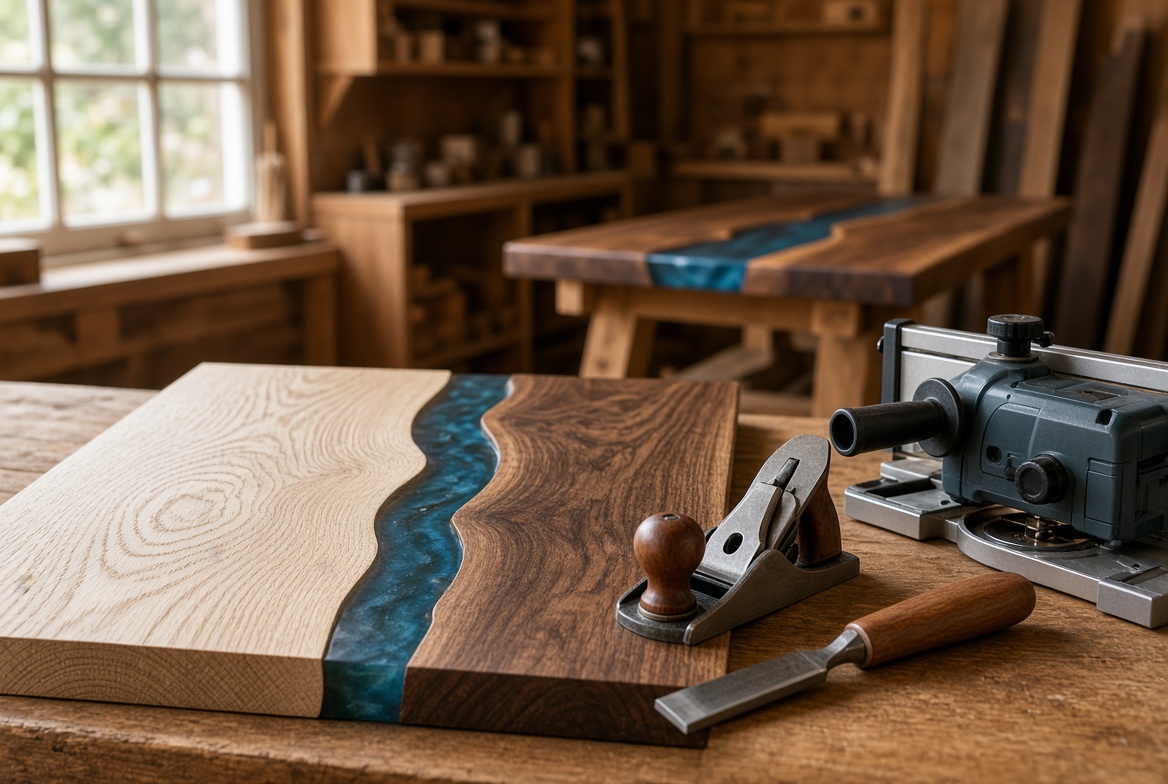
Live-edge slabs, reclaimed material with a story, and statement pieces such as epoxy river tables remain strong. Wider, longer planks (in both solid and engineered hardwood) continue to dominate flooring looks, often in matte or low-gloss finishes. Warm cherry, oak, maple, and walnut tones are favored over cooler or redder options. Millerwoodtradepub
Japandi influences, slatted wood details, and outdoor projects (cedar pergolas, privacy screens) also keep showing up in project lists.
Safety and Smart Tools Keep Advancing
Safety technology is no longer limited to table saws. SawStop introduced a 14-inch Professional Bandsaw with its Sensic active safety system—triggered by skin contact, though the blade-stopping method differs from the classic table-saw brake. Harvey has been showing contactless safety detection on a table saw. These developments continue the industry push to protect fingers without forcing woodworkers to abandon power tools. Finewoodworking
Elsewhere, cordless systems keep improving (Festool’s tabless batteries, new Kreg cordless joiners, various random-orbit sanders with better vibration control). Compact CNC machines and automatic tool changers are becoming more common even in smaller shops, reflecting the steady trickle-down of technology once reserved for industrial floors. Popularwoodworking
WOOD Magazine’s 2026 Innovation Awards highlighted practical improvements such as longer-lasting indexable carbide countersinks, a convertible multi-function plane from Bridge City, regenerative braking on DeWalt mitersaws that helps charge the battery, and intelligent features on bandsaws and drill presses.
Bigger Picture: Sustainability, Automation, and Steady Demand
Sustainability is no longer optional. Consumers and regulations both push for responsible sourcing, reduced waste, and energy-efficient equipment. At the same time, automation, digital design, and CNC continue to reshape production while still leaving room for hand-tool skill and custom work.
Industry outlooks for 2026 point to modest growth in wood manufacturing and furniture, driven by renovation demand, furniture, and construction. Italian machinery orders rose in the second quarter on the strength of export markets, even as domestic investment stayed cautious. Custom architectural millwork shops are expanding capacity with advanced CNC and material-handling systems. Fdmasia
What It Means for WoodCentral Readers
Whether you’re building a single river table, refining your kitchen cabinets, or just trying to get more done in limited shop hours, the current moment favors practical efficiency and honest materials. Test the new one-step finishes, consider whether a compact or safer machine fits your space, and lean into the warmer, character-rich woods that clients and homeowners are asking for.
As always, the best ideas still come from the shop floor and the forums. Share what you’re trying, what worked, and what didn’t—WoodCentral has been that place for more than 25 years. Keep the shavings flying.


