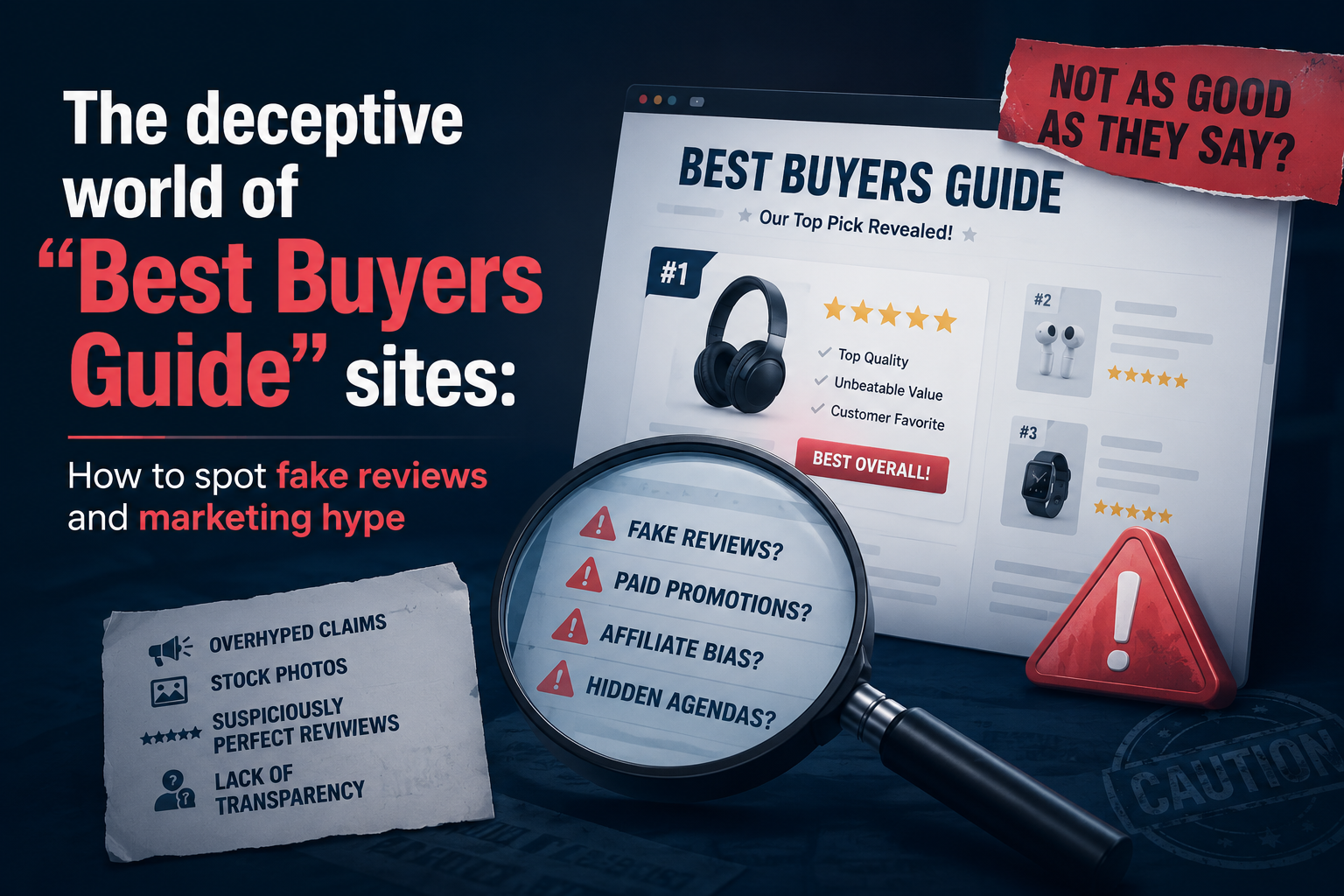
In the age of online shopping, product review sites promise to cut through the noise and help us make smart purchases. Sites like BestBuyersGuide.org claim to use “advanced algorithms” analyzing quality, price, user reviews, brand reputation, and more, backed by expert testing. Sounds helpful, right?
Unfortunately, this is often pure marketing hype. Many such sites are little more than thinly veiled affiliate platforms pushing cheap, often Chinese-made products as premium options through biased or fabricated content. They exploit trust in review ecosystems to drive commissions rather than deliver objective advice.
Why these sites proliferate
These “buyers guide” or “best of” websites have exploded in search results for queries like “best chain saw sharpener.” They often share traits:
- Affiliate-driven content: Nearly every “recommended” product includes tracking links. When you click and buy, the site earns a commission. This creates a strong incentive to rank high-commission items highest, regardless of actual quality.
- Generic, over-the-top praise: Reviews sound suspiciously similar—vague superlatives without specific testing details or drawbacks. Many appear AI-generated or written by teams optimizing for SEO rather than genuine experience.
- Misleading branding: Domains and names designed to evoke legitimacy (e.g., sounding like “Consumer Reports” or established guides). They mimic professional layouts with star ratings, comparison tables, and “expert” claims.
- Focus on high-volume, low-quality goods: Heavy promotion of inexpensive imports positioned as luxury alternatives, often with manufactured positive buzz.
Real user feedback on platforms like Trustpilot and ScamAdviser for sites in this category is frequently mixed or negative, highlighting their promotional nature.
Red flags of deceptive review sites
Here’s how to quickly evaluate whether a review site is legitimate or hype:
- Check for affiliate links: Hover over or inspect “buy” buttons and links. If they contain tracking parameters (e.g., from Amazon Associates, Impact, or similar), the site has a financial stake. Legitimate non-profits or subscriber-funded sites like Consumer Reports are transparent about any affiliate use and prioritize independence.
- Look for “expert testing” claims without evidence: Vague mentions of algorithms or testing rarely link to methodologies, lab results, or author credentials. Real testers (e.g., Wirecutter, Consumer Reports) detail their processes.
- Examine review quality: Genuine reviews include balanced pros/cons, specific usage details, and variability. Fake ones overuse generic praise (“game-changer!”), lack personal anecdotes, or cluster in timing.
- Domain and ownership scrutiny: Use tools like WHOIS lookup. Hidden owner info via privacy services is common in low-trust sites. Newer domains or networks of similar sites often indicate content farms.
- Absence of negative content: Truly objective sites acknowledge flaws. Constant 4.5+ star dominance for promoted items is suspicious.
- SEO over substance: Heavy keyword stuffing, thin content, and dozens of similar “best [item]” pages across niches suggest mass production over expertise.
How to find legitimate reviews and recommendations
- Independent non-profits: Consumer Reports, Wirecutter (NYT), and ConsumerLab emphasize testing and subscriptions or donations over commissions.
- Reputable publications: Sites like RTINGS.com (for tech), or specialized magazines with transparent methodologies.
- User-driven platforms with safeguards: Reddit communities (e.g., r/BuyItForLife), verified purchase reviews on major retailers (with caution).
- Cross-reference multiple sources: Never rely on one site. Check YouTube hands-on reviews from channels with proven track records, forums, and official specs.
- Direct research: Read manufacturer details, look for third-party lab tests, and consider return policies from reputable retailers.
Fake review checkers
Fakespot officially shut down on July 1, 2025, after Mozilla (which had acquired it in 2023) announced it didn’t fit their sustainable business model. ReviewMeta also went offline at the beginning of 2026 without any official comment. Tech Tips Now Buzz4AI
Here are the best current alternatives:
RateBud (ratebud.ai) — A free tool that analyzes Amazon reviews using AI, providing trust scores and letter grades. Works across 20+ Amazon country domains with no signup required. RateBud
SureVett (surevett.com) — Scores each product on six statistical signals, including rating distribution, verified purchase ratio, and review velocity relative to product age. SureVett
SeekShop (seekshop.co) — Goes beyond Amazon-only analysis by pulling reviews from Reddit, YouTube, retailer pages, and expert sources to give a combined “SmartScore.” Available as a Chrome extension or web tool, free with no account needed, and works on 1,000+ stores. SeekShop
ReviewDetector — Keeps the “fast trust score” approach but with more transparency into why specific reviews look suspicious. Product Hunt
Keepa — Primarily a price tracker, but also shows whether review counts spiked suspiciously around price changes, which is a common review-incentive pattern. SureVett
Of these, SeekShop and RateBud seem to be the most direct replacements. SeekShop is particularly interesting if you want context beyond Amazon’s own review section.
Protect yourself as a consumer
Always remember: If it feels too good to be true or pushes urgency, pause. The FTC warns against manipulated reviews and requires disclosures for material connections.
Develop a habit of skepticism toward “top 10” lists dominating Google results. Prioritize depth over convenience. For big purchases, invest time in primary sources rather than aggregator hype.
By staying vigilant, you can avoid overpaying for mediocre products hyped by deceptive sites and make purchases aligned with real value and quality.
What deceptive review sites have you encountered? Share your experiences in the comments to help others stay informed.


Discuss in forums
https://www.woodcentral.com/forums/topic/76004010/how-to-spot-fake-reviews-and-marketing-hype