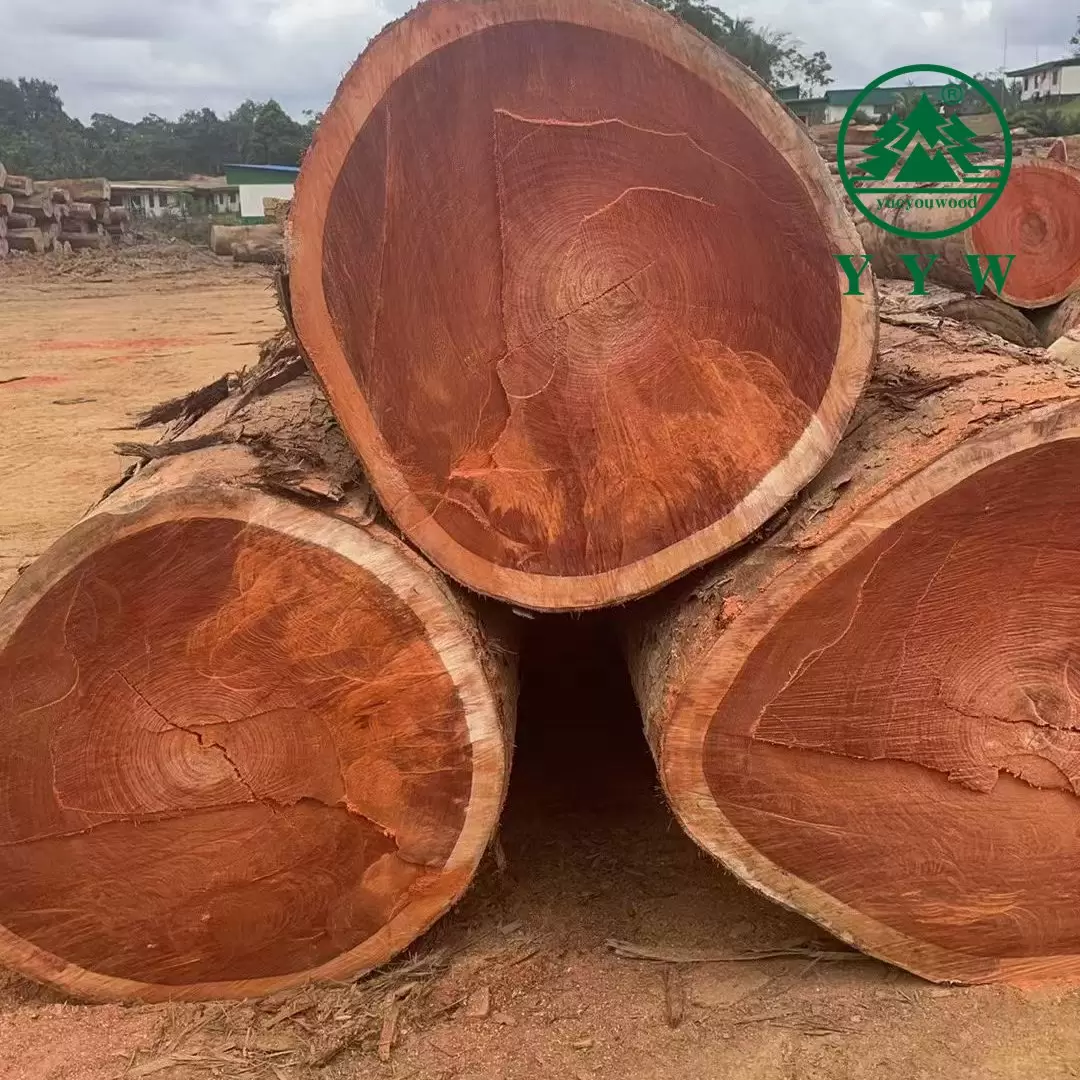
If you’ve never worked padauk before, the first cut is always a surprise. You expect another reddish hardwood in the mahogany family, and instead you get something closer to fresh-cut salmon that darkens, almost glows, orange under a coat of finish. It’s one of the few woods that photographs poorly because cameras can’t quite capture how saturated the color actually is in person.
Padauk (most commonly African padauk, Pterocarpus soyauxii) has moved from “novelty accent wood” to a genuine staple in custom furniture, cutting boards, and accent inlay work over the past couple of years, driven partly by the broader swing toward bold, distinctive hardwoods in interior design. If you’re thinking about bringing some into the shop, here’s what you actually need to know before you commit board footage to it.
What makes it distinctive
The color is the whole pitch. Freshly milled padauk is a bright orange that can look almost fluorescent, and it will darken over time — weeks to months, depending on light exposure — settling into a deep reddish-brown not unlike aged cherry, but with more warmth. This color shift catches people off guard the first time. If you want to slow it down, a UV-inhibiting finish helps, but nothing stops it entirely. Some woodworkers lean into this and treat the eventual mellowing as part of the piece’s character rather than something to fight.
Grain is usually straight, sometimes interlocked, with a coarse, open texture similar to walnut or ash. It’s moderately dense — heavier than walnut, lighter than most true exotics like ipe or bloodwood — which makes it forgiving to machine without being a featherweight to handle.
Working properties
Padauk cuts and machines well with sharp tools, but a few things trip people up:
- Dust is genuinely irritating. It’s one of the more commonly reported sensitizers in the hobby. A respirator and good dust collection aren’t optional here — this isn’t pine dust you can shrug off.
- Blade and bit wear is moderate. It’s not as brutal as some tropical hardwoods, but expect to sharpen more often than with domestic species.
- Gluing can be finicky because of natural oils in the wood. A quick wipe of the glue surface with acetone before gluing improves bond reliability noticeably.
- Finishing is where it gets interesting. Oil finishes intensify the orange dramatically and look fantastic, but accelerate the darkening. Film finishes (lacquer, poly) preserve more of the initial color contrast for longer. There’s no wrong answer, just a tradeoff to decide on up front.
Where it earns its keep
Padauk shows up most often as:
- Accent and inlay strips against lighter woods like maple or ash, where the contrast does the heavy lifting
- Cutting boards, where the color makes an otherwise simple end-grain board look considerably more expensive than it was
- Small turned pieces — pens, bowls, handles — where a little goes a long way
- Full case pieces, though this is a bolder commitment given the eventual color shift across an entire large surface
If you’re building something to sell, it’s worth knowing padauk photographs and sells well online precisely because of that color — it stops the scroll in a way a walnut piece often doesn’t, even though walnut may be the more “serious” wood by reputation.
Cost and sourcing
It sits in the mid-range for imported hardwoods — pricier than domestic walnut or cherry, but well below true premium exotics like cocobolo or Gaboon ebony. Availability is generally good through hardwood specialty suppliers, less so at big box stores. Buy a little more than you think you need; color and grain can vary noticeably board to board, and matching later is harder than with more uniform domestics.
The bottom line
Padauk rewards a woodworker who wants a dramatic result without exotic-wood pricing or exotic-wood difficulty. The dust caution is real and worth taking seriously, but the working properties otherwise are approachable for anyone comfortable with walnut or ash. If you’ve been eyeing it for an accent piece, there’s rarely a bad time to try a small project first — a cutting board or a set of drawer pulls — before committing to something bigger.
Have you worked with padauk? Share your results, finish choices, and any lessons learned in the WoodCentral forums — we’d love to see how the color held up on your piece a year or two out.


