Home Articles Forums Gallery Marketplace Videos

WoodCentral Forums

Knowledge You Can Build On — Est. 1998

Need a tree taken down or milled?

Lathe history/help

Posts

Lathe history/help

#1

Lathe history/help

John Jordan

>I have agreed to write about the lathe and the changes that have occurred over the last 2-1/2 decades for the 25th anniversary AAW book. It's intended as an overview, so while it may not be comprehensive, I do want to try to hit on the significant changes/advances etc. and to be fairly accurate and factual.

I've seen and turned on and have an opinion about a lot of lathes, but again, it's been from my perspective, and I am depending on my memory, which is not what it once was. :)

So, I'm asking for any help and input that folks here may have. What been significant changes, good or bad, in the evolution that I MUST put in the article? Stories, anecdotes, anything of interest might be helpful. I can't talk about every color change etc that ever happened-it is a fairly brief article.

For example, I think that the advent of electronic speed control, in particular the AC frequency drive that almost all lathes come with today is at the top of the list of advances.

I'm grateful for any input, ideas etc that anyone has, but would prefer not to turn it into a general lathe discussion. Some of you guys are old and have seen a lot, but that doesn't mean that those who are newer to turning can't chime in. Feel free to email me as well.

John
Re: Lathe history/help

#2

Re: Lathe history/help

John Jordan

>And I should add, people/places/names/dates/stories are useful too!

John

Re: Lathe history/help

#3

Re: Lathe history/help

john lucas

>John Aren't sliding and swiveling headstocks a fairly new thing. I know older lathes often had gap beds with filler blocks I don't think I've ever seen an old one with a swiveling headstock or a sliding headstock. Sliding beds like on the Stubby have been around on metal lathes back in the 30's but I've have not seen one on a wood lathe until the Stubby.

Re: Lathe history/help

#4

Re: Lathe history/help

Mike Brazeau

>Even though they are attachments, the introduction of four jaw scroll chucks is in my mind, one of the most significant developments. After having an old Rockwell Delta Homecraft lathe for about 30 years and doing little with it, purchase of a Stronghold chuck reawakened my interest, and turned me on to turning as a principal obsession so to speak.

Re: Lathe history/help

#5

Re: Lathe history/help

Ed Moore in SW VA

>John,

Following John Lucas' lead, the sliding headstock, and then the Robust Tilt-Away tailstock, improved chucks, and tool/steel development have all made significant contributions to improving lathes and woodturning. And obviously the variable speed that you mentioned is another biggie.

The use of stainless steel for the ways is an under-appreciated improvement. Ask anyone who turns wet red oak.

Ed

Re: Lathe history/help

#6

Re: Lathe history/help

Bill Grumbine - Kutztown PA

>Gee John, I saw lathe history, and thought maybe the rope came loose and your Stubby was at the bottom of the lake! ;-) Sorry, it's too late and I am too tired to be useful. I just got done loading everything up to go to MA for a demo and workshop tomorrow. Good luck on the project though! Ask Mike Stafford about the boat thing if you don't recognize it.

Re: Lathe history/help

#7

Rude Osolnik oral history *LINK*

Jerry Hall

>in link where he discusses his turning career, and briefly his contribution to the sliding headstock design on the Powermatic:

"And I would turn the outside and then start on the inside. And that�s where I came up with the idea of having Powermatic design a moveable head that slides back and forth, because it used to be you had to lean over your machine to work on the inside. And I had that designed so that the head stock could move down, and I could stand directly in front of it and turn."

Also a short you tube video of him late in life:

http://www.youtube.com/watch?v=emP0W4K0YVE

Shows the old Powermatic, without sliding headstock.


Oral History Interview

Re: Lathe history/help

#8

Re: Lathe history/help

Wally Dickerman

>John, many years ago I had an old Delta lathe that was mounted on an open frame stand. The motor was hinge mounted to easily move the belt for speed changes. I had thought about a reverse switch for the motor so that I could sand in reverse. One day it occured to me that if I lifted the motor on it's hinge and put a figure 8 in the belt I would have my reverse. Worked very well until I got my next lathe whuich had a reverse switch.

The ability to reverse the motor is a real improvement. The fact that my Oneway has a good system for securely locking the chuck or faceplate to the spindle allows me to safely turn left handed.

Wally

Re: Lathe history/help

#9

Re: Lathe history/help

Russ Fairfield

>Almost everything we think is new lathe technology can be found in an old Oliver catalog.

The sliding bed is not new. Oliver made several large wood lathes with a sliding bed in the 1930's. I had one in the pattern shop in Seattle that was made in 1934. They also made several "motor head" lathes with 4 and 5 different motor windings on the same shaft.

Rather than swivel the head, Oliver made an early lathe whose bed could be rotated and slid on a separate ways under it. The final version had the head stock, tailstock, and tool rest as separate assemblies that could be repositioned on a large bedplate.

Re: Lathe history/help

#10

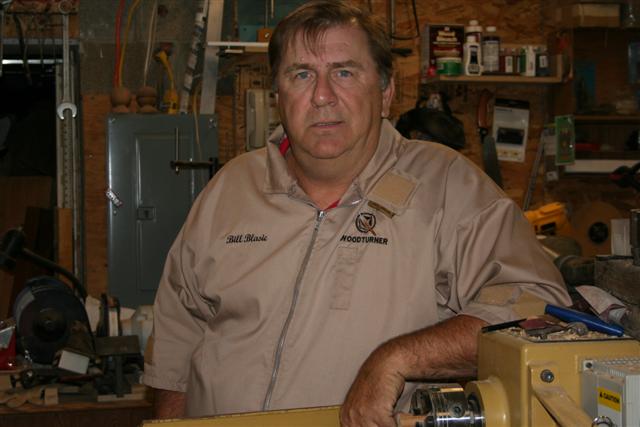
Bill Blasic

Re: Lathe history/help

Bill Blasic

>Russ,

Your right a while back I had in my possession an Oliver from 1904 that the motor was the head of the lathe. This lathe weighed in at about 800 lbs and probably 200 of that was the motor/head of the lathe. It was interesting as one of my lathes is the DVR having the motor as the head of the lathe.

Re: Lathe history/help

#11

Mike Stafford

Bill, you just won't do.......LOL!

Mike Stafford

>

Re: Lathe history/help

#12

Mike Stafford

Re: Lathe history/help- I wonder....

Mike Stafford

>How many people got their starts on a multi-purpose machine like the Shopsmith?

I think the advent of the DVR motor by Poolewood and Nova is pretty innovative. The Poolewood represents the high end and the Nova DVR lathes are within reach of many of us.

Also making turning more accessible to the masses are the wonderful and ever improving mini and midi lathes that are coming on the market.

No matter what you say good about a lathe there will always be someone who will counter that with another lathe that does it better.

I have owned 4 lathes, the Shopsmith I started turning on, a Nova 3000, the Jet 1014, and my Stubby. Lord I do love my Stubby even though Bill Grumbine disrespects it by suggesting it is a boat anchor.

Re: Lathe history/help

#13

Re: Lathe history/help

Philip Duffy

>John, May I suggest you call Myron Curtis in Virginia Beach as he has been turning for about 40 years and is a big fan of Oliver lathes. Myron has a distinguished career as a turner, and several other interesting careers before that, including being a Navy Senior Chief, a teacher, etc. Myron is a walking history book and a fine gentleman. Philip

Re: Lathe history/help

#14

Re: Lathe history/help

wilbur

>You might want to at least mention the Conover lathe. My understanding is that one of the main reasons Ernie Conover developed this lathe is that at the time (1985 or so) there were no readily available quality lathes that were really geared towards woodturning, as opposed to metal turning.

Re: Lathe history/help

#15

Re: Lathe history/help- I wonder....

Bill Grumbine - Kutztown PA

>Mike, you know I love your lathe. It's just...I can't resist...it's a character flaw. ;-)

Re: Lathe history/help

#16

Cam lock banjo and tailstock

Rick_Allen

>Being able to easily move and securely lock the banjo and tailstock without additional tools.

Re: Lathe history/help

#17

Steven Antonucci

Started on a Craftsman Monotube

steve antonucci

>So, basically EVERYTHING in the last 25 years was an improvement in the technology.

Seriously- the internet made it possible to read about and understand what was important in lathe technology. The single biggest improvement in lathes today has been driven by the access to knowledge about what makes a lathe good or bad. Before the internet, you would go to the local store, and buy what they had...now we can easily research choices online.

This has forced the manufacturers to step up their quality and basic features. Low end lathes are usually exposed as such, making turning less difficult to learn because you aren't constantly realigning the monotube or breaking equipment.

Steve

Re: Lathe history/help

#18

Re: Started on a Craftsman Monotube

John Jordan

>Thanksm so far! I won't reply to all the posts, the thread will get too long and hard to read. Good points, all. I had a Conover, Sears and Shopsmith got a lot of people started, particularly back then.

If you must use the Stubby as an anchor, rotate the bed and put the aux bed on it. It will hold well in a sandy bottom.

John

Re: Lathe history/help

#19

Re: Lathe history/help

Bill Turpin in WNC mountains

>I believe that the use of CA glue has changed a lot of lathe technique.

Re: Lathe history/help

#20

Perhaps most amazing of all, *LINK*

Jerry Hall

>and worth discussing, as a point of beginning, is how LITTLE the lathe has changed over the centuries, simply a rotating work holding vise into which you stick a sharp implement. It seems to me everything else has been a fairly minor refinement, but a major work saver. Kind of like the electric tooth brush. Some of us could have used the exercise tho. Another nice video is:

http://www.youtube.com/watch?v=HGQ37cq-zqE

Which reminded me that a band saw/chain saw/sanders/carvers have become almost essential work saving lathe related tools, altho the hatchet works. These ancillary tools arguably have led to more innovation than changes in lathe technology.


Bow powered lathe

Re: Lathe history/help

#21

Re: Lathe history/help

Bill Gasper

>This may be a bit out of the scope of your article John but I don't think you can discuss changes to the lathe without mentioning the proliferation in the use of wood lathes by artists. Most of the inovations discussed here played directly into the hands of many talented artistic individuals who many not have pursured turning without them. Their works have reached a much wider audience and helped to promote turning worldwide. Of course we can't forget those that were cranking out artistic turnings before many of the changes discussed were available.

Re: Lathe history/help

#22

Re: Lathe history/help

Harry in Beautiful Downtown Kulpsville

>John, don't forget the 'live' center. When I learned to turn on my grandfather's homemade lathe in the mid forties, the lathe had a dead center. You jammed it into the work and then backed it out a tad. A small drop of motor oil on the tip helped too.

Re: Lathe history/help

#23

Re: Lathe history/help

Mac

>Who you calling old Bub?

Re: Lathe history/help

#24

Re: Lathe history/help

Pete in Holland, MI

>1) Increase in mass on the machines (mostly due to the cheaper means of building things overseas). Really old lathes were heavy, then they invented light "homeowner" lathes, now heavy ones are coming back.

2) The "standard" tool set has evolved significantly. That & the scroll chuck are two key accessories that has changed the turning field.

3) The internet. 25 years ago, many turners lived lonely lives in their basement or garage, developing turning skills on their own. With the internet, those "thinking" about turning and struggling to do so have a wealth of information now available to them.

4) But the one comment earler was right. It still is a very basic machine, unchanged for years (other than the event of the electric motor. But, unlike a tablesaw or drill press, where most anyone can cut a straight board or drill a good hole, the whole mystique in the lathe is the end products heavily rely on the operator.

Happy writing !

Pete

Re: Lathe history/help

#25

Re: Lathe history/help

Pete in Holland, MI

>1) Increase in mass on the machines (mostly due to the cheaper means of building things overseas). Really old lathes were heavy, then they invented light "homeowner" lathes, now heavy ones are coming back.

2) The "standard" tool set has evolved significantly. That & the scroll chuck are two key accessories that has changed the turning field.

3) The internet. 25 years ago, many turners lived lonely lives in their basement or garage, developing turning skills on their own. With the internet, those "thinking" about turning and struggling to do so have a wealth of information now available to them.

4) But the one comment earler was right. It still is a very basic machine, unchanged for years (other than the event of the electric motor. But, unlike a tablesaw or drill press, where most anyone can cut a straight board or drill a good hole, the whole mystique in the lathe is the end products heavily rely on the operator.

Happy writing !

Pete
