WoodCentral Forums

Est. 1998 — 27 years of woodworking knowledge

What is best for adjusting tenon thickness

Posts

Re: What is best for adjusting tenon thickness

#26

Rasp

Jack Dover

I am wondering if the right kind of rasp would be best for removing 0.005 of wood from a tenon cheek(to use and example of a typical fitting need). I don't know much about rasps. They are too expensive to go buy and try.

A suitable block of wood with some 80-100 grit sandpaper works just well, maybe even better if you remove only 0.005" of wood on average.

There are decent rasps in "under 40$" category. The Shinto hacksaw rasp is something like 25$? It's fast and it leaves quite a smooth surface - no ridges, etc., very convenient for flat surfaces.

Re: What is best for adjusting tenon thickness

#27

Clarification...that other edge

Bill Tindall, E.Tn.

I revised that section of my post several times because I was not coming up with a clear way of describing what I have as a problem. I see it failed. At the risk of being dismissed because who the hell uses a digital caliper woodworking, but in the interest of providing clarity I will quantitatively describe an example of my need.

I find a digital caliper so essential I have it hanging at hand behind the bench. It, a brass screw and a set of number drills is the way to never shear off a screw, or have a less than optimum pilot hole for a brad. But I digress....

As a curiosity I measured a tenon that was slipping into the mortise optimally and one that was not. The difference was a piddly 0.005". The edge I unclearly was referring to was not the chisel, but the edge of the tenson that I am to stick the chisel into 0.005" below the surface. In my hands this edge is insufficiently defined (not sharp) to accurately stick a chisel 0.005" below the bulk of the surface.

The more I think about the need the more I think the right kind of rasp is the solution for removing a smidgen of tenon cheek. I fear the right kind of rasp will cost half the cost of a plane.

Re: What is best for adjusting tenon thickness

#28

Thanks will look into it

Bill Tindall, E.Tn.

To work the rasp will need to cut quickly and smoothly. The more the strokes the more rounding risk.

Re: What is best for adjusting tenon thickness

#29

Re: What is best for adjusting tenon thickness

PhilCT

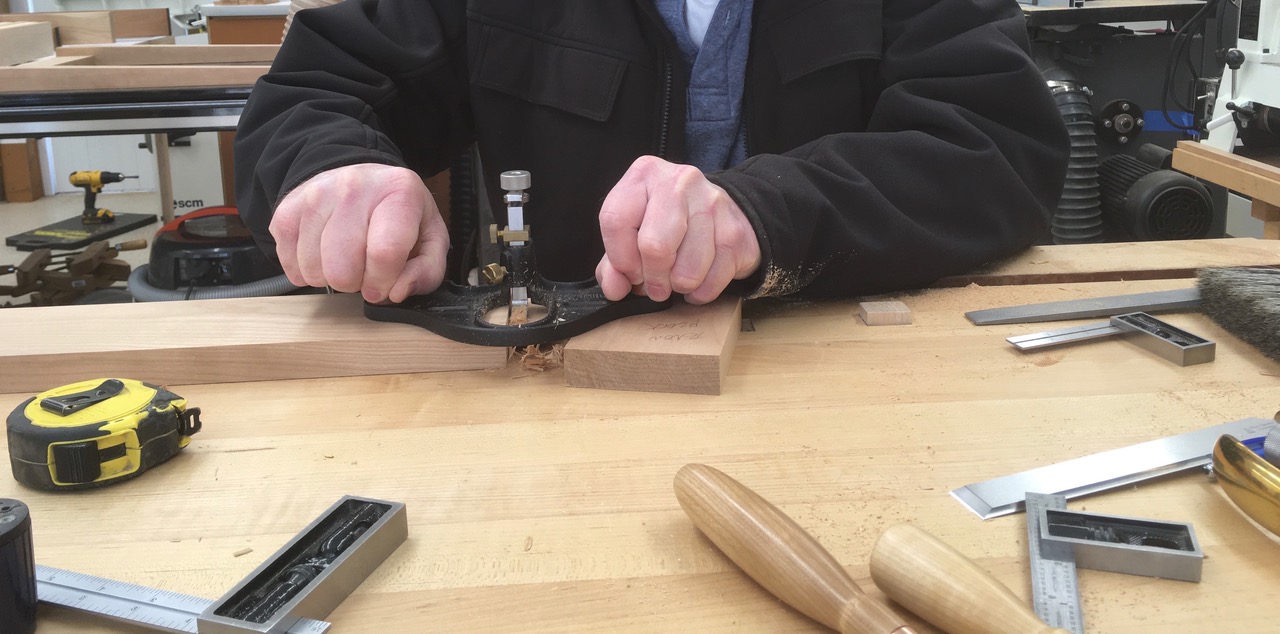
I have found that the router plane will make quick work of this task: you can easily dial in the precise fit and end up two uniform tenon cheek surfaces that are parallel.


img

Re: What is best for adjusting tenon thickness

#30

question

Bill Tindall, E.Tn.

My experience matches yours in making this joint, many times over for 3 tables that the client would like to use this year not next. What rasp do you prefer for fine tuning.

Till you voiced this fact I had not realized why I hate shoulder planes. The center of gravity it too high for good control given their narrow base. That and there is no good way to hold them to overcome this limitation. I need to study the plane and see why they are made so tall. I have never trimmed a shoulder with mine, just cheeks and I hate it every time I pick it up.

Re: What is best for adjusting tenon thickness

#31

Re: Chiseling question

Charlie

https://www.salemnews.com/archives/beverly-furniture-maker-gets-dream-job-for-peabody-essex-museum/article_f1b9c049-dae2-52d0-bee8-e953bc8eeed1.html

Would love to hear about some of your museum commissions when you have a moment.

Re: What is best for adjusting tenon thickness

#32

What do you recommend

Bill Tindall, E.Tn.

I have little knowledge and no experience with anything but inexpensive files and rasps....which don't cut wood that well. What exactly are you recommending and where to find it?

Re: What is best for adjusting tenon thickness

#33

Re: Router plane useless for my need

John Jardin

Bill,

I have routinely used my Stanley and Clifton shoulder planes to zero in on fitting cheeks into mortises. However, I will now do what Derek suggests and use my new pair of Auriou rasps to get the final fitting right. I've had and used Nickolson rasps occasionally for years but the Auriou rasps are a game changer. Yep, they are not cheap, but Bill, get a friend to loan you one to try out and I bet you will be sold.

Using those rasps on Windsor chair seats is an absolute joy.

Re: What is best for adjusting tenon thickness

#34

Re: What do you recommend

Steve D, CT

Lie Nielsen has them on their website but out of stock.

LV has a Japanese version that has different style teeth. I have one and it leaves a fairly smooth cut compared to a rasp with pointed teeth.

Also, I picked up some extremely coarse single cut files that look close to the joinery float. Mine are bigger but something like this:

https://www.mcmaster.com/4282A12/

another option if you want to mount it in a handle:

https://www.tognar.com/panzar-file-300mm/

Re: What is best for adjusting tenon thickness

#35

Re: question

Derek Cohen (in Perth, Australia)

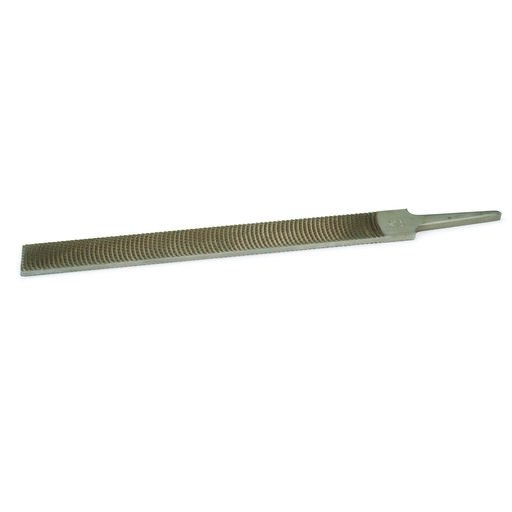
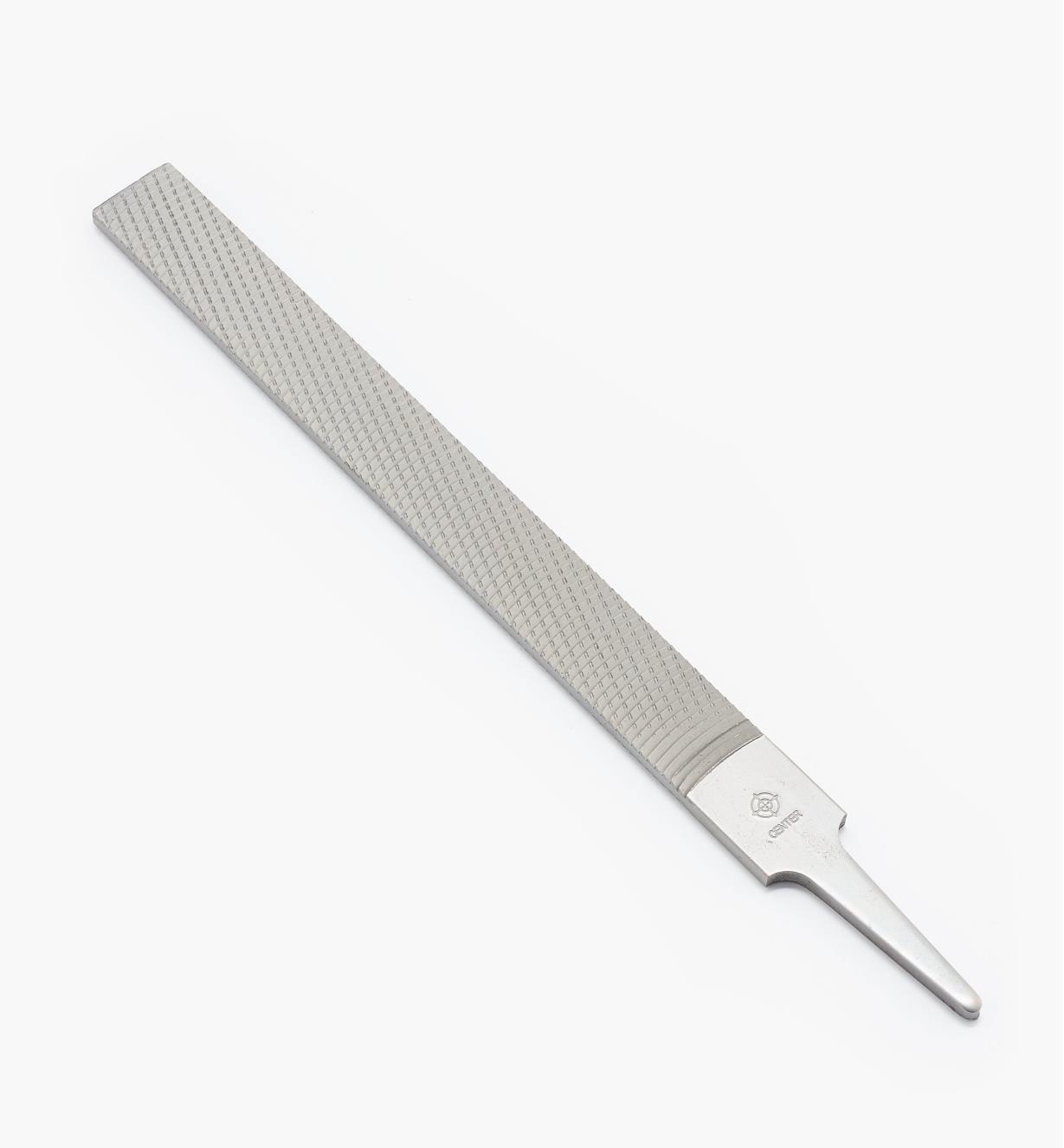
Bill, what you need is a coarser file-rasp with safe sides. There is a Japanese rasp which fits the bill, made by Iwasaki.


... sold by Woodcraft ...

https://www.woodcraft.com/products/iwasaki-10-flat-bastard-file

Alternately, a Japanese Milled-Tooth File, as sold by Lee Valley ...

https://www.leevalley.com/en-ca/shop/tools/hand-tools/files-and-rasps/files/63451-japanese-milled-tooth-files?item=62W3080


Regards from Perth

Derek

Re: What is best for adjusting tenon thickness

#37

Re: Rasp

Derek Cohen (in Perth, Australia)

Jack, I have a couple of Shinto rasps, and I love them. Best bang for the buck!

However, they are not ideal for tenon cheeks as their sides are not flush and will make it more difficult to work against a shoulder.


Regards from Perth

Derek

Re: What is best for adjusting tenon thickness

#38

Re: Clarification...that other edge

Warren in Lancaster, PA

It sounds as if you have decided on the rasp without learning to use a chisel.

Re: What is best for adjusting tenon thickness

#39

Re: Clarification...that other edge

Bruce, a MN Galoot

A brief discussion of your chiseling technique would be helpful here.

Re: What is best for adjusting tenon thickness

#40

Re: Clarification...that other edge

Warren in Lancaster, PA

I aim for a fit right off the saw. This happy result occurs more or less depending on how many tenons I have made recently. If they are consistently too fat, I keep that in mind as I am sawing.

I do most paring straight across the tenon. Sometimes I put the rail on a sawing board (bench hook) as I am working. That way it is somewhat secure, but does not need to be unfastened when I want to check it. Usually pare with two hands on the chisel. I don't think it is a problem removing stuff right where it is too high. I have done some diagonal cuts as described by Paul yesterday.

Usually the problem is one corner or one end or one side, not like there are lots of hills and valleys. One time when it is nice to make sure you haven't cut the tenon too thin is when it is a through tenon that will show.

Re: What is best for adjusting tenon thickness

#41

Great minds come to common result- success

Bill Tindall, E.Tn.

That's tongue in cheek at least on my end.

I own the very rasp Derek pictured. It is so aggressive I have never found a use for it. But early this AM there it was beckoning from the holder where my files are stored. With one finger lightly pressing down on the file in the middle of the tenon I pushed the file cross grain. The sound of wood being smoothly shaved brought a feeling of hope. To cut to the conclusion.....

On the first try, five strokes of this file on a tenon that would not fit resulted in a tenon perfectly sized. In short order the remaining fat tenons were perfectly sized (some did not require adjustment).

I can neither reliably shave 0.001" increments from a cheek with a chisel, nor guess and target exactly what adjustment is needed. Incremental shaving leads to perfect success.

The file does what one would want a plane to do, take small repetitive increments of wood from the cheek until the fit is perfect. Hands down this kind of file is the way to make small tenon cheek adjustments.

Then this afternoon I get a note from Weaver, suggesting, based on his hands on experience, exactly what I wound up doing. More affirmation that this means to an end has merit.

Thanks to all that intended to be helpful for a good discussion.
Re: What is best for adjusting tenon thickness

#42

Re: question

William Duffield

They are made taller than they are wide because they were designed to adjust tenon shoulders, not so much cheeks. In general, tenon shoulders are narrower than tenon cheeks, fitting the geometry of the plane. That's why they are called shoulder planes. ;)

Re: What is best for adjusting tenon thickness

#43

Re: Thanks will look into it

Kent

Thread has been very helpful. I'm not the only guy lost in those woods.........

FWIW - I generally turn to my Lie-Nielsen face float. I keep it pretty sharp. Smooth edges leave shoulder unmolested. A light pass or two takes care of the problem.

But - your concern about the cost of a rasp is not helped with this idea.

Also - back when I had a full-bore shop, the tenoning jig for the TS was he cat's pj's. Left it set for 5/16" tenon out of 13/16" stock. No good for long parts.

Re: What is best for adjusting tenon thickness

#44

Re: LN Joinery float ...

Jack Dover

They aren't and it seems they will never be back in stock.

There are similar Chinese tools sold on eBay. Not because they were made in China, but because it's a Chinese traditional tool. It looks like a slightly scaled down version of an LN joinery float, but it has way more sharper teeth (almost like a chisel, no problems slicing a finger on these) and is way more aggressive. These "floats" have fine and medium versions - relative, of course. Try searching by "Woodworking Cranked Float Wood Rasp File Carpentry Carving Hand Tool Push Stroke". Please note that they look better than the pictures, in fact they are a neatly finished tool, really decent quality.

I own three or so. Don't really use them these days because they make softwoods disappear almost literally. They work wonders on harder woods, can't wait while all non-essential stuff in my life settles, so I work on what really matters again.

Re: What is best for adjusting tenon thickness

#45

Re: Rasp

Jack Dover

You mean the blades have some set? Indeed they do, but even without set it's going to be tricky around the shoulder area since sides aren't flat (they're quite wavy), aren't stiff and there are rivets' heads. But I usually don't go that close and just pare that area.

Re: What is best for adjusting tenon thickness

#46

Re: What is best for adjusting tenon thickness

Charlie

Make sure you haven't sawn twist into the tenon before you start trimming. Set a decent stainless bench rule on each face of the tenon and sight it against the tenon shoulder. Check in the middle of the face of the tenon and near the end, checking both tenon faces.

If it tests wonky, then test the component for overall twist by putting a regular winding stick on the tenon and then one near the other end of the part. If the part has been sitting around, it may have become twisted. You may have to fix the twist by trimming the tenon down pretty substantially and then packing it back out again with veneer once it's out of twist in order to get a snug fit in the mortise.

Re: What is best for adjusting tenon thickness

#47

Re: What is best for adjusting tenon thickness

William Duffield

Go to Woodcraft.com and search for iwasaki.

https://www.woodcraft.com/search?q=iwasaki&button=search

You will need a flat one with safe edges. I didn't look through all the descriptions to find the right one. You will probably also want to make a handle for it. The provided dipped rubber handles are not very comfortable.

Re: What is best for adjusting tenon thickness

#48

Re: What is best for adjusting tenon thickness

joel moskowitz

Try the following.

Instead of pushing the plane - which is an ergonomic disaster.

try pulling the plane with your hand grasping other the top of the body. It is world easier and more comfortable.

Re: What is best for adjusting tenon thickness

#49

thanks

Bill Tindall, E.Tn.

If this suggestion lessens the bad words while using you will be my hero

👍 This page answered my questions

Your vote helps other woodworkers quickly find the answers and techniques that actually work in the shop.