WoodCentral Forums

Est. 1998 — 27 years of woodworking knowledge

Question on strike buttons

Posts

Question on strike buttons

#1

Question on strike buttons

Oskar

Hi all,

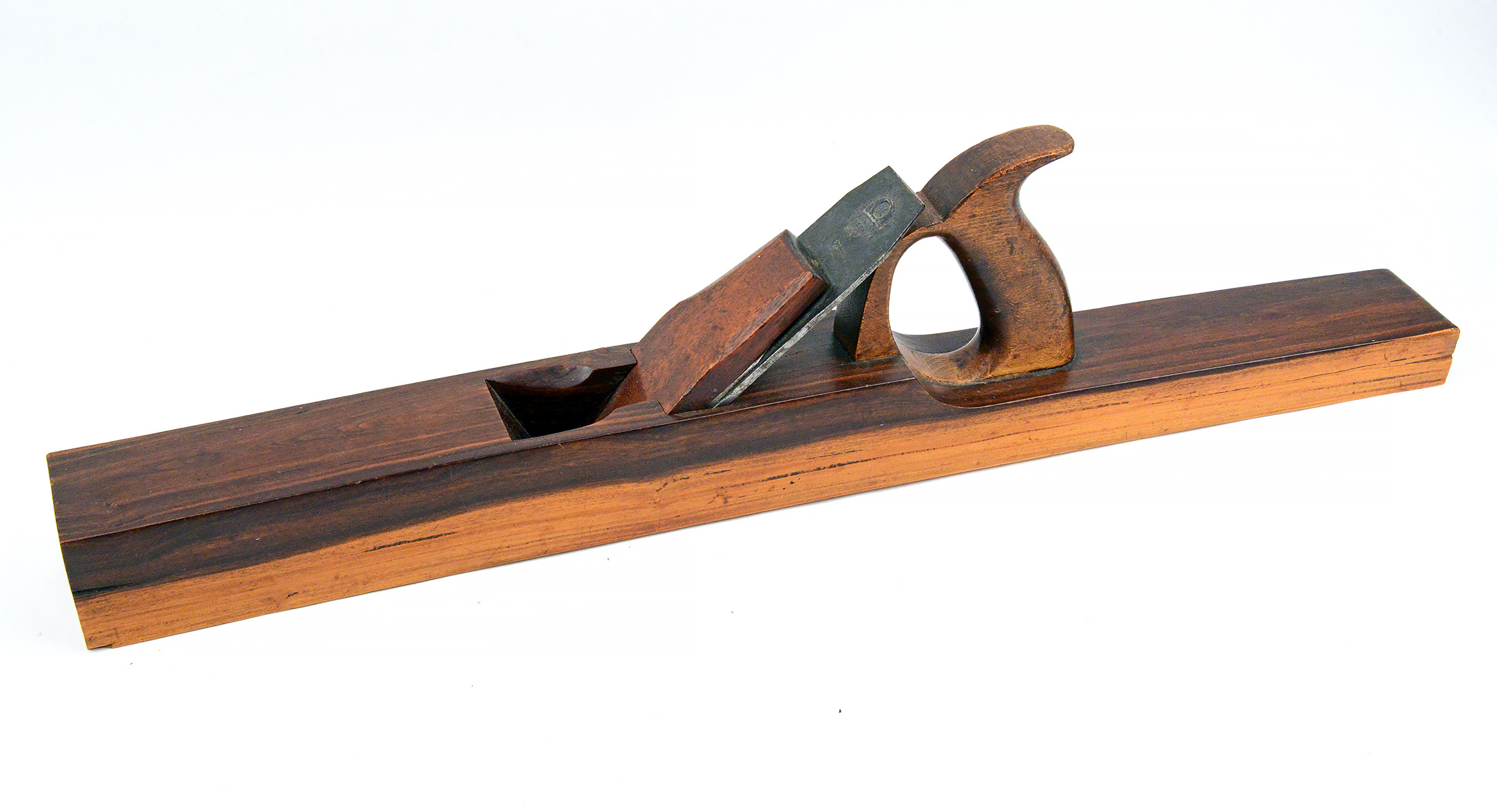
I´m close to finish line on my new try plane and I have a question on strike buttons. Never made one before, and I dont have an old plane to look at.

Grain direction - Is the strike surface usually end grain? (I have a small piece of lignum I hope to be able to use)

Position - Is there a traditional or preferred position between the front and the escapement?

Fitting - made so that it takes the main force on the shoulders, or at the bottom? Or do strike buttons usually have no shoulder?

Looking forward to your feedback.

Oskar

Re: Question on strike buttons

#2

Re: Question on strike buttons

John Aniano in central NJ

Oskar,

The few strike buttons I've seen were endgrain. A turned piece of lignum would be perfect. Or dogwood...

I can't comment on placement on the front end of the plane, sorry. How about positioning the button centered on the rear? Works well there too.

John

Re: Question on strike buttons

#3

Rafael from PA

Re: Question on strike buttons

Rafael from PA

Oskar,

I've an Ohio Tools 22" try plane with a strike button. The front of the mouth is 6.5" from the toe and the strike button is centered at 3 1/8" from the toe.

Rafael

Re: Question on strike buttons

#4

Re: Question on strike buttons

Jérôme

I use strike buttons on jack, fore and jointing planes mostly. Hitting the back or the top back edge is easy enough of smaller planes.

I prefer square buttons to round, about 1.5 inch wide, half an inch high, an sixth protruding out.

This is mostly an aesthetic choice.

I use fish glue to hold them in the mortise, it’s a bit elastic.

As for the grain orientation, you may consider wood movement and the potential mushrooming / splitting. In my experience, the small size doesn’t induce movement problems and adding a chamfer around the top edges prevents the other issues aforementioned.

I usually use the same wood as the plane body, so sorb, hornbeam, beech or green oak.

The closer to the mouth escapement, the more impactful the effect. I usually set my strike button to an inch to the mouth.

Re: Question on strike buttons

#5

Re: Question on strike buttons

Warren in Lancaster, PA

Here are some notes on your plane woods for those who may not be familiar.

Sorb is Sorbus domestica which is in the same genus as our American mountain ash, Sorbus americana, but significantly harder.

Hornbeam, Carpinus betulus is very similar to our American hornbeam, Carpinus caroliniana, and European beech is similar to our American beech.

"Green oak" may have caused some questions in these circles. In French, it is chene vert, in Latin Quercus ilex, which is an evergreen oak like live oak of SE United States. The evergreen oaks are generally much harder and finer textured than the other oaks.

Re: Question on strike buttons

#6

Re: Question on strike buttons

Steve Voigt

Hi Oskar,

1. I always use endgrain for durability, and that's nearly always how it's been done. I use cocobolo, mostly because I have a stash of it and it looks good. Lignum should work too. Ebony was popular in the 19th c.

2. It can be centered between the breast and the toe for planes up to about 22," but for longer planes (26", 30") it should be closer to the breast. about 3" from the breast is a good spot, because farther away the effectiveness is reduced.

3. I would never use a shoulder. It is a full sized mortise, whether the button is round or square. Both can look nice. The important thing is to have a good chamfer so it doesn't split.


Re: Question on strike buttons

#7

Rafael from PA

Re: Question on strike buttons

Rafael from PA

Steve, if Ebony were to be used, would a long grain button work? How thick is the button?

Re: Question on strike buttons

#8

Re: Question on strike buttons

Jerome

Thanks Warren for the localization.

As an addendum, sorb (or «� Cormier� ») is not «� hard� » as «� difficult to carve� », but very dense (like 0.9, barely floats), very resistant to wear (thanks to its very fine texture) but quite nice to work with. My 8 by 8 by 68cm jointer weights 4.4kg. Heavy.

It is the most commonly found wood for good wooden antique planes in France. Maybe because the other already rot or got eaten by pests.

Hornbeam and beech are more modern and somewhat second choice. Sometimes making the bulk of the body with a laminated sorb sole.

Green oak is hard in every sense of the word. It’s rare though. Maybe more common in Italy, where those grow bigger and faster.

Re: Question on strike buttons

#9

Re: Question on strike buttons

Steve Voigt

Rafael, I've never tried ebony so I couldn't say. It would probably be fine I think…

My buttons are usually 13/16" square by 1" long. For a jack I make them a little smaller, like 3/4".

What is the diameter of the strike button you referenced earlier?

Re: Question on strike buttons

#10

Rafael from PA

Re: Question on strike buttons

Rafael from PA

Does anyone have information on where one can source live oak for tool making?

Re: Question on strike buttons

#11

Rafael from PA

Re: Question on strike buttons

Rafael from PA

I have some Ebony, about 3/16" thick; it's probably too thin.

I'm pretty sure the diameter was 3/4" and it protruded about 1/16". I'll have to verify that later.

Re: Question on strike buttons

#12

southern suppliers...

David Weaver

..in order to get something good for planes, you'll probably need to buy 16/4 flatsawn.

It's heavy, though, and will make a heavy plane. There's a fellow named terry cross on youtube (not suggesting this) who has thick wide slabs and I contacted him years ago and contemplated buying a large slab to cut plane blanks from, but most that I've seen cracks at some point and specific gravity is about 1 at stable ambient moisture (beech is just over 0.7).

I think it may have promise for coffin smoothers, but will need to be used in smaller or narrower planes for jack through jointer unless you want a small dense jack. A beech jointer is already a load (28 inch planes usually range from 8 to 11 pounds depending on the wood and what's been done to them - some are soaked with linseed oil or something similar and very heavy).

Separately, a long time ago, I bought a group of wooden planes and one of them was a euro jointer in some kind of dense oak. Not sure if it was narrow to make up for the density of the oak, but the iron was only 48mm, which made it difficult to use for match planing, etc, and difficult to use for truing (narrower on a try plane sized plane makes it harder to keep flatness by eye and feel as the width counts along with the length for that).

Re: Question on strike buttons

#13

Re: southern suppliers...

Jerome

> Separately, a long time ago, I bought a group of wooden planes and one of them was a euro jointer in some kind of dense oak. Not sure if it was narrow to make up for the density of the oak, but the iron was only 48mm, which made it difficult to use for match planing, etc, and difficult to use for truing (narrower on a try plane sized plane makes it harder to keep flatness by eye and feel as the width counts along with the length for that).

French traditionally had no “jack plane”, but “demie varlope”, literally “half plane” where the standard plane was the jointer. Roubo describes the full length jointer as a 27 inches long plane, and the half plane as “6 inches less”, with a lower bed angle and a cambered blade. A fore plane of sorts. Keep in mind that the royal French inch around 1800 is probably not 2.54cm. My demie varlope is 51cm and has a 45mm wide 4mm thick tapered blade. My jointer is 68cm wide and has a 60mm wide blade.

What you had was probably a fore plane. Which is narrow, like a scrub plane.

Re: Question on strike buttons

#14

I can't recall exact length...

David Weaver

.but it was jointer length - something like 26 or 28". It also didn't look professionally made to me, but other than that was in proportion to the european jointer type (handle near the back, mouth much further back than an english plane.

The more recent euro jointers that I've seen have irons that are closer to what we're used to in english planes (most english try/long/jointer planes after the double iron was introduced are 2.5 inches, though I've had a couple of jointers that were 2.75" - their proportions were the same as the other english jointers except for an extra quarter inch of width).

As you're describing the euro planes, I've never had one in between in size. 26" -28 jointers are common to find used in the US (presumably used by people who moved here from continental europe - i mean old planes when describing this, not planes made in the 1900s or later), and if there is a double iron, most of the rest are similar to what people here think of as a "euro smoother" (a 48-50mm wide plane with a double iron and a horn on the front).

Jim on here sent me an ulimia jack to refit, but it's a recent plane and it was made in the style and proportion of english planes.

(at any rate, with the oak jointer that I had, it was either made narrow to make up for the weight of the wood - given it was long - or because that's what someone had available as an iron. I think it was amateur made, but skillfully so - just some of the aesthetics were wonky). It had been used hard, too. Someone either liked it or used it because they had to, but if the latter, they still liked it enough for that.

Re: Question on strike buttons

#15

Rafael from PA

Re: southern suppliers...

Rafael from PA

Found a supplier selling 3x3x12 blanks of live oak for about $10. It may work out for smaller planes.

In his plane making book Cecil Pierce favors exotic woods and the razee pattern, I presume to balance out the added weight of the heavier woods.

Re: Question on strike buttons

#16

yes on the razee

David Weaver

...you can do that, make narrower, or make shorter or some combination.

Most of the rosewood or lignum planes for boats are some combination of that so that they're not.

I'd say with live oak, if it's dry, plane/flatten a sole on the side where you'll have it. Let the billet sit for a couple of weeks through some weather changes and then check flatness again. If it holds flat, you're probably good (as long as grain direction is close to agreeable). If it twists, flatten the bottom again, wait, etc. and do that until it stops moving.

i'll be interested in hearing how easy it is to work as one of the things that I've noticed with woods other than beech is if they have grain direction less than agreeable, it can be hard to get clean cuts inside cheeks, etc. Or in the case of something like ebony, there's not enough directional conviction for the long grain to be strong, and erosion at the mouth and chipping is pretty common. I got about 2/3rds of the way through a 3x3 ebony blank and then quit as the wood is just too chippy around a plane mouth and the abutments. It can be worked with but rosewood is almost the same weight and has much more directionality to take advantage of.

Re: Question on strike buttons

#17

Razee

Jack Dover

Just for the record, Cecil Pierce cites aesthetic reasons only, something along the lines "a non-razeed plane was considered a clunker around the yard". If memory serves me right, most of his planes were of a jack size, so maybe weight wasn't really an issue. How much much weight would be shaved by razee-ing a jack or a smoother anyway?

I do agree with him on aesthetic being important, most shop-made planes that aren't copied from classic designs are quite... repellent? Laminated planes seem to suffer the most, for whatever reasons makers seems to compete for the most pretentious artsy shape ever.

Re: Question on strike buttons

#18

Re: yes on the razee

Jerome

> i'll be interested in hearing how easy it is to work as one of the things that I've noticed with woods other than beech is if they have grain direction less than agreeable, it can be hard to get clean cuts inside cheeks, etc. Or in the case of something like ebony, there's not enough directional conviction for the long grain to be strong, and erosion at the mouth and chipping is pretty common.

In my experience, green oak isn’t a pleasure to work with. It feels like compressed white oak: stiffer, harder and denser. It’s just hard on tools. But it makes fine planes and other tools.

Sorb is great. It resembles pear wood. As easy to work as beech, but tighter, heavier and wear resistant. Try it some time.

Re: Question on strike buttons

#19

what again is sorb?

David Weaver

I have euro pear and african hard pear (which doesn't feel like a fruitwood and I wouldn't be surprised if it didn't come from a tree that makes pears).

One of the wonderful things about beech when it's straight is how it works. Rosewood (i'm fond of and not so much ebony) when it's straight is a lot the same. It's like a slightly harder beech, so when you get used to certain cuts you do on planes, rosewood is agreeable to things that beech is.

When I made a plane from cocobolo, which is a decent plane, but no aesthetic prize, the grain direction wasn't perfect and there were some consequences in it.

At the hardness of live oak (2600) and density, that's not such a big problem - but if the grain direction is hard to read then you can end up paring chips off of edges when not expecting to. One way to work around that is to back off cuts, try to do things other than cutting cross grain, etc. And then there are other woods like air dried apple where it feels like the wood is waxed and you can kind of do whatever you want, anyway (there must be lots of "apple" types, as I've used kiln dried apple and not gotten the same feel.

Re: Question on strike buttons

#20

Rafael from PA

Re: Razee

Rafael from PA

I've no personal experience with LV jointer planes, or other heavier wooden planes. I don't care a lot for heavy planes, a Beechwood jack plane is perfect for my uses.

As a side note, I dug up a woodworking trade publication from the early 1900s a few weeks ago. Lots of advertising for industrial level machinery and several articles on woodwork. In one of these articles the author expresses gratitude for the powered jointer plane. He described the wooden jointer that a woodworker would have had to use in the past as a "man killer", quotes included. This was a hard occupation, with possibly 8 to 14 hour workdays, unnecessary effort was not something readily chosen.

On the other hand there really was a market for fancy planes. Here's something that popped in my feed today, it certainly looks impressive. I wonder if it was more of a trophy plane than a everyday tool.

https://shop.vintagevials.com/product/magnificent-lignum-vitae-24-razee-jointer-plane


img

Re: Question on strike buttons

#21

Pretty...

David Weaver

.the big oddballs are always pretty. Bill and I have a side discussion (I know he's not prissy and won't mind me disclosing it) about things like paring chisels.

I have no interest in opening a business and will never sell more out of my garage than the tools cost, but I know if I were going to try to get people to buy tools, I'd make the extremes. Long paring chisels, little oddball specialty chisels...

....and I have a burning itch to make a steel 28" infill plane with a 2 1/2" iron. Nobody would ever use it for long, but you could start a tool business and put such a thing in the banner at the top and everyone would "woooh!" except for the people who have tried making furniture for a living. They'd resent it.

The thing about all of these (actually, the paring chisels are nice in the rare instance they're needed, but other than that) is that you find out quickly when you get tired from using one of them why they're uncommon.

The first long plane I built was a 28" jointer. It's on the rack in front of me. I don't think it's moved in at least 5 years. I can't imagine walking around a large shop or boat yard with a plane like it as unlike the shorter planes (including the 20-24" planes, the jointers are both heavier and *very* nose heavy.

So, you get tired with them, but then you get sore muscles where you didn't expect to - like your right forearm from wrangling the heavy nose of the planes up. I'm sure a 14 pound 28" rosewood infill plane would be extremely nose heavy, and if it was made in a proportion that it wasn't, it would look really funny.

I think that lignum plane looks grand. A half hour with it would probably tell anyone why it looks like it has so little wear, though. A lignum coffin smoother would probably be dandy if it could be kept from cracking (not easy). When you look at the eyes on that plane, you can see someone struggled to cut them and gave up trying to get them to look smooth. They do look decent at first glance.

Re: Question on strike buttons

#22

Re: what again is sorb?

Jack Dover

It's a tree from apple family that's mainly native to Europe. I had to look it up because I always thought it's a shrub. This particular specie can grow up to 3' in diameter and is quite dense and hard, if you ever worked applewood you can relate. It's a very slow growth tree, so probably lumber is not commercially available anymore. The largest tree I've seen was maybe 6-8" in diameter, other were even smaller, barely enough to get some stock for walking canes.

Re: Question on strike buttons

#23

Re: what again is sorb?

Warren in Lancaster, PA

In Pennsylvania we call sorbs "mountain ash". It is not really an ash. Our native mountain ash is found in the Appalachians and the northeast part of the state. I have seen it in Berks County also.

We also have a European mountain ash, Sorbus aucuparia which is widely planted in yards. It is a small tree with clusters of bright red berries which persist into the winter and attract birds.

The sorb that Jerome is talking about Sorbus domestica is a favorite for planes in France. You might remember seeing a Goldenberg plane with a screw mechanism so you can adjust the cap iron without taking the wedge out of the plane. They are usually made of this sorb which the French people call cormier.

Re: Question on strike buttons

#24

ahhh...cormier...

David Weaver

that rings a bell.

When I first put my videos up, I heard from someone in the comments that beech is junk and not suitable for planes.

And then a while later, I heard the same thing and the person posting said that beech is only for cheap planes and cormier is used for better planes.

Re: Question on strike buttons

#25

Re: ahhh...cormier...

Jerome

Sure, Cormier has good features that would made it the “reference” choice for plane making when wooden planes were the tools of the craft. Roubo says the planes should “ordinarily” be made out of it. Manufacturers used to stamp “Cormier veritable” on plane bodies and “acier fondu garanti” (“genuine crucible steel”) on the blades, as a guarantee of quality.

Beech (“hêtre”) grows in abundance in Europe, is relatively cheap and has been widely used. But it was not as strong as oak, not as beautiful as walnut or cherry, not as rot resistant as chestnut, ... I can’t remember any situation where the craftsmen proudly stamped “hêtre veritable” on their creation but for workbenches.

That’s not to say one can’t build great planes with beech or oak though, as other European and Japanese makers have demonstrated.

👍 This page answered my questions

Your vote helps other woodworkers quickly find the answers and techniques that actually work in the shop.