Trying plane refit
Derek Cohen (in Perth, Australia)
Wylie's recent thread on his fore plane re-kindled a flame that has been smouldering for some while. It also opened up a topic that others here may find of interest.
I switch between metal and wooden planes, and for periods will use just one or the other. The wooden planes are a mix of HNT Gordon and one's I have built. The plane of interest here is an HNT Gordon Trying Plane.
Terry Gordon describes this as good for "smoothing of any long timber surface or for jointing". This plane is 18" long, and has a 2" wide and 1/4" thick single iron bedded at 60 degrees, and set up with a camber similar to a smoother. The plane was no doubt inspired by Terry's years based in Malaysia with the airforce, yet is intended for the cranky woods of Australia. At this, it excels.
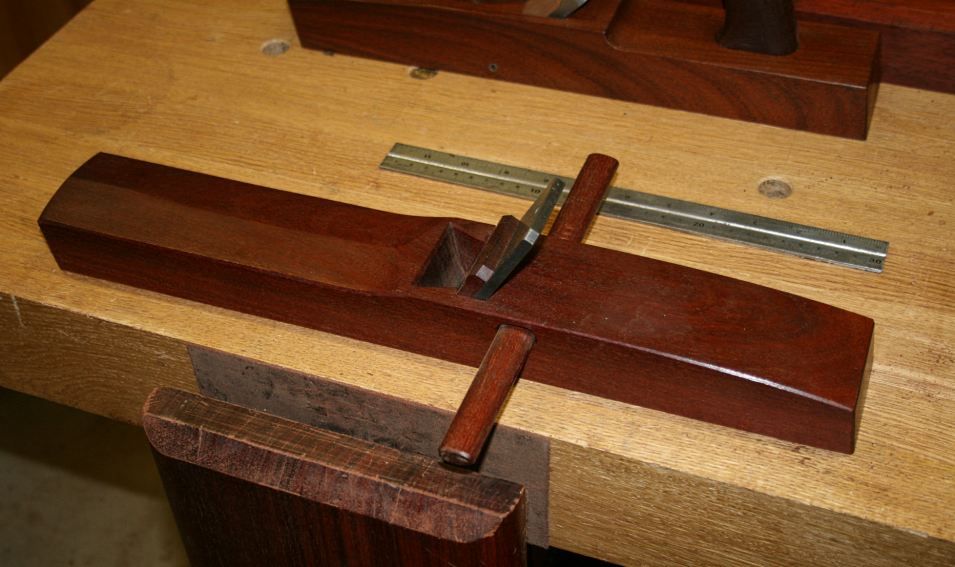
I love the way this plane performs, but I do not enjoy pushing it with the cross bar handle, and instead remove it, and wrap my hand around the body. This is quite uncomfortable as the body is square and the edges cut into the hand.
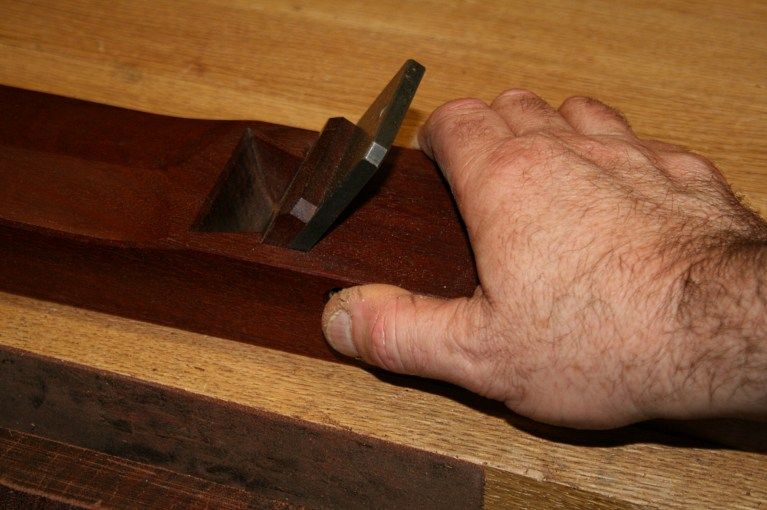
One may be excused for thinking that this plane is for pulling, as with a Japanese plane. The mouth is far back, compared to a Western plane. It is about half way. And there in lies the issues I faced - is there room for a handle, and how will this affect the balance?
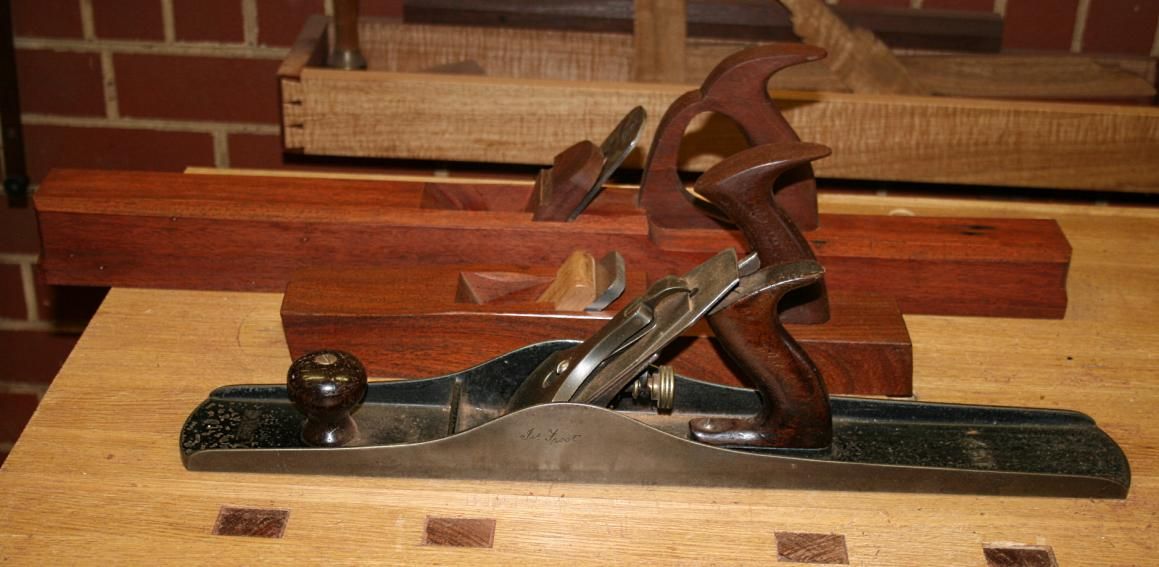
For illustration, here is my 28" jointer and 15" jack plane alongside the trying plane ...
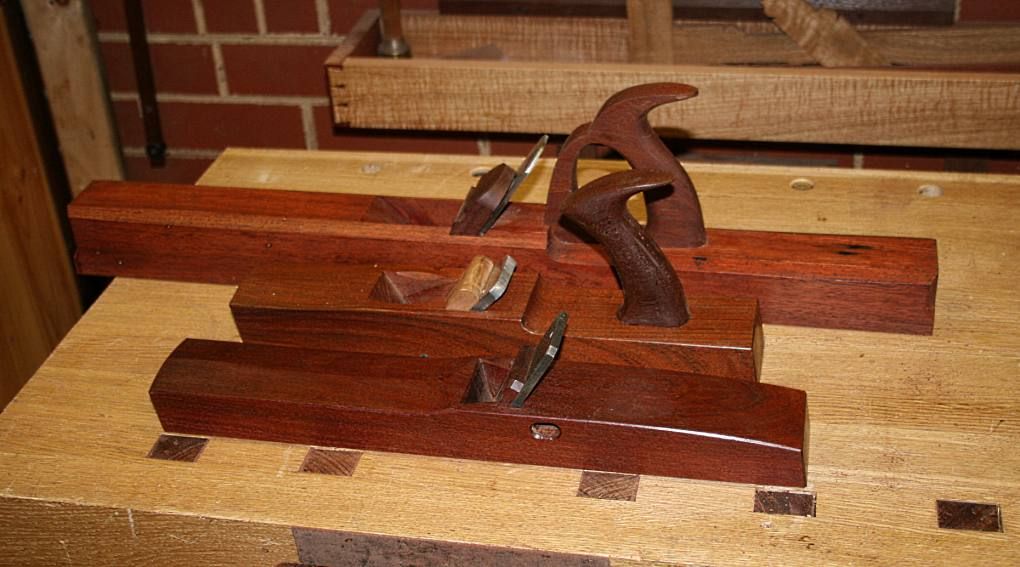
In the picture above I lined up the planes at the rear hand. Now look where the mouths are ...
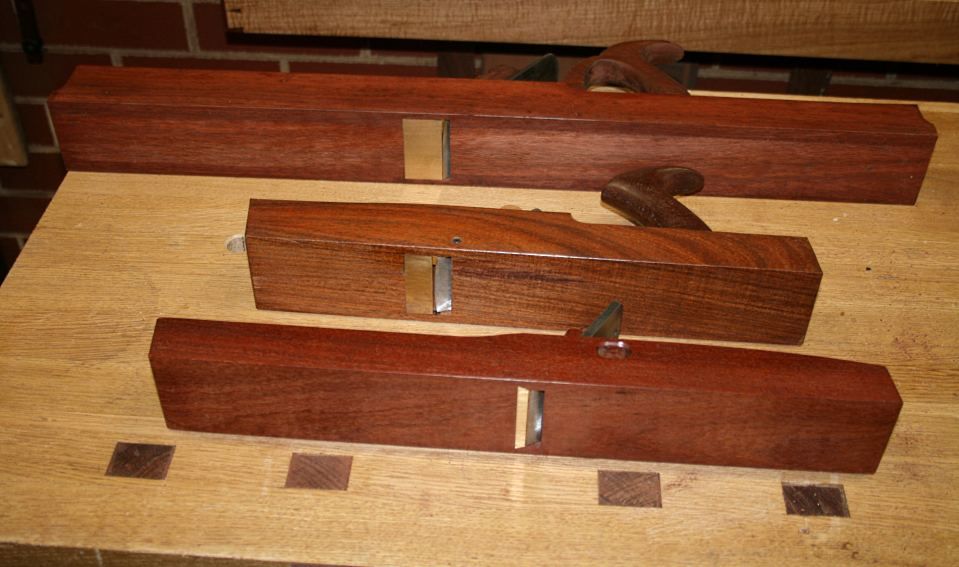
The HNT Gordon is definitely the odd one out - including a Stanley #7 reveals that the others are similar in placement of mouth and handle ...
I did some research looking for information on the relationship of the handle to the mouth. I could find information on the mouth, but not where the handle should be placed. I do know, partly from experience, that the further back the handle, the less the control.
One other aspect that could change - probably would change - is the "feel". The reason I like the HNT Gordon planes in that they are low aspect with a low centre of effort. A handle would raise the centre of effort and change the nature of the plane.
The only reason I was prepared to go ahead was that the Trying Plane was stuttering into disuse as I now found it uncomfortable. And yet it worked so well.
So I built a handle. The white lines on the plane body indicate the position where my hand usually grips.
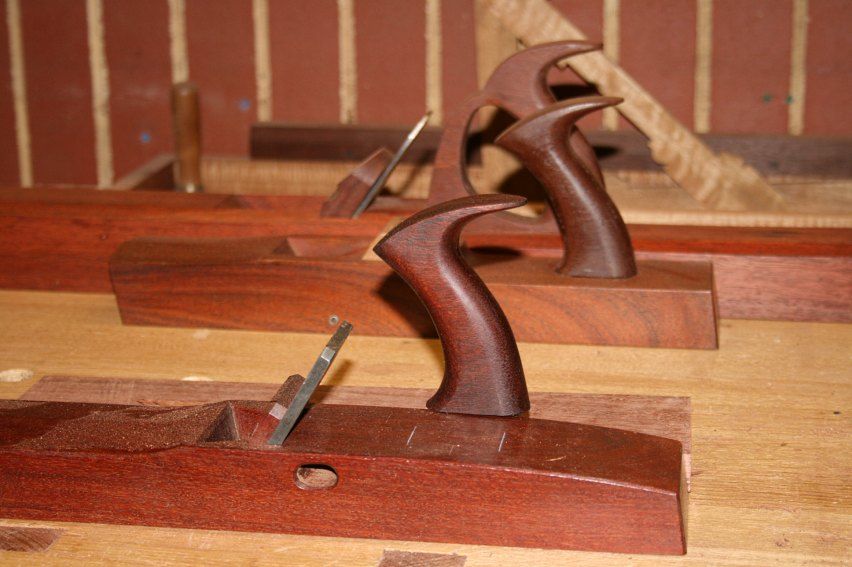
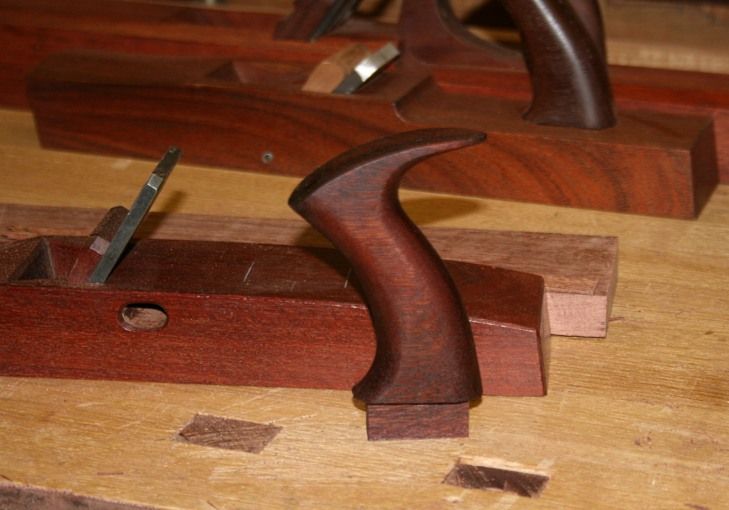
The body was morticed ...
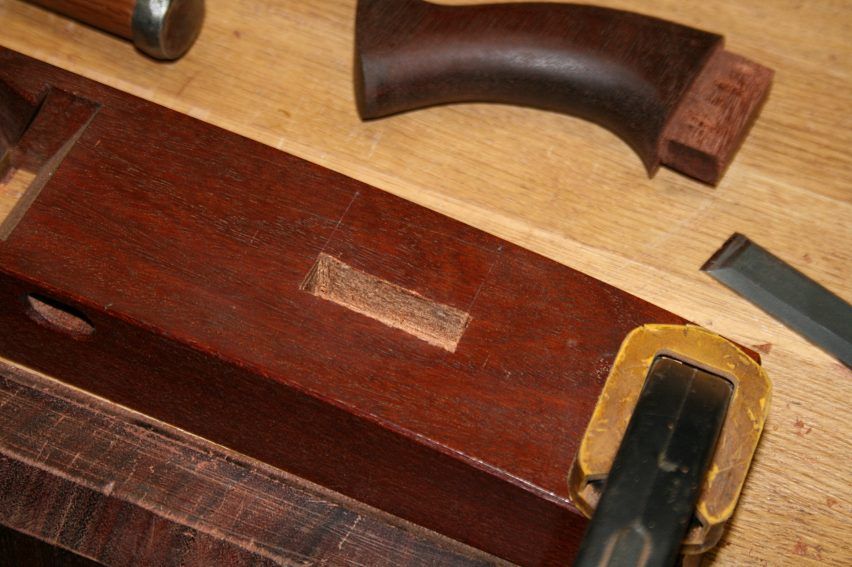
And the handle was epoxied in. I figure that epoxy is reversible with heat.
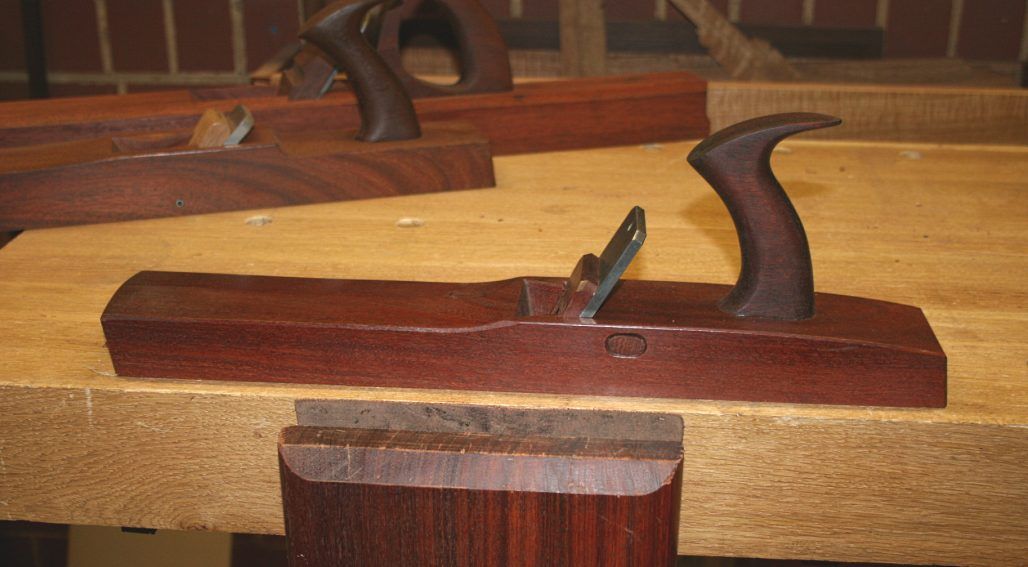
There is enough room to swing a plane hammer (this was not by luck!  ) ...
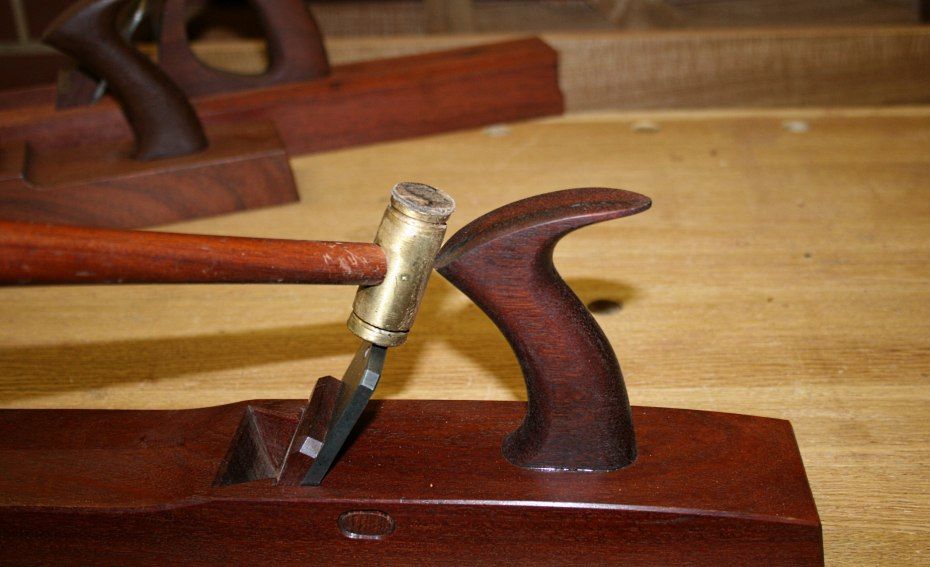
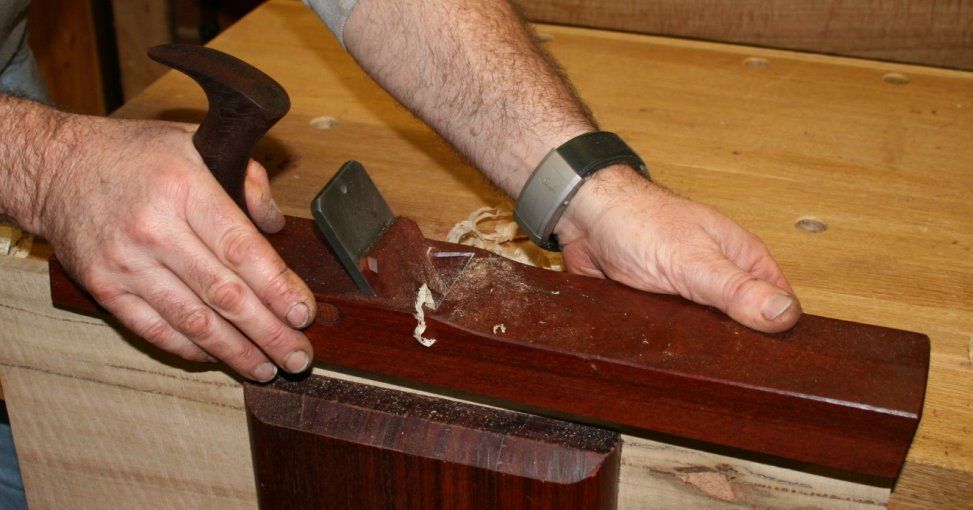
Trying out the new trying plane (ouch! Sorry!) ...
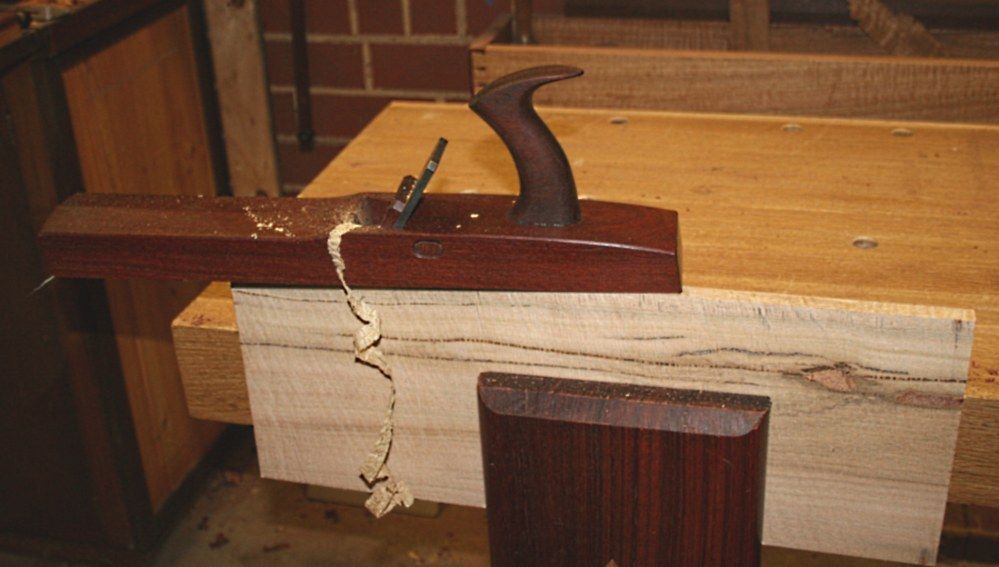
The handle is a good size, and fits my hand perfectly ...
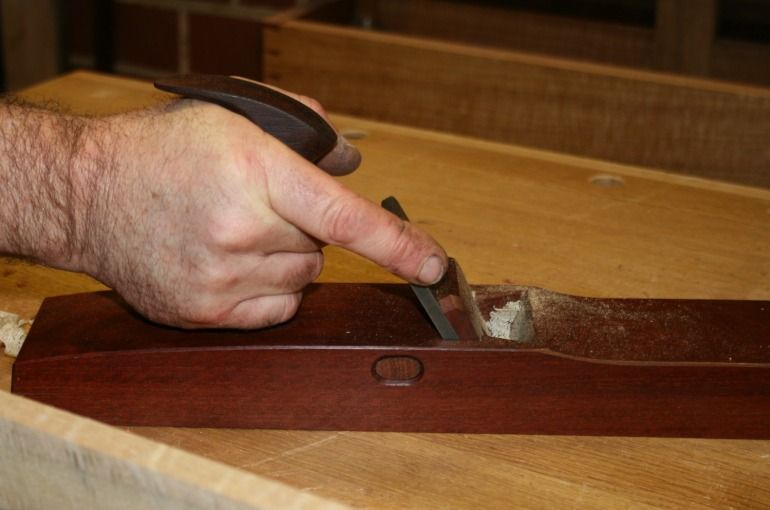
How does it feel? In a word, different. A little squirrely at first, then I became used to this and it was solid. But definitely different. The higher centre of effort is noticeable. The performance, however, has not changed - still fantastic.
I did find one other way to hold the plane, and that was to use the handle as a hook for the crook of my hand. This restored the low centre of effort.
Any thoughts?
Regards from Perth
Derek


