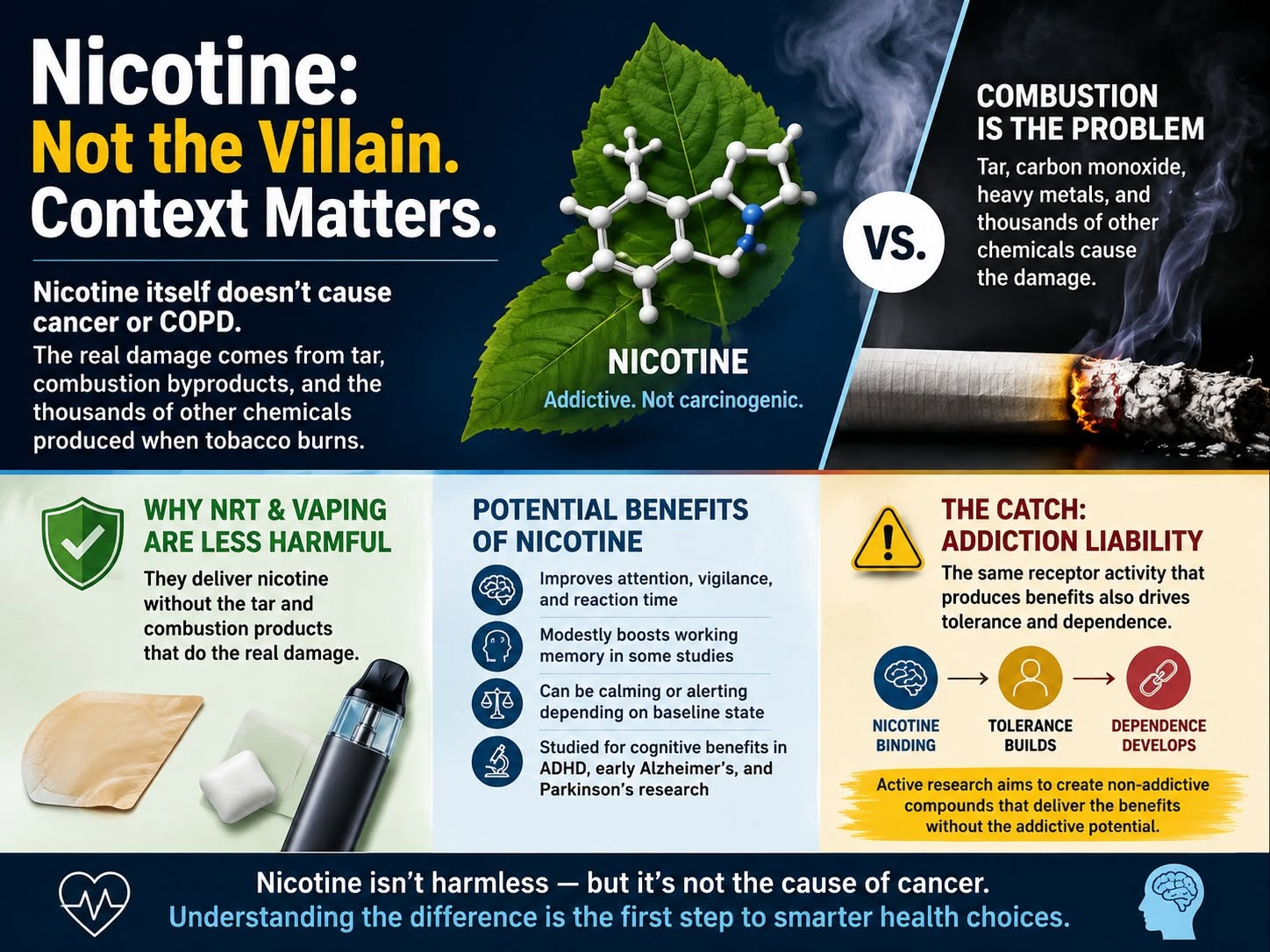
Many people assume nicotine itself causes cancer and COPD. It doesn’t — that damage comes from tar, combustion byproducts, and the thousands of other chemicals produced when tobacco burns. Nicotine is the addictive component, but it’s pharmacologically closer to a stimulant than a carcinogen. Its main direct health effects are cardiovascular (raised heart rate and blood pressure).
This distinction isn’t fringe — it’s why nicotine replacement therapy (patches, gum) and vaping are considered significantly less harmful than smoking cigarettes: they deliver nicotine without the tar and combustion products that do the actual damage.
Nicotine also isn’t without potential benefits. Research has shown it can:
- Improve attention, vigilance, and reaction time
- Modestly boost working memory in some studies
- Produce calming or alerting effects depending on the person’s baseline state, due to its action on multiple neurotransmitter systems (acetylcholine, dopamine, norepinephrine)
These effects are notable enough that nicotine has been studied as a potential cognitive aid in ADHD, early Alzheimer’s, and Parkinson’s research — though it hasn’t become standard treatment.
The catch: the same receptor activity producing these benefits also drives tolerance and dependence. That’s the real, well-documented downside — not cancer risk, but addiction liability. This is why there’s active research into non-addictive compounds that target the same receptors, aiming to isolate nicotine’s cognitive benefits from its addictive potential.


