[Continued from my earlier post on the first half of our recent trip to Panama and Costa Rica, see below.]
On my birthday, February 2, after our lovely few days in the Volcan Baru region of Panama, we returned our rental car in David and hired a young dude with a fancy Chevy pickup truck to haul us to the Panamanian border crossing town of Paso Canoas, where we literally walked across the border into Costa Rica, with all our luggage, in the sweltering heat, after waiting in line for about an hour to get our exit visas stamped. The border crossing area was a madhouse of trucks, buses, and people of every description toting a bewildering array of stuff.

We cleared Costa Rican immigration and hopped on a bus to Uvita, about 100 miles up the coast via the Panamerican Highway. The bus was modern looking, but the bathroom was pretty bad, and the overhead TV screens were blasting a horribly stupid movie that I suppose was intended to be comedy, but which was really just obnoxious, and loud. We had one pit stop, near the top of the Osa peninsula, where we stocked up on plantain chips, a regional delicacy.
When we arrived in Uvita, we picked up the rental car we had reserved in advance, which turned out to be a Rav4 exactly like the one we had just dropped off in David. Car rental is very expensive in Latin America because of all the insurances you are forced to buy, but there is no good alternative if you want to explore the country.
One major difference between Costa Rica and Panama is the condition of the roads. In Panama, where the country’s infrastructure is heavily subsidized by the Canal revenues, the roads are *excellent*, even in remote places like Boquete. Costa Rica, on the other hand, has the worst roads I’ve ever seen. Cars take a terrible beating there. By the end of our week in Costa Rica, our trusty Rav4 was covered with dirt and the rear bumper had to be reattached with baling wire.
Besides getting away from the Pennsylvania winter, one of the main reasons Candy and I went on this vacation was so we could look for an affordable vacation home. From our earlier trips to Costa Rica, we knew we wanted to focus on the area around Ojochal about 12 km south of Uvita, where the hills rise rather steeply from the sea, offering wonderful ocean views. There is also an international expat community in that area, along with excellent restaurants and markets. We stayed for four days in a fancy home that we rented in a gated community on one of these hillsides, and used it as our base of operations for day-long side trips into the neighboring hills and valleys.

We actually found a couple homes and building lots that we thought might work, but we finally realized that the tropical heat near the coast was going to be oppressive, not to mention that these lower elevations are home to Costa Rica’s 28 species of poisonous snakes as well as crocodiles in the shallow rivers and coastal flats.
March and Steph were looking for land where they could start an organic farm, which meant it needed to be at altitudes over 1,000m above sea level, where year-round temperatures were temperate enough to raise vegetables. They also wanted property that was high up against the cordillera, where the streams and rivers run free of pesticides and animal wastes and there is no spraying of herbicides and pesticides by coffee farmers and livestock operations. It turned out that, in Costa Rica, the country with the world’s highest pesticide usage per hectare, finding pristine agricultural land is a tall order. But we sure had an interesting week exploring the outer reaches of civilization, up around the Chirripó region, the highest mountain area of Costa Rica.
We checked into a hotel called El Pelicano, north of the village of San Gerardo de Rivas, for the next several days, while exploring the surrounding countryside. Our hotel was perched on a hillside high above the winding, dusty road, with a commanding view of the spectacular Rio Chirripó valley.

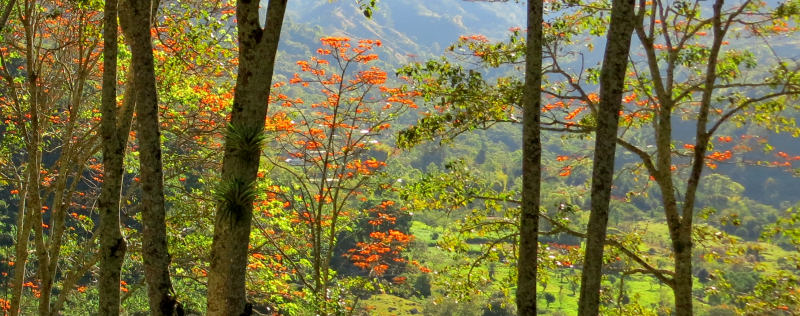
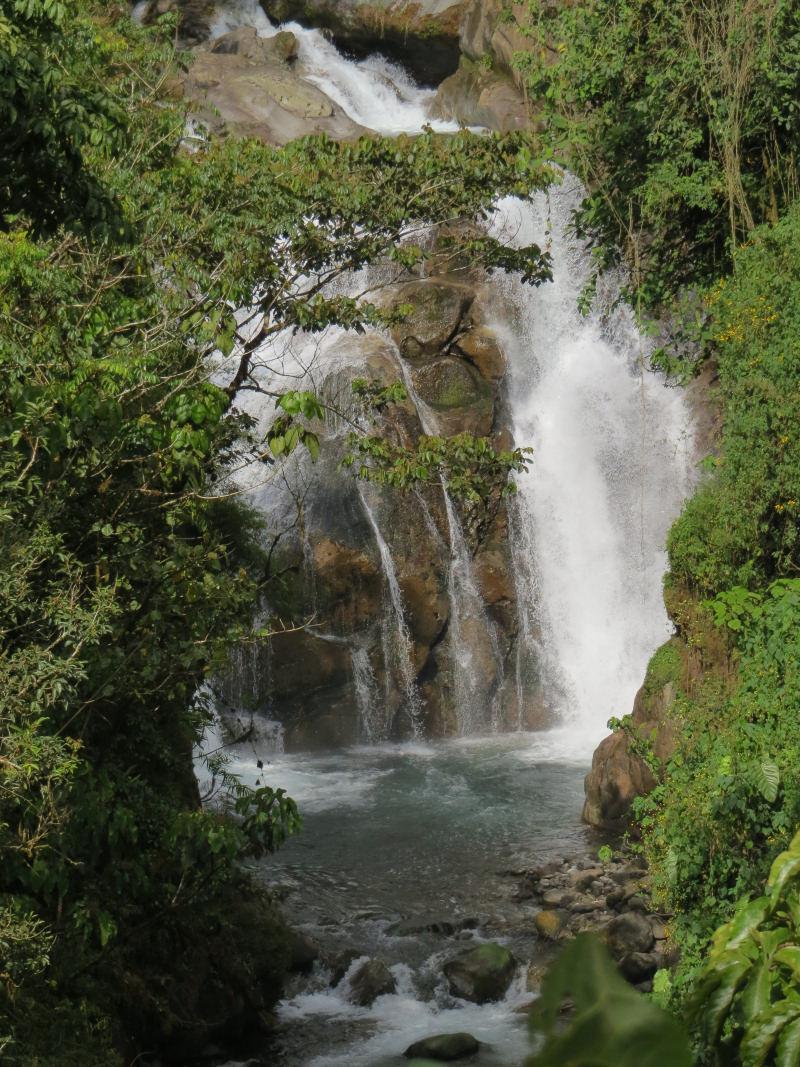
Another highlight of our stay in the mountains was our two trips to Cloudbridge Nature Preserve, and some of the finest hiking on the planet, with spectacular waterfalls, gorgeous views, and an immense variety of plants.


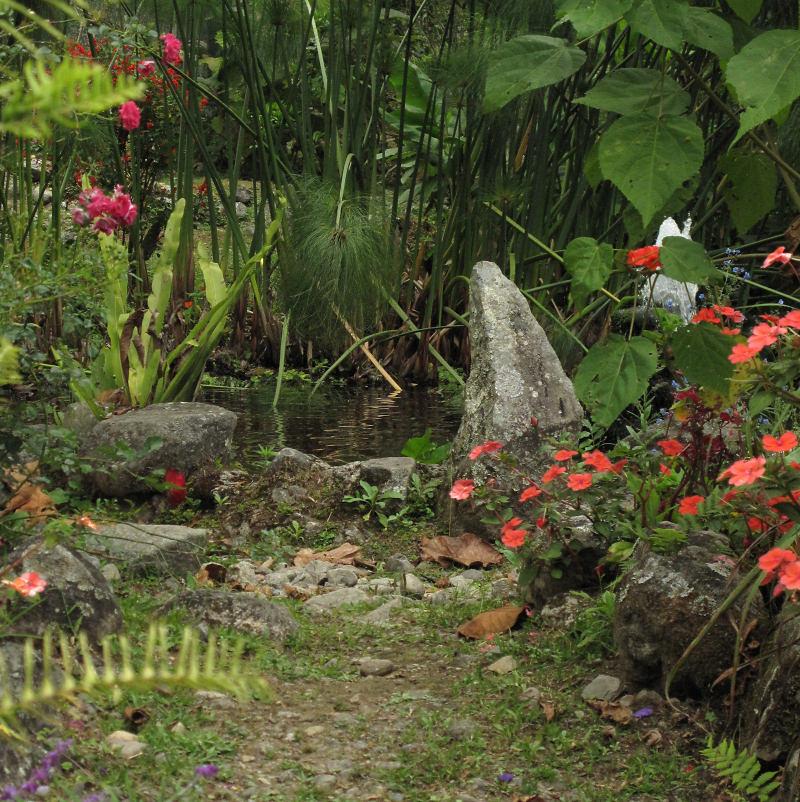
We did find one farm that was to die for, 90+/- acres with steep hillsides rising hundreds of feet up the mountainside, a banana plantation, scoress of avocado trees, two aerated ponds for aquaculture, sheep and goat pens, a large stone house, a guest house, beautiful rock-rimmed raised-bed gardens planted with asparagus and cabbage, covered gardens with lush lettuce, broccoli and other veggies, and a little river cascading through it!



The only trouble was that it didn’t have a clear title. Costa Rican property boundaries historically were essentially handshake deals, determined by acclamation of the neighbors, not by surveys or deeds or titles. These innovations have only begun to take hold in recent years. To obtain a clear title, the owner(s) need to get all the surrounding property owners to sign off on boundaries, then the application must be processed by a single, overworked bureaucracy in San Jose and must be approved within three years or else lose its place in the queue and have to start the process over.This farm’s title has been pending for about three years, with no perceptible progress, scaring off at least three potential buyers, including us. Too bad, because if we had to ride out the apocalypse, this is a place we wouldn’t mind doing it, off the grid, with endless supplies of water and food.
We were due to return to Newark on Friday, February 8, but the great blizzard of 2013 happened to occur on that very day, and over 4,000 flights into the New York region were cancelled. Ours was among them, so we had to wait until the following Tuesday to make our way back to snowy New Jersey and the rest of the winter that wouldn’t quit, stocked up with enough photos, coffee and memories to last a long, long time.


