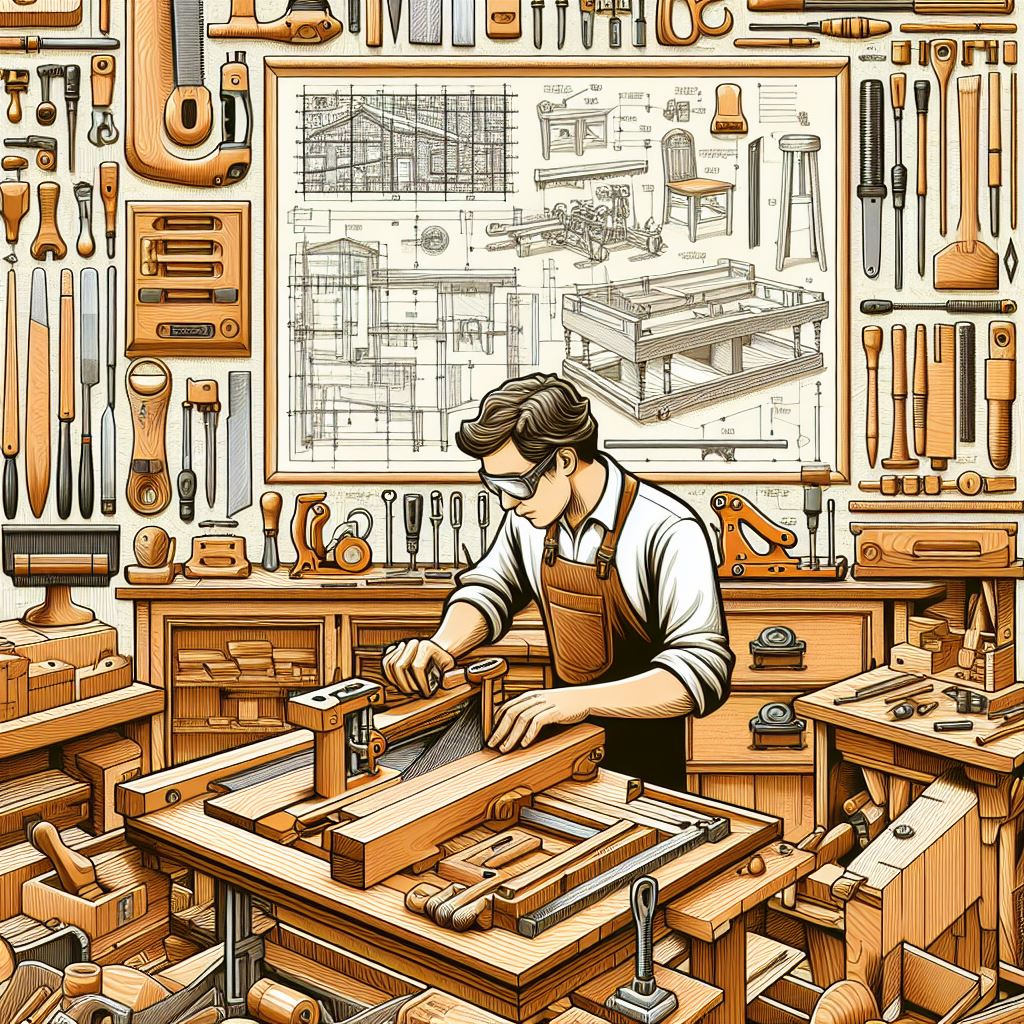
For over half a century, woodworking magazines have published a relentless stream of project plans-for everything from the simplest geegaws to the most complex case pieces. Someone must be using all these plans, but who, and why, and how? I recently posed this question to our web site visitors… “Do you design the things you make, or do you work from others’ plans? Why?”
“I like the challenge of designing it myself and seeing the result come alive.”
“I use patterns (plans) for my projects because I am a novice. But i often alter the pattern, trying different things so that I can find what I like to do and what looks good.”
“Every set of plans that I ever bought had at least one major error which made me cut pieces over. Now, I take my ideas from pictures and take creative license with the details.”
“The upside of not using plans is that I build unique things; the downside is that I spend as much time designing a piece as I do building it. A good design book, like Jon Arno’s The Woodworker’s Visual Handbook, helps with the design standards.”
“I’ve never been able to make anything exactly to plan. I invariably botch a cut and have to modify the plans to accommodate the botch.”
“When a particular piece of wood suggests a use, I’ll develop the rest of the design to complement it. Nothing is ever fully worked out beforehand, so the work evolves during the making.”
“I’ve filled 20 sketch pads with drawings over the years. I doodle until something strikes me, then I develop the idea further.”
“I use CAD software, then I print to scale and build the item. This allows me to check final results in advance, to see that everything fits before a cutting tool goes into the wood.”
“I’ve never used someone else’s plan, but I’ve studied hundreds of them in a effort to learn. I keep a stack of pictures, sketches and CAD drawings for possible future projects.”
“As a machinist, I’ve usually worked to drawings where no deviations were permitted. I often rebelled at such constraints and redesigned weak or overly expensive engineering. On the other hand, perfect freedom can equal perfect confusion; too many choices and opportunities.”
“I usually start with an idea from a photo then redesign it to fit a space or function. The new piece becomes a hybrid of someone else’s Initial idea. Is it true there are no new ideas?”
“In making reproductions, I’ve found that published plans take great liberties with the original designs. So, I’ve often made museum trips to see how the originals were constructed.”
“When I started, plans helped me concentrate on skill development, techniques, learning ‘standard’ measurements, etc. Now I plan the items myself.”
“I design my own projects from photos, plans, and ‘shopping’ at antique stores. Drawing many details forces me to think through all aspects of the project and eliminates many of the goofs before they are etched in sawdust.”
“I see furniture building as problem solving: First, design the solution; then get on to the aesthetics. Only once did I try to follow someone else’s plans, and I failed. Must be the human trait of’improving’ the existing.”
“Dream, draw, make some dust and, most importantly, enjoy!”
What are your thoughts on this? Add your comments below!