
The Mark Twain Tree
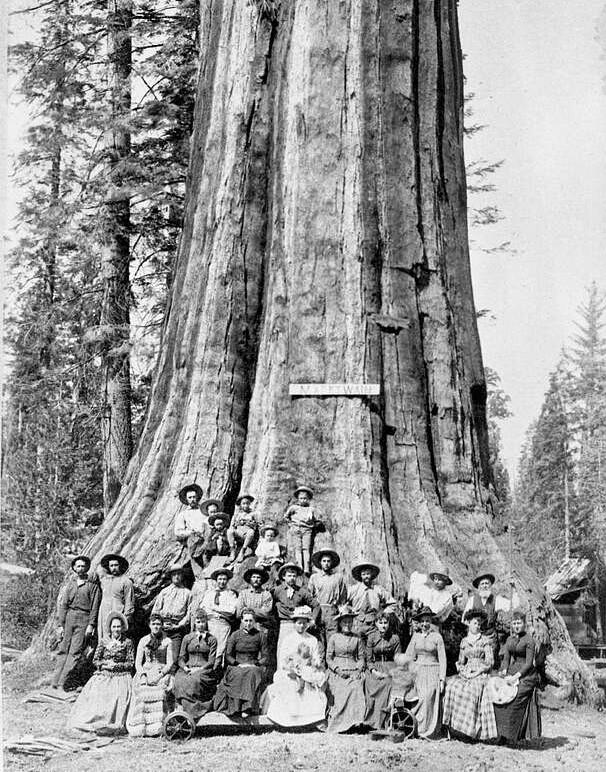
Overview
Species: Giant sequoia (Sequoiadendron giganteum).
Location: Big Stump Grove (now part of Kings Canyon National Park), Sierra Nevada, California, USA.
Name: Named after the American author and humorist Mark Twain.
Historical significance: Selected and cut down in 1891 to demonstrate to the wider public that giant sequoias of extraordinary size really existed.
Physical attributes and age
Height: Approximately 331 feet (about 100 meters) tall.
Diameter: Roughly 16 feet (4.8–4.9 meters) at the base.
Age when felled: About 1,341 years.
Growth ring record: Annual growth rings in the museum cross-section are annotated with significant historical dates, reflecting its long life.
Felling and transport
The tree was cut down over 13 days by lumbermen Bill Mills and S.D. Phips with help from Barney and John Lukey.
Portions of the trunk were transported and displayed at major museums.
A section was sent to the American Museum of Natural History in New York.
Another segment went to the Natural History Museum in London.
The cost of transport and exhibition was covered by Collis P. Huntington, a key figure in the Southern Pacific Railroad.
Purpose and impact
At the time, many people doubted such immense trees existed, since access to remote groves was difficult. The museum sections were intended to conclusively demonstrate the sheer scale of giant sequoias to the public.
The event occurred during an era when large sequoias were still being logged before full conservation protections were enforced.
Legacy and present day
Today, only the stump remains at the Big Stump Picnic Area/Big Stump Trail within Kings Canyon National Park, where visitors can still see the site of the felled tree.
The stump and trail are maintained as historical reminders of early logging and evolving attitudes toward natural wonders and conservation.