Identify This Wood! [Jan 2026]
Edited #1

Knowledge You Can Build On — Est. 1998

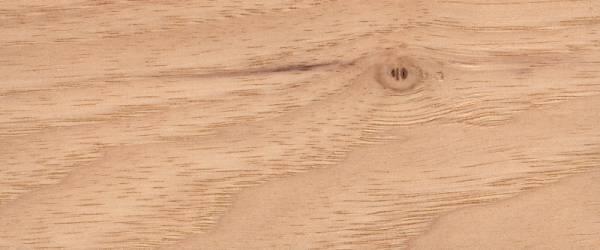
Hard to tell from such a small sample, but I'll guess Red Oak.
I have no idea, but I'd guess you borrowed this from another forum. Anyway, I use ChatGPT for a lot for things I don't have a clue about, so I tried it using the photo asking it to ID the pith of the embedded stem. Here are the results, but are they meaningful?
https://chatgpt.com/share/6970158c-56d0-800d-a95c-8e2b51fc58ec
Huh....
I would guess pecan, but as Jim noted, the pic is limited. Could be lots of woods.
@Dale Stansbery,
I obtained this image from Woodfinder and assumed it was appropriate. However, AI did not identify it as what it was intended to represent. Rather than speculate further, I will post a few additional images that I know are accurate and more representative.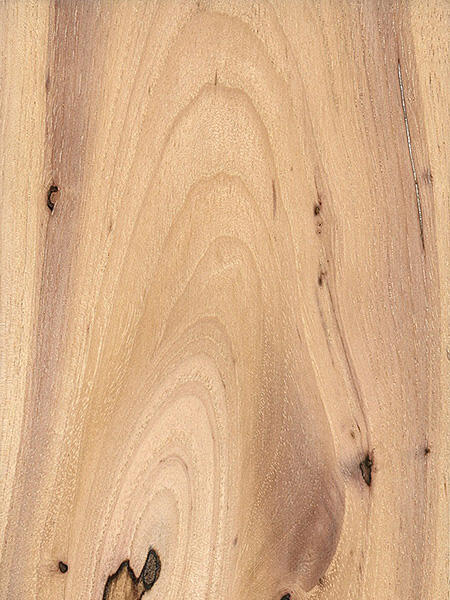
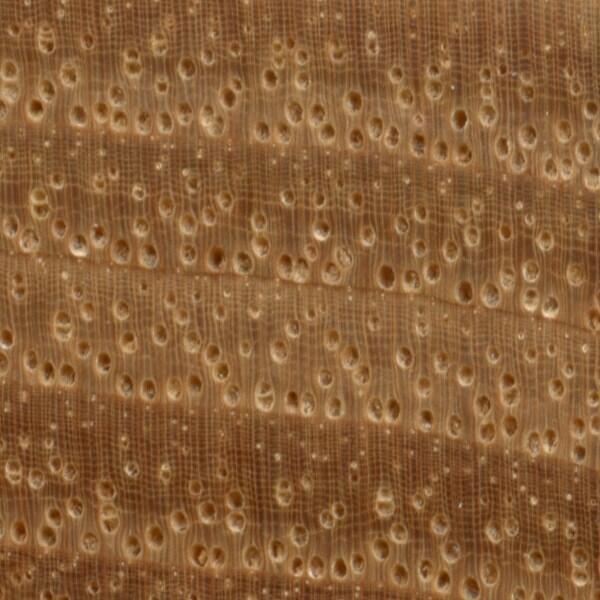
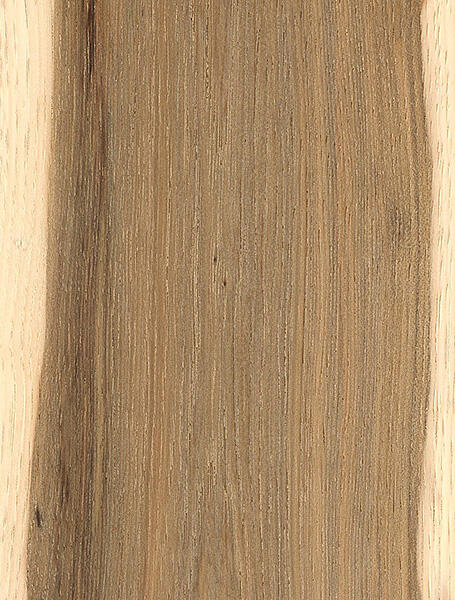
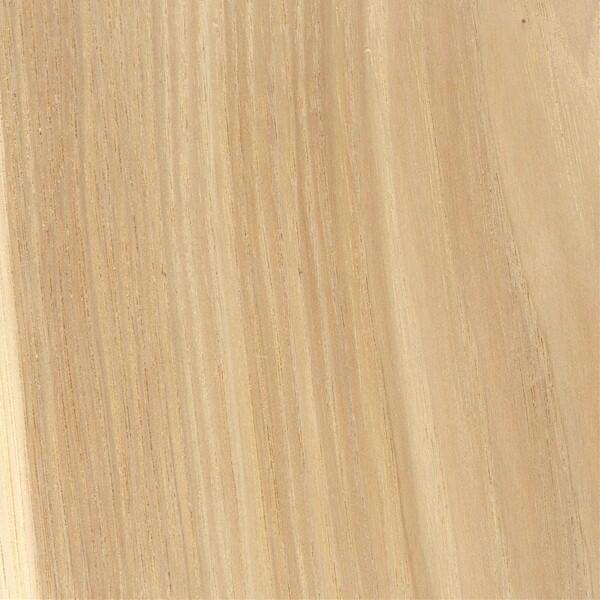
Sticking with pecan.... or hickory, pretty much the same thing I've heard, at least in commercial lumber. Only pecan I ever cut up looked like hickory but was not as hard and dense.
I aske ChatGPT about hickory/pecan.
"Short answer: very unlikely.
Here’s why.
Hickory & pecan (Carya spp.) pith characteristics
Hickory and pecan have very small, often barely visible pith that is:
Tight and pin-point sized
Frequently off-center
Sometimes crushed or discontinuous
Much smaller relative to twig diameter than what’s in your photo
On finished lumber, hickory/pecan pith usually looks like:
a hairline dot, or
a tiny dark speck that’s easy to miss
They do not normally show a clearly defined, round pith like the one in your image.
What your photo shows instead
Your embedded twig has:
A clearly visible, round pith
Uniform shape
Proportionally large compared to the twig diameter
No chambering or collapse
That combination strongly points to diffuse-porous species, not ring-porous woods like hickory or pecan.
Ring-porous vs diffuse-porous (key distinction)
Hickory / Pecan → ring-porous, tiny pith
Maple / Poplar / Birch / Willow → diffuse-porous, visible round pith
Your example matches the second group.
Bottom line
While anything is possible in theory, hickory or pecan would be a very poor match for the pith shown.
From an identification standpoint, they’re essentially ruled out.
If you want to be 100% certain, a clean end-grain photo of the board would settle it immediately—ring-porous hickory/pecan is unmistakable under even a hand lens.
Yeah, maybe.
I don't much care what AI thinks though.
Maybe my idea for a recurring "Identify this wood" topic using images from Woodfinder wasn't one of my shining moments. 
Kinda tough to identify a wood species based on a small image.
The answer BTW for this one is...
Hickory
how did you identify it?
@Dale Stansbery,
I didn't identify it; I copied it from Woodfinder. It has a Wood Library of wood photos, descriptions and sources. My "brilliant idea" was to periodically pick a photo and post it in this puzzler forum.
But maybe that's more frustrating and annoying than fun and educational. A little thumb-sized photo isn't enough to go on in identifying the many types of wood.
What say y'all?
I thought it was ok, fun wise - but then I would think that in retrospect.
Had the wood been something else it would be entirely predictable for me to be bitter and negative about the whole exercise - so I wouldn't blame anyone for taking this opinion with a grain of salt.


