Having recently completed the restoration of the heirloom kitchen/dining table for my son and DIL, I asked Jamie what else I could add to the shipping, since 'why not, its Christmas'. I thought that he might want an entry hall table in the style of the table, but Lauren piped up and suggested a bench for the table. She has this thing about benches at a country table. Anyway, I said 'why not'.
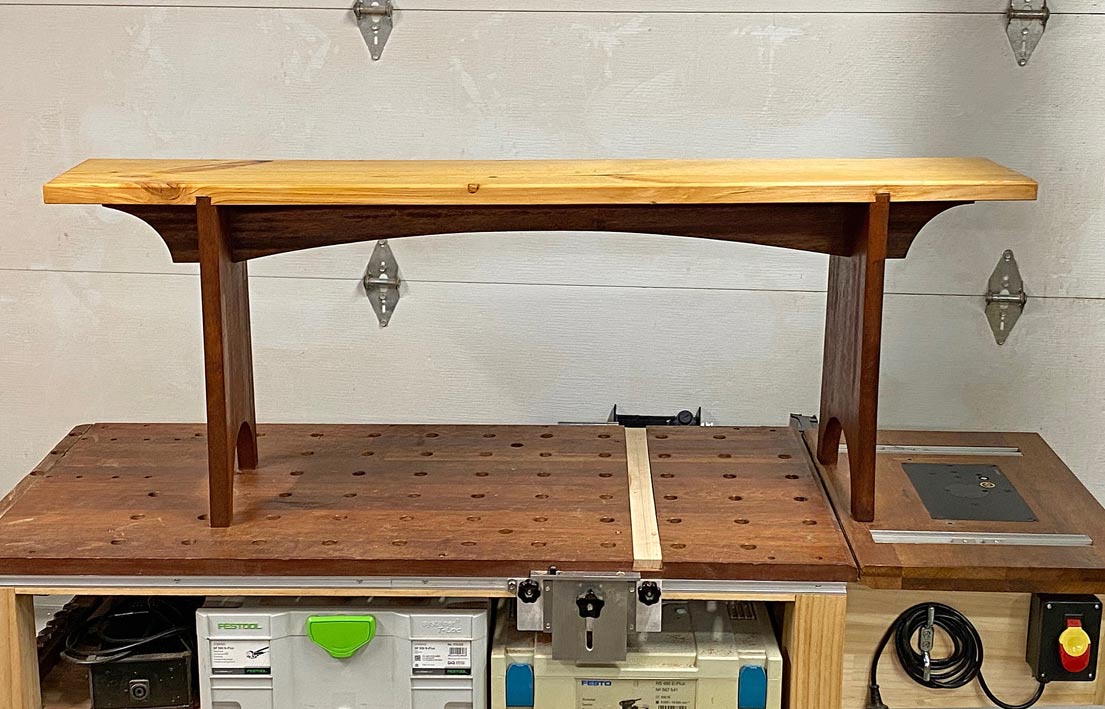
I discovered a decrepit old Pine beam under the wood pile, which could be a reasonable match for the table top when given a little aging. It looked pretty aged as it was, and several repairs were needed to patch knots and cracks. The beam was 260mm wide x 100mm thick and long enough to run the length of the table. When resawn, it was enough for not one but two bench tops 250mm wide x 30mm thick. A panel of laminated Merbau would do for the 48mm high base, and later I will stain it to match the table legs.
The design for the benches was inspired by a few photos, and featured tapered sliding dovetails ...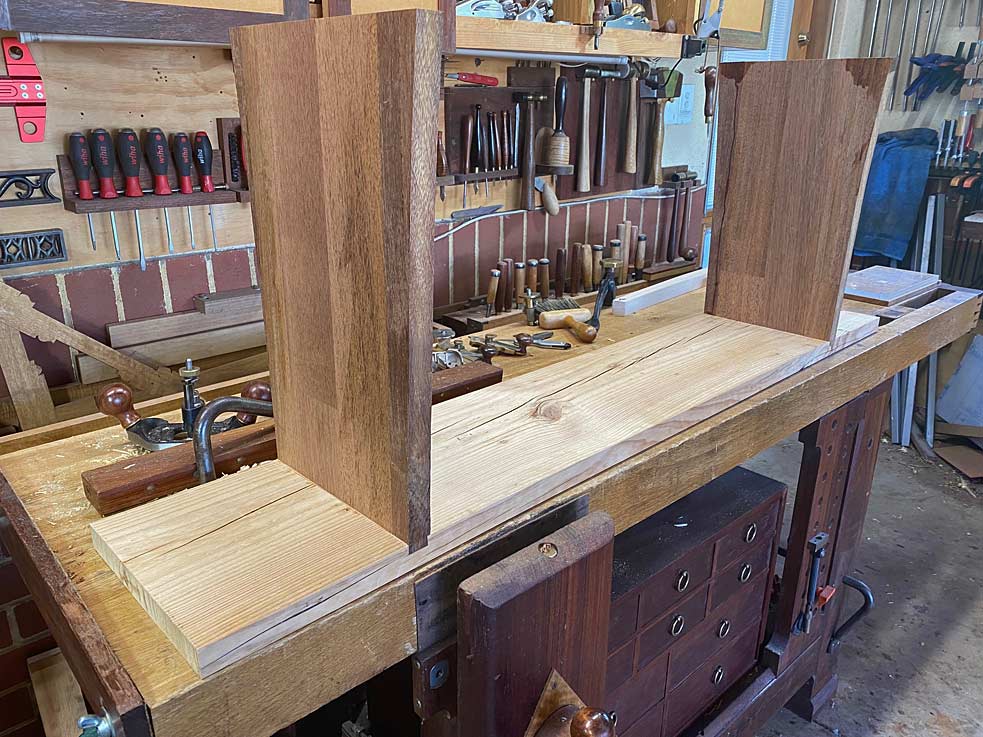
... and interlocking sections. Nothing too complex to build, and this made for a relaxing couple of weekends in the workshop.
The tapered sliding dovetails reminded me of a dovetail plane I made several years ago, which was a simple modification of a Stanley #79 rabbet plane. I cannot take credit for this, which goes to Terry Gordon (HNT Gordon), who used the principle on his side rabbet planes. I though that it would be timely to show this here since others might wish to replicate it.
I start with the male half of the joint, which has one angled side and one vertical side. The main features here are enough of a shoulder (6mm) and enough of a taper (3mm). 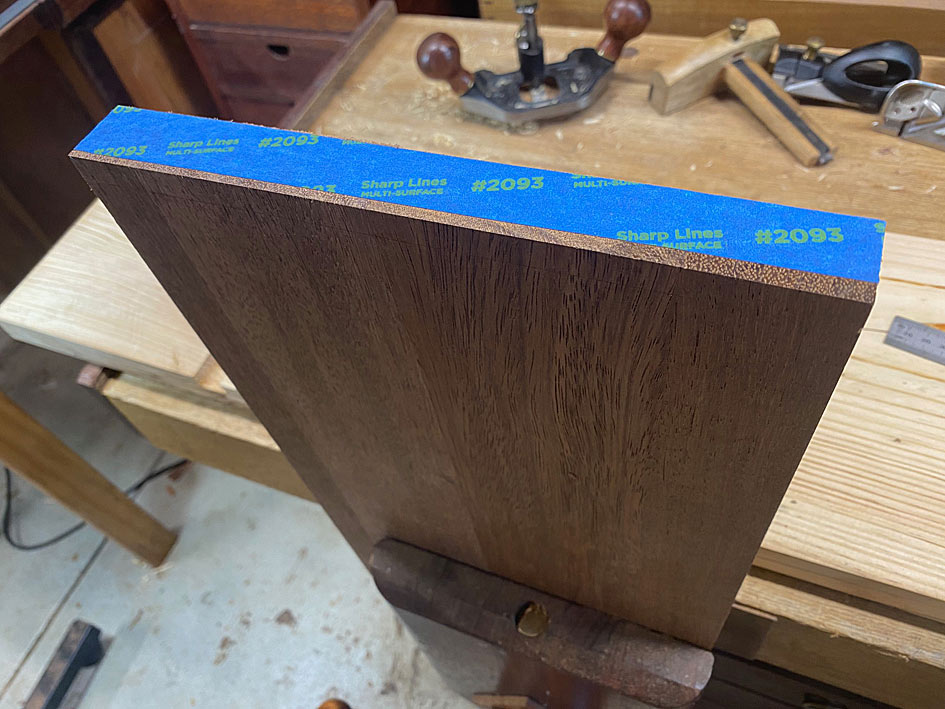
An azebiki saw is used against a vertical fence to cut the square shoulder ...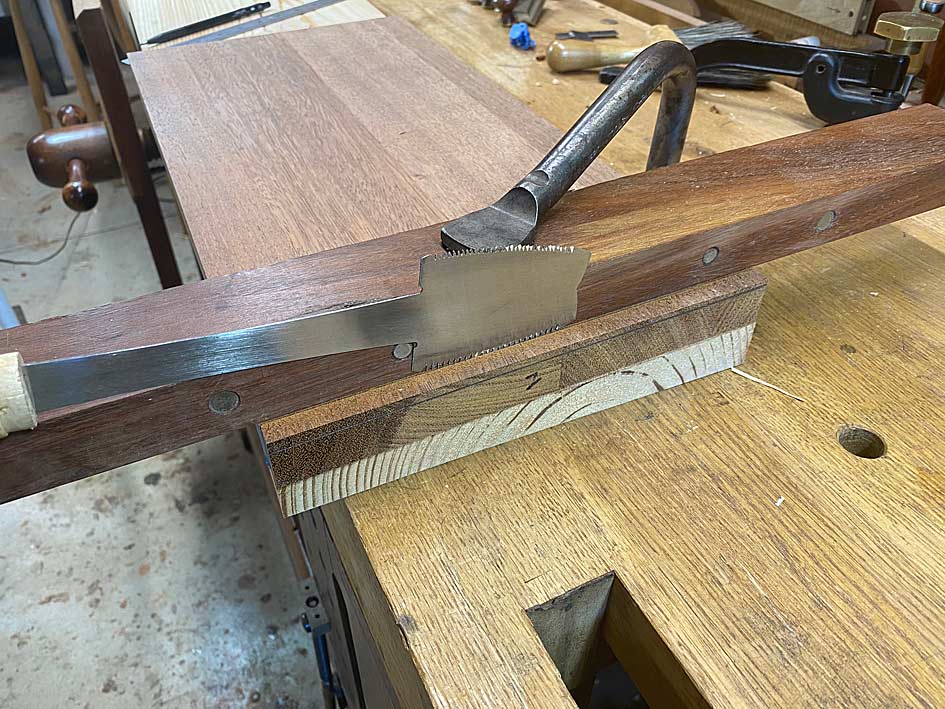
The reason for the azebiki saw is that it has a curved blade, which makes it possible to hold the handle higher up than a standard pull saw (or Western saw), and above the fence.
Once the shoulder is sawn, the remainder is down to the dovetail plane ...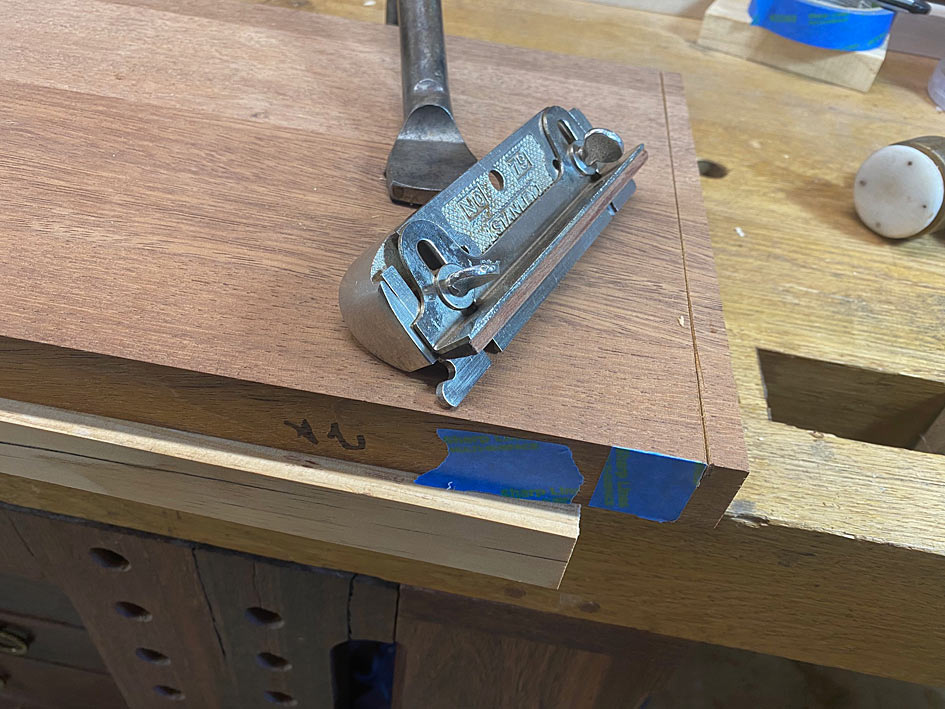
Note that the fence has been modified to angle at a 6:1 ratio. The other advantage of the #79 - which is the reason I based mine on this plane - is that it has two ends and can cut in either direction.
With a sharp blade, it makes very quick work of the dovetail ...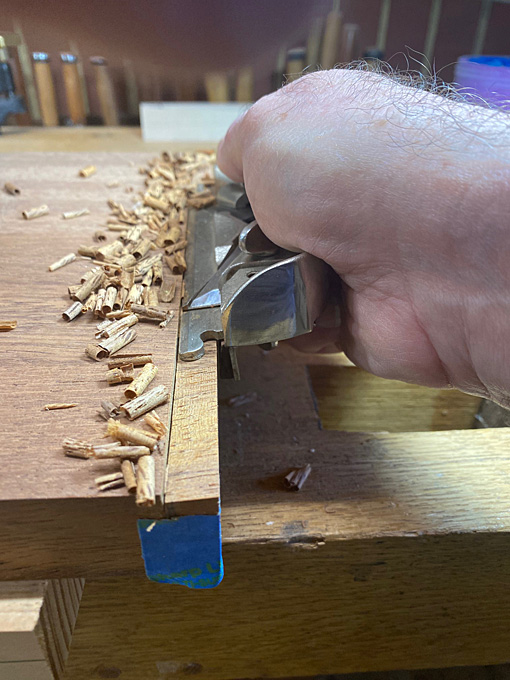
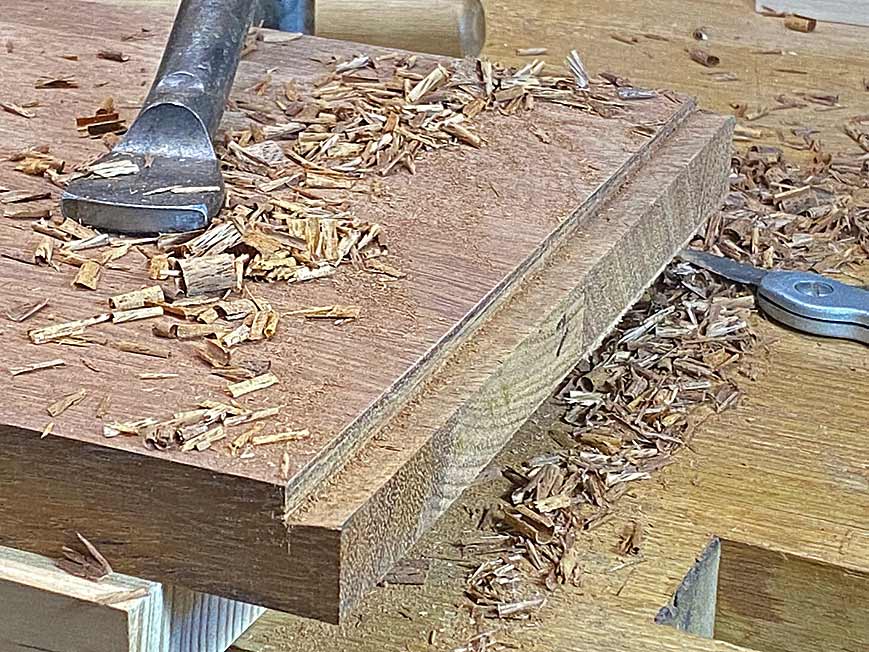
The female side should look like this ...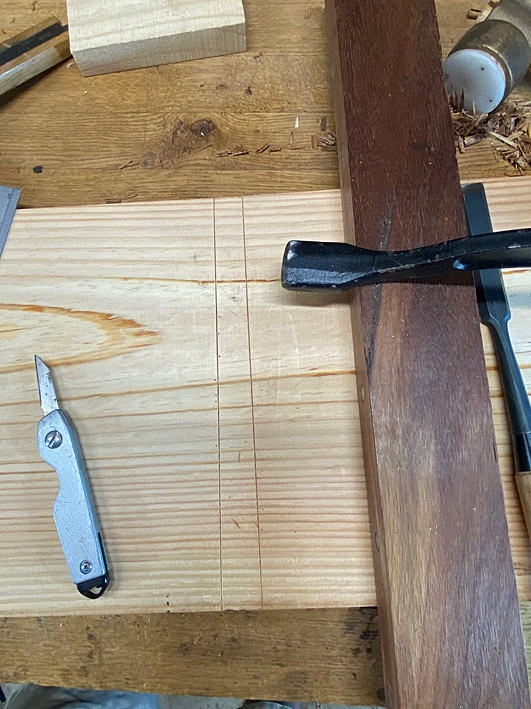
To mark this accurately, start with the squared line, and position a fence against it. Set the dovetail along this ...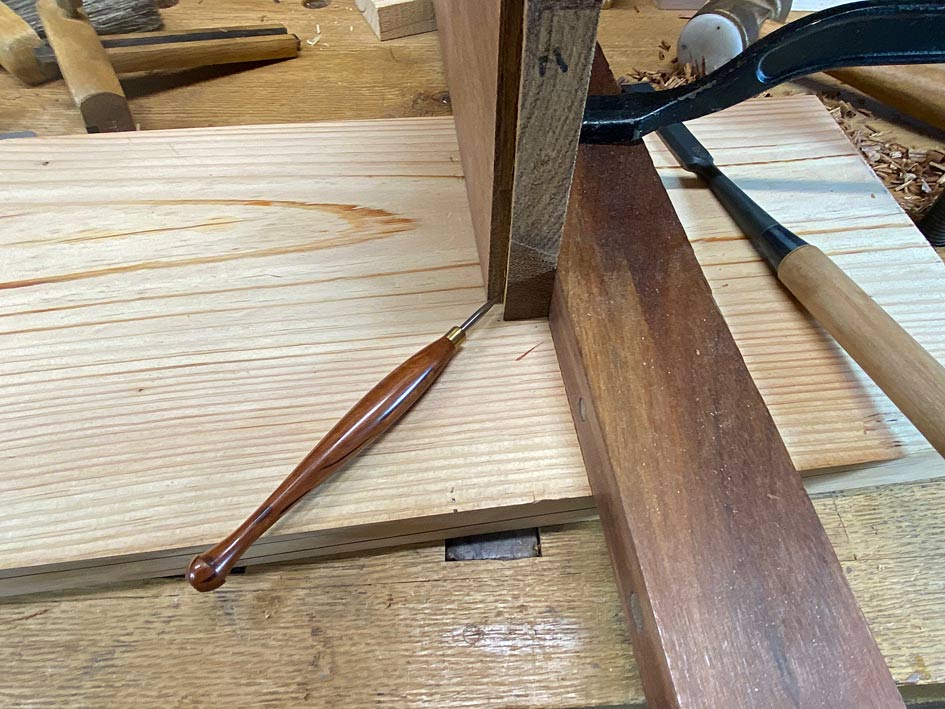
Mark the intersection of the taper at its narrowest position, and drop this to the edge of the board. Repeat for the other end.
Now saw the angle and the vertical, and chisel out. Finish with a router plane (or rout out the waste with a power router and finish with a router plane) ...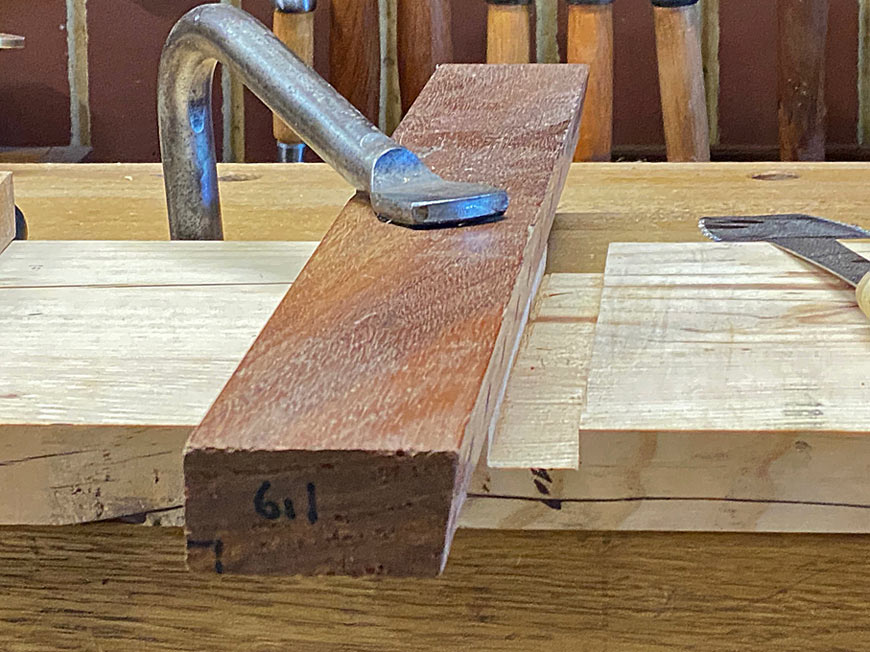
This is the final joinery. Done well, it should go together with a few taps of a mallet ...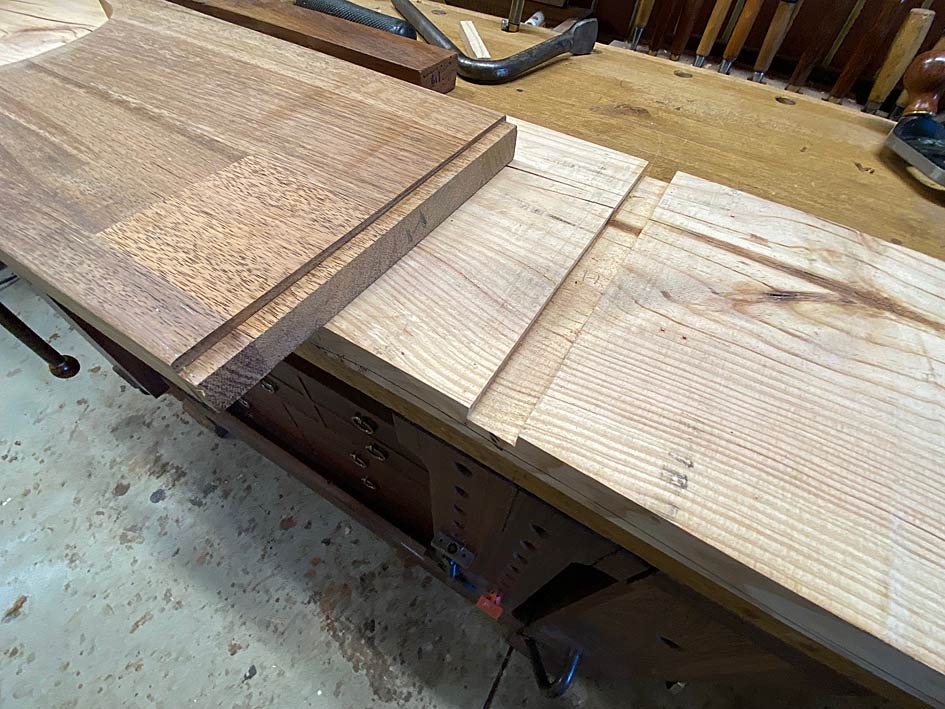
Here are all the pieces for two benches. Note the interlocking sections made of half-laps ...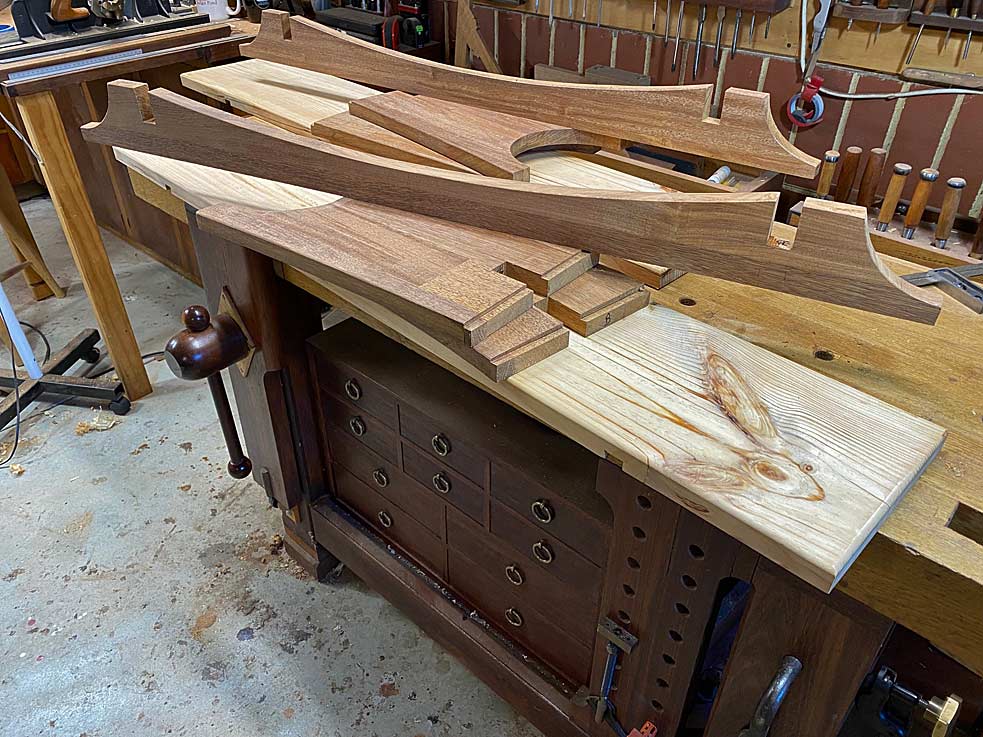
Stained, finished in hard wax oil, and assembled ...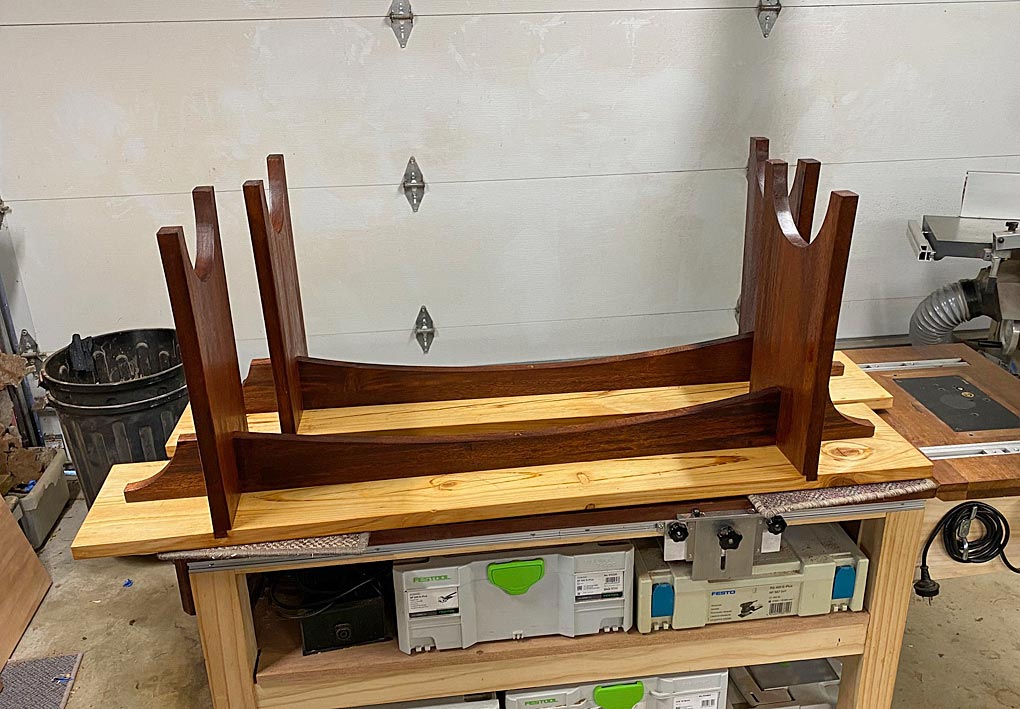
A bench at a table ...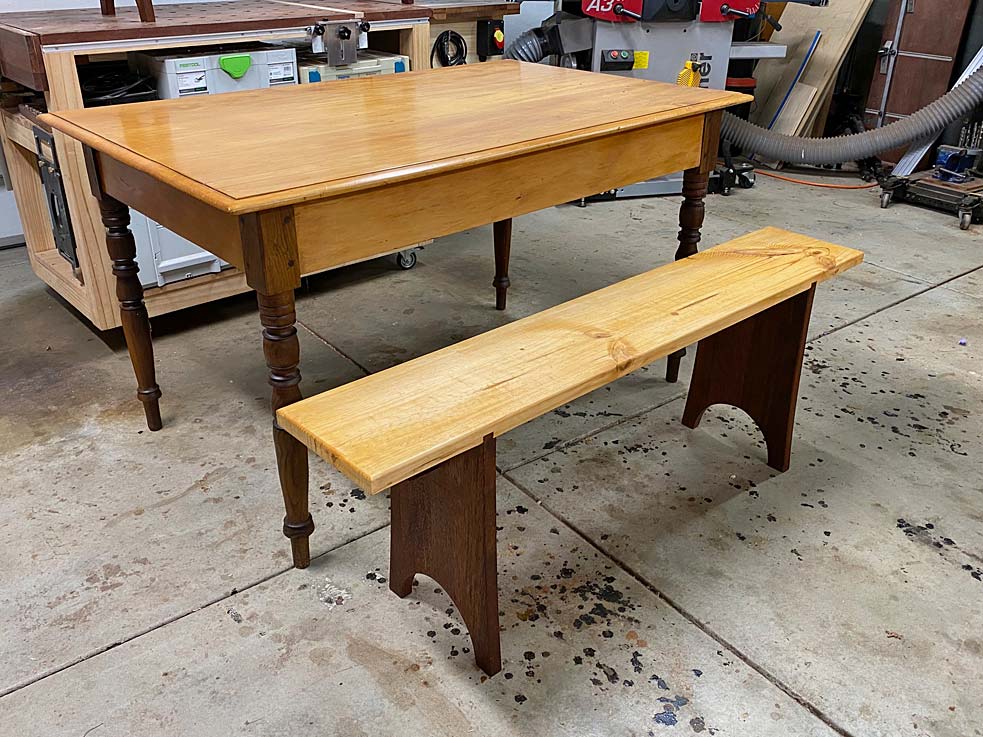
And both benches ready to go ...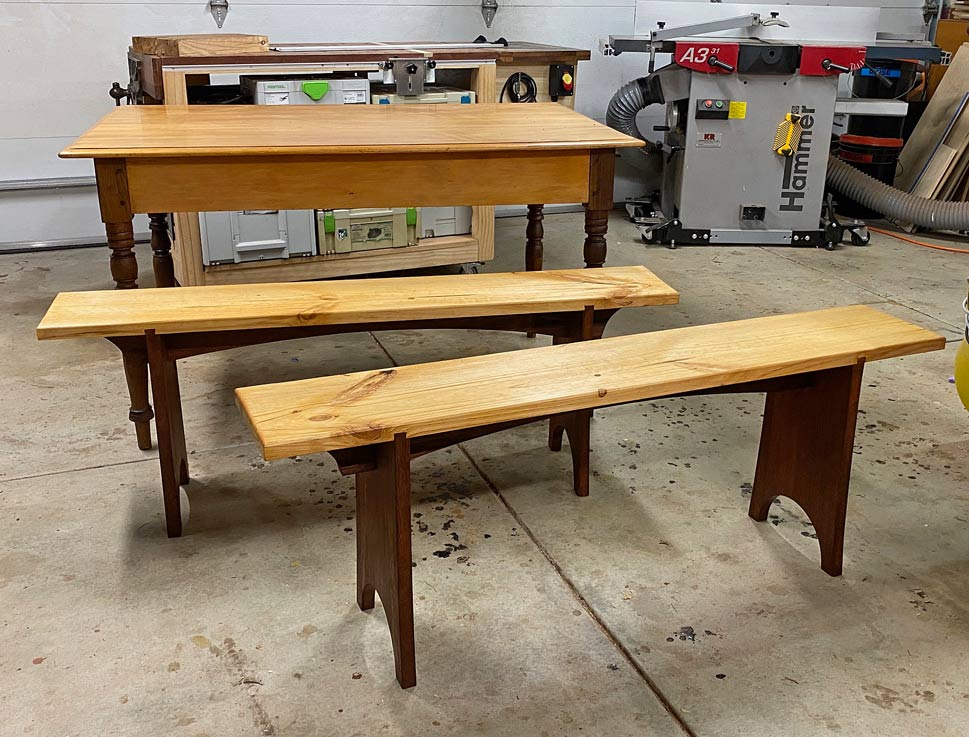
Regards from Perth
Derek
Benches for a table
Posts
Re: Benches for a table
#2Ah!
Re: Benches for a table
#3Derek,
Great work as usual. Thanks for sharing.
Ron
Re: Benches for a table
#4Derek -
Thank you for another great tutorial with pics. Fantastic. I haven't checked this board in quite a while but I'm glad I did this morning.
Two questions relating to your use of the #79: first, how do you affix the 6o wooden fence? Double-sided tape? Glue? Other?
Second - and only tangentially related - one of the blades on my #79 came to me pretty badly out of alignment with regard to the skew angle. I don't have much experience working with skewed blades - and this is such a tiny blade. Any advice on where I could go to learn how to correct this skew and sharpen that blade? The only other skewed blades I have are in old wooden planes and their skews were properly aligned when I acquired them, and because they were old (and thick) blades I could sharpen them free-hand.
Thanks again for posting. Your posts are a real service - to me, for sure - and, I think, to the hand tool woodworking community in general!
Dave
Re: Benches for a table
#5Thanks Dave.
I wrote about the dovetailing plane in 2016, so it is not new: http://www.inthewoodshop.com/ShopMadeTools/SlidingDovetailsWithTheStanley79.html
The auxillary fence is attached with epoxy. This is 1:6 ratio, which is 9.5 degrees.
Regarding correcting the skew, I think the #79 comes in at 20 degrees skew and a 30 degree bevel. A useful aid in correcting and honing this is the Veritas short blade honing guide. https://www.leevalley.com/en-ca/shop/tools/sharpening/guides/111758-veritas-short-blade-honing-guide?item=05M0930
Regards from Perth
Derek


