WoodCentral Forums

Est. 1998 — 27 years of woodworking knowledge

Turning boxes lately

Posts

Turning boxes lately

#1

Joe Fleming

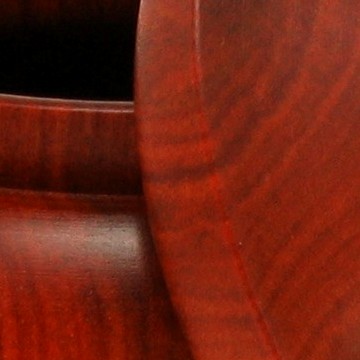
Mark issued a challenge to post some photos.  The challenge for me has been the photos - not the turning.  Here are several piston-fit lidded boxes I've made lately.  In order, Carolina cherry, sugar gum eucalyptus,  sugar gum eucalyptus and cocobolo, ikeawood and cocobolo  (hand-chased threads), hard maple and cocobolo.  The first three are from a 23 year old stash of box rough-outs I discovered in my shop.  The maple comes from Big Monk Lumber.  I have a good supply of cocobolo from the pre-CITES era.  The cocobolo buttons comes from that.

For the curious, ikeawood comes from offcuts of the Ikea furniture that I modified for a friend.  No idea of the species.

Carolina-cherry-box-AAW23-swap-2.jpg
Eucalyptus-box-gift-for-Julie2.jpg
Eucalyptus-cocobolo-box-SWAT23-swap.jpg
Ikeawood-cocobolo-hand-chased-box-1.jpg
Ikeawood-cocobolo-hand-chased-box-2.jpg
Maple-cocobolo-box-AAW23-swap1.jpg

Re: Turning boxes lately

#2

Very nice work, Joe!  I like the shape (the important thing, IMO) of all of them and with the grain added they are beautiful.

Re: Turning boxes lately

#3

Nicely Joe.
I've toyed with the idea of threading , just not sure about the learning curve

Re: Turning boxes lately

#4

Joe Fleming

Hey Mark,  The popular starting point is 16 tpi.  The more coarse they are, the more difficult to learn.  I don't use the auxiliary hand-held tool rest.    There are lots of videos on-line.  Sam Angelo and Kirk DeHeer have really good ones.    Mahoney is really good too, but I haven't seen as much video.  Tight grain wood and harder is best.  Hard maple works well and is readily available.

Re: Turning boxes lately

#6

Mike Stafford

Ikea wood....I like that description.

I was curious myself about what exactly are the woods used by Ikea.  Well, with a little research I found that Ikea most commonly uses pine, birch, beech, acacia and eucalyptus.  But they don't limit their use just to those few species and actually use as many as 26 different species.  One more that is commonly used is rubberwood which is otherwise scrapped after the sap is extracted.

I am a big fan of boxes Joe and I like these examples. Never have gotten into threading but I wish I had learned that skill. 

Re: Turning boxes lately

#7

Joe Fleming

Mike, the maple box form is inspired by your boxes.

Re: Turning boxes lately

#8

Mike Stafford

Joe Fleming wrote:

Mike, the maple box form is inspired by your boxes.

Flattery will get you everywhere!   :D

Re: Turning boxes lately

#9

I find these boxes to be very fine indeed. I also have been turning boxes, a bunch of them recently; and they really look a lot like yours( if I may be so bold to say so.)So here's a technical question: a couple of my box turning heroes are Richard Raffan and Ray Key. Raffan sands with dry sandpaper, but Key always uses wax with his sandpaper. What do you do? And why?

Re: Turning boxes lately

#10

Joe Fleming

Usually dry.  However, since exotics are oily, they clog up the paper quickly.  I sometimes use water or Briwax as a lubricant on them.

Re: Turning boxes lately

#11

I'm with you -- usually dry. But I respect Ray Key a lot, so I have been trying out sanding with Renaissance wax on the sandpaper recently. It gives a beautiful look, but it REALLY  clogs up the paper; you just have to throw it away afterwards. How thin are the walls of your small boxes?

Re: Turning boxes lately

#12

Joe Fleming

Eliot, I typically shoot for about 1/8" (3mm)

Re: Turning boxes lately

#13
eliot feldman wrote:

I'm with you -- usually dry. But I respect Ray Key a lot, so I have been trying out sanding with Renaissance wax on the sandpaper recently. It gives a beautiful look, but it REALLY  clogs up the paper; you just have to throw it away afterwards. How thin are the walls of your small boxes?

Eliot - I find that the use of a small but stiff bristled brush - either nylon or even a finer brass brush - keeps sandpaper from being so temporary. Whether you are hand sanding or using a small disc sander - it seems to clean the paper without dulling when you "wet" sand.
Hope this helps.
T

Re: Turning boxes lately

#14

Mike Stafford

eliot feldman wrote:

I find these boxes to be very fine indeed. I also have been turning boxes, a bunch of them recently; and they really look a lot like yours( if I may be so bold to say so.)So here's a technical question: a couple of my box turning heroes are Richard Raffan and Ray Key. Raffan sands with dry sandpaper, but Key always uses wax with his sandpaper. What do you do? And why?

Richard sands with whatever works best.  I saw him turning some architectural boxes from some very dry ash.  He was sanding that dusty mess with sandpaper and spritzing with water to hold down the dust.  He also doesn't spend much time sanding and usually does not go much finer than 220.

I have used water, oil, paste wax and beeswax mixed with mineral oil over the years to sand various timbers.  I like the mineral oil and wax mixture for exotics to reduce the friction and prevent heat checking.  On the thin end grain of some of my boxes heat will cause the lid to crack and that makes one say bad words.

Re: Turning boxes lately

#15

Sure wish I could learn how to cut threads as beautiful as your's!  P

👍 This page answered my questions

Your vote helps other woodworkers quickly find the answers and techniques that actually work in the shop.