How can I bend a piece conduit without collapsing the conduit at the bend? I don't have any bending tools, and I don't do this enough to justify buying a bending tool. Is it possible do this without a bending tool?
Thanks for any help.
Bending conduit
Posts
Re: Bending conduit
#2I think I would just go to one of the box stores with it, and ask to test out a bender. If it is only one bend, and you know where it needs to be.
I more then one piece or multiple bends then I wouldn't.
I doubt you could bend it with out some sort support around the bend.
Re: Bending conduit
#3Depends on the conduit.
If it's thin -wall you might be able to anneal to the point of being able to use a plumber's bending spring. Would take several cycles of really hot and gradually cool to do so.
Personally, I'd just go down to the Home Depot rental counter, give the guy $5, and use his hand bender right there.
Re: Bending conduit
#4

The pipe benders hold the side walls tight to keep them from flattening out. You can always buy 90 degree elbows and cut to the needed radius. Use couplers to join.
I once made a bending form for EMT tubing with a couple pieces of plywood - just like a steam bending form. It worked with firm slow bending force.
Re: Bending conduit
#5You can try filling it completely with sand first. You will need to cap the ends somehow so the sand can't shift around. Practice first.
Re: Bending conduit
Edited #6I saw a video on YouTube of a fella putting plastic tubing in copper tubing. Do you think that would work for conduit?
Added later 12 min 44 s:
saw a video on YouTube of a fella putting a clear plastic tube inside a piece of copper tubing and then doing the bend.
Do you think that would work for conduit?
Re: Bending conduit
#7No. The plastic will kink along with the conduit. You must either fill the tube full (sand, etc., hard to do) or restrain the outside surface (bending tool or machine) to prevent the kink. Remember, as you bend, you're stretching the metal on the outer curve while compressing the metal on the inner curve.
A second (or third) option is to take your piece to a nice local electrical supply house and see if they'll bend it for you as a favor.
Re: Bending conduit
#8A bending tool is less than $30. I bought mine for a specific project and don't use it often, but it has come in handy more than once.
Re: Bending conduit
#9The quick answer is NO you cannot bend it without kinking. I bent conduit for 45 years. EMT can kink even with a conduit bender if your not paying attention and don't use enough foot pressure on the bender (ask me how I know!) without a bender you don't stand a chance. Forget about the sand, I have used bending springs but typically only to straighten pipes coming out of the deck or concrete and you have to bend them in place. Find a bender somewhere or like someone suggested go to Home Depot and use one of theirs.
Good Luck
Re: Bending conduit
#10Cut a wooden disc the thickness of the conduit and the inside radius that you want. Then screw it between 2 rigid pieces of 3/4" plywood. Use several screws close to the OD of the wooden disc. This should work for you. Filling the conduit with sand will help.
Re: Bending conduit
#11Depending upon how many pieces you might need to bend you could politely ask a local electrician to do the bends for you. Be sure to offer to pay for the bends. Make sure you know the angles you want and locations in your conduit marked before you show up for the bending operation.
If you were close to me I would loan you my bender.
Re: Bending conduit
#12

Lowe's and HD sell EMT pieces with a 90-degree bend, but they charge almost as much for that as an entire stick of EMT. Add the needed couplings, and spending 25 bucks for a bender isn't unreasonable.
https://www.lowes.com/pd/Gardner-Bender-1-2-in-IMC-Conduit-Bender/1003193216
Prices go up some with larger diameter benders. You can use a larger bender on smaller EMT, but it will produce a larger diameter radius and you risk flattening the EMT as it won't hug it properly. I often used a 3/4-inch bender on 1/2-inch EMT and never had issues.
And if you need to make offsets, you'll definitely need a bender, and a fair amount of head scratching trying to figure out how to work the contraption and get the angles right. When I was an IBEW apprentice electrician, I was in awe of the journeymen who could runs rows and rows of conduit over obstacles in industrial settings and get all their cuts and angles right the first time. Sorta artistic IMO, but then I'm easily impressed because I can't do this.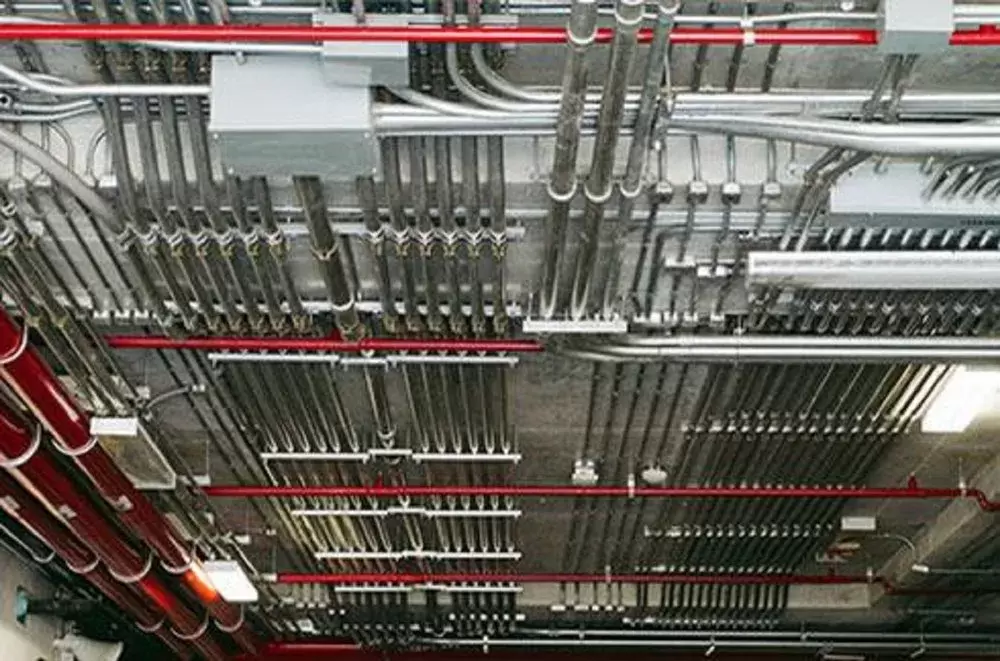
A quick tip when cutting EMT. Ream the inside of the cut with a screwdriver or something. You don't want any sharp edges inside something where wire will be pulled.
Re: Bending conduit
#13I would not anneal it, assuming it is hardened, in particular if it has some kind of zinc, like coating. Breathing that is a very bad outcome.
One thing that sometime works, is filling with water and freezing. Then you can bend it on a plywood form without the walls collapsing. If you don't have a large enough freezer then it becomes seasonal if you even live in a area with freezing weather.
Re: Bending conduit
#14I was able to get the bend made. Only a very little crimping at one the bends. Totally acceptable.
I will try and get a picture and post it.
Thanks to everyone for the help.
Re: Bending conduit
#15How did you do it in terms of fixtures/tools ?
Re: Bending conduit
#16

Here are some tips for bending conduit without specialty tools:
Use larger radius bends rather than tight 90 degree bends, as this puts less stress on the conduit.
Make shallow bends over a wider section rather than a tight bend all in one spot.
Pack the inside of the conduit with sand at the bend point before bending to help prevent kinking.
Bend the conduit incrementally, only a few degrees at a time, rather than trying to bend the whole amount at once.
Use a rounded edge like a pipe or piece of wood when bending against it to support the bend radius.
Clamp pieces of wood at intervals along the conduit to act as bend supports when you apply bending force.
For tight spots, use multiple smaller bent pieces of conduit joined by couplings rather than one sharply bent piece.
Avoid bending at fittings or joints in the conduit. The bend should be along a continuous section.
With care and gradual bends, it is possible to bend conduit without collapse using these "poor man's" methods. But a proper conduit bender tool would make the process much easier and consistent.


