Re: round carbide bowl gouge?
jeffrey bowman
What is a name of a good quality gouge and would a 5/8 be a good overall starting tool cant afford a whole set at this time
Est. 1998 — 27 years of woodworking knowledge
Re: round carbide bowl gouge?
jeffrey bowman
What is a name of a good quality gouge and would a 5/8 be a good overall starting tool cant afford a whole set at this time
starting with a bowl gouge
John K Jordan
Jeffrey,
(I wrote this over an hour ago but the power went off as I clicked "post". Sorry if this duplicates what someone posted in the interim - I didn't check.)
>>>What is a name of a good quality gouge and would a 5/8 be a good overall starting tool cant afford a whole set at this time
There are actually two things you need: a bowl gouge and a way to sharpen it.
There are many good bowl gouges available. You can spend a little or a lot and there are some differences such as flute shape and how long it will hold an edge.
Lots of turners, including myself, like the Thompson tools - well made with special 10V steel that seems to stay sharp longer. However, they are pretty expensive.
There is another issue that is important for a beginner - you have to learn to sharpen the gouge. A "fingernail" grind, or one with the sides ground back is probably the most useful for bowls for several reasons but it is difficult to learn to grind by hand. Beginners often grind away much of their first gouge just by learning to sharpen. In this case, a less expensive gouge might be better to start with, then get a better gouge later. A less expensive gouge will certainly cut wood!
Some people advise only to buy the better gouge and one with certain flute shapes but the bottom line is it doesn't really matter much - they all basically cut the same. Before the 10V and other special steels became popular, everyone used tools made from High Speed Steel (HSS). Before HSS was popular, everyone used carbon steel and still made bowls. HSS and better steels do have certain important advantages compared to carbon steel such that you can't even find new carbon steel tools now.
A very important thing about non-carbide lathe tools is you HAVE to be able to sharpen them. The old saying is "if you can't sharpen, you can't turn." There are lots of options for sharpening a bowl gouge but the one used and recommended by most people is the OneWay Wolverine system. It consists of a base you mount under a standard or 1/2 speed bench grinder and an arm with a v-pocket that fastens to the base. A flat, adjustable tool rest will also fit in the base. For spindle and bowl gouges, you also need to buy a Varigrind jig which makes it trivial to grind the complex curves of the gouge. These things are available from Amazon and lots of other places, for example:
https://www.woodturnerscatalog.com/p/93/817/Oneway-Wolverine-Sharpening-System-4-Piece-Set
https://www.woodturnerscatalog.com/p/93/3891/Oneway-Vari-Grind-Jig
You can also find lots of videos on the Wolverine/Varigrind if you are a video watcher.
The Wolverine system is not real cheap but are definitely a worthwhile investment that can be used the rest of your life. I have several on different grinders, some I bought used.
There are other options and you can even make a useful system for about $10.
Look for the "Cheap Sharpening System" on this page:
http://www.cumberlandwoodturners.com/tips--links-and-projects.html
Here's a direct link if it works:
http://nebula.wsimg.com/6dc1c5fd31413c771331703f66f80855?AccessKeyId=8E1EC0DC707F1FE36FCB&disposition=0&alloworigin=1
Josh Bowman from the Chattanooga woodturning club spearheaded this, I did some graphics and such for it. Several people have made these and they work well. You could use this for quite a while then get the commercial sharpening system later.
Another thing about buying a bowl gouge. There are decisions about the size and the flute shape. The flute shape doesn't really matter - there are subtle differences in function but all of them will cut wood and make bowls. This size is a personal preference and depends a little on the the size of bowls you turn. I personally consider a 5/8" a huge gouge perhaps more appropriate for large work. A 1/2" gouge might be more reasonable. I know professionals who prefer a 3/8" gouge for even large things and has the advantage of allowing detailed work. I consider the 3/8" gouge perfect for smaller bowls up to about 8" diameter. When beginning, you might be wise to make a bunch of 4"-8" bowls first before tackling bigger things.
One tradeoff with gouge size is the larger the gouge, the stiffer the shaft and the more you can have it overhang the tool rest. Perhaps a 1/2" would be best to start.
The gouges I use the most are all Thompson but I have other older gouges from Crown, Sorby, and others. I haven't kept up with what's available today, especially with the inexpensive gouges, but I'm sure someone else here can recommend options. I've heard some people buy inexpensive HSS sets from Harbor freight.
One more unsolicited comment: some of the best woodturners out there recommend learning spindle turning as well as bowl turning, even if you never plan on turning spindles. Spindle turning will quickly teach you the fine tool control that will let you turn anything. Some people start and stick with bowl turning and, in my opinion miss out on so much.
JKJ
Re: Negative rake scrapers
jeffrey bowman
Thank you for the advise I think I may try that
Jeff
Re: starting with a bowl gouge
jeffrey bowman
Thank you so much for all your advise and I will be purchasing a Thompson tool and looking into the oneway wolverine system
Thanks again and I will let you know how things turn out
Jeff
Re: starting with a bowl gouge
jeffrey bowman
Is the v or the u thompson gouge better
Most people like the U. I love my V
john lucas
Go with the U it's easier to sharpen. With all tools you can still screw up the edge when sharpening if you grind too long in one spot. The V gouge has a steep transition between the sides and bottom of the V shape. It's very very easy to get a dip in the cutting edge at this point and takes very careful grinding to avoid this. The U shape doesn't have this same problem.
I have a video on youtube that shows how to correct sharpening problems. When you get to that point just ask and I'll post it.
Re: Most people like the U. I love my V
jeffrey bowman
Thanks again I am going to order a thompson 5/8 u gouge and the oneway wolverine tool sharpening system
Jeff
Re: Most people like the U. I love my V
Bill Blasic
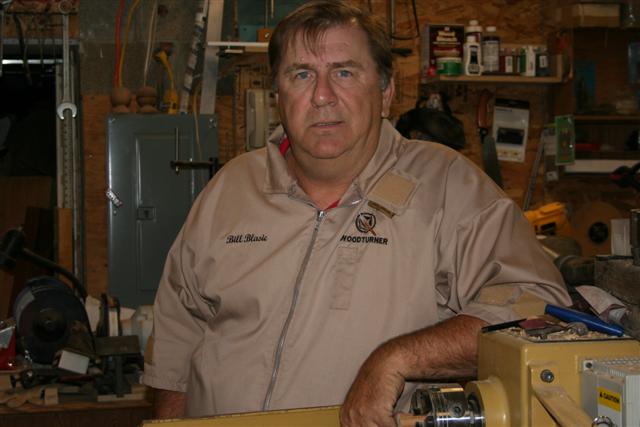
I do not agree, go with the V you will find it more versatile and it is not any harder to sharpen with the Wolverine Sharpening System. Doug Thompson has a drawing as to how you set up the Wolverine for sharpening and he also has a video on youtube showing how to sharpen that is very good. I have never had a pro come through my shop for hands on (and there have been many) that uses a U shaped gouge as their go to tool. Talk to Doug he always is willing to give advice 440-241-6360.
Jeffrey.....
Barry Irby
You have gotten some wonderful and helpful advice and also overwhelming. Among the best of it is to find a mentor or club to attend and get some hands on experience and guidance. An hour or two with a good instructor will save you weeks of frustration.
About 16 years ago my son and I went to Arrowmont and took a class from David Ellsworth. I was using one his gouges completely wrong. Had a death grip on it. David came over, took it from me, reoriented it, held it with just finger tips and made a beautiful cut. It was like the difference between a tractor and a sports car. That minute was worth the whole class.
All the tools recommended re good ones, but they all have some sort of learning curve. Learn to enjoy them.
Doug's V is not as "tight" at the ........
JamieDonaldson
....cutting point as some others, like P&N which I don't like. I have no trouble sharpening the Thompson gouges with my Oneway jig, and I have both of Doug's gouge flute profiles and use them for specific applications. The width of the U flute is a bit more aggressive cutter due to the wider cutting edge at the tip, but it's a great spindle tool.
Re: Most people like the U. I love my V
jeffrey bowman
John as i stated I went on line and ordered the thompson bowl gouge and the oneway tool sharpening set and after extreme excitement of receiving my gouge there was no handle so i had to order that . It would seem that the handle would be included however thanks again and am looking forward to my new handle and get rid of my problems
Re: My head IS spinning......
jeffrey bowman
Well come to find out I was using a spindle gouge as it was a bowl gouge and that was my problem as I stated I am a new guy to all this thank you for your time and please stop you head from spinning
Jeff
buying tools without handles
John K Jordan
>>>...after extreme excitement of receiving my gouge there was no handle so i had to order that . It would seem that the handle would be included however thanks again and am looking forward to my new handle and get rid of my problems
There are several reasons people buy tools without handles.
- The tool is less expensive and it is so quick and easy to make a handle.
- You can make a handle of the length and shape to suit yourself instead of take what someone else decided was a good compromise. I usually use long handles for big bowls and very short handles for delicate spindle and detail work.
- Many, many use purchased handles with a quick connect or set screws to hold the tool. This allows one handle to be used for more than one tool. (This can save a LOT of space if you accumulate a lot of tools - you can keep a few handles in the the rack and many tools in the drawer.)
I personally never buy a tool with a handle. Years ago I bought a number of very heavy duty commercial handles which I use for larger tools. For most tools I make metal inserts and fasten into wooden handles. I put these in long or very short handles depending how I use them.
These provide several huge advantages. One, they are almost free.
Two, I can sink much of the tool shaft deep into the handle to have a shorter and more controllable amount extending from the end of the handle. This also lets you have the same length of tool extended over the years as the tool is shortened by sharpening. I find the consistency in length translates to consistency in control.
Three, I can change from a dull tool to an identical tool in seconds and keep turning instead of having to stop to sharpen. (For example, I keep several of my favorite spindle gouges ground identically and sharpen them all at once, swapping as needed.)
These inserts are also available commercially but there are good reasons to make your own.
I made these two for spindle roughing gouges:

Here the third and fourth handles from the left use commercial inserts. The third one shows one problem with these - the insert is 1" in diameter but I prefer a smaller insert for a 1/4" tool shaft:
I make most of the inserts from steel or aluminum on the metal lathe but I've made them on the wood lathe as well from aluminum, like this one:


JKJ
Re: buying tools without handles
David Smith
Beautiful handles John. What do you use to texture?
Re: buying tools without handles
John K Jordan
Thank you, Sir David! The one made from Bubinga at the top is stippled with a small oval-shaped carbide burr on a Dremel - touch, touch, touch... Takes a while if there is a lot of area! After I go all the way around I find the extents where I might have been sloppy and use a skew to cut v-grooves to clean up the edges, occasionally burning in the grooves with light-colored wood.
Some of the others use the little star wheel texturing tool with the dots filled in with walnut grain filler paste. Sometimes I just cut grooves, little shallow beads or coves, or use a pointed tool to distress the surface. Occasionally a knurling tool. Very occasionally I'll get out the carving gouges and knives. Something a little different each time, I hope. It's just a tool handle so I can experiment with wild variations without worrying what it will look like.
JKJ