WoodCentral Forums

Est. 1998 — 27 years of woodworking knowledge

color question

Posts

color question

#1

color question

GaryG in MD

OK, so I already know the answer -- try it on a piece of scrap.

I don't have a piece of scrap like this, and this is already finely finished. That's the problem.

At this point, I'd like to ask the experts among you.

Can I airbrush an alcohol-based dye over a piece already finished with Myland's Sanding Sealer (two coats diluted 50/50) that has been sanded to a silky sheen with Abralon 4000.

It's a small (3") femisphere of unknown (scrap) wood. It's the "alpha" version -- call it "proof of concept" -- I didn't even bother to rotate it before first gluing so there's no grain match on this one. My bad. Coulda, shoulda, woulda...

Yes, this is the one I had concerns about the water-based glue warping the ends -- turns out it came out OK. Whew.

I think I would like it colored rather than the rather blah "wood" color that it currently exhibits. The photo is before finishing.

I know I should have dyed it before I sealed it, but I didn't. That's for next time.

What do I do with this one?

Can I put alcohol dye over lacquer or will it just sit on top in most area and make a horrible, blotchy mess in places where it may soak in? Airbrushing should be much better than just slopping it on, but will that be enough?

Should I just leave it alone, or go for it?

I am particularly interested to hear from somebody who has already done this, for better or worse. ...GG

Re: color question

#2

Re: color question

john lucas

I think you can but it may not go as dark as usual with the color. I have only airbrushed over finishes with paints. You can get transparent air brush paints that show the grain pretty much like dyes do. My suggestion would be to start with a lighter color than you want and back off and do a light spray. If it doesn't look like it's going to lay down properly then pick up some airbrush paints and try those.

Re: color question

#3

Re: color question

Mike Foster

I don't think a dye would work well on a piece that has been sealed already. Airbrush acrylics would work fine, and probably give you better color. You can use transparent acrylics, which will show the grain if that is what you want, or you can just go for the color. With these acrylics, you can spray a new color over an existing color to mute or change the first color. The more paint you put on, the less it will show the grain (obviously). Also, if you add white to any color to get a color you want, it automatically becomes an opaque color because the white is opaque.

Nice Femisphere. I made a few sphericons, and one I actually textured and painted using the dry brush technique. These are fun objects to create.

Re: color question

#4

Check this guy's work for ideas. *LINK*

Keith Newton

It looks like a lot of the wood base color is close to your, and the multi color sanded through would work nice on this.


http://collectorsofwoodart.org/artist/portfolio/230

Re: color question

#5

Re: color question

Ralph Watts

Gary, I think Mike is correct and his suggestion is probably the best thing that you can do at this point. However, you mentioned alcohol soluble dye. Generally, you should never use any form of aniline dye it is simply not lightfast. Instead, use a dye such as Procion MX sold by Jacard. It is the most lightfast dye you can use. It is water based and I doubt it would work in your situation but might be worth a try. You can always sand some more [:-)

Re: color question

#6

Re: color question

John from Lutz

If you want to use an alcohol based die like TransTint, I would mix it in a blond dewaxed shellac. This should stick to the lacquer. I do this when I am trying to match colors for a repair. I usual can spray a 2 lb cut although for an airbrush you might need it thinner. I sometimes use an air brush for this but you can get a more even coat using a touch up spray gun with a 1.0 needle.

I think if you spray the die mixed in alcohol or water, without another medium, on sealed wood, the lacquer will keep it from penetrating and it will just wipe off. Try to find another piece of wood with a similar color seal it with lacquer and do some test. It can take me three or four test to get the color right.

Re: color question

#7

Thanks, John...

GaryG in MD

I hadn't thought of that.

Excellent idea.

I'll look into it. ...GG

Re: color question

#8

Thanks, Mike...

GaryG in MD

I know your work (!), and I appreciate the praise coming from someone who makes "impossible" shapes like you do. Thanks for reminding me that they are technically sphericons. I plan to make more in different shapes -- they're great fun, and, as you indicate, they give opportunities for many different coloring and texturing experiments.

Good thoughts re the coloring. I appreciate the feedback (and the warning about the opaque white). ...GG

Re: color question

#9

Thanks, Ralph...

GaryG in MD

I've been concerned about this topic.

I've got the stuff sold by Craft Supplies.

I haven't been able to find any definitive comments about whether their product is light fast or not. Can you comment?

Thanks for the tip on the Procion. That's very good to know.

...GG

Re: color question

#10

Thanks, John...

GaryG in MD

Good idea about the shellac.

I hadn't thought of doing that.

It should work.

Thanks for confirming that my original idea was a bad one, as I expected.

...GG

Re: color question

#11

Dave Turner

Re: color question

Dave Turner

Gary, I airbrush alcohol based TransTint dyes on my pieces all the time. The wood is boxelder sealed with several coats of wipe-on-poly. I lightly sand the surface with 400 grit sandpaper and 0000 steel wool, but not cut thru to the wood. The dye dries almost as soon as it hits the surface. After I finish painting I seal with more coats of WOP. I not sure, but I think you could get the same results with the sanding sealer.

Re: color question

#12

Re: color question

mjonesrdg

Some years ago, I finished a lot of "blah" wood turnings with colorizing. I bought tinting dyes from my neighborhood paint store...Red, Yellow, blue, and black, in 4 oz. plastic bottles that they filled from bulk containers.

These were all transparent dyes and I mixed them into clear lacquer. A 1/4 teaspoon of dye in a paint-cup of clear lacquer, and began spraying. This method gave me a great deal of control over the color, depth of color, amount of (and areas of) grain display.

With the primary colors and black, you can make just about any color on the color wheel.

Re: color question

#13

Re: color question

john lucas

Gary I just used some transtint dyes to color a piece that I had to wipe areas with CA glue. It did not do a good job of coloring all the CA blue areas. Many were covered pretty well which is a little confusing as to why it simply would not cover those few areas. I think those might have been winter wood grain that simply was harder and the glue didn't penetrate but stayed on the surface. India ink on the the other hand colored it nicely. Don't know if this info will be of any use to you but might help. Oh one other thing. When I use the air brush I use a green scotch brite pad to abrade the surface so it works better. Maybe that would help with your dyes.

Re: color question

#14

Thanks, Keith...

GaryG in MD

I LOVE his work. Makes me drool.

But he's using opaque milk paints.

I like those too, but it's not what I'm trying to accomplish right now.

I still want this to look like wood, even though the grain is not matched.

But it's a closed grain wood, so I agree that not a lot will show through.

That's why I want to airbrush on a very thin, transparent coat to help solidify the piece and brighten it up a bit.

But I'm glad you reminded me of his work, because I'd like to do some things in that direction too!

...GG

Re: color question

#15

Thanks, Dave...

GaryG in MD

First, let me say "wow"; that's an outstanding piece, both in terms of the shape and the coloring.

Based on your experience, it appears that the dye will stick, as long as the surface is roughed up to 400. That's a good thought. Thanks for your input.

...GG

Re: color question

#16

Thanks, Mike...

GaryG in MD

Yet another way!

That makes sense -- as long as the dye is compatible with lacquer thinner.

And that way, you don't have to overcoat it.

Your results are undeniable!

Thanks for the idea, GG

Re: color question

#17

John...

GaryG in MD

That was my concern. Thanks for verifying.

There seem to be more than one kind of green Scotchbrite pad out there -- what's the effective grit level on the one you're recommending? ...GG

Re: color question

#18

Re: John...

john lucas

you are correct. I tried doing research to attempt to find out what grit or other term we might recognize went with these pads. I never did succeed. I bought a white, green, burgundy and gray. What I have seems to be abrasive in that order, white being basically a polishing cloth and gray was very course. The green I have is somewhere around 3/0 or 4/0 in steel wool ratings. I bought them from Lowes if that's any help.

Re: color question

#19

3M gray Scotchbrite pads are rated....

JamieDonaldson

....equivalent to 000 steel wool, and they make a gold pad used for final polishing in the auto painting industry that is even more fine. It's available from suppliers to the auto painting industry.

Re: color question

#20

Thanks, Jamie...

GaryG in MD

There's a lot of confusion and misinformation available online about the grit equivalencies of ScotchBrite pads. There appears to be more than one green one. That seems too aggressive to me. The 7448 "light gray" is rated around 800. That should be fine, as one you recommend.

I have a roll of 7745 (gold), which is supposedly equivalent to ANSI 1200.

It's advertised purpose is what we have here -- in their words:

"Clear Blend Prep Scuff Roll - Gold

Scotch-Brite Hand Pads give you a fast, consistent scuff for everyday surface preparation. Ideal for cleaning parts and scuffing prior to staining and painting. Hand pads are also a great alternative to steel wool — similar performance without the rusting or splintering.

Least aggressive of 3 part scuff pad system. Scuffing prior to clear coat blending, light scouring, fine polishing on metal. Each roll tears into 30, 4-3/4" x 6" pads

Ideal for top coat rubbing, sealer sanding prior to lacquer, and defuzzing or denibbing wood

Performance similar to steel wool grade 000 (I think this is a misprint -- probably should be 0000)

Gold in color, leaves behind a scratch pattern equivalent to grade 1200 and finer.


Re: color question

#21

Bill Blasic

Re: Thanks, Jamie...

Bill Blasic

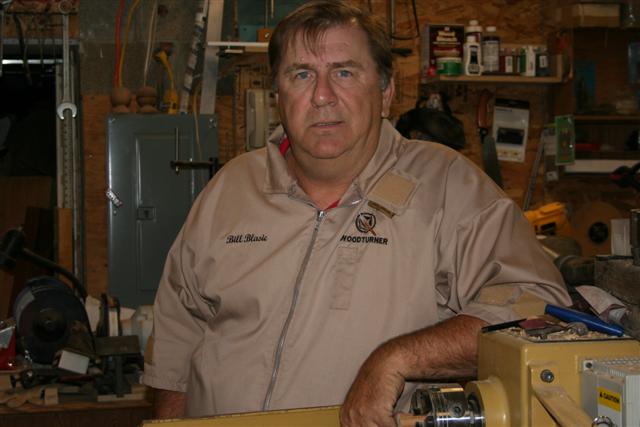
If I were you I would take a little piece of Maple and put a spot of red, blue and yellow Artisan dye on it and set it out in the sun. You may be surprised of what is there after two days in the sun. TransTint is very light fast and is one of only three or four dyes I have found that are really light fast.

Re: color question

#22

I cut 2"squares of the Scotchbrite.....

JamieDonaldson

.......materials and mount them to my sanding mandrels in a drill chuck. Use the Velcro discs available from Lowes for the adhesive female pads on the Scotchbrite, and they stick nicely to the sanding mandrels for many buffing applications.

Re: color question

#23

Bill, what ever happened to the dye....

JamieDonaldson

......testing research you were doing? I don't recall seeing it published in the AAW Journal as I understood was your goal.

Re: color question

#24

Bill Blasic

Re: Bill, what ever happened to the dye....

Bill Blasic

Jamie it is still ongoing but it will be put to paper soon.

Re: color question

#25

good to know


👍 This page answered my questions

Your vote helps other woodworkers quickly find the answers and techniques that actually work in the shop.