WoodCentral Forums

Est. 1998 — 27 years of woodworking knowledge

using gouge upside down

Posts

using gouge upside down

#1

using gouge upside down

John K Jordan

Does anyone else use a spindle or bowl gouge upside down?

I've asked several turners I know and they all said "say what?"

I've found that holding a spindle or bowl gouge with the flute down makes an excellent finish scraper especially for getting into tight coves. I hold it with either one or both sides of the flute held against the rest, I get very fine material removal, extremely clean surface, and there is zero chance of a catch.

For example, you might be able to see here how it removes just a very fine amount of wood, tilted a bit like when shear scraping.
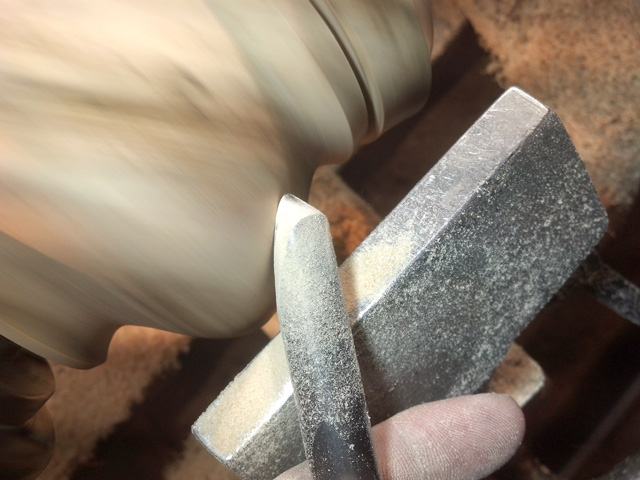

I have used this in tight coves where normal shear scraping with the gouge (flute up) would be difficult. This will even work if the cove is the same profile as the tip of the gouge, scraping all the way around at the same time.
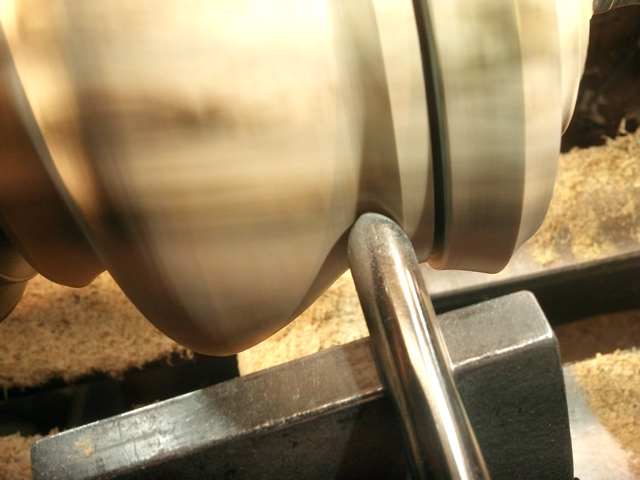
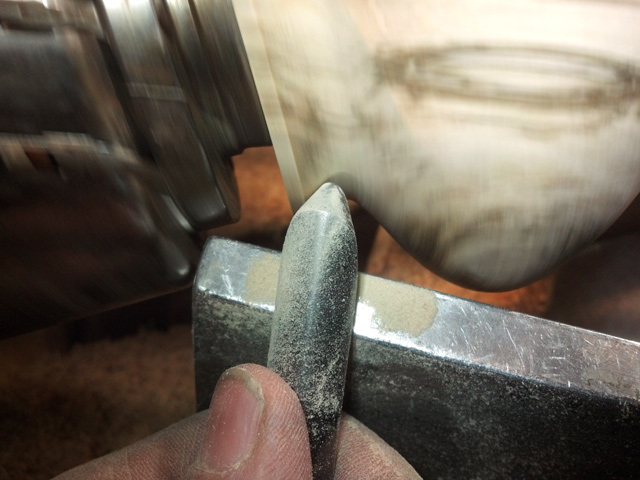

The only problem I've had is the flutes are often fairly sharp so the gouge doesn't slide so easily on the tool rest.

BTW, the piece I'm working on here is the elm box described in another thread.
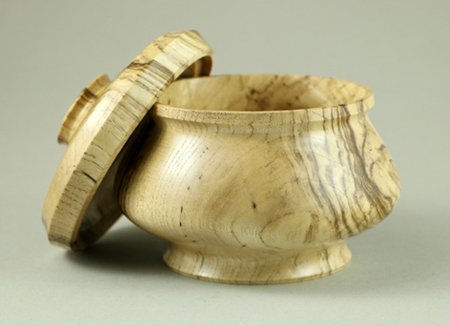

Does anyone else use the gouge like this? Since there is almost nothing new under the sun in woodturning I know better than to claim I came up with something new. :-) I remember how they scoffed when I described the catch-less skew I made years ago for turning beads. (but ha, that really does work!)

JKJ
Re: using gouge upside down

#2

Re: using gouge upside down

Barry Irby

Abut 16 years ago my son and I took a class from David Ellsworth at Arrowmont. He said there were eleven different cut you could make with his signature gouge. I never did learn all eleven.

I have made those cuts you describe. The Ellsworth gouge is my go to tool. I must have drunk the Koolaid.

Re: using gouge upside down

#3

Re: using gouge upside down

John K Jordan

> David Ellsworth... He said there were eleven different cut you could

> make with his signature gouge. I never did learn all eleven.

Ah, I'd like to see that list. Maybe someone can remember the Ellsworth Eleven.

That class must have been fun!

Re: using gouge upside down

#4

Re: using gouge upside down

john lucas

I would be a little nervous using the gouge like in the first photo. with both flute sides upside down like your cove cutting photo wouldn't be a problem. I do a cut similar with the top flute just a millimeter or two away from the wood. The bottom lip does the cutting. I think this would cut exactly the same but be much safer because you have support under that flute.

I've started using my Hunter tools for cleaning up coves or what I call undercuts on the inside our outside of the rim. I'm may try to do a video in the next few days. It's the cleanest way I've found of cutting these.

Bob Rosand used to grind a used bowl gouge to cut beads. He used the gouge upside down and ground a cove or bead shape on the inside. I've always wanted to make one of those but never had a gouge short enough. I'm getting really close with my thompson gouge so I may have one before too many months go by.

Re: using gouge upside down

#5

Re: using gouge upside down

Dick strauss

I believe that Bill Grumbine has been teaching this technique for at least a decade. I picked it up from him and use it every once in a while.

Re: using gouge upside down

#6

Jerry Maske

Re: using gouge upside down

Jerry Maske

I took the infamous Ellsworth Class this summer and have the handout, somewhere. The Big thing he taught me was to hold the gouge with BOTH edges against the wood and back off on the top one. Scared me to death, but it produces a flawless finish.

As far as your trick goes, I've used tools in ways they were never meant to be used before as well and accomplished things I never expected to accomplish. I know, for example, what speed to set the lathe before I push in too hard on the rim of a bowl in order to break at least two bulbs in the ceiling light fixture. Now, if changing the bulbs was my goal, I've come up with a new way to do it. I'll leave the rest up to you.

Now, I'll go look for that handout.

Jerry

Re: using gouge upside down

#7

Re: using gouge upside down

John K Jordan

>I would be a little nervous using the gouge like in the first photo.

>with both flute sides upside down like your cove cutting photo wouldn't be a problem.

Maybe the cell phone photo doesn't show it well, but in the first photo both sides of the flute are down. The side on the right is firm on the rest and I'm holding the flute on the left a hair off the rest. The wing is still angled down steeply making the extreme negative rake. When I moved deeper into cove I twisted the tool so both flute sides were supported and swung the handle so he nose was aimed straight in. I couldn't make it catch.

What I really liked about this method was how quick it was to clean up even a tight cove without the chance of a catch from a millisecond's inattention!

Hey, after seeing the beading tool Harvey Meyer used in the BoC video I thought about making one that worked the same way from a small gouge. Maybe sometime you could describe Rosand's grind.

JKJ

Re: using gouge upside down

#8

New techniques

John K Jordan

>I know, for example, what speed to set the lathe

>before I push in too hard on the rim of a bowl in order

>to break at least two bulbs in the ceiling light fixture.

Ha! What speed? I'm always ready to learn something new! :-)

It's nice to hear that others use the gouge upside down. I'm inspired now to try some different grinds to see how they behave. What about carbide cutters?

JKJ

Re: using gouge upside down

#9

Keith Tompkins

Re: using gouge upside down

Keith Tompkins

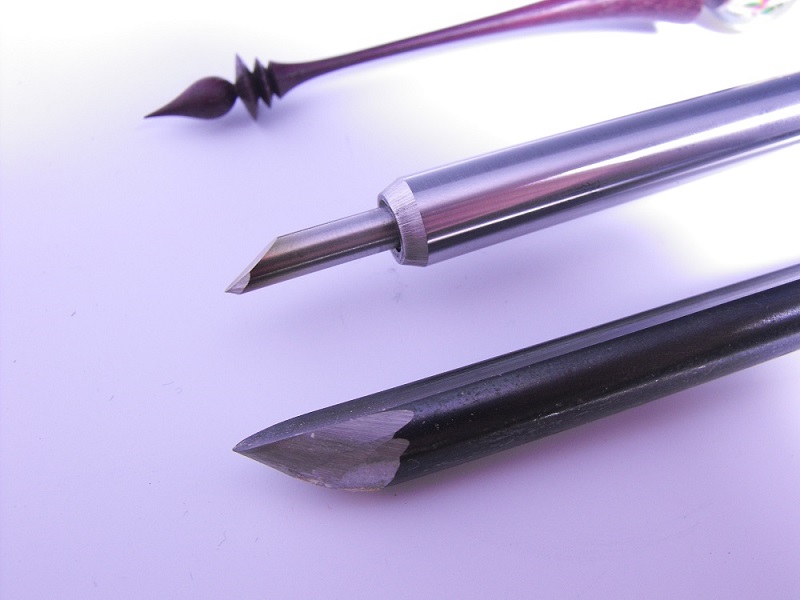
Hi John, When I took David Ellsworth's class years ago, he showed the same technique inside a bowl to clean up ripples. When you flip the tool over, the cutting edge is at the bottom, with little or no tendency to catch and flip over. (Similar to a negative rake scraper, less tendency to dig in) I have studied why catches occur, and have tried to make tools to overcome it. Here is my latest mini-gouge. No flute, so less tendency for the wings to catch. The cutting edge (like your inverted gouge) is far below center, and the bevel is very short, which gives me no interference from metal under the bevel. Notice my Thompson detail gouge; I have three bevels in an attempt to remove metal under the bevel, which can act as a fulcrum point, lifting the cutting edge out of the cut. Look how high up the cutting edge is....a good catch will flip the tool over. My mini tool will not easily catch, and won't tend to flip over, you can perform the same operation you describe with the flute straight up, and it cuts rather than scrapes. I also used a 3/8" stainless steel shaft to hold the 3/16" M2 cutter. I can reach over the tool rest a good distance with no chatter at all. Vibration is your enemy especially when turning small. We must think alike, The ornaments I posted recently were all done with my new mini-gouge. I also have a 1/16" mini-gouge that was prone to unexpected catches at just the wrong time until I reground the tip as shown here. Problem solved. I do market a "catchless" skew through Packard.
Re: using gouge upside down

#10

Re: using gouge upside down

John K Jordan

>Here is my latest mini-gouge.

Good clean fun - I want to try making one! Are you saying the mini-gouge in the picture is 3/16"? I have some round Thompson steel rods just begging to be ground. Do you do the entire finial with just that tool?

Also, is that tool glued into the handle shaft or are there set screws out of view?

I looked up the Thompkins Skew on Packard's site. I might need to get one to try it out.

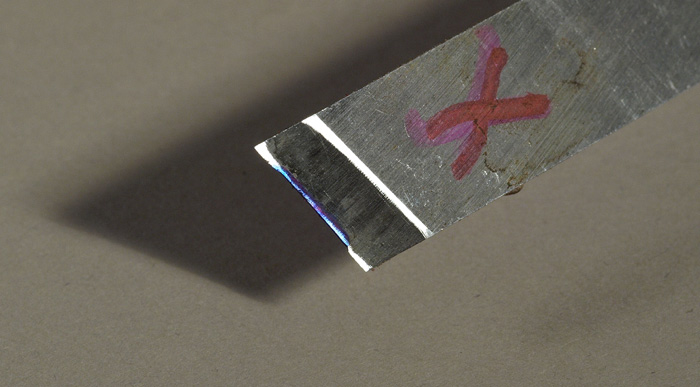
My own "catchless" skew design is good only (or primarily) for beads and v-cuts. It is obvious why catches are so easy when cutting a bead or v with a skew - without perfect control the sharp edge back from the point is just waiting to grab. Since only the points are needed for the cut I simply rounded off the edge in the middle with a small diamond file. You can lean the skew over and it will just harmlessly rub the smoothed edge. Here's an old picture - I marked the tool so I wouldn't grab it by mistake!


JKJ

Re: using gouge upside down

#11

Steven Antonucci

I use the SRG upside down as a skew...

steven antonucci

once in a while. Straight wings make a skew, but doesn't seem to be as grabby.

I will shear scrape with wings when necessary... but I find that I need to sand those areas more than if I cut them cleanly...which means I need to sand everything to get to one surface.

S

Re: using gouge upside down

#12

Re: using gouge upside down

Robert Lalonde

I learned it from Bill also and use it with nearly every turning.

Re: using gouge upside down

#13

Re: using gouge upside down

Frank Joseph

I do recall seeing this I belive it was Bill Grumbine that showed me the cut as an example for some point he was teaching me, its a very fine cleaning cut, that requires a very light touch, even t though I had turned for years the money I spent on three days of private classes with Bill was money WELL spent, If you can spend a day or two with Bill he is a great teacher and a nice guy.

Re: using gouge upside down

#14

Re: using gouge upside down

robo hippy

To me, this is shear scraping 101. The reason I prefer using a scraper for this cut is that I can see the edge, but when using gouges, you have to roll them over so far to get the edge to cut, you can't see the cut as it happens at the cutting edge. I will be getting a shear scraping video out later this year, and it will also be the next demo I do for our local club, the Beaver State Woodturners. A shear scrape is a cut, and not a scrape, the bevel does not rub, and the cutting edge is at an angle to the rotation of the wood. Scraping cut is at 90 degrees to the rotation of the rotation. The higher the shear angle, the less resistance there is to the cut, so the cut is cleaner. The shear angle with your gouge looks to be in the 70 + range.

robo hippy

Re: using gouge upside down

#15

upside down spindle gouge

john lucas

Many years ago someone was using a 1" or wider shallow flute spindle gouge upside down to somewhat shear scrape. Flat on the too rest you had those sloping surfaces doing the scraping so it acted like a shear scraper. I always wanted one but never made one. Not sure it works any better than a flat scraper held at an angle. It would however be much safer on the inside of bowls, especially if it was ground with a negative rake.

Re: using gouge upside down

#16

I like your variation...

GaryG in MD

...on a skewchigouge. Moving the cutting edge lower makes a lot of sense.

I don't have one, but now I might just grind one on a rod, because this makes a lot of sense. ...GG

👍 This page answered my questions

Your vote helps other woodworkers quickly find the answers and techniques that actually work in the shop.