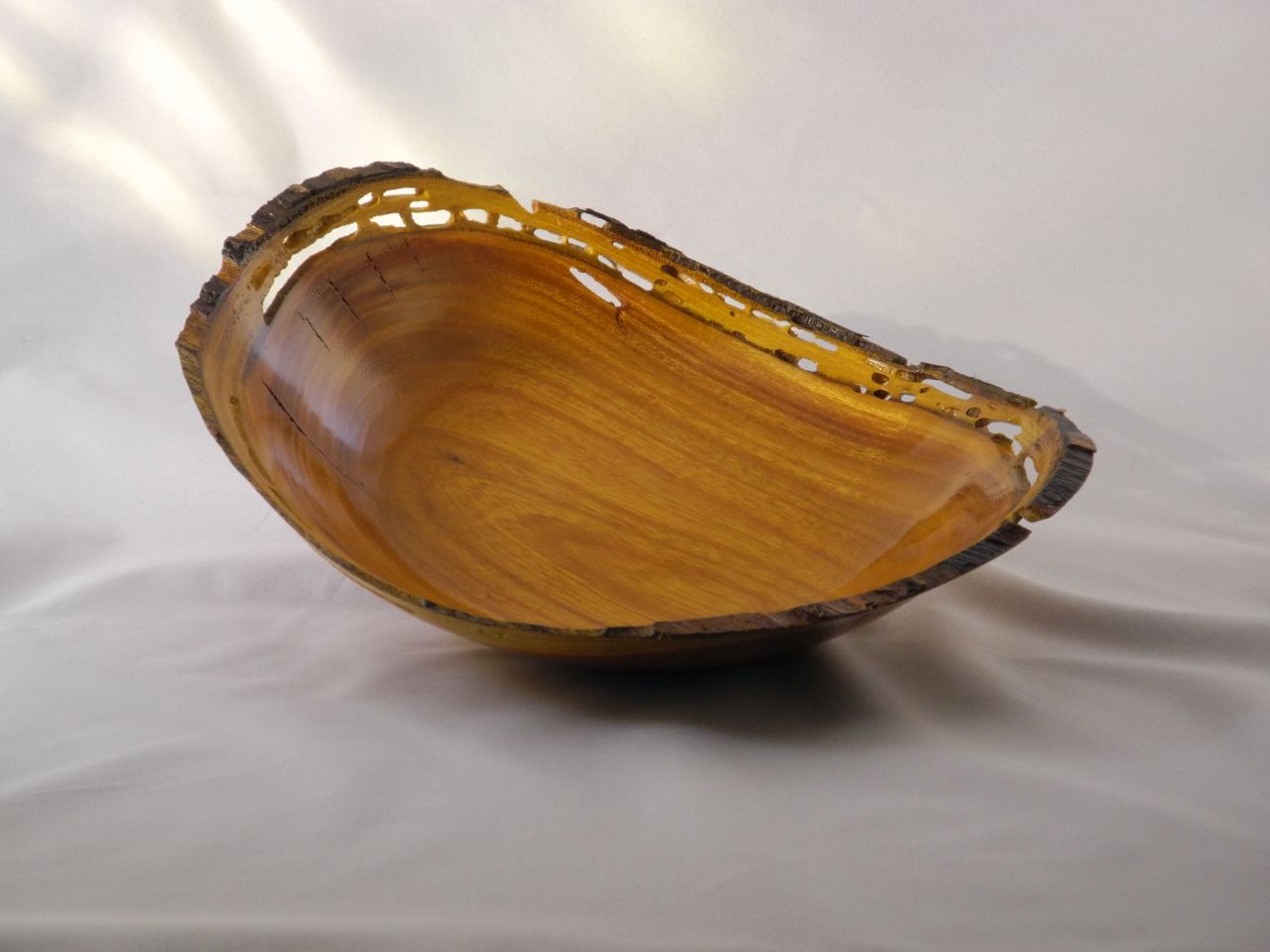
As a few of you know, my wife and I are building our retirement residence which will include a dedicated shop, but before I get my "freedom" to turn what I want, she has commissioned a few items:
- 3 shades for pendant lights over the island
- knobs for the cabinet pulls
- handles for the cabinet drawers
I hope to use mesquite or pecan for most of the items (keeping it native to Texas). I suspect the shades should be turned wet and thin, but could use any advice. For the knobs, I plan to use the wine stopper setup and then just install threaded nuts to reduce the thread size and get a tighter mechanical fit. And for the handles I thought I could use threaded spacers (stainless/aluminum) with a decorative bolt through a wooden spindle piece (in essence a dowel).
Does this sound reasonable? Any advice as I get started would be greatly appreciated.
Adding a threaded insert seems more complicated than just turning the knobs with a shop made screw chuck using a screw size you will also use to fasten the knobs to the cabinet. I did a video on making knobs you can see here: https://www.youtube.com/watch?v=CsfWQoOIkNw
If you are talking about three light shades, they must be relatively small, but this video I found should give you some ideas. Pine becomes very translucent when turned thin. Golden color when cut fresh; stains/spalts in a very short while after cutting.
Shades: Trees of the Poplar family have the highest translucence (at least of the species that grow here in the Northeast).
Peter Bloch uses Big Tooth Aspen, then soaks them in an 80:20 mix of Urethane Oil: non-toxic thinner (I think a citrus based paint thinner). His shades are quite a bit more refined and curved than those of Soren Berger... Link here:
Here's a full 90-min demo from 2003 showing Peter's process. Peter is an excellent demonstrator and instructor, but this is just a video shot live at a symposium, so if you can put up with the long intro and the gear in the way, there is a lot to learn here:
Berger writes that you must use his favorite hook tool (and he's completely mistaken that you can't use a scraper), which is fine for getting close enough, but to really refine the surface and get the thicker & thinner areas smoothed out and blended seamlessly, you really DO want to use a very sharp scraper. The recent developments in nano carbide scrapers and very fine cutting tools like the Hunter line may have opened a new & improved chapter in this sort of thin, translucent turning, but I have no experience with them for this task.
Peter Bloch may have started using these newer tools by now, but as of about 4 years ago, he was still turning and refining the outer profile first (always end grain), then hollowing out the inside in stages with the final blending done with a Dennis Stewart teardrop scraper in the original Stewart Armbrace handle. I have done the same on all but one of mine. Peter has at least a dozen of these teardrop scrapers, plus a second Armbrace, and with an assistant helping, he can swap out the tool and scraper often, and always have a freshly-sharpened tip to work with. I have only 1 of each, so I need to go a bit slower, and refresh the edge of my teardrop scraper fairly often when the going gets real thin.
Peter's web site shows a number of lamps, including a number of kitchen island installations, which you should find very helpful.
In Texas, you probably have plenty of Cottonwood, which should work almost as well. I've used Quaking- & Big-Tooth Aspen, and Balsam Poplar (a.k.a. "Balm-of-Gilead" trees with equal success. I think I did one about 12" diameter in Cottonwood too. Any penetrating oil finish will enhance the translucence.