Tool Rest Question
Tom
Starting to get back into turning and have a question. Should a toll rest have the capacity to go "below" the center line of a turning?
Knowledge You Can Build On — Est. 1998
Tool Rest Question
Tom
Starting to get back into turning and have a question. Should a toll rest have the capacity to go "below" the center line of a turning?
Re: Tool Rest Question
John Lucas
It doesn't have to go below center but I have several cuts that I do and it's really nice if it does. Many of the older lathes and tool rests don't go below center. You can buy some aftermarket tools rests like the round ones from Bestwoodtools that will sometimes work.
The two things that are important is where the tool is cutting and where you feel comfortable holding the tool. The tool should be cutting above center, lets call it 10 or 10:30 and in my case I like to hold the tool handle on my hip. With these two positions established I simply move the tool rest to the height that intersects this plane. That may be above, below or on center depending on the height of the lathe that i'm on.
For some cuts this varies quite a bit. Having the tool rest locked so it's on the center line of the turning isn't always the best location although it is a good starting point when your learning.
When I do a pull cut I like the tool rest very very low so the tool handle can be down really steep. When I turn beads on platters I like the tool rest way above center, like an inch or more. It allows me to turn the bead more like I would if it was spindle.
I really need to do a video on tool rest position. maybe when the weather gets warmer. Too cold in my shop to do videos right now.

Re: Tool Rest Question
Keith Tompkins
HI Tom, I try to turn with my tool cutting right on the center line of the wood, so the rest must have the ability to go below center.
Re: Tool Rest Question
robo hippy
For Bowl turning, I prefer to be at or slightly below center when turning the outside, and at or slightly above center when turning the inside. The exception is when I am at the very bottom of the bowl and the only way you can cut the very center is to be on dead center. With hollowing, pretty much the same thing. With spindles, I think most prefer to be at or above center. If you ever see traditional Japanese turners, they use hook tools and are below center on the outside of the bowl, like way below center. Interesting because they are doing more of a pull cut.
robo hippy
Re: Tool Rest Question
steve worcester
Go below for hollowing since you have to be able to bring a 3/4" bar with a cutting tip on center, then maybe above if you're using a skew with a small spindle.
So, both.
Re: Tool Rest Question
Tom
Well I would like to make a rest that will allow me to go below center. I saw some You Tube Videos and they used round steel stock for the rest. Is there a disadvantage to this vs. the standard rest?
disadvantage?
GaryG in MD
IMO, Yes.
Depends on the tool and the cut, but with a round bar, your contact point is half the diameter of the bar back from the closest approach. I like to minimize the lever arm and have my contact point very close to the wood. ...GG

Re: Tool Rest Question
Harry Robinette
I like the cutting edge of my tool just at center or a hair below.
Re: disadvantage?
Tom
I see your point. If you were making a rest what would you use?
Re: disadvantage?
John Lucas
I respectfully disagree. You have to be on the round part of the tool. The bevel takes up a certain distance from the tip so you have to have the tool rest back far enough so that you are past the bevel. I took my Powermatic tool rest and moved it back to the tool was sitting where it should be and the tip of the rest was at the same distance as it would be sitting on top of the round Bestwoodtools rest.
I used to think exacltly what you did until I did this test. Now that's on a 1/2" bowl gouge with a standard grind. With my Thompsons I have ground back the bottom even further so the tool rest needs to be a hair further away .
Same is true with parting tools. Because of the long bevel on a parting tool you have to move the tool rest away to be sitting on the flat area so you would still be on the top of a round bar and the tool would be properly supported.
I hadn't really thought about this until I bought my Robust tool rest. I was thinking because the top is thinner I would have the tool supported closer to the work. Not so for normal size tools. It is true for gouges in the 1/4" and smaller category. I have a 1/8" wide tool rest that is sharpened so I can support my ultra small tools within a few thousands of the work but that's a special case.
Re: Tool Rest Question
John Lucas
I guess I should have clarified what I am turning. For spindles I like the tool to be above center. On the outside of bowls I want the forces to push down onto the tool rest for push cuts so I cut at or slightly above center. Especially for roughing.
For pull cuts I have the tool rest way below center and the tool above center. On a pull cut there aren't any real forces going into the tool rest so it I am often quite a ways above it and often above center. For a pull cut it's more about tool control and I use my body for that so I find a good comfortable stance where my body and hands can control the tool and the cut is at or slightly above center.
For the inside I'm always use a push cut and have the tool pretty much on center however I tend to cut uphill as it goes down the bowl and then back downhill as I get to the center. So it's kind of an arc. I've noticed a lot of demonstrators do the same sort of Arc. I make my tool rest height whatever it needs to be for this cut. Again the tool rest height is dependant on the cutting position and where the tool is on my body or sometimes just where my hands feel comfortable. So I'm not concerned with tool rest height per se but only that it's right for that cut.
for hollowing I usually do use the tool rest so the tool is dead center. (Maybe tilted down a little but it depends on the tool I'm using)
Re: disadvantage?
John Lucas
Well I'm a huge fan of the Robust tool rests but they are a little hard to make. You need some good cutting tools and welding skills to do it right. If you don't weld you would probably need a mill to mill a round recess in the top for the hardened bar to be glued on.
I do have several of the Bestwoodtools round tool rests and like them. They would be very easy to make if you have some drill rod for the tool post and top bar. Just weld them up. The Bestwoodtools are different in that they screw together and have a brass fitting between them to help lock them together and to help reduce vibration. Vic buys the steel from a company that sells to NASA. He says it's supposed to be a low vibration steel.
I did make what I like for my mini lathe. It is a 3/8" thick piece of steel welded on my tool post at 45 degrees. Then the back side has been ground parallel to the tool post so the tool can be very close to the work. This is handy for using my 1/4" and 3/32 gouges for really small work. The taper lets me reach into bowls really far and still gives me enough strength to support the tool. I did harden the top edge before I painted it so hopefully it won't ding.

How close can you get with a cove cut
John Lucas
I should clarify that you can only get the tool rest so close to the work. You might be able to get really close to a bead but if there's a cove next to it you have to hang the tool our over the rest to make this cut.
This is also true if you use a long tool rest to turn something like a lamp. You can only move the tool rest up until it almost touches the high points on the turning. all the rest of the low points will make you hang the tool out. The option is to use a shorter tool rest and swing it as close as you can.
for inside-out turning where I really have to hang the tool over the rest I use my Thompson detail gouges because they are so much thicker they don't chatter when held this far over the rest.

I disagree
Lyle Jamieson
Two out of the four cuts have the handle down with the bowl gouge. With a round tool rest the support is pushed away from the wood surface before you consider any overhang. A 1 inch round tool rest means you are 1 inch away to start. Ever do sheer scraping with a bowl gouge on a round tool rest?? Makes it very difficult.
The tool rest needs to be below center when hollowing with captured systems.
Don't Like Up-tight
Bill Howatt
I'm not going to argue about physics and levers but I do not like turning with my toolrest, often a Robust, up as close as I can get to a spindle where I am cutting. Worrying about a 1/4" or so when doing a spindle is pointless, IMO.
Bill
Re: Tool Rest Question
robo hippy
I had some round bar tool rests and didn't like them at all. They just felt wrong. Some times I do hang out a ways off the tool rest, but still, they felt wrong. I prefer the tool rests with the drill rod on them. Much less friction as your tool glides across it, and it is still better than any fine sanded and waxed cast metal rest. I do prefer bowl rests when turning them. I like keeping the tool rest close to the piece I am turning. It is just less work. None of the curved bowl rests I have tried are quite right for me. My favorite shaped one is a cast metal painted blue one from Craft Supplies. It is best shape for working the rim, going down the inside, and going through the transition and across the bottom. Some just use a straight rest which means you have to hang out farther off the tool rest, and move it more often.
I would guess positioning the tool rest should mean putting it on a level relative to your cutter. You would have it lower if you have a 1 1/2 inch diameter boring bar on, than you would if you are using a 1/4 inch gouge.
robo hippy

Re: Where is the cutting happening?
Betty Scarpino
To me, the question should have to do with where the cutting action takes place. For different-sized tools and different cutting techniques, there will be a different height of the toolrest. Same with how close to the wood the toolrest should be (as close as possible and still be able to use the tool correctly and effectively).
So, instead of asking for the height to adjust your toolrest to, I think it would be more informative to indicate first of all where you want the cutting action to take place, then adjust the toolrest height accordingly. A general rule for me is that the cutting action takes place at or above centerline. Unless you know what you are doing and have a specific reason for doing otherwise, having the cutting action take place below center could be potentially dangerous. (The tool is being pulled toward the rotating object.)
Totally Agree, Merry Christmas

Re: Tool Rest Question
Roger in MO
A tool rest I like is a length of 2 1/2 x 2 x 3/8 structural angle welded to a post. The long leg is "up". This works well for spindles and for outside of bowls. However for inside bowls I use a 3/4" round rest.
As others have said, I try to match the height with the tool being used so the cut is normally at or above the center linel

YES !
Brad Vietje
I sometimes use the rest significantly below center -- especially when shear cutting or what Bill Grumbine calls a "vertical shear scrape". Tool handle steeply down toward floor, and cutting edge at, or often above center, but I use the rest quite a ways down to do this.
I also use the rest down pretty low when doing one form of end grain hollowing with a spindle gouge, and when using a swept-back bowl gouge or spindle gouge to shear scrape the inside of a very thin (translucent) end grain vase or goblet.
Tom may not ever elect to do these nutty things, but it sure would be neat-o if his tool rest allowed him to, no?
Safe spinning,
Brad Vietje
Newbury, VT
The Robust Comfort rests have been......
JamieDonaldson
.... the best combination resolution to most all of my toolrest needs, and they are on all 4 of my lathes.
Re: The Robust Comfort rests have been......
Keith Tompkins
Jamie, Have you seen the Steve Sinner rests? Very good also!
Re: Tool Rest Question
Tom
Thanks Roger. This is something I can make up!
Rest from Adavanced Lathe Tools
Joe Meirhaeghe
I use tool rest from Adavanced Lathe Tools. ( Steve Sinner ) on Both my mini & Powermatic lathes.
I don't think you'll find a heavier built rest with a hardened rod top than his.
Re: Rest from Adavanced Lathe Tools
Bill Blasic
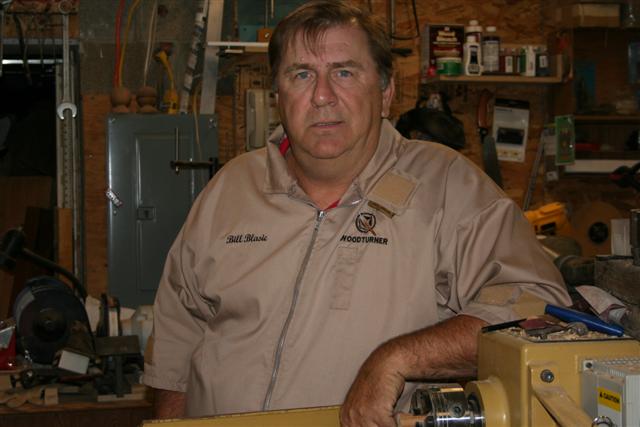
I guess I'm out there on my own as I prefer cast iron as my metal of choice for my tool rest. I worked with cast iron machinery for 40 years and I'm sort of ingrained to it. I've bought and tried the tool rests with the steel bar and again like cast. So any of you who are looking for a depository for those cast iron rests feel free to send them my way ;>)
Merry Christmas!
Bill


