...maple shavings to my compost pile, and remember that wood shavings lack some ingredient for making good mulch. Is it nitrogen that should be added for good balance before using it around shubbery? What's the word you knowledgeable gardners?
Nitrogen will increase the decomposition in a hurry. The decomp process aggressively takes nitrogen out of the soil and robs the plants. You could put some nitrogen fertilizer under the mulch for the plants and hope they get a share. If you put plenty on a compost pile and wet it, the decay process can reach 140 degrees.
you need to have a good mix of nitrogen and cellulose to have successful composting. It should also be kept moist, not wet and turned to keep it oxygenated. It can break down anerobically,but it takes much longer and is smelly. When the wood breaks down it will attach nitrogen from wherever it can find it, so adding it to the mix assures more complete and rapid composting.
I'm think you were asking what you should add after it's composted, and before you use the compost for plants. That would depend on the type of plant and whether it likes a low or high pH. I think all wood shavings, sawdust, etc. have a low pH (acidic). You can throw some lime into it after it's composted to bring the pH up.
My wife is the gardener around here, not me, and she keeps up on what the plants like. Like everything else now days, there are several web sites with good info about what each plant needs.
The garden guy in the Dallas Morning News said in one of his articles that wood shavings used as mulch do not rob the soil of nitrogen. Compost is dug into the soil for added nutrients, mulch is used for weed control, soil temperature and water retention. Adding nitrogen to your compost pile will speed things up but usually green grass clippings work just as well.
Mulch and compost are two different things. Mulch can be almost any material. I have seen river stone and pea gravel used as mulch neither of which decompose (at least not in our life times).
I garden organically and have for over 30 years. For about the same amount of time I have been adding my wood chips and sawdust to my compost bins. In the summer I have green glass clippings and hedge prunings to add to the mix to aid in decomposition. In the fall I mow up the leaves from my neighbors and till them directly into the soil. I easily put put 6 inches of mowed leaves on the garden every year and till them in. If I have too many woodchips for the bins I add them to the walkways between rows in the garden where they serve as mulch and decompose directly into the soil. Wood chips alone don't add much to the garden except some lignin which acts, I am told, as a sponge to hold water. I don't even worry about adding walnut chips as several gardening experts have told me that most of the plant killing chemical juglone originates in the roots of the walnut tree. Most of us do not turn walnut roots and even if we do I doubt that enough is turned to be a problem. Back in my flat work days I planed hundreds of board feet of walnut and put the shavings around my azaleas because they looked beautiful framed by that dark mulch. The azaleas thrived with no ill effects whatsoever. I used to grind up the thousands of pine cones that drop every year and use that as mulch around my plants but I don't have a wood chipper these days.
A horticulture professor/master gardener told me that all wood chips have some chemicals that are harmful to garden plants but you would have to put 6-12 inches of wood chip mulch around your plants before you would see any appreciable effect.
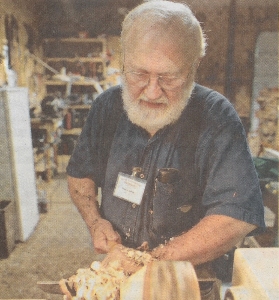
I tell people I eat my sawdust and wood shavings because I have put the shavings of more than 400 species in my compost and along my garden paths. The soil is black, friable, rich smelling and swarms with earthworms. Proof of the friability of my soil are 9" and 10" long carrots. All of this rich black soil started as grayish sandy clay 30 years ago.


 .


