Living in a location rich with lots of wood opportunities, I have never bought any wood for turning. People usually just call and offer me their trees, hoping that I will take them, and put them to good use.
We have had a bit of bad weather lately, which took down quite a few trees. If I knew what the market was like, I might be able to harvest some pretty good wood for others, if it seemed like I could do it without loosing money.
I just got a call from someone who claim to have lost a large portion of a very mature pecan grove. I'm sure there will be some wonderful curly figure under the big branches and root buttresses of these 100 yo trees.
The bark will come off easily right now, so I could take some pics to show what to expect. Could any of you advise me about the market.
Ellis, if this sounds like a marketing ploy, and is inappropriate here, feel free to delete it. I just hate to see so much great wood going to waste. thanks K
I sell a lot of salvaged wood cut to pen blank size on Ebay. Pecan sells OK, especially if it is spalted. But Ebay keeps adding restrictions and raising fees on the sellers. I will never get rich doing it, but I do make some pocket change and it keeps me off the couch. Probably make more selling lemonade on a street corner here in Sunny St. Cloud, Fla. The lemons are cheap down here.
Largely because of the same reasons you said- it grows on trees around here!
As far as people who do buy wood, I know that there is an expectation level that needs to be met. If the wood isn't sealed, has any defects, isn't debarked and squared or rounded, you will have an issue. Often, I wonder what the heck they do with it when they buy it, since they expect it to be so processed.
Do I think you can sell a lot of it? Probably not. Every time I try to organize a group buy with my club, it becomes a cat-herding exercise where people who have no intention of buying voice counter opinions ("I bought wood on th internet once and it was bad...")
I'd take as much as I can carry and think about doing it very small scale. If you find market for it, it will still be waiting for you after the next storm.
Although I sit in 20 acres of forest, it is mostly balsam fir and spruce with a few red maples and birches, so when my bowl and platter stock is looking very monochrome, I must obtain other woods, and also now and then there are commissions for an specific wood, so I do buy. Not in huge quantities but I do buy.
I buy about 95% of my wood. (Yes, I know wood grows on trees, but I live on the prairie -- there aren't any trees!)
I primarily buy burl and figured woods, exotics, and occasional special woods, (like Holly, etc.) for my work.
Steve, (and Keith)... the reason buyers want the wood processed is to cut down on shipping charges if possible, and make things a little easier to manage. (I, for example, have a bandsaw with only 6" resaw capacity... for everything else I have to drag out the chainsaw, (which is something I avoid doing -- takes too much time)).
As far as "fear" goes -- I've bought several hundred pounds of burl at one go... over the Internet, and I was absolutely delighted with what I received. (Incidentally, there are several wood vendors who I can highly recommend.)
So... what do wood buyers want?
-- First of all, all cut edges, (excluding barked edges), should be sealed with end-grain sealer. By the time the box gets to my house, unsealed wood is horribly cracked in my dry climate.
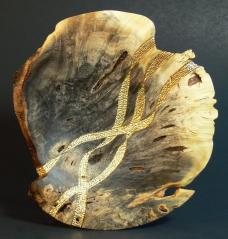
-- Burls -- I want the whole burl -- don't slab it or cut it in any way. I want to have the natural edge if possible. (And protect the burl points if the bark is off!!! Broken points are so unbecoming... Seriously, broken points make a fantastic piece slightly less-great.)
-- Blanks -- I prefer square blanks to round ones -- that way I can orient the piece the way I want it. (And use the corners for smaller work!) out of a 6x6x2 blank, I can make one bowl, OR 3 boxes, or ??? Don't forget that buyers may want to resaw the blank.
-- If possible, (one) bandsawn/sanded edge gives the buyer a better idea of figure. When taking photos, spray with water or add a quick coat of oil, etc. to show figure.
Hope this helps. (And send me some pictures of that wood!)
My situation is much the same as you describe yours. I live in a heavily wooded rural area, have a Wood-Mizer LT-40 sawmill (mostly for hobby), all the equipment needed to handle the logs, lots of folks wanting to give me trees, and I'm retired and have time on my hands.
A couple years ago I went through the same thought process. For starters I sawed up a bunch of cherry bowl blanks, waxed the ends and stacked them in my sawmill shed. Unfortunately the shed has a metal roof and is open to the sun for a good part of the day. By the time I got my website built and plans in place the heat and sun had caused about 75% of the blanks to crack. That and more rethinking made me decide I had other things I'd rather do--like turn wood.
Having said that... I don't believe the opinions you are getting here necessarily represent the broader opportunity. My guess is that most of the folks on this forum (except me) are more experienced at woodturning and have more wood savvy than the average bear. I have seen vendors sell truck loads of blanks at symposiums and there are lots of sources on the web. Look at the prices Woodcraft gets for some very everyday wood. My guess is there are lots of "city folks", working people, professionals, and such that are just not comfortable enough to go scouting for wood and use chainsaws and such to harvest it.
I wouldn't rule it out... if I were a bit younger, hungrier, and more energetic.
I too live in an area where there is plenty of wood . As I learn to turn, I pretty much have resisted buying wood. But if I want something I can't easily pick around here (size or species), I have bought it.
Example - A friend wants a 18" fruit bowl/platter. I tried several avenues locally, regionally and across the US, but could not find one, either as a blank or a roughed out blank. Timing was not friend in this case. Eventually I found one available in CA (I'm in NC) and I bought it. I am unlikely to buy at Woodcraft for the size/shape/species there at the prices I see.
At least for me - price is a factor when I am in the market, and I am only in the market looking for specific project sources.
Well, I used to. I sold at symposiums, to people who came over to look at my hoard and on eBay. I sell thousands of other things on eBay now, its how I make my living.
I just did two demonstrations on "free range" wood. It's never REALLY free when you consider the cost of tools, time investment, loss due to improper/inadequate processing, etc. One of my recommendations was to consider your commitment level. If you want "free" wood, consider, like me, that you could lose a lot of turning time doing it.
People who are casual turners or or if you don't want to (or don't have the space to) have all the tools to properly process wood, you might do well to buy wood, especially, if like Katherine you have a solid idea of what you want (most people don't).
As a seller, you will get the least amount of friction / greatest number of happy transactions if you cut each piece like you are going to use it yourself. Don't just make blocks of rounds of wood.
People like figure and they like to see what is in the wood. STRONG curl is an excellent selling point, and the best way to show it in a rough cut blank is to use clear (white) paraffin wax, melted in an electric frying pan. I buy old candles and candle making supplies at garage sales, costs pennies on the dollar for that. I also buy electric frying pans and griddles at those sales ($5.00)
When the wax is hot enough and properly bonded to the blank, there is very little loss, even over a year or more.
Put the square end grain edges to be sealed into the liquid (but not smoking) wax and let it sit till you can see bacon sizzle bubbling at the edges. That shows that the wood is warm enough to expel a little moisture and that the wax is hot and liquid enough to get into the pores created by the bubbling. For rounds, roll the blank's edge in the wax. That way you are sure you got the end grain and you get a peak at the side grain.
If there are no milky areas, you have a good bond. If there are milky areas, stick it back in the pan. I MUCH prefer this method to AnchorSeal, which is a very good product, but is more expensive and more time consuming to apply (in my opinion and experience).
Blanks
For bark edged blanks (on woods that can be shipped across state lines like that) try and get the piece centered on the log so that the finished bowl has that bulls eye centered on the bottom. Same blank, in the other orientation, make sure that the bow tie is well centered. If there is curl, that becomes less important, unless you can get both aspects centered.
Burls, seal everything but the bark.
Spalting, use an ice pick or awl to check and make sure the wood is still solid... There is nothing worse than spending money on a piece of wood that has punky spots and isn't really useable.
Vase blanks, if you cut them shouldn't be just the leftovers from making bowl slabs, sometimes I'll "waste" a whole log section because the vase/hollow form blanks will be too nice to ignore... Vase blanks don't seem to show up as often.
Personally, when I make hollow forms, I like voids, so I like using wood that is a bit irregular. There is a market for that stuff too.
Storage
After you do all of that work, make sure to store the finished products in a cool place with even humidity and temp. Mine is all indoors, temps run from 40 to 85
Selling
Symposiums can be expensive and exhausting, but people like to touch the wood they are buying and its a great way to meet repeat customers. I still sell a piece or two (or twenty) from time to time to people I like.
Club meetings are another good way to sell wood. Call em up and offer to bring down a truck load to sell at the break/intermission... Donate a piece or two in advance to let potential buyers see what you have.
eBay can be a bit problematic, BUT, if you:
Auction off wood that you would be willing to turn
Take and show good pictures of every side so people can see what they are bidding on
Accurately describe the species, attributes, defects and dimensions
Answer questions quickly and honestly
Offer lots that fit well into Priority flat rate boxes to keep the costs down (if there is room, throw in a bonus piece, it makes buyers excited to buy again).
If you have one, show a picture of a finished piece made from the same wood with similar characteristics. It will help buyers visualize what they might be able to make.
I hope this helps you decide if you want to be in the selling business or not, it can become a full time job.
Here in NJ, I belong to two clubs (both herds of cats). There are some guys who buy wood, but usually it is "exotic" (i.e. doesn't grow here). We live in an area that has a lot of diversity, and lots of these guys are satisfied with it.
In a great many meetings at one club, someone comes in with a truckload of wood that they acquired (usually for free) that they share with the club. Sometimes, we organize "group cuts", where membership can work for a share of whatever it is that we are working on. Some guys are not comfortable with chainsaws, or lack bandsaws to process into smaller blocks. (they tend to want to take one or two pieces and then scoot...) Then there are a few guys like me who block it into "as big of a piece as I can lift into the truck". Whatever I don't get to in time gets split for firewood.
If you are working locally, I suspect that pecan is nice, but nothing special since it grow there. I don't know if you could organize a local "group cut", I would share the following with you from my "last" group cut:
12 guys showed up
3 had chainsaws (and that was probably a good thing)
a couple expected everything to be processed like it was in Woodcraft
a couple came in button down dress shirts (had never done any field work)
about half came ready to work
one guy repeatedly offered to hold the log while I was sawing it
in the end, we (the organizers) ended up forcing free wood onto most of the people because it had to come out of the truck (we transported big pieces to be cut and distributed)
I'd take as much as I can carry and perhaps sell the odd piece here or there as I got to it. Having a stash also means that you can trade with folks in other geos when you want a piece of something "exotic"
Chuck, I like to keep my turning stock in as large a format as I can until I'm ready to work it. Usually I have a few logs laying around, out under some shade trees. We normally get enough rain to prevent much checking, except drought years, then setting up a lawn sprinkler every now and then takes care of that.
I usually keep a bucket of latex primer, with a half length roller handy for when I nibble off a blank. Just roll the roller up in aluminum foil, will keep it usable for this purpose, easier than cleaning it.
You are downwind of me, and have been getting the same storms coming through here a few hours later, so I'm sure you are getting plenty of opportunities to memorialize tornado victims, as I like to call it.
If you are like me, I'm always on the hunt for something special. One thing that I have found, that I will share, is to pay attention to the large hollow trees. It is easy to write them off without giving them a second glance, but sometimes they will have the most incredible figure of anything around. I believe it may be due to the fact that without the support and strength of a solid heart, what is left is growing under greater compressive and torsional loads as the wind blows, and the canopy twist the trunk around, probably induces more figure, to prevent splitting, while adding flexibility. You may not get the thickness for deep blanks, but for small projects, and platters, it can be incredible.
I've turned several bowls and platters from the solid part of this beech. I'm having considerable difficulty getting them dried without cracks. I'm going to try some of the wall from the hollow part next.
You are right about the weather we have been having this spring. We haven't had a direct hit from a tornado yet, but lots and lots of wind damage in the area including a lot on our place. This is about a 30" dbh oak that I'm still studying about how I'm going to get it down. Luckily I have time to think about it since it isn't threatening anything (until I start messing with it).
I can't say for sure about that log. The ones that I have seen with the most figure were thinner walled.
Do be careful with that leaner. I have an old friend who lost his brother-in-law who was standing right beside him, when it did something unexpected and nailed him.
The best thing I have learned from almost 10 years on a volunteer disaster response team is caution. I work with a bunch of really experienced folks (men and women) and we've learned to leave the macho stuff for others (is there a word like macho for females, or are they just naturally too smart to act hastily?).
Chuck, you can boil the roughouts, and virtually eliminate the checking. Google Steven D. Russell and read his treatise on boiling. I've been successful with a LOT of difficult woods. That being said, never Beech, but I'll bet it would at least improve your chances. I know there are some folks here that scoff at the idea, but it works, and the proof's in the pussing.
The hollowed sections can yield some incredible bowl, vessel, and platter blanks, and as has been suggested, sometimes a lot of nice figure. I section it in long grain orientation, too, for thin endgrain pieces, as the grain and figure often displays some wonderful variety and color.
Hold on to that saw as you cut it, though....
As far as the leaner you showed, I'll echo some of the cautions already voiced, due to personal experience. Ever seen a tree fall up?
Thanks to a lot of help from one of my sons today that big storm damaged tree is all cut up and in the saw log pile and brush pile. We used my dozer and wrestled that root ball around for a few hours before we got it moved enough to get the tree dislodged.
My grand daughter served as camera operator and she got some great pictures and a video of the final fall. She had to go home tonight and I haven't yet figured out how to edit and trim the 10 meg video sufficiently go get it posted anywhere.


 Seriously, broken points make a fantastic piece slightly less-great.)