Here are a number of ideas that work... (long)
GaryG in MD
Steve is certainly right about the DNA (not denatured alcohol, in this case). I'm in three different clubs, and I do mean "different" -- each has their unique strengths, and that's why I enjoy all three, but for different reasons.
More to the point:
Rick Allen is certainly correct about the CAW Mini-Symposium. I look forward to that every year and try hard not to miss it. Three rotations of three simultaneous demos, each by a local club member, and each in a different room. Thanks to one of these, which became a little bit "hands on" at the end, I got a skew in my hand for the first time. It felt good. If you have a big enough club to do this, it's a great event. Smaller clubs can scale it down to suit their needs.
I try to mix it up in MCW as much as possible. Some examples, in no particular order:
1) A very popular event was a meeting-long member Show & Tell period with the critiques done by a panel of three outside craftspeople or artists -- two of whom were not involved in wood. Cross fertilization is great -- you can have a potter, a glassmaker, an art historian, etc. You get new insights that way. This was so successful, we have decided to make it a yearly event.
2) A Batty-vs.-Mahoney-like dueling lathe demo with two of your good, local, member turners working on similar (but not necessarily identical) pieces of wood. The friendly competition, the give and take, one talking part of the time while the other is turning, having them interact and comparing notes along the way, are all very enriching.
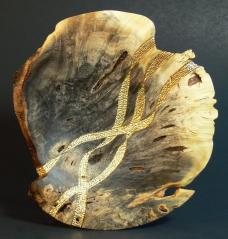
3) Dealing with burls. There's something very special about burls, and it is certainly not obvious how to handle them in general or in particular. A good "how to use a burl" demo (or two!) is well worth the time. The demo(s) can accompany a "burl buy" situation so that members can join in at home and practice what they've learned.
4) Wood ID. How many times do we see a post about "What kind of wood is this?" It takes a full demo period to show the literature, tree structure, and techniques involved, including a good PowerPoint show and magnifiers of different powers to show and compare all the internal features of the grain structure, etc. It helps to have a really knowledgeable person in your club to do this.
5) A comparison of hollowing tools and systems. Same thing -- how often do we see questions here on WC asking that type of question. Have members bring their tools and systems in and show how they work -- with good planning, you can get 4 or 5 different ones done in one session.
6) Coring. I think all the posts here a few weeks ago on this topic make it an obvious one. Have one member set theirs up and let the other members come up and try it out. If you can compare two, all the better.
7) A multi-axis demo showing two or three different methods. I think a lot of people are a little afraid to try this sight unseen, but having seen it once, will give it a go. It opens up lots of new avenues.
 The skew. Many turners avoid this tool. DAMHIK. An irreverent approach to this tool will help break the ice. Use an axe first and then move to more sophisticated examples. There are many different shapes to talk about. Leave time for some member hands on.
9) Peppermills. This isn't rocket science -- just some spindle turning and Forster drilling, but there are two different hardware systems and a lot of tricky, practical stuff you have to know and do for each of them to make it come out right. That's what the demo is about -- to remove the mystique and uncertainty.
10) Segmented building and turning. Even for people who never plan to make a segmented form themselves, this is a fascinating topic, and it will be well attended. You can do two -- one for open segmenting and one for closed. Show both the building and the turning by having a number of pieces at various stages of development.
I could go on and on, but this is a good start. ...Gary
 (No skin-flics and no "Summer vacation travelogues")!!