Home Articles Forums Gallery Marketplace Videos

WoodCentral Forums

Knowledge You Can Build On — Est. 1998

Combination Press Plough Plane

Hidden Heroes

Posts

Hidden Heroes

#1

Hidden Heroes

charlie belden

>Hidden Heroes

OK - so maybe �heroes�, for the sake of aliteration, is stretching things. I couldn�t come up with a �catchy� subject line for Unacknowledged Contributors To The Advnacement of Turning - the tool makers who put new turning capabilities into the hands of the Average Joe/Jane woodturner.

The Pioneers of woodturning become The Masters of woodturning, the ones who find new shapes, forms, tools and techniques and become known to new turners and are familiar names to old hands at turning. The people who make the tools of The Masters and make them available to those who follow are far less familiar - if even known - and are seldom acknowledged for THEIR contribution to turning.

Think about it for a moment. Do a mental inventory of the turning tools you have - that weren�t available ten years ago - at least not for purchase. And while you�re at it, go over your Lust After tools list. Who came up with those tools - or figured out a way to make them at a price range some, if not most, turners can afford (might require saving up - but still affordable).?

Who came up with The Scroll Chuck - with interchangeable jaw sets?

Who came up with �Insert Tools� - initially with HSS inserted cutters and then with carbide inserts?

Who made the Captured Hollowing System available - and who figured out a way to add a laser to that system?

Who put out the first Swan Neck hollowing tool?

Who, or what, is Stubby?

Wally Munro comes to my mind - a turning club member recently showed me one of his articulating hollowing tools. And Randy Privett also comes to mind since I�ve got one of his MiniMonster captured hollowing systems - with laser and a boat load of insert tools and holders. And I can�t forget a recently deceased turning club member, Richard Dige, who made hollowing tools for doing small hollowed christmas ornaments for club members - at the very affordable price of $10 each.

Got unsung Hidden Hero turning tool maker you�d care to acknowledge and share some background on?


Re: Hidden Heroes

#2

Steven Antonucci

Rolly Munro would agree :-)

steve antonucci

>

Re: Hidden Heroes

#3

Re: Hidden Heroes

Doug Thompson near Cleveland

>Many of the tools we use today came from metalworking, boring bars, scroll chucks and carbide tip tools.

Jerry Glaser (this could be a long list) first used 10V (A11) and 15V plus cryogenics.

Stan Townsend brought out the Elbo tool.

Joe Rollings (sp?) had carbide insert tools on Ebay for a long time.

Re: Hidden Heroes

#4

Re: Hidden Heroes

Wally Dickerman in Arizona

>The bowl gouge was around in various forms long before it was marketed by a major tool manufacturer. Jerry Glaser made a few special order gouges at least 40 years ago.

Peter Child is generally credited with working with a major tool company, Henry Taylor, to manufacture and market the bowl gouge in the UK. It wasn't in the stores in the US until around 1979 or 1980.

Wally

Re: Hidden Heroes

#5

Re: Hidden Heroes

John Jordan

>The Arnalls (sp?) form Australia had captured hollowing tools at the first AAW Symposium in 87. They were pretty crappy, but.........

John

Re: Hidden Heroes

#6

Lyle Jamieson

Re: Hidden Heroes

Lyle Jamieson

>Dave Thompson from Seattle was the first to publish the use of a laser on a boring bar in Fred Holders Morewoodturning. 1997

Clay Foster, Frank Sudol, Hugh McKay, John Nichols and others long before me had ingenious ways of holding huge boring bars up to do very large and tall hollow forms. I just took the idea and shrunk it down so everybody could do it and afford to do hollowing with a captured system in 1997. It was not my idea.

Re: Hidden Heroes

#7

Re: Hidden Heroes

charlie belden

>Doug:

Modesty is admirable.

Since you didn't mention yourself - take a bow anyway. Judging from all the positive comments on your tools, you surely deserve a round of applause from grateful users of said tools.

Re: Hidden Heroes

#8

Re: Hidden Heroes

charlie belden

>Lyle:

Coming up with the idea is one thing. Adapting it to the needs of less adventurous turners (really deep hollowing, in BIG stuff seems quite adventurous - if not insane - to me) and then being able to get it in the hands of others - a lot of others - is what makes a Hidden Hero in my book.

Are all of you this modest?

Thank you sir. And take a bow.

Re: Hidden Heroes

#9

Re: Hidden Heroes

john lucas

>Coring systems. I don't know who started this. I first saw Rude Osolnik use a heavy duty straight cutter to core a cone out of a bowl to be able to save that part. It was obviously only a small step from there to the curved bars.

Re: Hidden Heroes

#10

we, the masses thank you

bob davis

>

Re: Hidden Heroes

#11

Re: Hidden Heroes

charlie belden

>Wally:

You're a great resource for, among many other things, one who provides the historical memory and perspective of turning. And having some understanding of how we got HERE, often on the shoulders of a very few dedicated and driven people, is important.

Thank you once again Sir.

Re: Hidden Heroes

#12

Concur

Jorge Castaneda~Downeast Maine

>

Re: Hidden Heroes

#13

Re: Hidden Heroes

Eduardo Sarmiento-Hall

>Robin wood also make coring tools,his videos on turning are quite good

Re: Hidden Heroes

#14

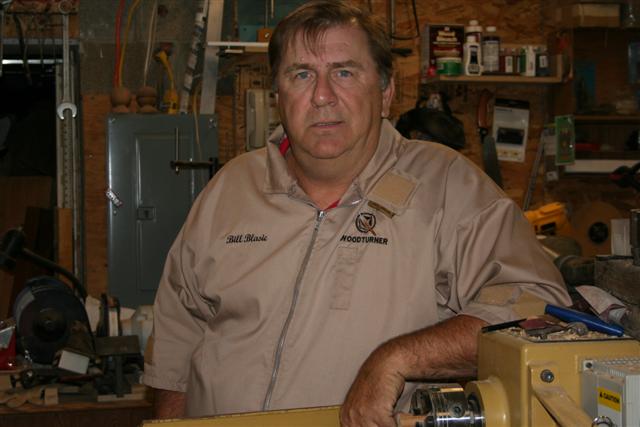
Bill Blasic

Re: Hidden Heroes

Bill Blasic

>I believe the four jaw chuck thing was by Teknatool AKA the Nova Chuck.

Bill

Re: Hidden Heroes

#15

Re: Hidden Heroes

Terry Morrill

>We don't want to forget David Ellsworth. He opened up hollow form turning with the tools he designed and made.

Re: Hidden Heroes

#16

Re: Hidden Heroes

bowlman

>I remember Nick and David, the Arnalls from Australia, John. When Nancy and I visited OZ in '88 I carried one of their captured rigs back to Indy with me. Still have it, and like you said, it does only a so-so job. But, the collet chuck they sold works like a champ. But, since I have the Stronghold, I rarely use it.

Re: Hidden Heroes

#17

Lyle Jamieson

Re: Hidden Heroes

Lyle Jamieson

>I believe the Axminster chuck(sp?) from England was in there just before or in the same time frame as the Nove chucks.

Re: Hidden Heroes

#18

Re: Hidden Heroes

Wally Dickerman in Arizona

>In about 1979 Fine Woodworking Mag. had an article on David

ellsworth with photos of several of his thin walled hollow forms. I had never seen anything like that. I thought "Wow, I've got to learn how to do that"...It took a few years but I did it. There weren't any tools available or instructions on how to do it, so it wasn't easy.

Wally

Re: Hidden Heroes

#19

Re: Hidden Heroes

Wally Dickerman in Arizona

>In 1986 a bunch of turners got together at Arrowmont in Gatlinburg Tenn. That was when the AAW was started. A small article was posted in Fine Woodworking mag. Within a month I became a member. Our first AAW symposium was in 1987 in Lexington, Ky. I attended along with about 400 others. Most of the pieces displayed were open bowls along with a few HF's and spindle turnings. We've come a long way since then.

Wally

Re: Hidden Heroes

#20

Lyle Jamieson

Re: Hidden Heroes

Lyle Jamieson

>Remember Russ Zimmerman's crude (first that I know of) turning tools catalog?? It was more like a newsletter that sold tools. Late 1980's I believe. Remember Thompson Boring bars with telescoping handles?? I dont remember his first name

Re: Hidden Heroes

#21

Giles Gilson

Don Orr

>He was one of the early ones to color or paint his turnings.

Re: Hidden Heroes

#22

Re: Hidden Heroes

Wally Dickerman in Arizona

>Yep, I have a Thompsom boring bar. It weighs 9 lb. and telescopes to about 6 ft. I had to build a tool rest on a stand that was behind me. It was to hold up the back end of the tool. When I first got the tool I was anxious to turn my first HF that was more than 12 in. deep, so I hand held it. It about wore me out and I had numerous catches when about 15 or 16 inches deep in the piece.

I still have it but haven't used it for many years.

Wally

Re: Hidden Heroes

#23

How many people have ...

Ed Moore in SW VA

>made ornaments in the style of Bob Rosand's acorn ornaments, birdhouse ornaments, and globe ornaments? Most of us are indebted to Bob for leading us down that path. Bob and Susan often stay here as they go north or south on Route 81 to woodturning or bicycle events. He has given me lots of excellent advice and he had me assist him at John C Campbell Folk School. Carolyn and I regard Bob and Susan as being among our most valued friends.

Not only Does Doug Thompson make excellent tools, he is a great guy to do business with. I owe Doug some turnings as a result of his kindness.

Brent English of Robust Lathe fame is another fine human being who has worked very hard to produce his version of the ultimate lathe. I indicated that I wanted to get the Robust demo lathe at the Louisville Symposium, but had to hold off a final commitment. Medical problems led me to allow someone else with cash in their hot little hands to have that lathe. A year later I ordered my lathe and Brent honored the original deal - which he certainly did not have to do.

So, Bob Rosand, Doug Thompson, and Brent English are my three names to be added to the Woodturning Hall of Fame.

Re: Hidden Heroes

#24

Re: Hidden Heroes

Jeff Rich

>I think there are a few people here that should get together and write a book on the Modern History of Woodturning.

It would be very interesting to learn the innovators and heros of the recent past and near future.

Re: Hidden Heroes

#25

History of American Woodturning-Late 20th Centur

charlie belden

>There are books written about several of well known turners, a recent one being about Bob Stocksdale - but I don't think there's one on the History of American Woodturning - Late 20th Century.

Given the rate that wood turning is growing and spreading, it would be good to get some of the institutional memory of the last 50 years together in one place, rather than scattered about in various magazine articles, web sites - and in the brains of people who were there and involved.

separate question:

Dale Nish has had a significant impact on wood turning in the U.S. and still is involved in putting together turning symposia in Utah. Where does he fit in to the historical picture? And since in the recent past, there have been date conflicts between gatherings in Utah and those put on by AAW - is this a coincidence or is there something else going on? (or is this something that just isn't discussed?)