WoodCentral Forums

Est. 1998 — 27 years of woodworking knowledge

Preparing Japanese Chisels

Posts

Preparing Japanese Chisels

#1

Preparing Japanese Chisels

Chuck Bjorgen
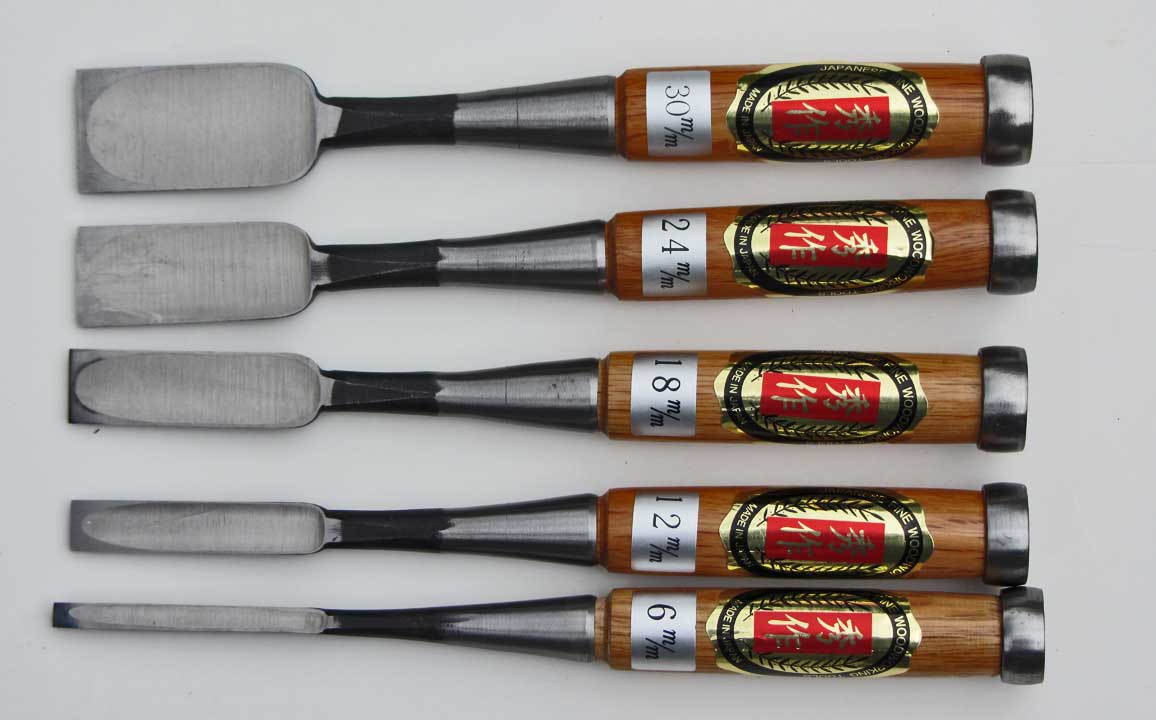
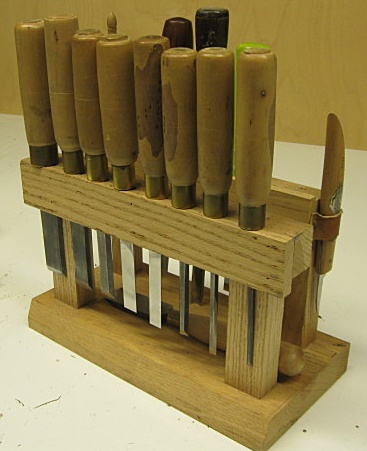
I recently found a batch of Japanese chisels I thought I had sold. They were purchased from my local Woodcraft store 18 to 20 years ago and had been stashed during a basement cleanup a few years ago. No idea about the maker of these chisels so I can't say much about them other than the retail source. I thought I might properly prepare the hoops and ends of the chisels but am immediately running into a problem. I managed to finally remove the hoop on one by using a battery terminal puller. I've been trying to smoosh the bare end of the handle with a ball pein hammer with little success.

Question: would it make sense to soak that handle end in hot water in order to compress the fibers in order to slide the hoop on and then mushroom the end? I thought about some judicious filing but that seemed wrong.

I looked at a few YouTube videos and other internet instructions and saw lots of variations on the process. I also checked the archives here. Just thought I'd ask this collective group.

Re: Preparing Japanese Chisels

#2

Re: Preparing Japanese Chisels

Brian Holcombe

No water and no bashing :D

When you remove the hoop, file the inside edge of both the entrance and exit of the hoop into a nice smooth radius.

You can use a pipe or something of similar diameter to reapply the hoop, if it won't go on then you might consider paring away or sanding VERY LIGHTLY until the hoop can get onto the handle until the hoop is just barely proud of the handle. If there is a little bump where the handle has been compressed, I usually pare that little bump away until its smooth and the hoop can go past that point.

At that point use your hoop setter tool (you can buy an actual one if you so desire, they're about $25) to fully seat the hoop knocking it down until 2mm of the handle is exposed.

Now take a couple taps along the edge of the handle with a hammer and knock the grain over, locking the hoop on tight. I go all the way around the diameter, but this is really not necessary.

Re: Preparing Japanese Chisels

#3

Re: Preparing Japanese Chisels

TomD

It depends on the wood, which admittedly we can see in your photo. I decided it wasn't worth it on my Macasar Ebony chisels and just left them the way they came from the seller, about 35 years ago. I extended that set with 5 pro quality white oak handles, basically the only ones I consider at this stage, even when spending like 300 a chisel, and they set up great. I really like the whole chisel and hammer thing the Japanese have going but over time have come to the conclusion that while I hate the look a urethane mallet is a far better option for me. Having made that decision I don't bother setting hoops unless they become loose.

Re: Preparing Japanese Chisels

#4

Re: Preparing Japanese Chisels

Derek Cohen (in Perth, Australia)

I really like the whole chisel and hammer thing the Japanese have going but over time have come to the conclusion that while I hate the look a urethane mallet is a far better option for me.

Tom, I like using a steel gennou on nomi as it offers up good feedback. However there are times when the family prefer the quiet, and my elbows celebrate the reduced shock, of a plastic Thor hammer. :)

Regards from Perth

Derek

Re: Preparing Japanese Chisels

#5

Re: Preparing Japanese Chisels

Derek Cohen (in Perth, Australia)

Hi Chuck

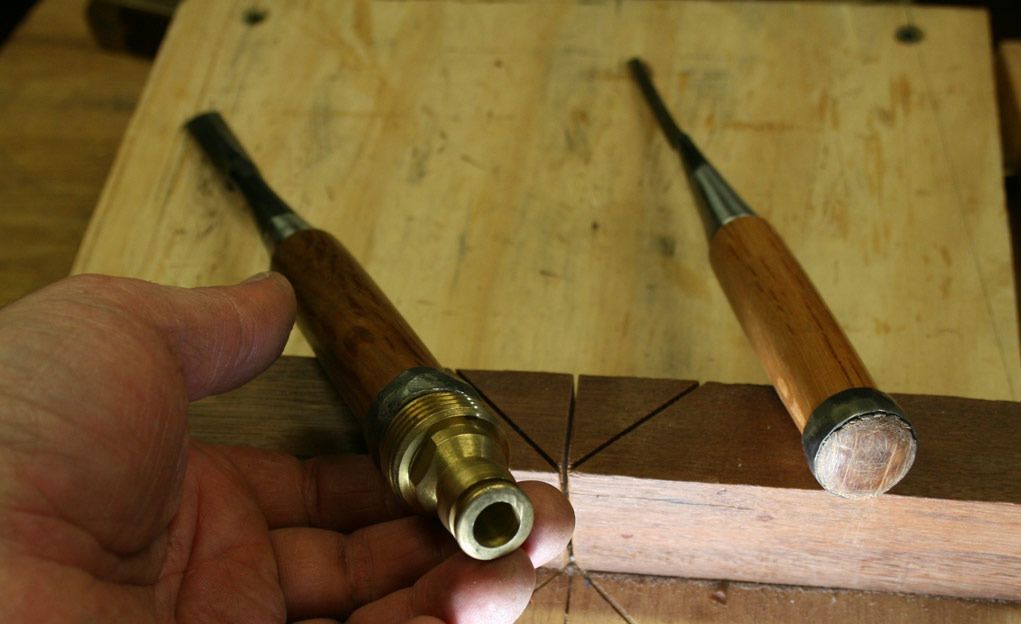
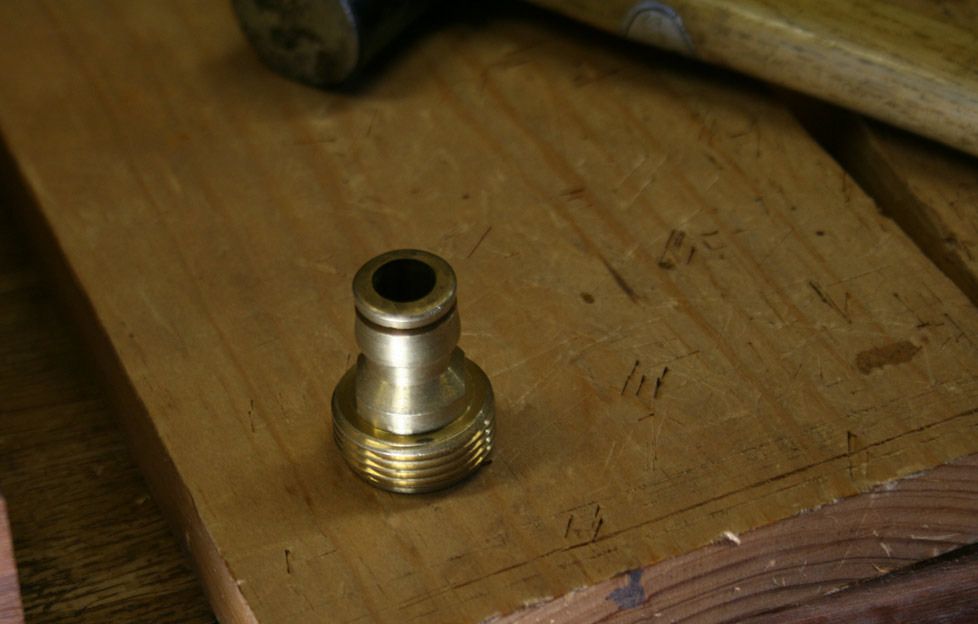
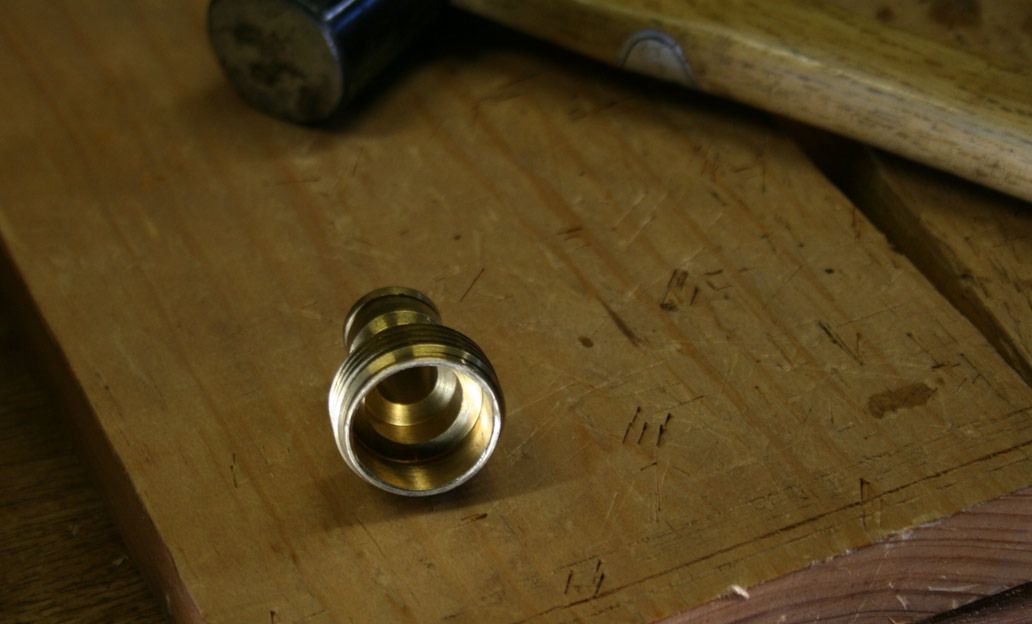
In addition to the good advice of Brian, I use a brass coupling to strike the hoop and force it down firmly. (Also, on the right is a completed chisel) ...


Incidentally, I have a bunch of those (perhaps Iyoroi?) Japanese bench chisels. I must have purchased them 20 years ago and still use them. They may be cheap, but they have great steel. I hollow grind them (!) and they have never chipped. These were done on a CBN wheel (grinds without much heat).


Regards from Perth

Derek

Re: Preparing Japanese Chisels

#6

Re: Preparing Japanese Chisels

Chuck Bjorgen

Thank you gentlemen. I like your idea, Derek, of using the brass coupler. I also saw one YouTube video how one user created a wood jig by drilling holes in a piece of wood the same size of the handle and hoop. I've been working on a sixth chisel that is different from the ones in my photo. It is 8.5mm and a different brand. Can't figure out why I bought that size.

I almost thought I'd put these up for sale again but have decided to keep them and go through the prep process.

Re: Preparing Japanese Chisels

#7

Re: I use the same...

david weaver

..I don't know if you use a hammer shaped mallet or a round one, but I use a round mallet and urethane for light work and verawood for heavy.

I adjust planes with the gennou. It's a matter of noise and what you're used to, I guess.

Re: Preparing Japanese Chisels

#8

Socket set

David Charlesworth

I have found several different sizes of handle diameter.

A suitable socket, struck with dead blow hammer does a fine job.

David Charlesworth

Re: Preparing Japanese Chisels

#9

Re: Socket set

Chuck Bjorgen

Terrific idea, David. I'll be trying that first. I certainly have the sockets.

Re: Preparing Japanese Chisels

#10

Re: Socket set

Chuck Bjorgen

The socket worked perfectly. An 18mm seemed the right size. My main problem now is reducing the ridge that was created while pressing the hoop into place during manufacturing. Using a marking knife I'm trying to scribe a line just a bit back from that ridge, then paring back to that knife wall. Should go fine but it's a tedious process.

Re: Preparing Japanese Chisels

#12

Re: Socket set

Bruce, a MN Galoot

Never once thought of that. I used it to set the ferrule and hoop on a tool I made over the weekend. Worked exceptionally well.

Re: Preparing Japanese Chisels

#13

Re: Preparing Japanese Chisels

Chuck Bjorgen

Setting hoops

I started this thread three weeks ago and ran into some missteps along the way. With regard to David Charlesworth's recommendation to use a socket for seating the hoops, that's still a good plan although I had a bad cut on my index finger and caught that cut between the base of the socket and the tool. Lots of blood and that injury needed to heal. Dumb move but then I decided to purchase the hoop setting tool available from either Japan Woodworker or Woodcraft for $28.

Get a bigger hammer

Still the hoops would not easily slip on because the chisel handles were too large so I resorted to hammering the ends, rasping and even whittling with my pocket knife. I learned today that I needed a bigger hammer so I used a regular carpenter's hammer while holding the handle on the anvil part of my small machinists' vise. This worked very well and reduced the wood so I could slide the hoop part way onto the handle. I then used that same bigger hammer to pound the hoop on with the hoop setting tool. Success.

Next was mushrooming the chisel end to keep the hoop from sliding off. This proved to be somewhat difficult. I don't know the wood used on those chisels but my efforts with a small hammer as shown in lots of videos didn't make a dent. I decided then to heat and soften the chisel ends by holding them up to the spout of our whistling tea kettle with whistle enabled. Perfect! The chisels are done.

I think these are going to be very nice workers even though they are probably not of the highest Japanese quality. I flattened the back on one and ran it through my series of stones, starting with 600 grit diamond on up to finally a 13,000 grit from Stu's set.

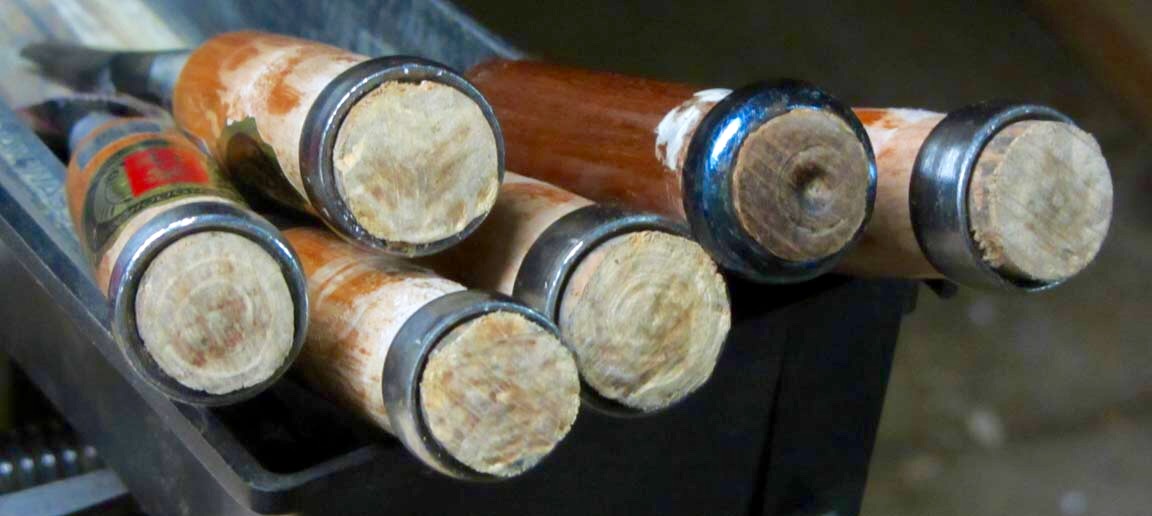
I appreciate the suggestions and tips offered here. With apologies to Brian, even though my methods probably defy the classic approach, they worked for me. They are a little rough but they should be fine. Here's a photo.


The dent in the one chisel was caused by the battery puller I used to initially remove the hoops. I subsequently used pennies between the puller and the wood to avoid that. That chisel was not the same brand as the other five. The results aren't pretty but maybe this will help someone else.

Re: Preparing Japanese Chisels

#15

Re: Preparing Japanese Chisels

Chuck Bjorgen

Yes, I watched his videos.

Re: Preparing Japanese Chisels

#16

Re: Preparing Japanese Chisels

Brian Holcombe

No need to apologize to me. We all tend to evolve and hone our techniques overtime and with guiding advice that suits us differently at different times.

I haven't had wood that won't dent, but I have had situations where a square hit would cause it not to dent.

Re: Preparing Japanese Chisels

#17

Peen the edges

Derek Cohen (in Perth, Australia)

Hi Bruce

The end of the handle needs to cover the hoop. The edges of the hoop are sharp, and the wood is to cushion the end of the handle when pushed with the palm.

Look at the chisel on the right ...


There are two components to setting a Japanese bench chisel. The first is driving the hoop below the the end of the handle. This you have done.

The second is to peen the edges of the handle. You want to move the wood and make it flow over the hoop.

Peening is the process of working the surface. To do this we need a hammer with a domed head - the traditional Japanese gennou is perfect (these have a domed end on one side and a flat end on the other side). A Warrington hammer is another.

To peen one does not hammer downwards. Instead you need to hammer at an oblique angle and simultaneously drag the hammer head across the surface, as if you were pulling the wood over the hoop. Several controlled gentle taps are better a single heavy-handed slam.

Give it a try.

Regards from Perth

Derek

p.s. I had a look at the video. This step is mentioned but not demonstrated there.

Re: Preparing Japanese Chisels

#18

Re: Peen the edges  *LINK*

JDK

I should have posted this video, which at about the 11:23 mark demonstrates his technique for mushrooming the handle.


Sumokun mushrooms the handle

Re: Preparing Japanese Chisels

#19

Re: Peen the edges

Chuck Bjorgen

Hi Derek --I spent a bit more time with a hammer on the chisel ends this morning. The result is not as pretty as yours but the wood edges are definitely wider than the hoops. If the hoops come loose again, I'll continue to work on them.

The video link was for restoring Japanse chisels but that same author has another on setting hoops.

More important is that a couple of these chisels showed a slight taper toward the edge when I started the back flattening. It was almost like the ruler trick. I had to resort to the 80 grit on my granite block to remove that. I imagine that reflects the lower price I paid for these tools way back. The traditional hollow on the backs makes this fairly easy. I sold my Narex set last week after I decided to keep these. Still, I'm not chisel deprived.

Re: Preparing Japanese Chisels

#20

Re: Peen the edges

Brian Holcombe

I had a closer look at your picture this morning, likely you are having trouble because there is too much handle sticking out past the hoop. 1-2mm is good, more makes for trouble. If they are too long I cut it down to 2mm, then peen it over.

He mentions water, I would not use water. I have one set of chisels with the hoops professionally set from Japan and they're definetly not using water.

I have been setting mine, but had a chance to speak with Stanley Covington over FaceTime, he was kind enough to show me his techniques for chisel setup, which further improved mine.

He sets the hoops....no water, no steam, no oil, just proper care of radiusing the inside edges of the hoops, carefully fitting them, then Peening the edge at two or three spots to lock it on.

If you wet the handles they fail prematurely because it advances how quickly the normal wear happens. The normal wear takes an incredibly long time...best to keep it that way.

Re: Preparing Japanese Chisels

#21

Re: Preparing Japanese Chisels

Brian Holcombe

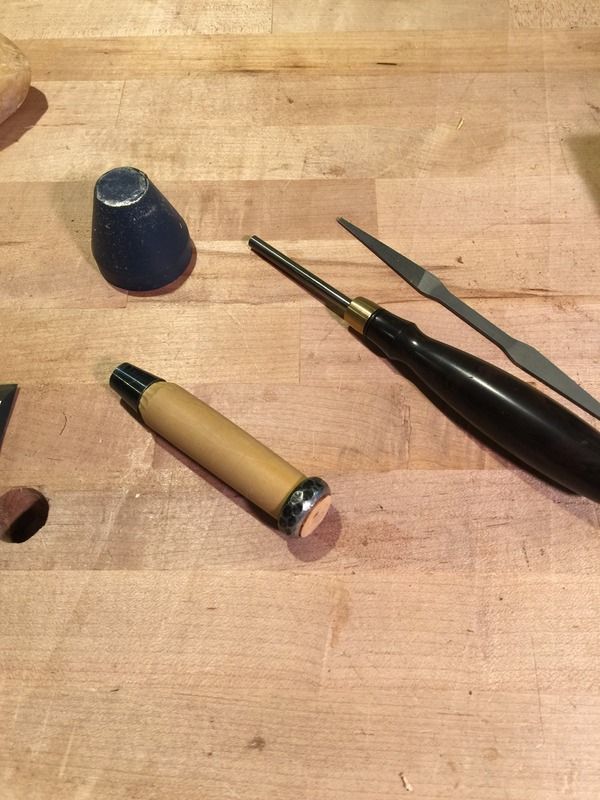
I didn't plan to do this, but I figure my comments are nonsense without pictures so here goes;

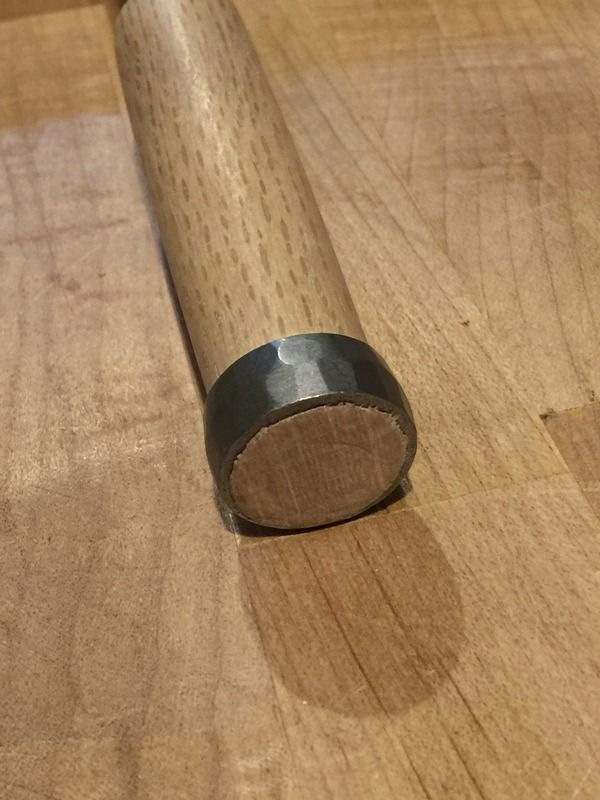
This is a professionally setup chisel from Japan, notice there are no water stains and the wood isn't protruding out along the sides heavily.


For the sake of this discussion, I took my most used handle and knocked the hoop off. Notice I have taken the handle off of the chisel before starting.

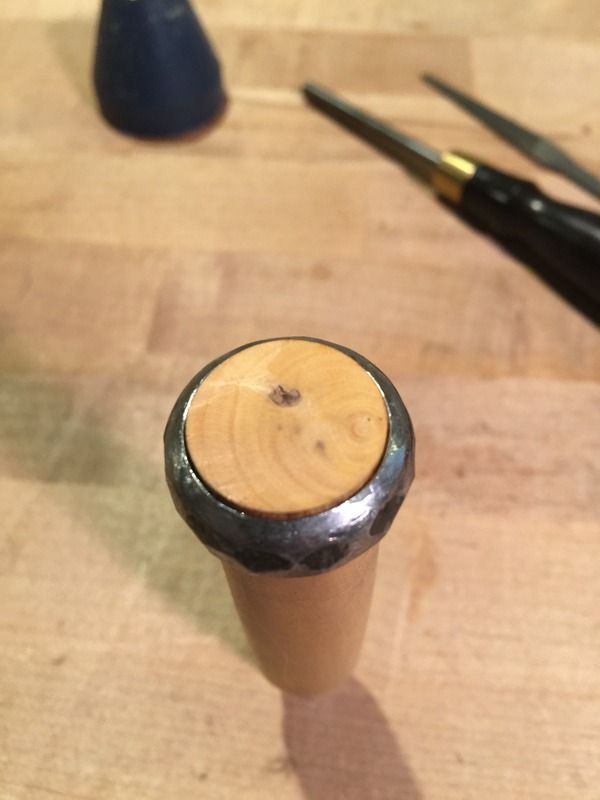
I cut the handle back to untouched wood. These are gumi handles, so they are incredibly hard wearing and have a certain springiness that makes them nice to use. My handle does not have any sharp ledges....because the hoop was properly attended to on the inside.


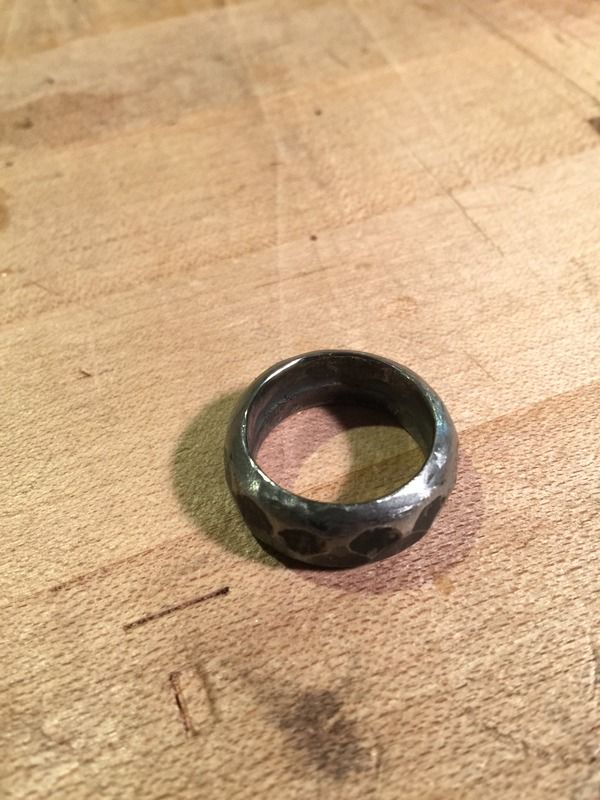
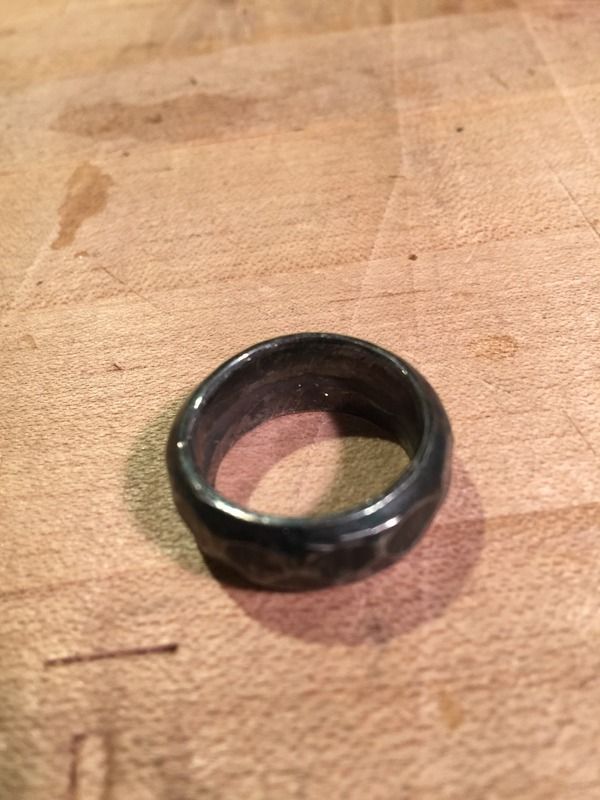
To completely remove any lingering burr, I work the top of the hoop with a file, inside of the edge to radius with a file, then finish up that edge with a carbide burnisher.


Same on the bottom


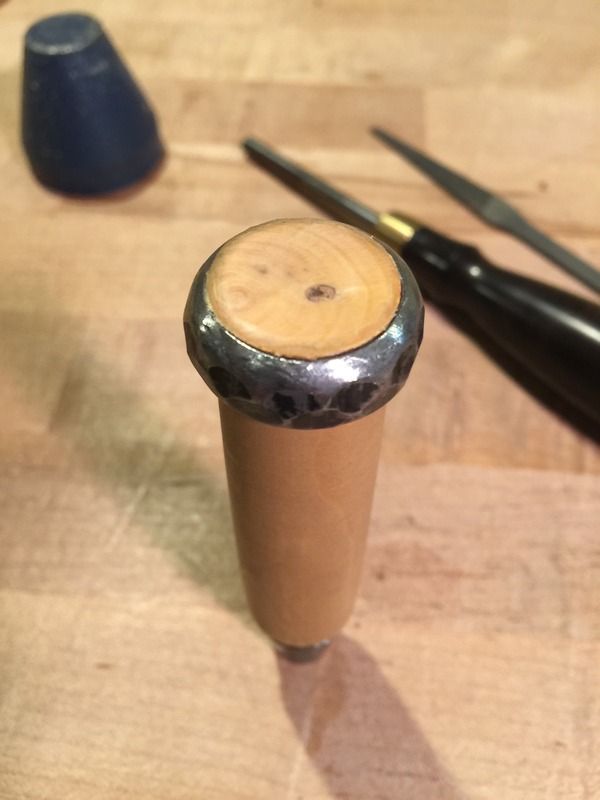
I install the hoop using a hoop setting tool and a mallet. I do not need to trim the wood or do kiridashi :D The hoop is nicely radiused, so as it is knocked down onto the handle it is compressing the wood, that compression is what retains the hoop.


I didn't measure, but I wold guess that is about 1.5mm.


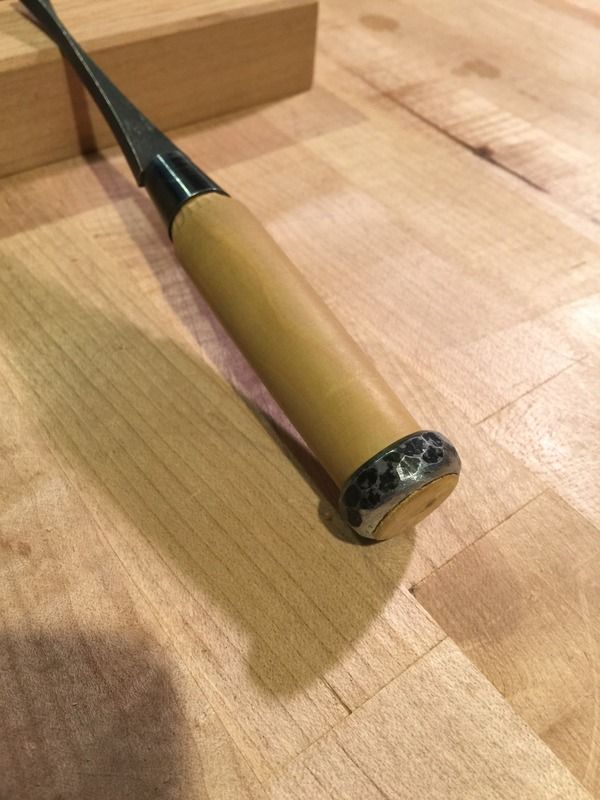
Finally, lightly peened;


Then, reinstall on the chisel.


Stanley trims the inside of the hoop with a cutting tool, since I do not own that cutting tool I use this method. Slight difference, his approach is quicker but same result.

Re: Preparing Japanese Chisels

#22

Japanese chisels and ax hnadles

Bill Tindall, E.Tn.

I don't know anything about Japanese chisels but I do know about ax handles. One must never wet them to seat them. A study was done and found that wetting the handle while compressed in the ax "eye" irreversibly crushed the wood cells making the handle prone to repeated failure from loosening. It would seem that the same would be true for a chisel handle captured in a hoop.

Re: Preparing Japanese Chisels

#23

Anybody tried hoopless

Bill Tindall, E.Tn.


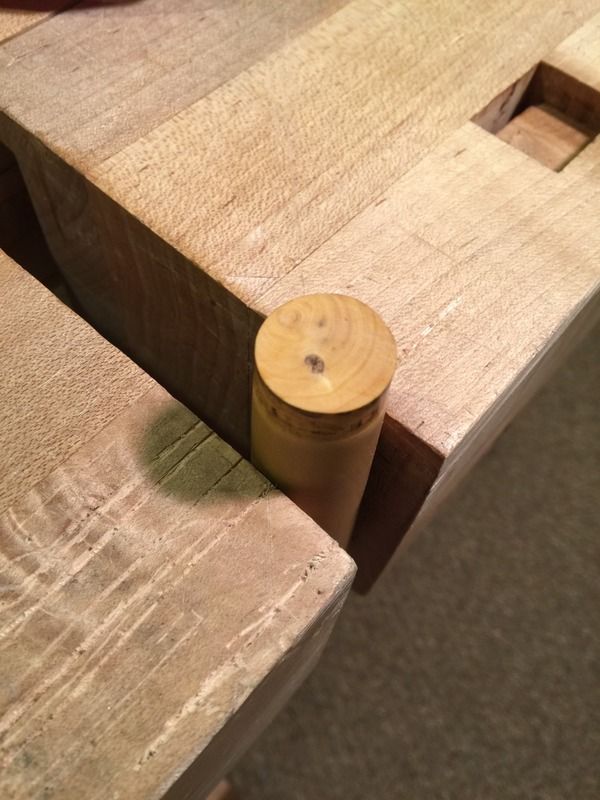
I made this set of chisels some years ago. I intended to hoop them but in my usual way got distracted making stuff and never got around to it. I thought that when I wrecked a handle I would just replace it. Well, after years of bashing on them they show little sign of wear. The wood is dogwood. As least in this specific case a hoop was unnecessary. They are more comfy hoopless when paring so I guess they will stay this way.

Re: Preparing Japanese Chisels

#24

Re: Anybody tried hoopless

Wiley Horne--So. Calif.

Billl,

What do you strike those chisels with?

Wiley

Re: Preparing Japanese Chisels

#25

Term error

Brian Holcombe

Goofed and put kiridashi (which is s knife) where I meant kigoroshi (killing the wood).

👍 This page answered my questions

Your vote helps other woodworkers quickly find the answers and techniques that actually work in the shop.