New WoodChat!
Home Articles Forums Gallery Marketplace Videos

WoodCentral Forums

Knowledge You Can Build On — Est. 1998

Premium Domestic, Figured & Live Edge Hardwoods in Stock. Best Prices for Serious Woodworkers.

Sharpening router plane blades

Posts

Sharpening router plane blades

#1

Sharpening router plane blades

Derek Cohen (in Perth, Australia)

The recent post on a router plane reminded me to post the method I use for sharpening router plane blades. This topic comes up regularly. I am not sure if anyone else prepares their blades this way, but I swear by it.

As with the preparation of any plane blade, the method consists of two parts - grinding and honing.

Grinding

I hollow grind all my blades - including the router plane blades - as this reduced the amount of steel to remove and enables the bevel angle to be repeated each time. To do this I built a very simple jig. This is good for Lee Valley and Stanley blades, with their angled sides. Grinding Lie-Nielsen does not require a jig, but follows the same principle.

The jig is a simple V-grooved section with one corner bevelled ...
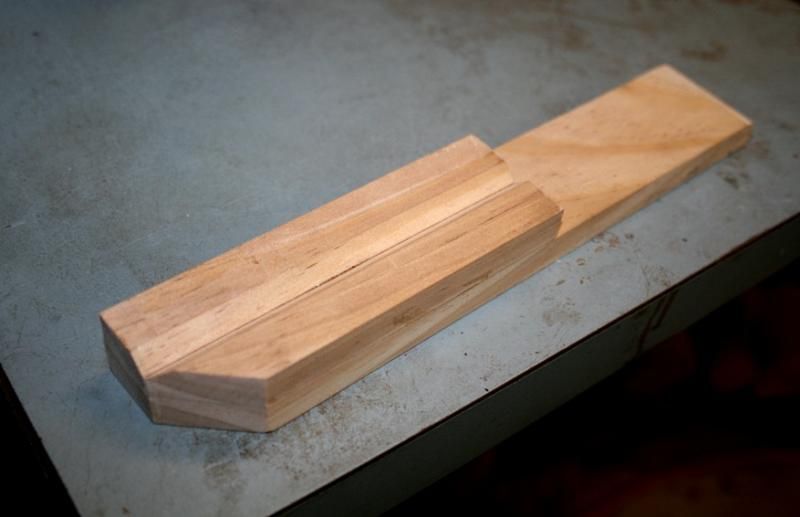

This is used in conjunction with a sanding wheel on a drill press. Use a coarse grit, around 80 - 100 maximum.
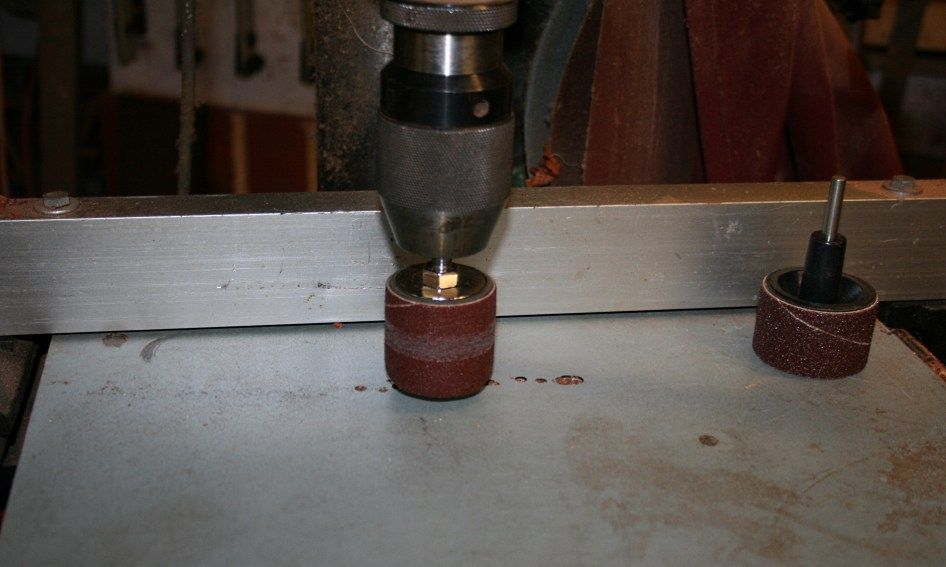

The size of the wheels depends on the depth of the hollow you wish to create. The Lee Valley/Stanley blade heads are longer than those on the Lie-Nielsen, and the latter must use a narrower diameter wheel.

The aim is to use the V-groove to keep the bevel square to the wheel. Ensure that the direction of the turn is into the bevel. This is a LV 1/4" blade.
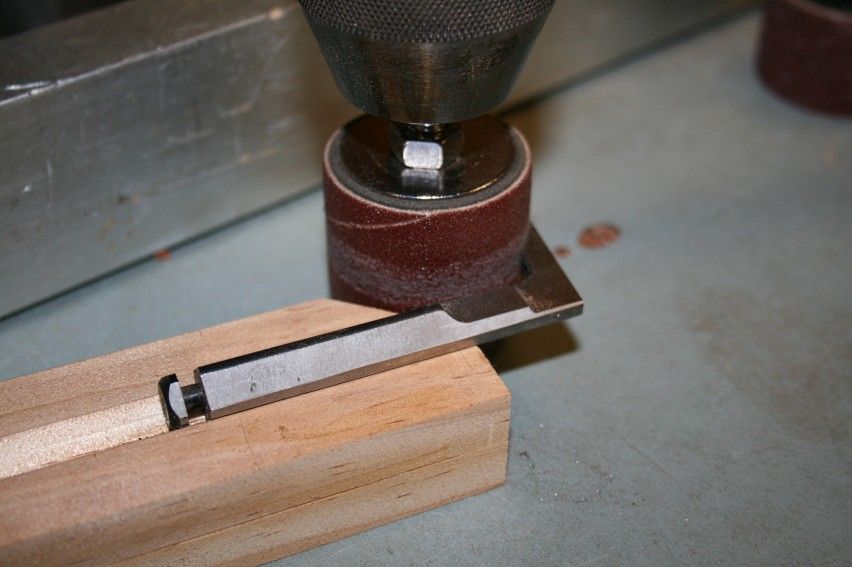
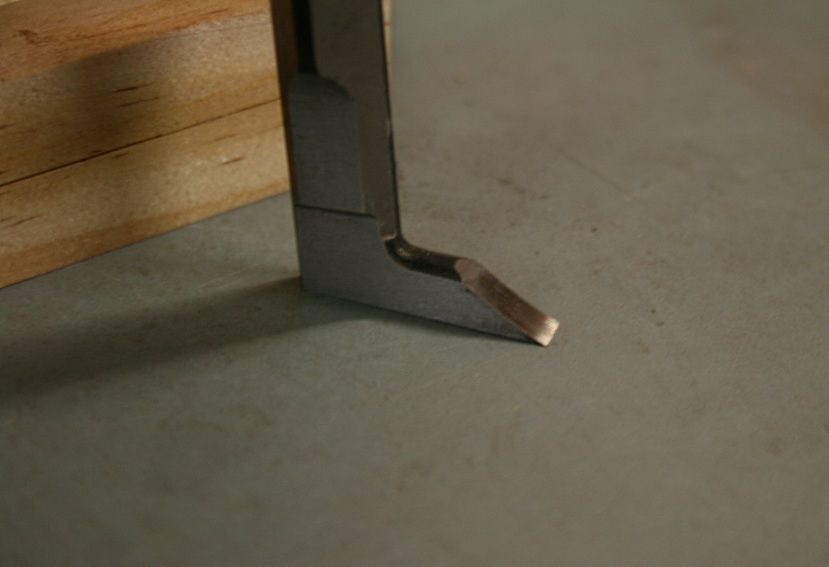

It is easy to maneuver the jig and blade into the ideal position. Use light pressure and keep the blade cool. Here are a few overhead shots ..
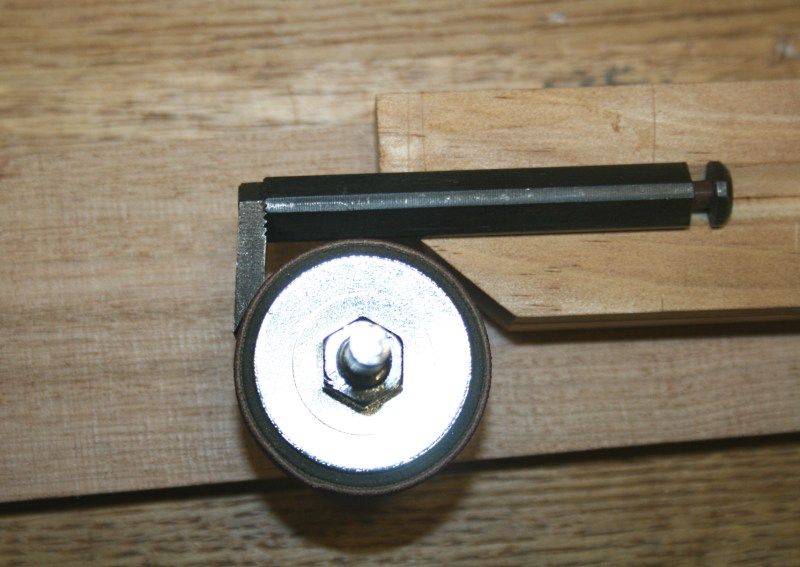
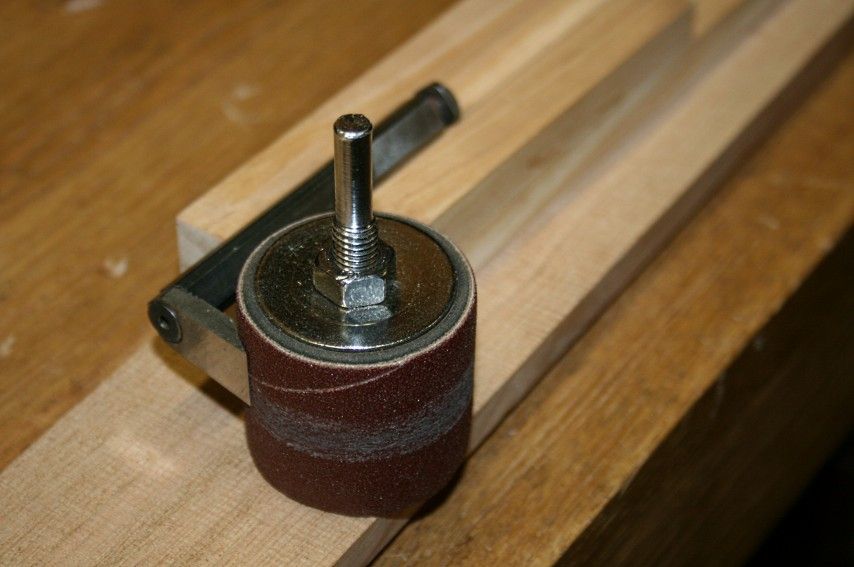

The 1/2" LV blade has a removable head, and this enables a different technique for grinding.
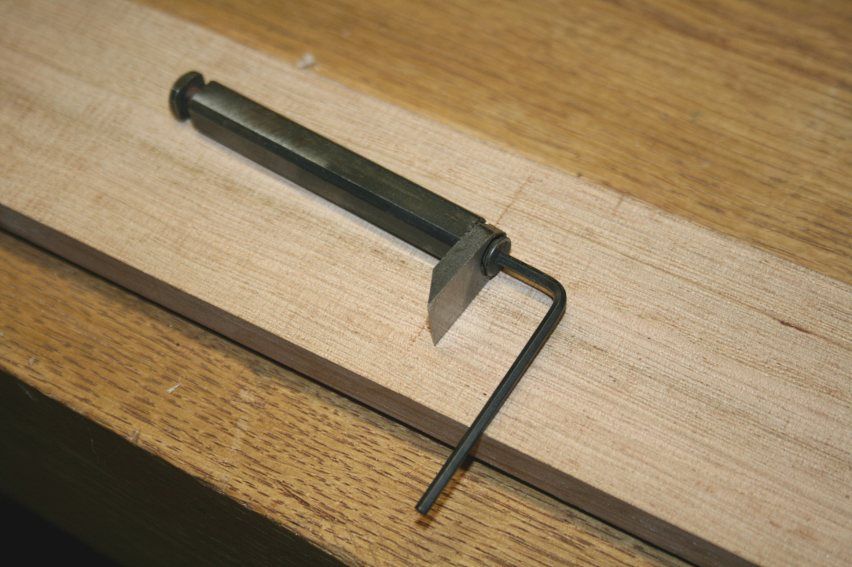

The blade head is attached to a holder. This enables it to be treated as a common plane blade. Here it is set up in a Tormek. It could as easily be ground on a high speed dry grinder.
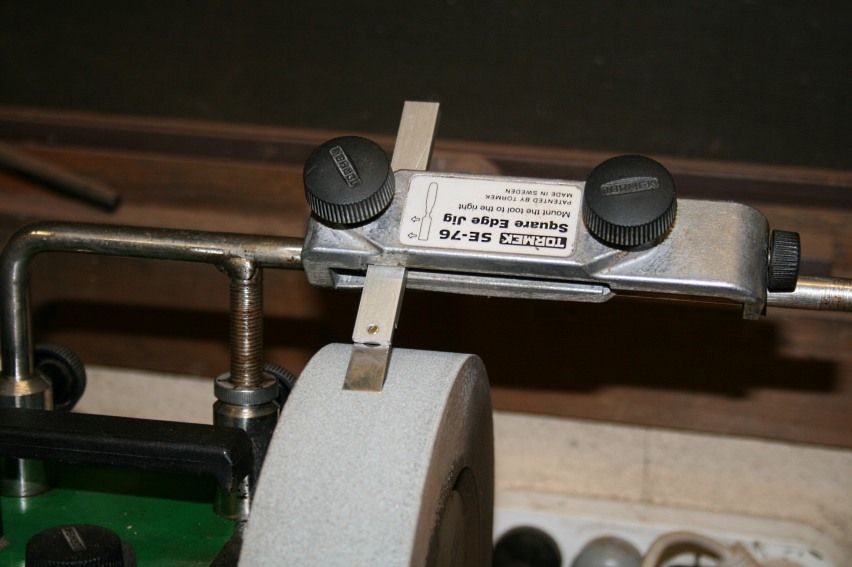

Honing

While the 1/2" head may be honed in a guide, all other blades need to be freehanded. That is my preferred method anyway.

Freehanding the 1/2" blade (using the holder). Pull the blade sideways on the sharpening medium. Honing on a hollow is quick work ...
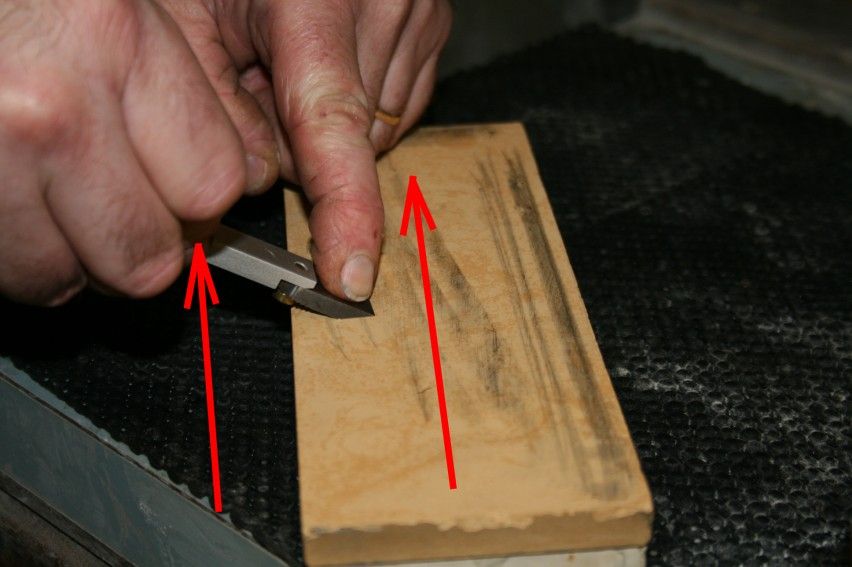

Honing the other blades simply requires balancing on the hollow, which is considerably easier than attempting to hone on a flat bevel. The hollow acts as a jig.
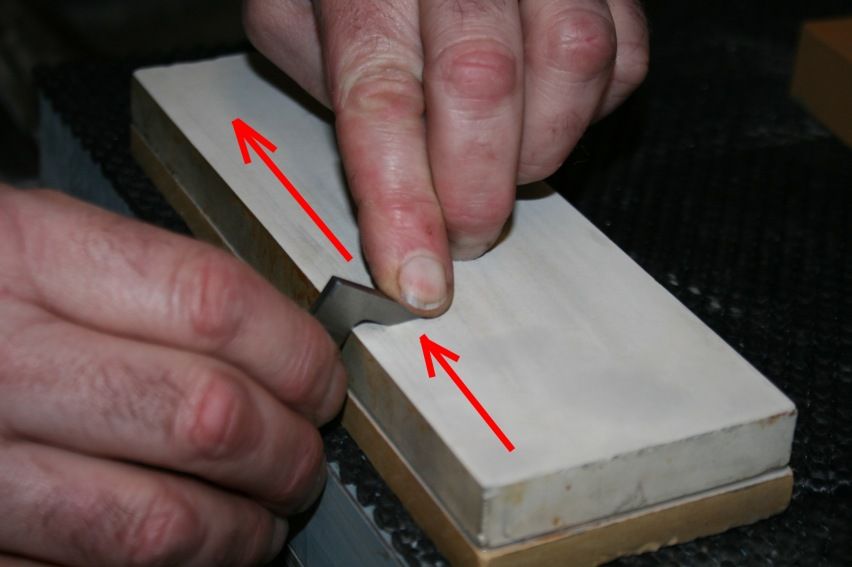

The result is a really sharp edge that is easy to renew many times before any re-grinding is indicated.
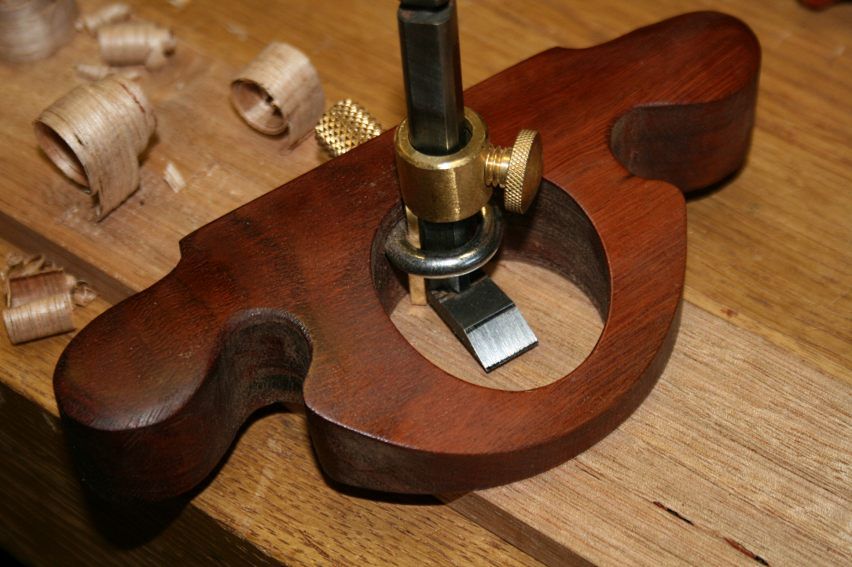
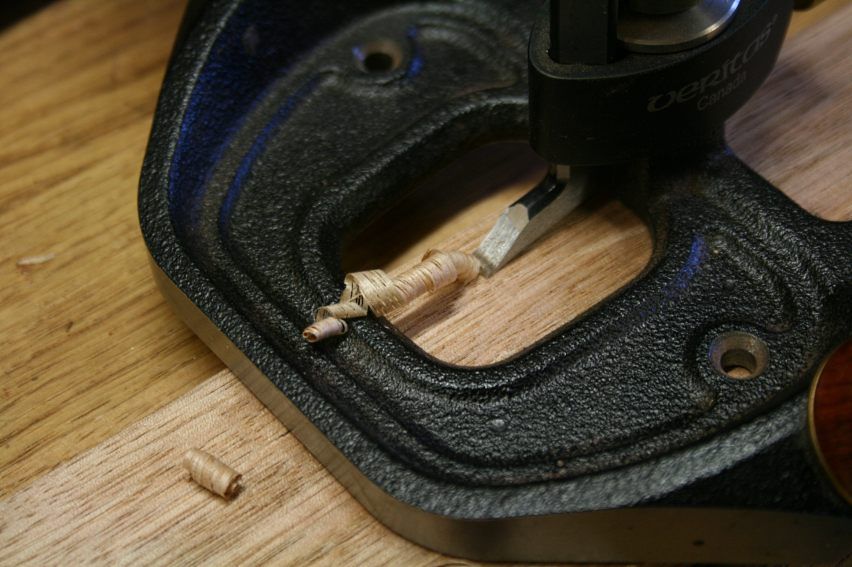

Regards from Perth

Derek

Re: Sharpening router plane blades

#2

Re: Sharpening router plane blades

William Duffield

That's a great tip, Derek, and it will be :falling off a log" simple to adapt to my Oscillating Spindle Sander. All I need to do is cut the corner off a V-block I already have. The only tricky part is removing the stone from its mounting block and hanging it over the edge of the bench for shaft clearance, but that's not a new issue. :)

Re: Sharpening router plane blades

#3

Re: Sharpening router plane blades

Tom

At the end of the day, the run-out on that system is probably no better than just freehanding it. And you don't get good at that by filling the shop with gizmos. As I point out from time to time, there are newbies in the knife building field, who's first stabs at making a knife require all the skill one would ever need to grind any tool in the wood shop. And they do that on the first day. One could tear apart a skateboard and make some stabilization scheme for a hand plane out of the wheels and trucks, but anyone who has attended a half hour demo knows you don't need that either. It's sorta like "hey dudes I figured out a way to attach a table and a fence to a circular saw, and now I don't have to steer that hand saw any more". Which of course like the table saw means it will probably be of powerful use to someone.

Re: Sharpening router plane blades

#4

Re: Derek, that looks almost toooo easy


Re: Sharpening router plane blades

#5

Re: Sharpening router plane blades

Derek Cohen (in Perth, Australia)

At the end of the day, the run-out on that system is probably no better than just freehanding it

Hi Tom

The reason for the jig is that the resulting hollow is as square to the bevel end as possible. This is what will determine the speed and ease of honing. BeforeI made the jig I would freehand this grind. The result was a rounded hollow, both at the tip if the bevel (which would then take forever to hone straight on a stone), or the hollow, per se, would be convex. Make a jig and keep it with your sharpening gear.

Regards from Perth

Derek