WoodCentral Forums

Est. 1998 — 27 years of woodworking knowledge

Phenix saw redux

Posts

Phenix saw redux

#1

Phenix saw redux

Roy from Cincy

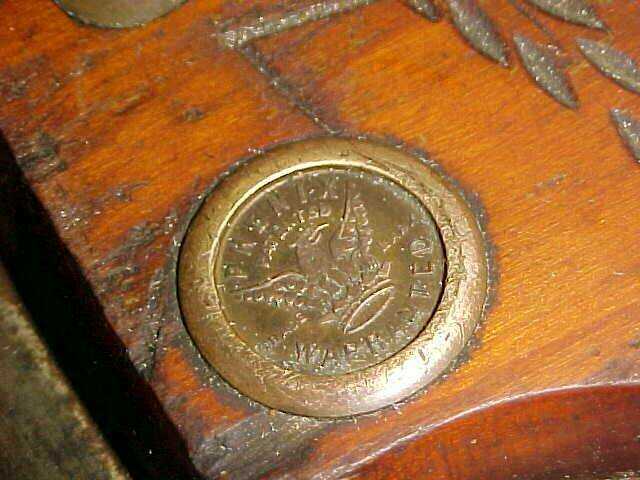
>As promised, here is a picture of the medalion on the Phenix saw. I did find a reference to the Sheffield Tool Co. in Indianapolis using the Phenix logo. Any further info from you saw experts would be greatly appreciated.


img

Re: Phenix saw redux

#2

Re: Phenix saw redux

Bob Nelson

>Roy, The Indianapolis plant that E.C. Atkins worked in was called the Sheffield Saw Works and I suspect that's what you heard about vs. a Sheffield Tool Co. there. You're right in saying that the spelling Phenix might make all the prior talk about Phoenix saw makers meaningless. OR, it might only mean that some saw maker in the past wasn't a very good speller. Bob

Re: Phenix saw redux

#3

Re: Phenix saw redux

Roy from Cincy

>Thanks for the info. This is an interesting saw to me and I would like to find out more about this company, but there is very little on the internet that I have been able to search up. Any suggestions?

Re: Phenix saw redux

#4

Re: Phenix saw redux

Mike L. (SoCal)

>Greeting Roy, Bob, and old saw afficiendos,

Although it's probably not related, a quick Google search yielded:

Phenix Saw Works

1116 Broad St

Phenix City, AL 36867-5922

Phone: (334)297-2644

Also, the medallion says "Patented" under the word "Phenix". I wonder what the patent is for. Saw nuts maybe?

Cheers,

Mike

ps. Can you post a picture of the entire saw handle?

Re: Phenix saw redux

#5

Re: Phenix saw redux

Roy from Cincy

>Hi, Mike. I saw the Phenix saw works in Phenix, Alabama, too. It seemed to be a modern saw and lawnmower repair shop. I couldn't find any indication that it had the necessary pedigree going back to the 1800's. If it did, that would be interesting. Besides, it just seems less likely that an Alabama saw would end up in Cincinnati than an Indianapolis saw.

Cheers.

Re: Phenix saw redux

#6

Re: Phenix saw redux

Roger Bell, Oregon

>The EC Atkins Company sold Phoenix (not Phenix) saw medallions in addition to their own (Atkins AAA logo) saw nuts to whomever wished to buy them. I have several older Atkins catalogs that show this. The word "Phoenix" and an identical looking eagle/bird standing over the crown is plainly shown in the literature. Also shown is an identical "Warranted" and "Trade" and "Mark". Only the spelling of "Phoenix" differs. While not conclusive, this evidence suggests a connection with the Atkins factory.

Saw medallions alone, however, dont prove anything, since they can be changed out so easily. Check for other indicators of possible origin to support the Atkins theory. These include the "perfection" pattern hang of the saw. Some, but not all, Atkins saw handles are attached differently than Disstons and others. It is quite apparent in use and rather distinctive. Not better or worse, just different. Also, Atkins had a habit of placing the medallian in much "lower down" on the handle than did Disston and others. This is not always the case, but when it is, it really stands out as something different. Simonds also did the same thing on some of their saws as did Disston on occasion. Also, the hand hole pattern on Atkins saw handles is often somewhat different as well. On some models, it looks more crude and blocky than the typical Disston saw of the same quality and the same era.

Also shown in my literature are Sheffield (brand) saws that are marketed as a secondary (moderately priced) line by Atkins. The premium (Atkins) line all had the Atkins AAA medallian. The Sheffield line shows the Phoenix medallion in some of their line drawings that are clear enough to read. The Sheffield line of saws, according to my literature, had etchings of various names...but all made by the Atkins factory. As someone else stated, the big three (Disston, Simonds, and Atkins) made saws for numerous hardware outfits, who in turn placed their own names on the saws. This was common practise then and is still done today (e.g. Craftsman/Ryobi tools).

The Atkins factory was in my hometown and stopped production in the very early 1960's, and I recall seeing the plant as a kid. I am pretty sure one of the neighbor men worked there. By the mid 1970's, it had been bulldozed away with urban renewal

This question of "Phenix" has come up before on the 'boards, and, if I recall right, someone "in the know" stated that the Phenix was attributed to the Atkins plant. I dont recall how the poster in the know knew. You might take your saw out into bright sunlight and see if you can make out the etching. Also use some form of low power magnification. The etch will show definitively what you have.

You also need to know that I am no authority on handsaws,(so dont get too excited or make unwarranted conclusions based on this post) but I have started a little "collection" of factory and hardware store catalogs and literature that comes in quite handy for tool "history detectives".
Re: Phenix saw redux

#7

Re: Phenix saw redux

Roy from Cincy

>Thanks a lot. Your info was most appreciated.

Re: Phenix saw redux

#8

Re: Phenix saw redux

Ernie Miller Topeka

>Does this saw have an etch? would be nice to know waht it is.

Re: Phenix saw redux

#9

Re: Phenix saw redux

Mike L. (SoCal)

>Hi Roy,

I agree that the Phenix Saw Works is probably not the maker of your saw but I wouldn't be too set on the idea that a 100 year old saw couldn't have traveled quite a distance from its point of manufacture. Over here on the left coast I've found D.R. Barton and L.&I.J. White tools from Rochester and Buffalo, NY, respectivley. And I was trying to buy a tool chest from somebody in Washington state that was filled with Scottish-made tools (didn't get it :-( ). Tools have a way of traveling and there's often an interesting story behind it.

Cheers,

Mike (who was "made-in-Ohio" but is now found a long way away)

👍 This page answered my questions

Your vote helps other woodworkers quickly find the answers and techniques that actually work in the shop.