WoodCentral Forums

Est. 1998 — 27 years of woodworking knowledge

Cutting a small semi-circular joint

Posts

Cutting a small semi-circular joint

#1

Cutting a small semi-circular joint

John in West TN

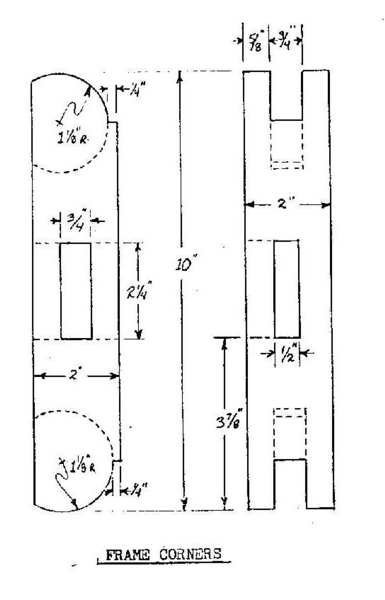
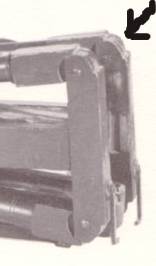
>I'm stumped. Attached is an image of a plan for a folding bed frame corner post; and, if I can figure out how to attach two images, there is also an image of the finished joint. At the top and bottom of the frame corner is the female part of the joint into which fits a circular (2 1/4" diameter) disk that is at the top of the leg and bottom of the bed post respectively.

I think I've figured out how to cut away most of the waste in the female part of the joint. However, I'm unsure about how to cut out the inside part of the circle. I assume that this part of the joint should be smooth and with fairly close tolerance with respect to the male disk. It's almost as if I need a sharply swan-necked chisel. Failing that it seems like I can only scrape/chew away at it with a regular chisel; although it seems like that would not be particularly smooth.

I'd really appreciate the wisdom of your experience.

img

Re: Cutting a small semi-circular joint

#2

Re: Cutting a small semi-circular joint

John in West TN

>Here is the picture of the joint shown in the plans I just posted.


img

Re: Cutting a small semi-circular joint

#3

Re: Cutting a small semi-circular joint

Ed Mulligan, Cape Cod

>John -

I suspect the inner mortise on the original bed joints is straight sided, i.e. not semi-circular. If the original is semi-circular, the maker could've used a swan-neck chisel as you suggest. Just guessing.

The semi-circular relief on the outside surfaces would've been formed with a carving gouge of appropriate sweep. Incannel works best but outcannel is OK, just angle the gouge so the bevel is vertical. When you're reproducing this joint make the joint radius equal to your gouge radius. It's a lot easier than trying to make the joint radius equal to the plan radius (1 1/8").

Ed

Re: Cutting a small semi-circular joint

#4

Re: Cutting a small semi-circular joint

John in West TN

>Thank you Ed! I hadn't thought about the female part of the joint not fiting closely with the male part. I guess because it seems that this joint is a slight variant of the Knuckle joint and the descriptions that I've found about cutting this joint in Hayward's Woodwork Joints, and in Jackson & Day's Good Wood Joints. show that the two parts fit together tightly.

Hayward writes, In a well-cut [knuckle] joint all the meeting faces form a close, accurate fit, and it is this feature of the joint that makes it so strong. In his discussion of this joint, Hayward further writes, Remove the parts marked with the crosses, partly sawing and finishing with the chisel. The latter will have to be used with a rocking movement to finish the hollow portion.

I'm not quite sure what you're suggesting with the incannel carving gouge. Do you mean that I should redesign the measurements of the joint to fit the radius of a gouge?

Again Ed, I really appreciate your helping me think through this problem.

Re: Cutting a small semi-circular joint

#5

Re: Cutting a small semi-circular joint

Ed Mulligan, Cape Cod

>John-

I'm really just guessing on the leg joint. If you can get a peek at the original or if another poster has some info to share, that would be great.

On the knuckle joint in Hayward the interior arc is about 90 degrees and might reasonably be cleaned out with a bench chisel. On your bed it's more like 135 degrees and harder to clean out, hence my guess that it is not cleaned up into a semi-circle.

The most critical fit on the joint is in between the knuckles. It should be a tight press fit. Any slop at all will weaken the joint. If you have some slop, glue in veneer shims and try again.

For gouge sizes, you have the idea. If you can find a gouge with 1 1/8 radius no problem but if the closest you can find is 1 3/16", make your leg joint radii 1 3/16".

Ed

👍 This page answered my questions

Your vote helps other woodworkers quickly find the answers and techniques that actually work in the shop.