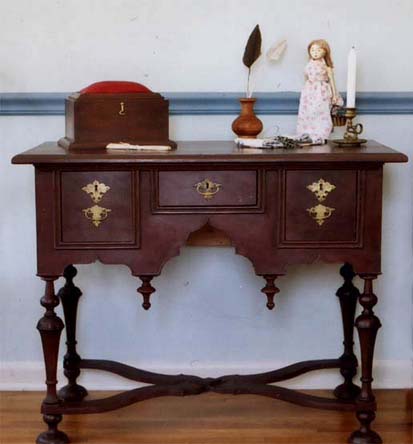
Lessons learned and answers to ??
Adam Cherubini, NJ
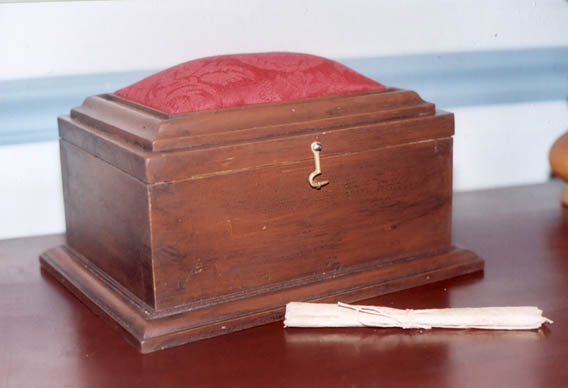
>The lesson I take away from this piece is that design matters. Maybe more so than craftsmanship. This box has amazingly tight dovetails, but who really cares! The hand cut miters came out okay, but no one will ever notice. Design and finish is really really important.
I gave this piece away so I can't fix it, but ripping off the moldings and replacing them or working them down with a hollow plane would certainly be things I'd consider if I still had it.
Adding bun feet is also a good idea. Atypical of sewing boxes (with the pin cushion), but very typical of document boxes, spice chests and so on. I think it would have looked cool and been quite easy to do.
Finish is typical for me:
3 coats milk paint
1 wash coat of black rubbed out
linseed oil and turps
shoe polish
The black thing is relatively new for me. This was the advice of a furniture conservator (DeMuzio for those who know him). Gene Landon gave similar advice in a recent FWW article. Black, not gray, not brown, makes stuff look old. I never liked the idea of distressing stuff, but I gave in to DeMuzio's point: people aren't acustomed to seeing new 18th century furniture. Reproductions are more readily accepted when they are "symapthetic" to the originals.
I can say this finish looks way better on hand made stuff. I don't sweat tear out and I never sand. The finish looks as good or better up close. I think its very believable.
No tricks to construction. Boxes like this (like drawers from the period) often have nailed on bottoms (meaning all nails in tension). I didn't have the guts for that as this will be used pretty hard. I left the end pieces long and nailed into the bottom's end grain (nails in shear). The trick to getting away with construction like this is using quartersawn stuff.
dimensions are 1 long x 3/4 wide x golden section high
lower molding should be 1/5 the height (that's 1/5 gs)
Thanks for looking and your interest. Here's a better designed piece to cleanse your pallets: