WoodCentral Forums

Est. 1998 — 27 years of woodworking knowledge

another mystery plane

Posts

another mystery plane

#1

another mystery plane

Jack from Maine

>I got a #5 plane from a friend. It has No 5 in raised letters on the tip of the toe.No other stamps or marks of any kind anywhere on the plane except for the Stanley name on the iron ,which means nothing. It has a broken frog. The lateral adjustment lever must have broken off taking the top of the frog with it. I don't have the broken off piece. I assumed it was a stanley so I got a used frog for it but when I went to put it on I discoved it won't fit.

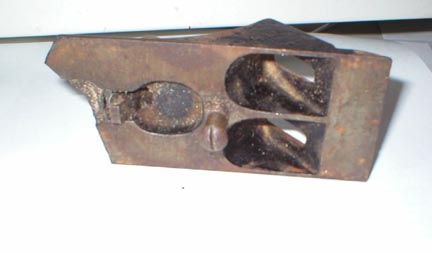
The raised part of the bed where the frog mounts is way too low. I checked other stanley planes of various sizes and ages and they are all the same height. The new/used frog would fit on any one of them. I removed the tote and put it on a #7 and it fit perfectly. So--what is this plane?I read the stanley plane type studies and I couldn't tell from them if this was in fact an older plane by Stanley.

BTW this plane has a nice sole,very clean mouth,no cracks and that rear tote was a nice rosewood one.Also the iron and chipbreaker are in nice shape(low front knob of rosewood).Very little rust. The top of the broken frog(where the iron rests)is solid across it's width,no indentations.

Any clues? Thanks for listening and I hope I'm not becoming tedious. I'm just learning all this stuff.Thanks---Jack

Re: another mystery plane

#2

Re: another mystery plane

Jim DeLaney, Tustin, CA

>The top of the broken frog(where the iron rests)is solid across it's width,no indentations.


That pretty much describes the early model "round top) Bedrocks. The earliest ones had the same shape as the 'regular' Baileys. Types 1 & 2 (1898-1900) had only the size (2 thru 8) marking on the bed - nothing else. They generally did have a 'Bedrock" marked lever cap, though.

Bedrocks with plain (likely replaced) lever caps are commonly seen, though. I have two of them myself...


Re: another mystery plane

#3

Re: another mystery plane

Jack from Maine

>So what I need is a bedrock style frog. Anyone have an old one that needs a home?Thanks---Jack

Re: another mystery plane

#4

frog picture *LINK*

Jack from Maine

>I did a search for bedrock frogs and the types I saw didn't have the step down on the base like this one has. All types I saw (including a frog on sale on ebay) were completely flat on the bottom. If I can't get a new frog I may just tune this one with the broken frog. I can't see what it would affect.

Jim,do the frogs on yours look like this?

Anyone else got any ideas?--Jack


img

ebay example

Re: another mystery plane

#5

Re: frog picture

Moses Yoder in White Pigeon, MI

>I'm pretty sure I can send you a good frog, but we are leaving for Lexington, KY this morning and won't be back till Wednesday or so, but if you can wait ;) I'll dig through my junk pile. I have piles of the common stuff that will have to be thinned out this year.

Re: another mystery plane

#6

Re: frog picture

Dennis

>Not sure if this will help but the pic looks just like a Fulton5 plane frog i have. Mine has 409 on the bottom side mouth end. My guess is the plane i have is a sargent made for sears and renamed fulton.

Hope this helps

Dennis

remove nospam for email

Re: another mystery plane

#7

Re: frog picture

Jack from Maine

>I'm in no rush.When you get back I can email a few more pictures to help with identification. Like I said I don't think it would hurt to use it as is ,but it would be nice to have it complete.Enjoy your trip.Thanks---Jack

Re: another mystery plane

#8

Re: frog picture

Jack from Maine

>I've never even seen a fulton. It's sopmewhere else to search.Thanks---Jack

Re: another mystery plane

#9

Re: frog picture

Jim DeLaney, Tustin, CA

>Okay, now that I see the frog, it's definitely not an oleder Bedrock.

The type of frog you pictured was used on types 5 thru 8.

The bed of the frog (on the plane body) was completely flat on Type 5, and Types 6-8 had two grooves cast across it in line with the frog screw holes.

BTW, the above info was taken from the 'type study' in John Walter's book.


👍 This page answered my questions

Your vote helps other woodworkers quickly find the answers and techniques that actually work in the shop.