I've been using 3/4 or 1/2" hardwood ply for stability in my case work backs. Years past I dutifully made panel glue-ups but had issues with seasonal movement.
We will go to the hot spot together. I bought two sheets of 1/4" maple MDF to make drawer bottoms for a Shaker Chest I'm building. I made an outer frame and will use the MDF for the back as well. I think the Shakers would have made the trip from Pleasant Hill up to Hardwood Specialties for this MDF.
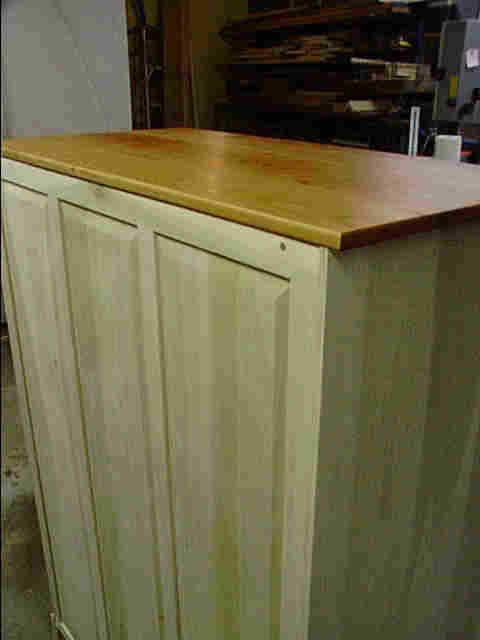
Plywood is practical if not aesthetically pleasing. When I first started out I was going to do things "right" although I didn't really know what that was at the time. I will say that there are ways out of the wood movement conundrum. Take a look at the linked (not very good quality) picture.
As an example I have been posting construction of two "case" pieces. The only thing the back will need to do is keep the mice out. The cases are rock solid from the top, and bottom, or even without the top and bottom they would be rock solid from the dividers. My kitchen cabinets don't have backs and they are ridged. The only piece I ever built where the back was structural is a Krenov wall cabinet. In this case it was built as he would have made it with a tight fitting veneered back glued into the case to make its otherwise frail doweled case ridged. What sort of case work are you making that the back is a structural necessity?
If you own a planer making drawer bottoms is trivial. Say I am building a walnut or cherry piece. Sapwood and anything else that isn't suitable for show gets resawed, glued into panels and run through the planer to become a drawer bottom. I took down some western cedar posts from daughters house. They were resawed and became bottoms. Kitchen cabinet drawers have plywood bottoms.
I used to put plywood backs in pieces. I resaw 4/4 poplar for drawer sides which leaves a piece that cleans up at 3/8 to become panels for backs. The Domino has takes most of the labor out of building a panel back. Once again the left overs become 1/2" thick frame and panel backs.
The lumber is "free" which appeals to my frugality and backs and espeically bottoms involve little labor.
I had several hundred feet of soft maple back in the day but have used it up making drawer bottoms. Same with the sapwood cherry but used it for secondary. Not enough of any other wood on hand and I refuse to buy 4/4 poplar and waste half of so the option left was plywood.
In my opinion,the only reason plywood wasn't used in older furniture is because it wasn't available. It is the ideal product for backs and drawer bottoms.
I seem to accumulate stuff that is too "good" to burn and not good enough to use most places I would like to use it. I probably have way more of it from sawing logs rather than picking top grade lumber at the lumber store. It ends up in drawer bottoms and case backs. It likely winds up a poor use of my time, though making drawer bottoms doesn't take long.
Jack's comment made me wonder - would the Shakers have used good quality plywood for drawer bottoms if it had been available? If it stays flatter than flat sawn lumber, and isn't subject to seasonal movement, would a drawer with a plywood bottom have been considered a better quality product?
stays flatter than flat sawn lumber, and isn't subject to seasonal movement
Period drawer bottoms are captured in the drawer sides and front and the drawer is made to accommodate seasonal movement so neither of these issues would drive the choice.
A more contemporary question is what do the Mennonites use. Plywood I would presume.
Plywood is going to be used in a commercial setting when cost is the most important factor. When Period Correct is the most important consideration, for example reproductions, well, Period Correct materials will be used.
Things get complicated in the home hobby shop-cost, time, capability, objectives, etc. The decision will be driven by many factors. But a factor that should not be relevant in building a Shaker piece is a choice made on speculation of what they would use today.
I tend to agree with Jack. There are many things to be learned from antique furniture. Something a hundred or more years old has some information to offer. The fact it survived at all may mean it was well designed and well built. The design may have made it desirable enough to warrant taking care of it for a hundred years. The fact it was well built may have allowed it to survive the bumbling efforts of the inheritors.
So, generally speaking we are seeing what survived the culling process of time and neglect. The ugly crappy stuff was let go or wore out.
So, we should examine the construction techniques and the essence of the designs. Dovetails are indeed over designed, but they work and last a long time. Even after the glue in them fails, they still function. Breadboard ends and stile and rail connections that are just butted together and glued fail quickly and end up in the wood stove. They turned those SOB's into BTU's, but the ones that had M&T's survived. ETC.
Bill T is bothered by Euro style hinges and mechanical drawer slides outside kitchen cabinets. So am I. I worked my way through college building kitchen cabinets. Euro hinges had not appeared but drawer slides had and we used them. My son wants me to build him a chest of drawers with drawer slides and Baltic Birch plywood drawers. Perhaps it's a generational thing. Or maybe it's the influence of Ikea.
The plywood I see that is really old is often pretty shabby with failing glue and delaminations. OTOH, I have repaired lots of antiques that had failing glue practically everywhere. Hide glue offers the benefit of being repairable. OTOH, that may mean it HAVE to be repaired.
I agree, Jack. If a cabinet can be viewed from the back I'd go with a hardwood panel, but if it is going to always be against a wall, then plywood is, IMHO, the preferred material.