Cheap as I am I would find the purchased tenons convenient, if they were convenient. I was about to use some and they didn't fit. The 6 mm tenons ranged from 6.03 to 6.16 mm thickness and they were too wide for the slot. They fit barely in end grain slots and not at all in flat grain slots which are invariably smaller when I make them.
1. Is this a problem unique to my batch of tenons that came with my used Domino purchase?
2. How do you all deal with the problem of too tight tenon?
I'm only guessing.....because, I do not own a Domino......but, if your parts are old, they probably have taken on moisture......perhaps a 30 minute time in an oven at 180 - 200 degrees might help.
I more often than not find myself sanding a domino to make it fit. A quick swipe over a piece of 100 grit usually does it. I have always assumed it was just a swelled domino since they are stored in a humid garage.
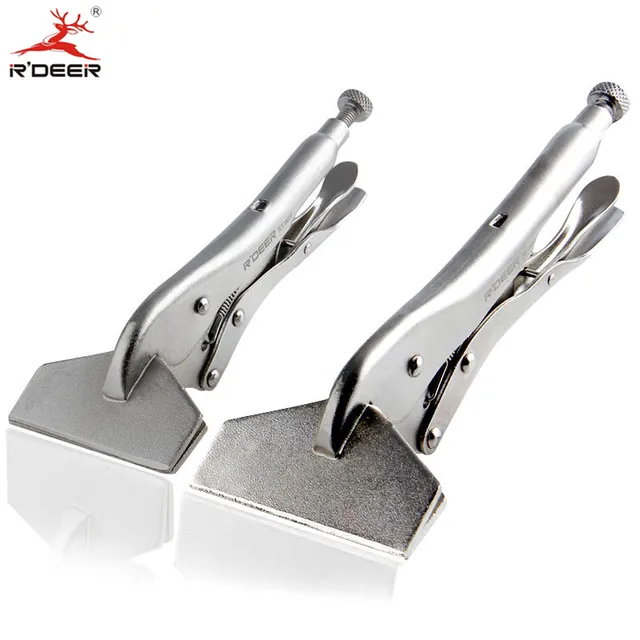
I've had the same problem, for the same cause as you surmise. I usually fix it the same way as Roger and Chad suggest. If they almost fit, I just use a bigger hammer. If it happens during a dry fit/trial assembly I use something similar to these to extract the tenons from the mortises.
Usually, they go together a lot easier on the second fit, especially if I am using liquid hide glue for beech tenons or epoxy for sipo (African mahogany, rot-resistant) tenons.
I believe the tight fit of Domino tenons is intentional. The surface of the tenon is corrugated so that a small pool of glue can be put at the bottom of a mortise and when the tenon is tapped into place the glue can be forced up the sides of the tenon by tapping with a mallet. (This can only be done on the first end of the tenon because of the amount of clearance in the length of the tenon compared to the depth of the mortise.)
If you look closely at the width dimension of the tenon you'll see a small ridge running along the edge. It's only this small ridge that is wider than the mortise. When I'm dry fitting I plane off the ridge and sand the sides of the tenon a little to make it easier to remove from the mortise. For actual glue-up the tenons can be used as purchased.
Compared to Lamello biscuits, which vary in thickness by an annoying amount, the Domino tenons are useful and uniform. They do fit differently from tenons done by other methods, though.
I have had my Domino for several years and use it sporadically. I have noticed the phenomenon you mentioned of the end grain and side grain mortices being different. I have the assortment of Dominos and bits. I have never measured them to see if they have swelled. Interesting idea.
If I find a Domino that is too tight in the mortice, I have a 6 x 48 belt sander and with it off I give the Domino a swipe across the belt, probably 80 grit. If it is too wide, I swipe the edge or both edges and knock the little ridge off. The Belt sander serves no purpose here other than a convenient holder for the sandpaper.
I am skeptical of the textured surface on the dominos. I understand the little grooves or flutes up the edges are to allow excess glue to circulate out, but the flat surfaces should be falt in my mind. Perhaps the Dominoes are compressed with the idea they will swell in the mortice as biscuits are supposed to do.
I have considered using a hammer to gently tamp the Dominoes on some anvil like surface to compress them slightly rather than sanding them. I will try that next time the situation arises.
I have about a thousand pieces of Maple that are shaped like dominos but are 3/8" thick and 16" long. 10 mm is 0.39" and 3/8 is 0.375" so a 10mm mortice is 0.015" too big. I contacted Seneca tools about grinding a 10mm bit down but there wasn't enough demand. So I reduced the sticks I have to 8mm and cut them up into 40 and 50 mm Dominos. The width is correct. They work well and I can make as many as I need. I made about a hundred of each.
I keep a little pile of Dominos that have been slightly undersized and use them for dry assembly. They slip in and out nicely and are a blessing.
And thanks to William I now know a good use for the pliers he posted. Someone gave me two pairs and being a packrat, I took them and threw them in a drawer with no idea what I would do with them.
For a complicated glue up round the end corners off the Dominos slightly. Makes assembly much easier. I also am fanatical about applying the glue. I coat the inside of the mortices and the dominos.
I recently built a small table and realizing that the only glue surfaces that "counted" were inside the mortices and the dominoes, I prefinished the parts and then cut the mortises and assembled he table. Much easier to spray the parts rather than the whole table.
I live in the high desert in New Mexico. Relative humidity is generally around 5-7 per cent. We complain bitterly when it hits 20 per cent.
Most of what little rain we get (7 inches per year average) comes in the late summer.
I never have a fit problem with the Dominoes during normal times, only during the rainy season. So I'm pretty sure it is the humidity that causes it.
Like many others who posted, I give them a swipe with a sanding block and that solves the problem. Annoying for sure, but still great compared to the tedious fitting with regular M&T.
A microwave oven also works well if you have just a few Dominoes. Watch out for scorching though. My workflow mirrors that of Steve Elliott. Often, in my experience, only one size of Domino will cause problems whereas other sizes will fit nicely. Otherwise, the ease of use of the store-bought Dominoes outweighs any downside. Jim
 If it happens during a dry fit/trial assembly I use something similar to these to extract the tenons from the mortises.