Home Articles Forums Gallery Marketplace Videos

WoodCentral Forums

Knowledge You Can Build On — Est. 1998

Veritas - Innovation in Tools

Coffee table

Posts

Coffee table

#1

Coffee table

Derek Cohen (in Perth, Australia)

It's been a long time since I made a coffee table. This one is for my son, who recently moved to Sydney. New city, new job. He has found a great apartment, and has begun to request furniture, first a coffee table to replace an Ikea piece his girlfriend purchased. I think that he is playing with fire! No, she's great :)

It's a long weekend in a fortnight, and Lynndy and I plan to visit. (We have family in Sydney, and old friends from when we lived there 30 years ago). My idea was to build a coffee table and take it on the plane as a sort of surprise (he knows I am building it, but will not expect it this way). Fun, eh? :)

So, I needed a knock-down design. And a design along the lines of Danish Modern, which would fit in nicely in his home.

I was taken with a piece by a Japanese maker, Ishitani. He has some great builds on YouTube which are worth looking up. Inspiration came from this design of his ...
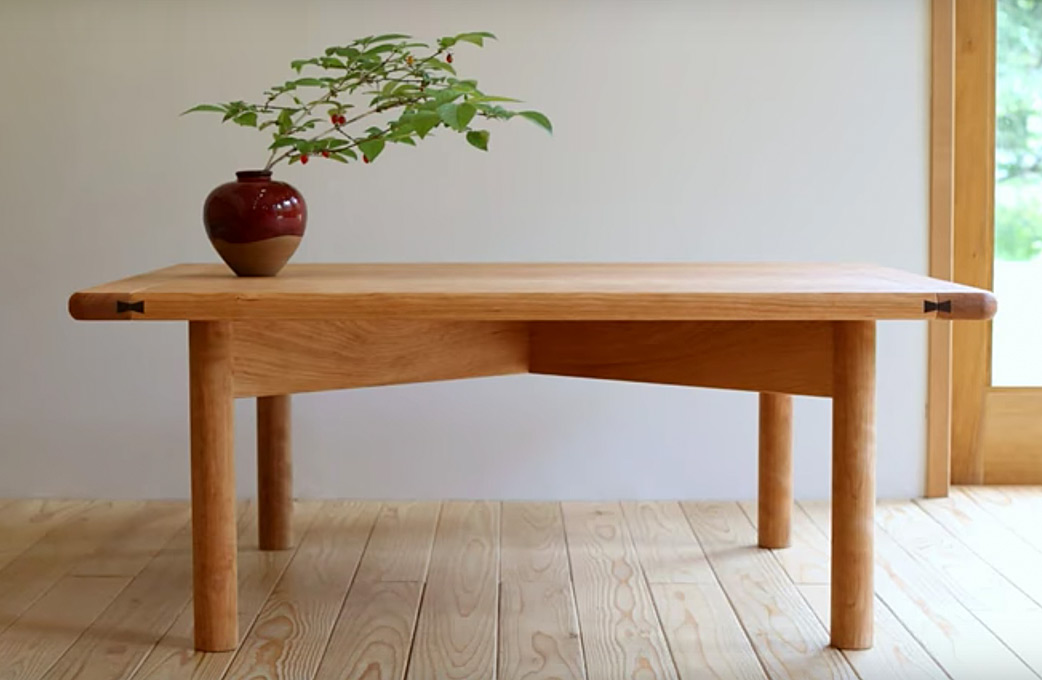

The top lifts off ...
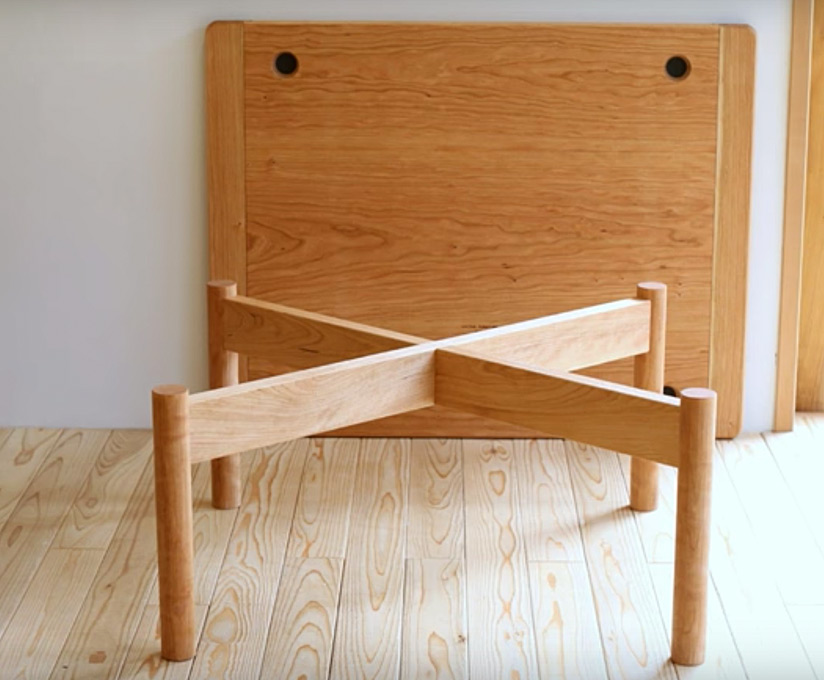

... and the legs come apart ...
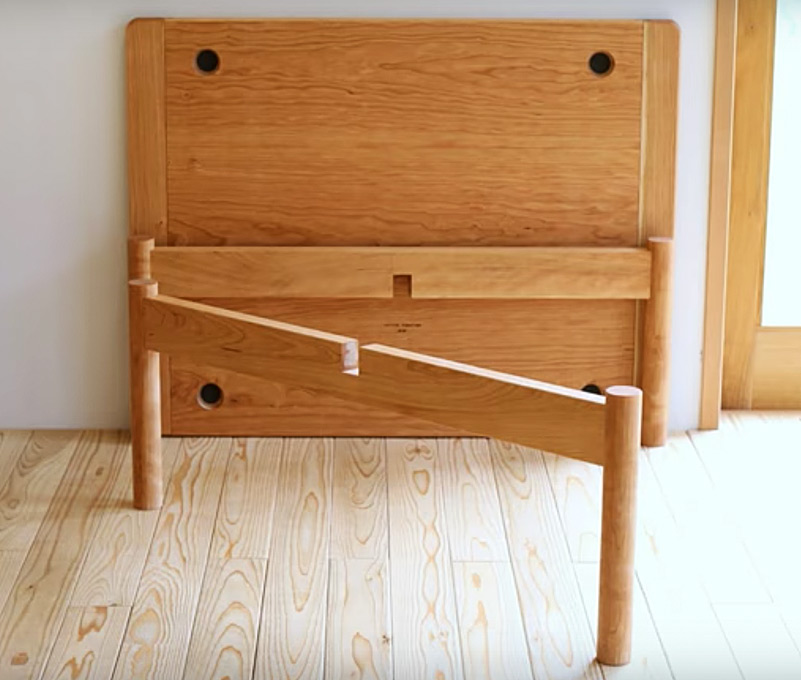

The coffee table required two weekends to complete. That's a nice change from the pieces I've been building. The wood is Hard Maple. I've grown to like this stuff.

I made a few changes to the design. Firstly, it is a little slimmer and larger (I think): 38" long x 28" wide and 16 1/2" high. Plus a few modifications.

Here's the table ...
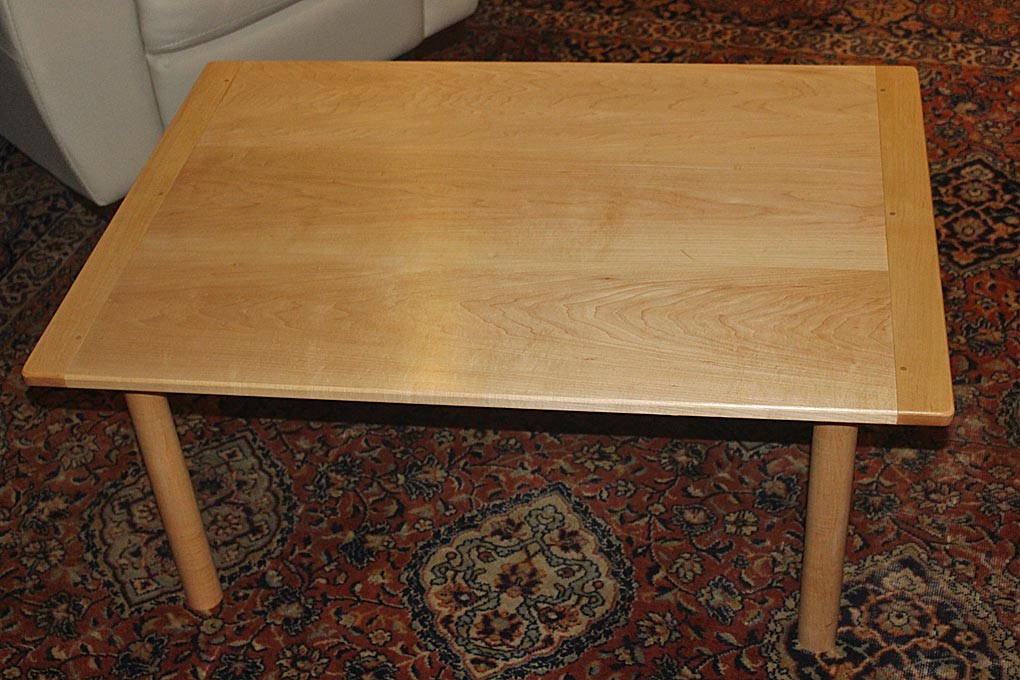

To take this shot I had to crawl on the carpet. Much of the underside is unlikely to be seen, even at a distance.
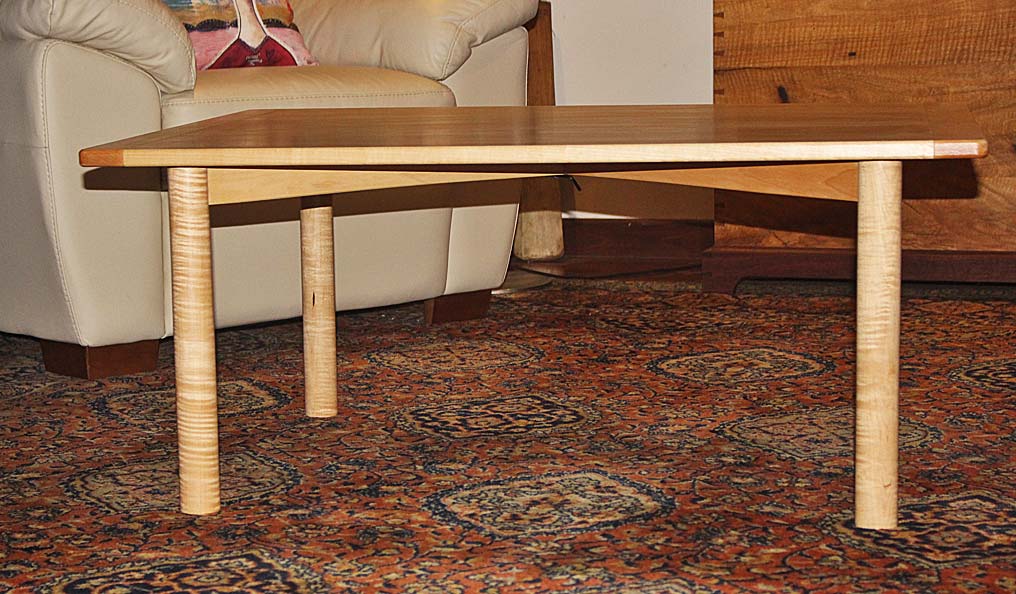

Here's what it looks like underneath. Where Ishitani left his rails straight, I've added a curve (you know me and curves) ..
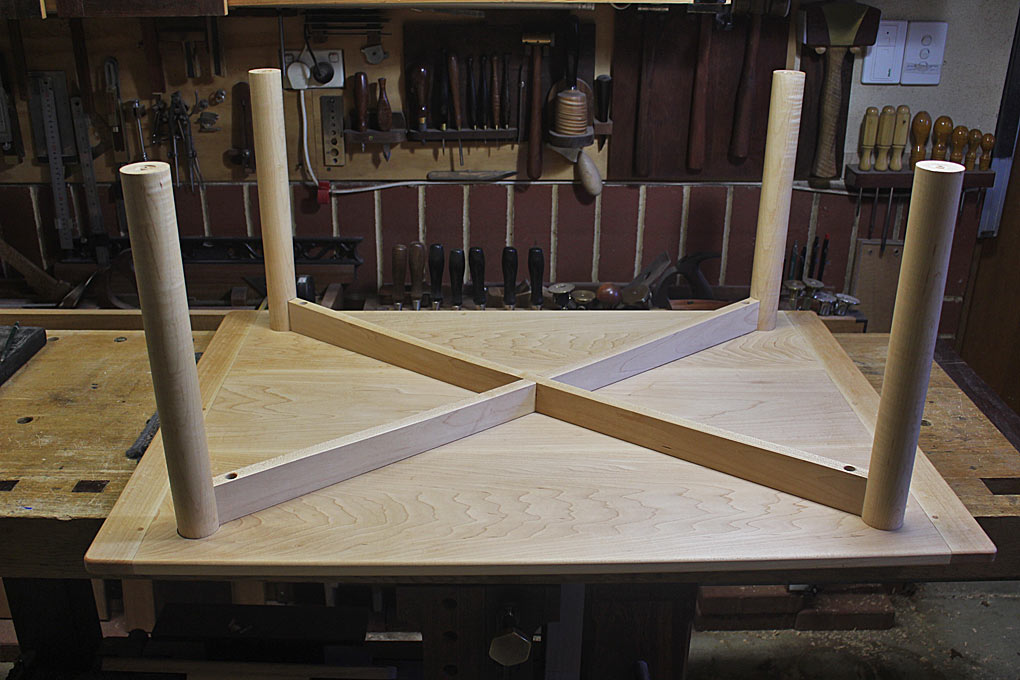

The legs come off for packing flat ...
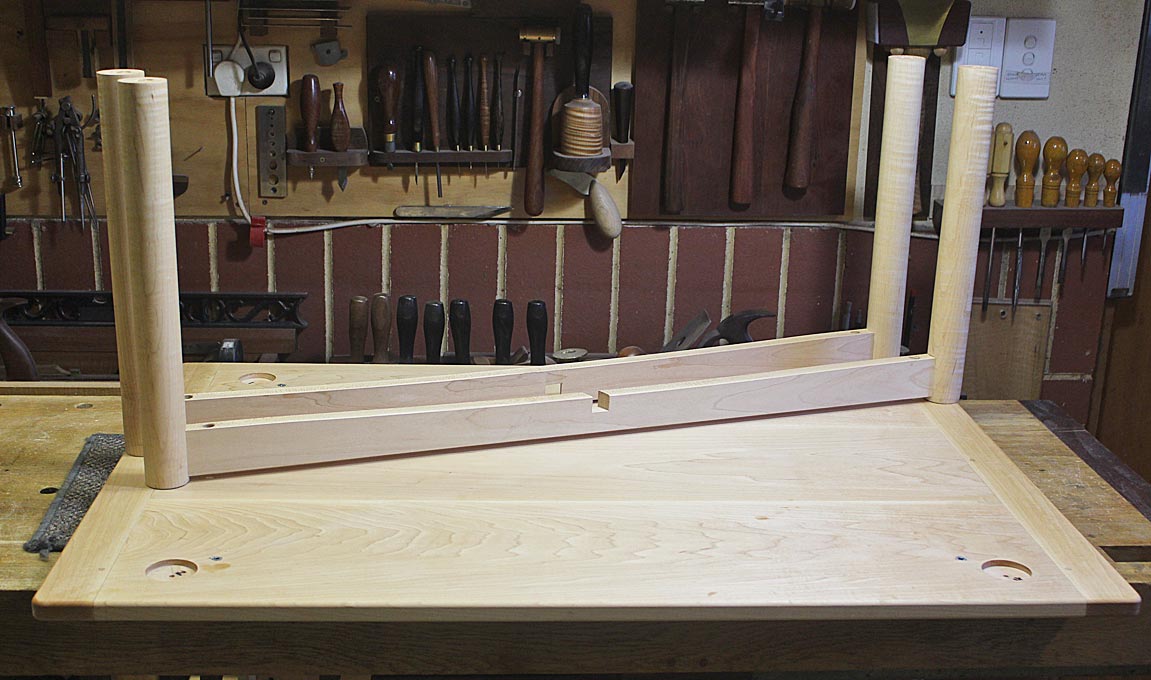

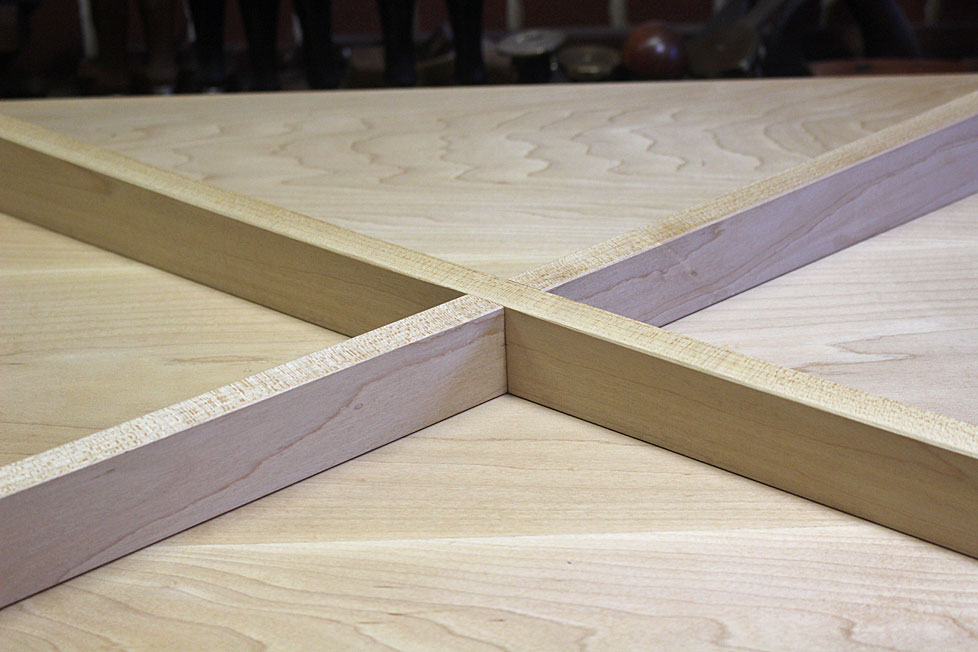
Join at the centre ...

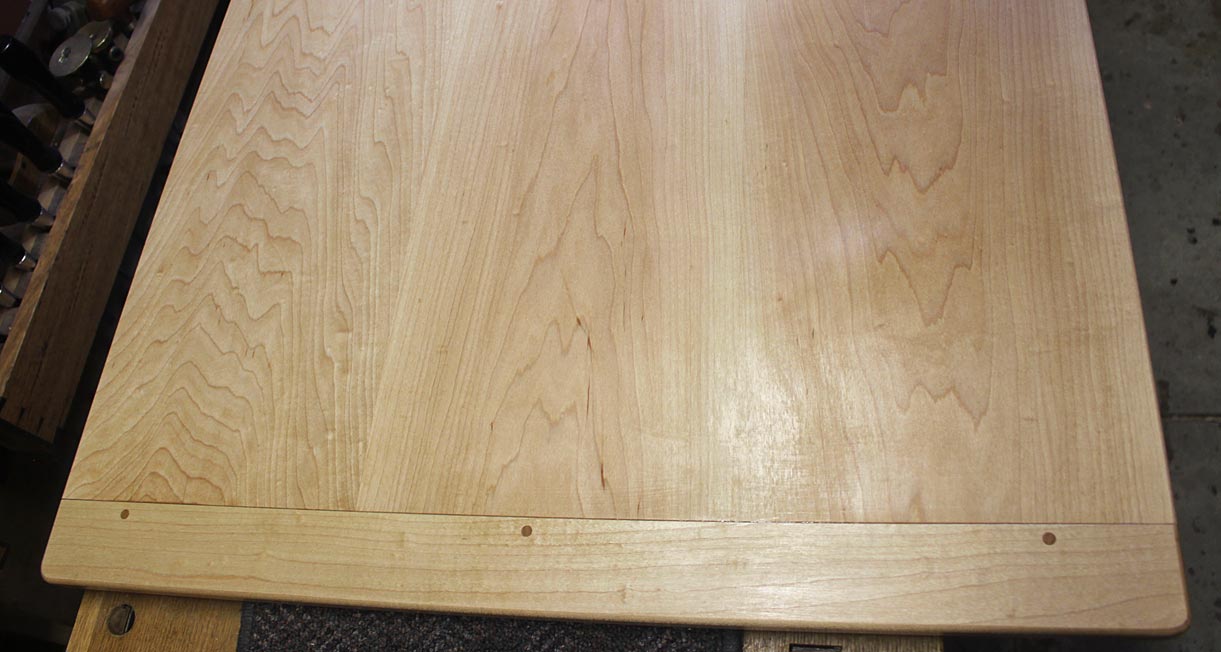
Ishitani connected breadboard ends with a dovetailed spline. I have used a true drawbored breadboard construction. The weather in Sydney changes from dry cold in Winter to high humidity in summer. I did not think that a dovetail would cope with this.
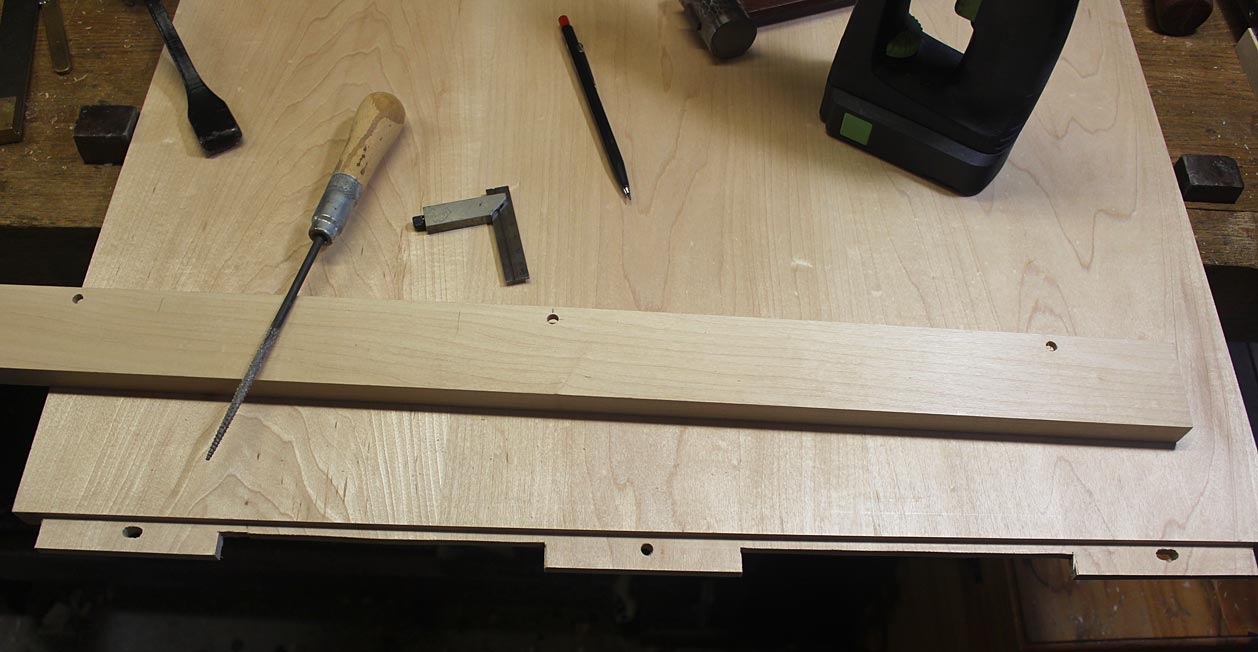

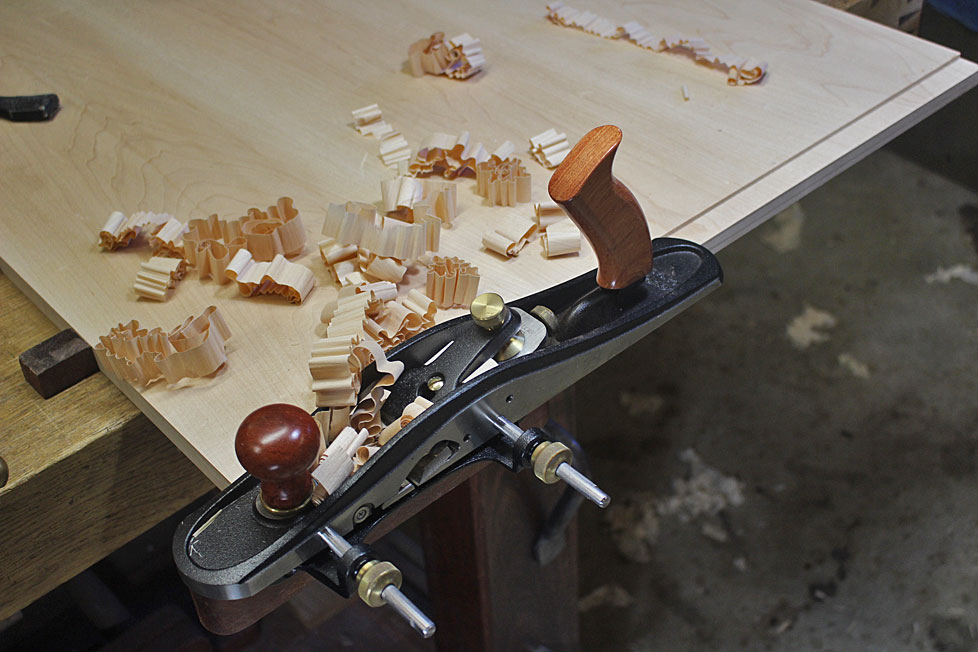
Gotta show a tool - these were made with a Veritas Jack Rabbet (to balance the recent post of a power router for the mortices) ...

Another change is the legs are connected with hex bolts. I really could not envisage the coffee table living a life with a loose top ..
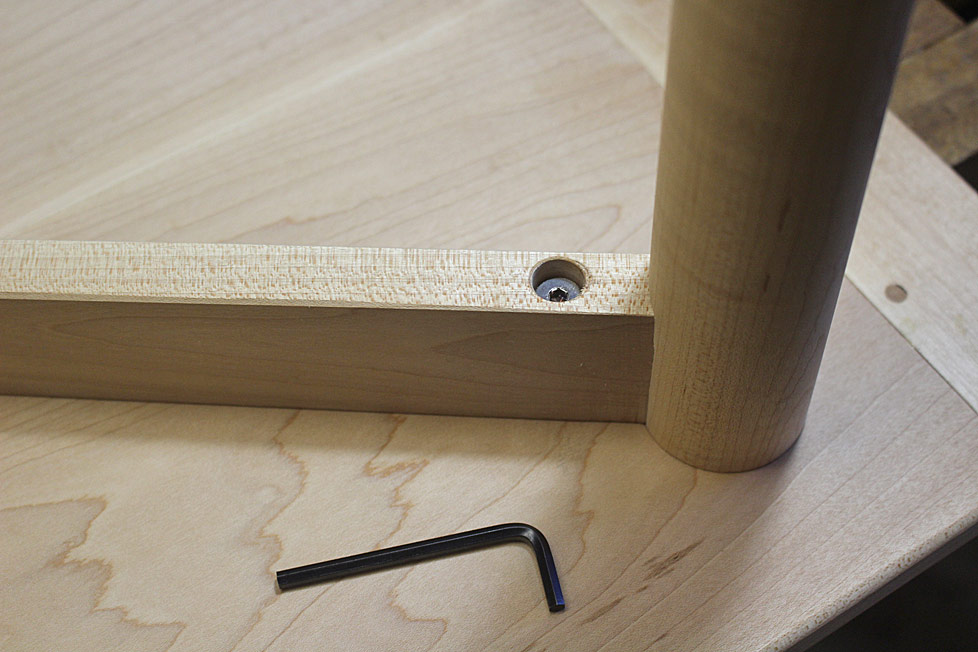
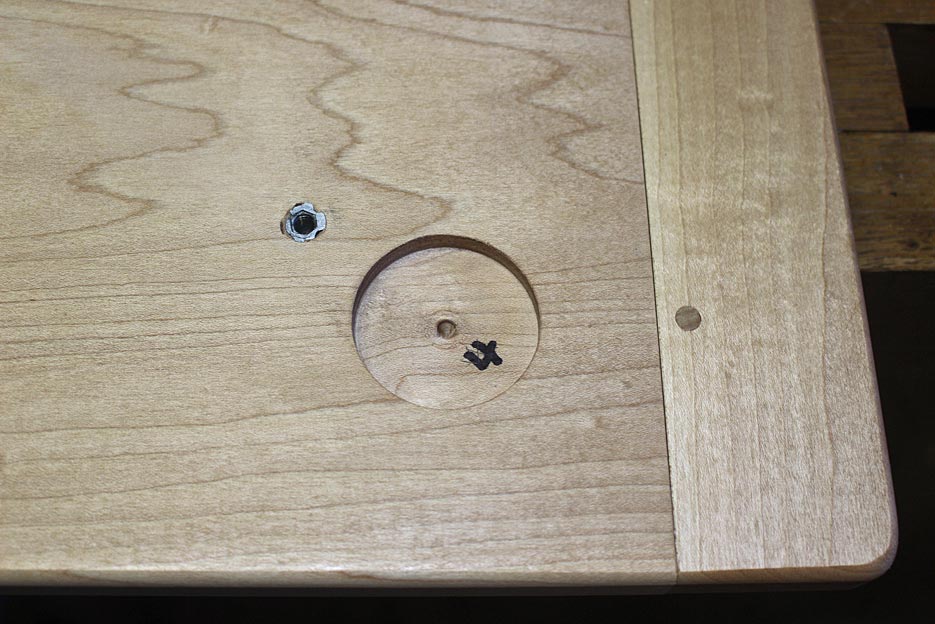

This was a very straightforward build. The only slight challenge was the legs - turning them precisely, and then morticing for the rails.

The mortices were first cut in the blanks ..
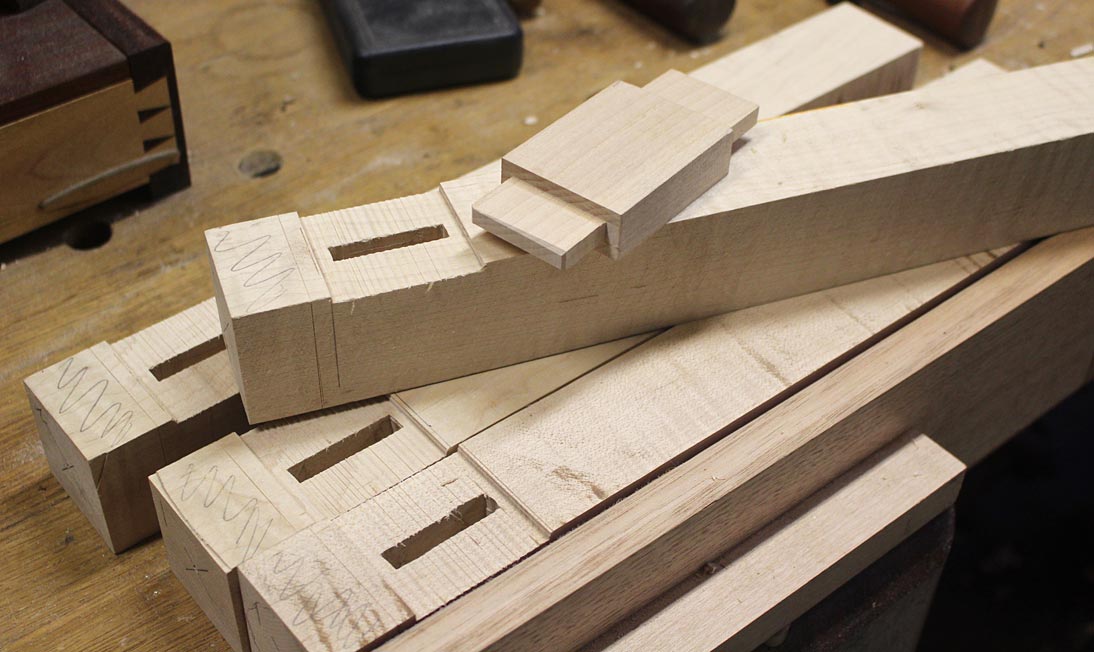

.. and then turned ..
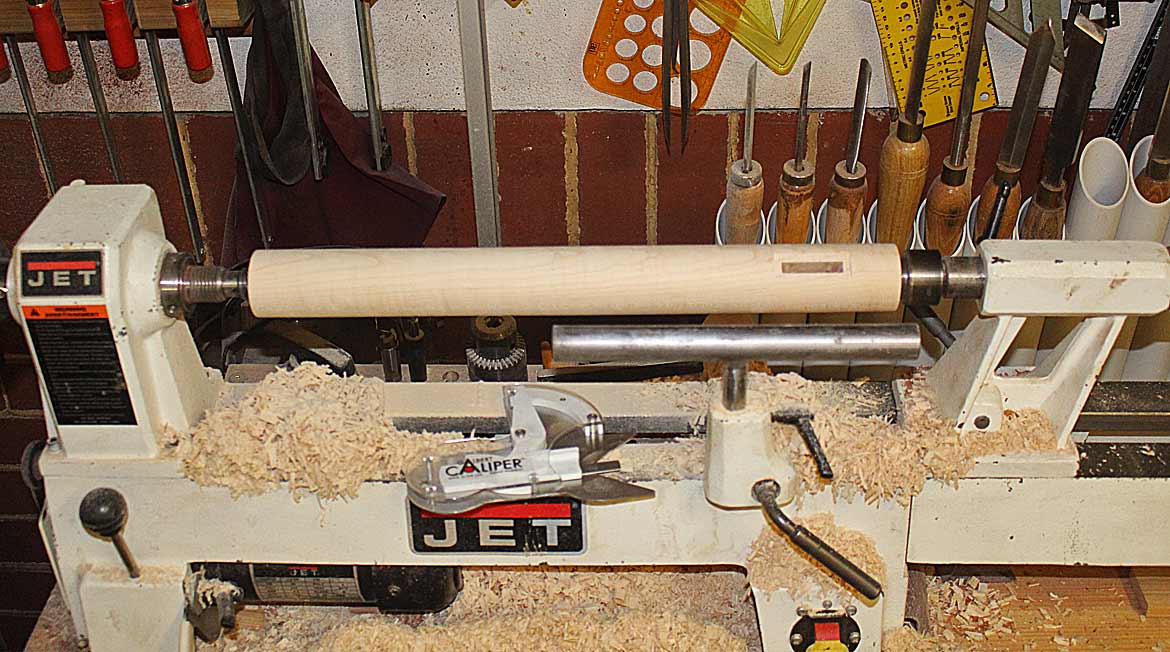

That's Peter Galpert's caliper on the lathe bed. I really recommend it for sizing spindles.

The tenons were fitted into the mortice ...
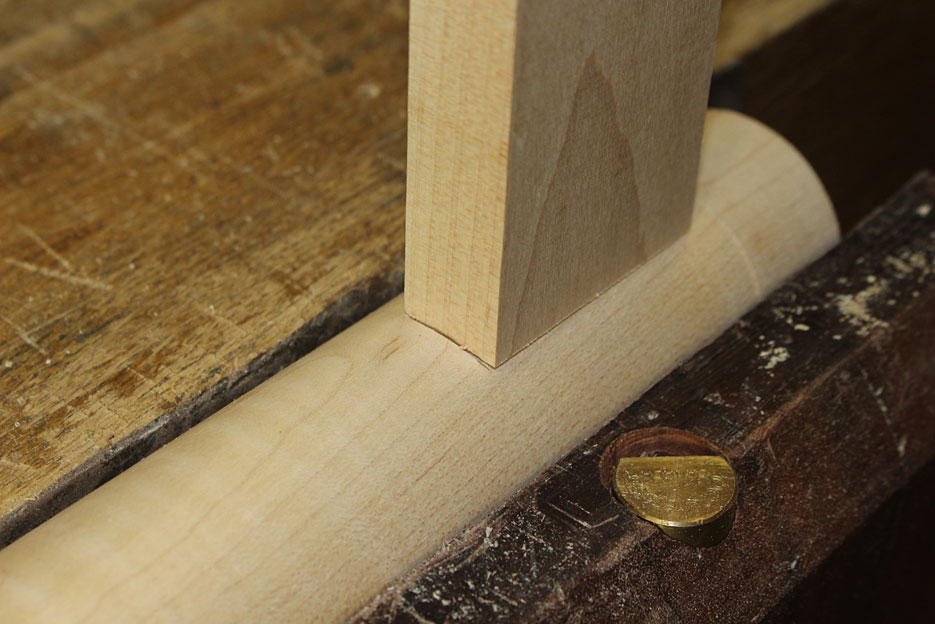

... and marked out:
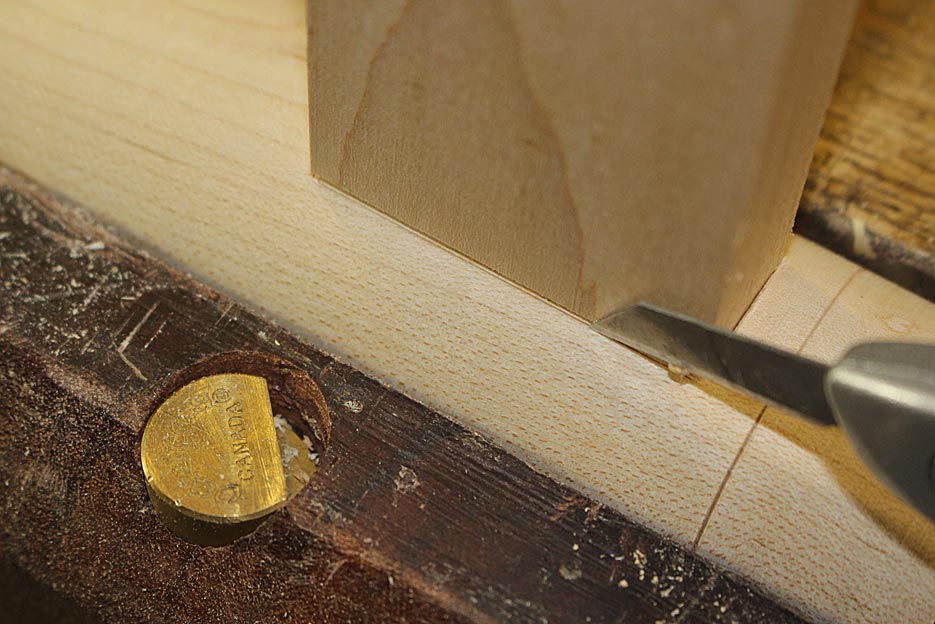

.. before being rebated (is that the correct term here?) for the shoulder ...
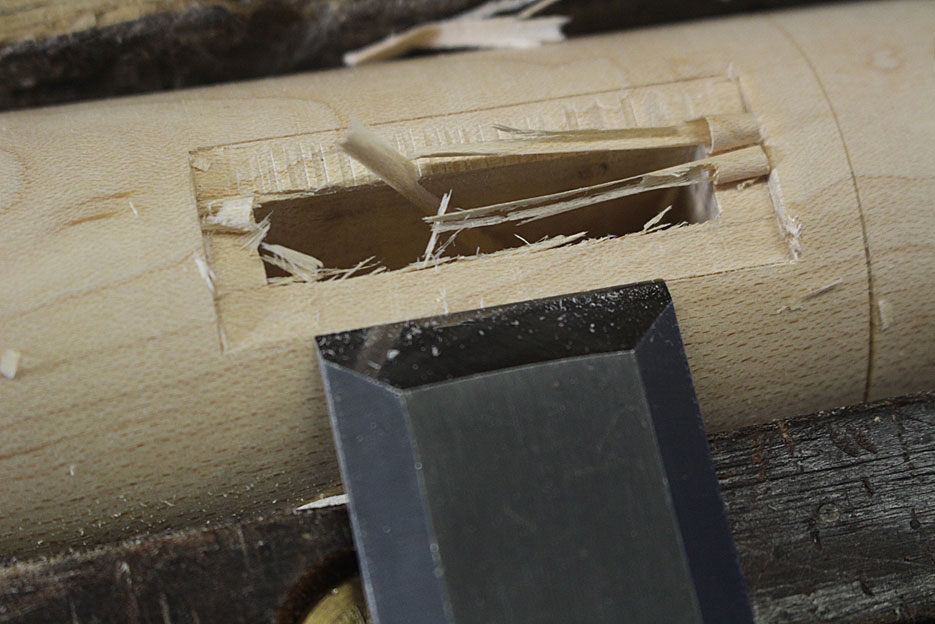

And that was it. Finish was a coat of Livos Universal Wood Oil to add a little amber to the very light maple. Then 5 coats of General Finishes water based poly was rubbed on for durability. This adds a little shine. Looks great.

Can't wait to see Jamie's face! :)

Regards from Perth

Derek

Re: Coffee table

#2

Re: Coffee table

Barry Irby

I like the table and I like Ishitani. I have watched many of his videos.

Have to admit I like the dovetails in the end of the bread board ends.

Re: Coffee table

#3

Re: Coffee table

roger lance

Derek....

I'm a fan of Ishitani as well.....great videos.....a good blend of power and hand tool furniture making.

With all due respect, I had a little concern with expansion/contraction of the top and if it were completely free to do so with your manner of attachment.....I'm assuming you've resolved any potential issue.

I've also had some problems with sizing of tenons on the lathe and recently purchased this which I have yet to try.....


Hope it works as well for me as the devise you showed.

Re: Coffee table

#4

Re: Coffee table

Derek Cohen (in Perth, Australia)

Hi Roger

I have one of those Sorby sizers as well. It works well, but is a different concept to Pete Galbert's caliper. The Sorby tool cuts a specified size. It is trickier because it really only works when you get close. When the spindle is large, it is difficult to hold to chisel to the work piece. The caliper, on the other hand, allows you to actually watch the spindle growing smaller and approaching the desired size. Plus it allows you to monitor tapers, which the Sorby cannot do.

Regards from Perth

Derek

Re: Coffee table

#5

Re: Coffee table

roger lance

Ironically, I just bought the Sorby sizing gauge after watching a recent Ishitani video in which he used that gauge to size some tenons.

Re: Coffee table

#6

Re: Coffee table

Roy

Derek, do you date and sign your work?

Roy

Re: Coffee table

#7

sizing turned tenons

Bill Tindall, E.Tn.

I use an open end wrench and a bedan. Peel away wood until the wrench slips over the tenon. Now aren't sorry you spent money on a single tasker tool?

Re: Coffee table

#8

Re: Coffee table

Derek Cohen (in Perth, Australia)

Hi Roy

I do have a stamp. I generally use it somewhere inconspicuous. In this case, I have written a message and dated it, which I've done with all family-personal pieces.

I had a stamp made years ago that is easy to use ...


Regards from Perth

Derek

Re: Coffee table

#9

Re: sizing turned tenons

Derek Cohen (in Perth, Australia)

Bill, it is not a single tasker tool. That was my first take as well. I, too, have used wrenches - still do for tenons, since the sides of the socket will compress and smooth the cheeks - as well as the Sorby sizing tool. The advantage of the caliper is two-fold:

Firstly, you can monitor the approaching size.

Secondly, you can size tapers. Can you size a taper accurately with a wrench? :)

Regards from Perth

Derek

Re: Coffee table

#10

Re: Coffee table

Don Stephan

Thought medicos were taught illegible handwriting (lol).

You are a machine.

Re: Coffee table

#11

Re: sizing turned tenons

Barry Irby

I have several wrenches I have ground one of the jaws back to a cutting edge. Just cut the tenon about a 1/8 or 1/16" over size and then slip the wrench onto it. It acts like a bedan or parting tool and cuts the tenon just right.

OTOH, I don't have a wrench as big as your tenon.

I can cut a taper with it, just not on purpose.

Re: Coffee table

#12

Re: sizing turned tenons

Bill Tindall, E.Tn.

I can monitor the approach to correct size by looking at the result. Never considered this facet of turning to be a problem.

It is well known among spindle turners that vertical spacing is critical. One's eye can detect small errors between the placement of elements along comparative spindles. However, there can be errors in the diameters among spindles and they will not be noticed. Ditto for tapers. The tapers on 4 legs don't have to be exactly replicated better than the eye can see.

I used to turn soft ball bats and that involved a lot of tapers. It never crossed my mind that I needed some aid to get the dr/dx (if you are into geometry) exact within the bat taper nor between bats.

I establish the large and small diameter of a taper and the distance between them with a parting tool and caliper. Then I just turn the taper between them, looking at the slope of the projected edge as I remove wood. As long as the taper isn't lumpy the result will be fine.

But, if you like to use it, fine by me. But I would suggest to others to learn to turn without these training wheels.

Re: Coffee table

#13

Re: sizing turned tenons

Derek Cohen (in Perth, Australia)

Actually Bill, this is the first time I have used the calliper. Over the years I simply learned to do it by eye. I used to turn baseball bats as well ... actually, they were marking knives which resembles baseball bats. I used to turn these a lot, all by eye, and managed good consistency.


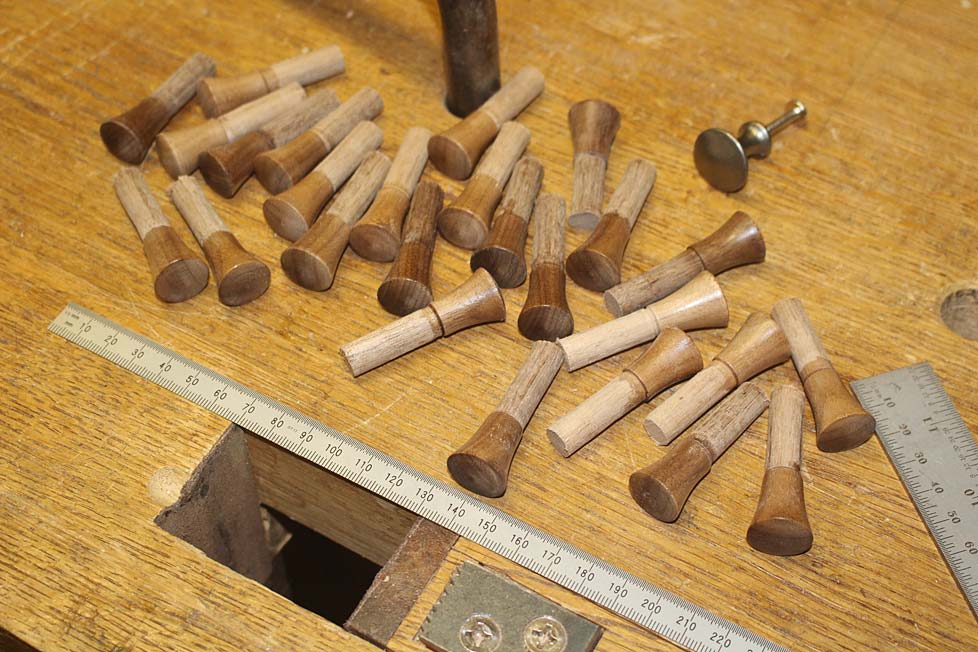
More recently I turned the knobs for the apothecary chest. These were also freehand ..


Still, the calliper adds a dimension that is helpful ... not necessary ... but it is a good design, which is why I mentioned it.

Regards from Perth

Derek

Re: Coffee table

#14

Jack Guzman from Maine

Galbert caliper

Jack Guzman from Maine

Bill ,in my world,the tool is not "training wheels". It is the most used tool I have for turning chair legs. I size tenons with a wrench and tapers with a block of wood shaped with the taper,but the caliper I use to size all elements on my legs except the tenons. Without it I would need to use more tools and steps to achieve proper sizing. It is a quite valuable asset for turning spindles. You would appreciate it if you did similar work and tried one.---Jack

Re: Coffee table

#15

Re: sizing turned tenons

Brian Holcombe

I use digital calipers. Wrenches are a good quick tool but they’re not always very accurate for size since they have a clearance built into them. If I used them for cut tenons they would probably not fit.

Re: Coffee table

#16

Jack Guzman from Maine

Re: sizing turned tenons

Jack Guzman from Maine

I use a wrench to get them close. I do final fit with a rounder made by Ray Iles.

Re: Coffee table

#17

Re: sizing turned tenons

Brian Holcombe

I’ve not used a rounder for straight tenons, does it cut a square shoulder? I can usually get mine within a few thousandths but a rounded sounds like it would make an improvement in processing.

Re: Coffee table

#18

Jack Guzman from Maine

Re: sizing turned tenons

Jack Guzman from Maine

These rounders don't cut a shoulder. I gradually taper the ends of stretchers and spindles so there is no shoulder.

Re: Coffee table

#19

Re: sizing turned tenons

Brian Holcombe

Thanks Jack!

Re: Coffee table

#20

Impressive engineering

Bill Tindall, E.Tn.

Hard enough designing something to suit even a relative client, but then to transport it on a plane....

I hope they like the result...I do. I like your supports better than the original.

Re: Coffee table

#21

Re: Impressive engineering

Pete in Holland MI

........and as a throw-back to Ikea, the table still needs a hex wrench to assemble : )

Re: Coffee table

#22

Re: Galbert caliper

William Duffield

A Galbert Caliper has been on my Want List for quite some time, but I had not convinced myself that I really needed it, so there it has stayed. Now, thanks to your and Derek's recommendations (and maybe in part in spite of Bill's denouncement ;) ) I decided I need to acquire one. Bummer, Lee Valley says they are no longer available, and Peter says he won't have any more to sell until October of next year.

Does anyone know where I can find one now?

Re: Coffee table

#23

Re: Galbert caliper

Hank Knight

William, you should give in to cravings and temptations at the earliest possible moment. Denying yourself leads to disappointments like this.

Re: Coffee table

#24

Or......

Bill Tindall, E.Tn.

Pick up a few Starrett and other quality calipers at flea markets for $5 and achieve the same capability. You will need them anyway because of the limited size range of this tool.

Re: Coffee table

#25

Re: Or......

William Duffield

I have lots of pairs of Starrett calipers, both inside and outside, and several pairs of dividers, and sticks (templates) with several brads that I hang them on above the lathe. I've been duplicating spindles that way for years. But it is easy to get confused about which is which, or hang them back up on the wrong peg, or drop them on the floor in the shavings under the lathe, or bump the adjustment wheel while I'm taking them off the rack, or set them to the wrong diameters. I'm just looking for something that's easier and less error prone, and the Galbert Caliper sounds like it might do the trick.