WoodCentral Forums

Est. 1998 — 27 years of woodworking knowledge

Improving clamp handles

Posts

Improving clamp handles

#1

Improving clamp handles

Derek Cohen (in Perth, Australia)

I have had a bunch of old Bessey parallel clamps forever. About a year ago I purchased a few of the Bessey Revo. What I came to appreciate about the Revo are the soft grips - they are so easy to tighten and loosen. By comparison, the red-painted wooden grips of the old Besseys I have are slippery, which can be quite frustrating.

I tried a latex spray on the painted handles, but it was not durable and peeled off.

I recalled a thick silicon tape I had used to repair pipes. It seals by welding to itself.

Wrapped around the handle, it takes about an hour to become permanent. It is very grippy and comfortable. A definite upgrade for any clamp handle ...


Regards from Perth

Derek

Re: Improving clamp handles

#2

Good Tip, Thanks For Sharing


Re: Improving clamp handles

#3

I won't allow anything that says silicon in shop

Dick Coers

I'd be worried about the silicon aspect, or release agents, on the tape with relation to contamination with finishing. Terry Q. gave the same suggestion using horse ankle wrap recently.

Re: Improving clamp handles

#4

cheaper solution

Bill Tindall, E.Tn.


Indeed the silicon tape is a great handle wrap and useful for other things as well, like temporarily sealing leaks. But it is pricy. The tape used to wrap your arm after giving blood works too. It is available at any farm store and pharmacy. However, not as durable.

A better solution is different clamps. I fail to see the attraction of these expensive and heavy clamps. They are more inconvenience in every factor of clamp importance. The convenience of going to the clamp rack and grabbing 4 easily adjusted bar clamps in one hand is not to be dismissed. There are advantages to have a clamp assembly that weighs much less than the wood that is bring clamped.

Re: Improving clamp handles

#5

Re: Improving clamp handles

roger lance

Rob Cosman also uses tape to improve his grip.....it's the tape hockey players use to tape their sticks.....no idea what it's made of, price, etc.

My ole man would have told me to "man up" and get stronger if I had said my grip wasn't up to the task.....much less admitted that I wasn't strong enough to lift the clamp!!

:D :D

Re: Improving clamp handles

#6

I've used that stuff in other applications...

John in NM

We use it as added strain limiter on a bundle of optical fiber that gets moved around a lot at work. I also tried it as a quick and dirty radiator hose repair on my horrible old truck. It did so well there that I tested it to failure - roughly one month (I'd cleaned the hose very well before applying).

I don't worry a great deal about silicone oils as the stuff is not even remotely oily. It stays sticky for a short time and then bonds to itself - if the tape hasn't gotten dusty the bond is close to immediate. That said, it only takes a tiny amount of silicone oil to ruin a finishing project, so an excess of caution is not a bad plan at all.

For clamp handles I usually end up just spitting on my hands, in true cartoon cliche fashion. For now that still works :D

Re: Improving clamp handles

#7

Re: tennis racquet grip wrap

Henry (Raleigh NC)

I have tried the same thing with a few types of wrap, but like the wraps made for racquet handles. It is not particularly expensive (don't recall the numbers), nor nearly as grippy as silicone tape. It does provide enough non-slip for my use of clamps.

Henry

Re: Improving clamp handles

#8

Kneale Brownson

Squeeze out or squeeze dry?

Kneale Brownson

I have many, many Bessey clamps. I've never found the need to tighten them so much I ran out of grip (I'm a not particularly strong old, old guy). I'd be afraid of over squeezing glue-ups.

Re: Improving clamp handles

#9

Re: Gloves

pecker

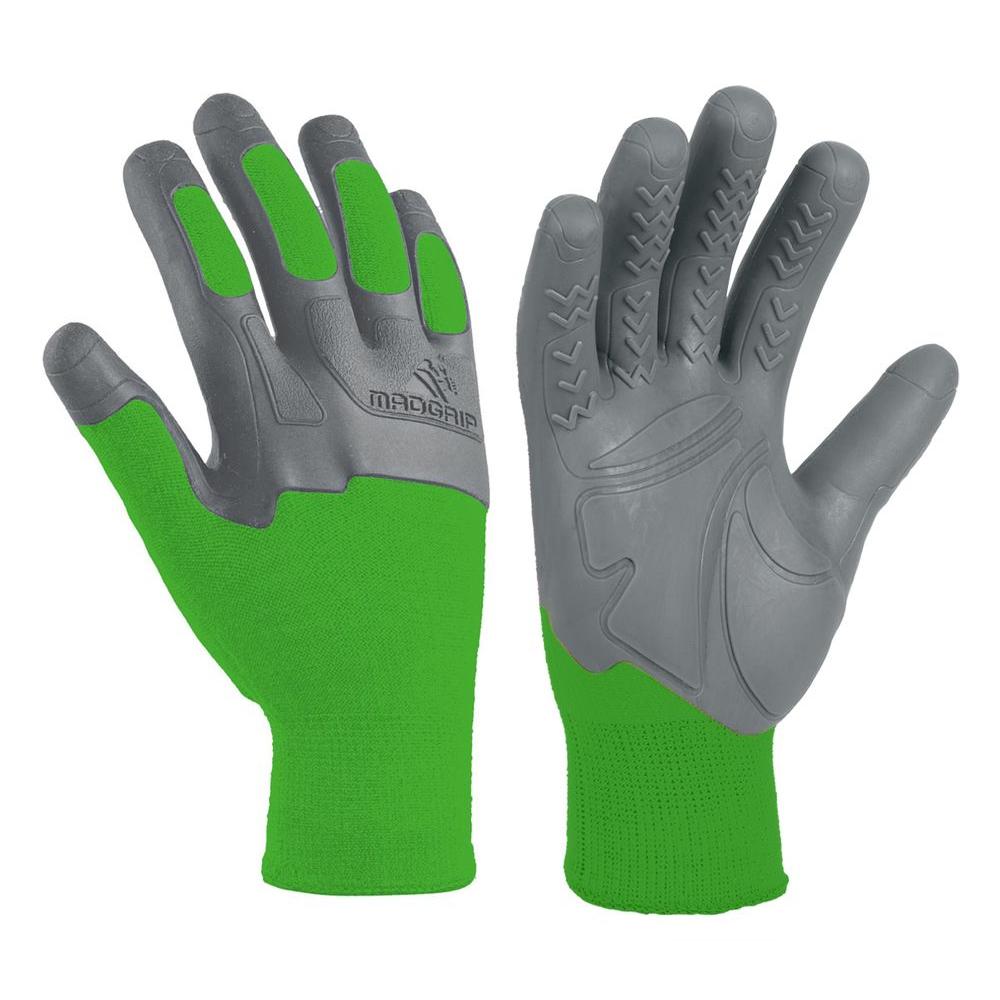
There are also many varieties of grip-gloves out there which allow you to torque the old style clamps harder. Might be a solution for those not wanting to alter a bunch of old Besseys.


img

Re: Improving clamp handles

#10

Re: Gloves

Bruce, a MN Galoot

That’s what I use. I have extremely dry hands, and these take care of that problem.

Re: Improving clamp handles

#11

Re: Improving clamp handles

Stuart Hough

I have had success using old innertubes from my old 10-speed bike. The skinny road tires used very narrow tubes, and though they are tough to get on the handles, once on they grip well, and don't cost me anything extra, especially since they cost me about $1.95 back in 1975. JMHO

Re: Improving clamp handles

#13

the myth of over tightening panel clamps

Bill Tindall, E.Tn.

Franklin recommends 200 psi clamping pressure for maple, for example. That translates to about 500 pounds of clamp force on a 3 foot long panel joint in 4/4 lumber. Neither Franklin, not I, have been able to demonstrate that excessive clamping pressure could squeeze out so much glue from a joint as to weaken it. The only risk of over tightening clamps is distortion of the wood assembly or clamp damage.

Re: Improving clamp handles

#15

Silicone vs Silicon

Henry (Raleigh NC)

You meant silicone - not silicon. Easy to interchange.

Silicone is the elastomer/polymer that is used in gaskets and thousands of other applications. In smaller molecules silicones are used as an lubricant/oil. That is the material the you want to avoid on wood surfaces - the cause of 'fish-eye' in finishes.

Silicon is an element that is only part of the silicone materials; carbon, hydrogen, and oxygen are the other primary components.

Silicon is a solid, and is the semiconductor that is the basis for almost all of modern consumer electronics; LEDs phosphors are the primary exception. Modern electronic era started with the consumer goods like the transistor radio and the handheld calculator. There are likely earlier examples, I just can' t think of them.

So unless your shop radio has vacuum tubes, you probably already have silicon in your shop. Even plenty of integrated electronics in many power tools in the last 25 years.

Re: Improving clamp handles

#16

Re: the myth of over tightening panel clamps

Mark Hennebury

"Franklin recommends 200 psi clamping pressure for maple, for example. That translates to about 500 pounds of clamp force on a 3 foot long panel joint in 4/4 lumber. "

A 3 foot long panel joint of 1" stock is 36 square inches x 200 psi is 7200LBs of clamp force.

Re: Improving clamp handles

#17

Oops missed a decimal point

Bill Tindall, E.Tn.

About 5000 pounds of force. a panel from 4/4 lumber will not be an inch thick. I should not try to do math before noon :(

Re: Improving clamp handles

#19

You beat me to it, but correction,

Keith Newton

3/4 of 36= 27 sq inches X 200# = 5400#. Their specs show 900# each, so that would call for 6, or two per foot to achieve the 200 psi.

Re: Improving clamp handles

#20

Handles

Bill Tindall, E.Tn.


Manufacturers put handles on clamps with the handles designed to prevent clamp failure from over tightening. Round handles are probably the most limited. In contrast, panel clamps from an earlier time had cranks capable of exerting substantial force. I wish I had access to a load cell so I could measure the force these traditional Hargrave clamps apply. This basic Acme thread size is found in the panel assembly stations in furniture factories. In the factory they are tightened with an air wrench but I do not know the foot pound setting used. Franklin technical literature indicates that 5 of these clamps will provide at least 14,000 pounds of pressure.

I use these Hargrave clamps on 8/4 assemblies. I use industrial strength aluminum bar clamps for 4/4 assemblies.

Re: Improving clamp handles

#21

Re: Hockey Stick Tape Wrap

William Duffield

I also use a hockey stick tape wrap. I use it on all my clamp handles: Bessey's, hand screws, F-clamps, Festool screw clamps, etc. It also improves the grip of my lump hammer, mattock, hatchets, froe and maul, wheel barrow, etc.

It is personal preference, but I do one flat wrap, overlapping half the width of the tape, then do the twisted cord wrap back to the other end, spacing closer than shown in the Cosman video, and do another flat wrap to completely cover the twisted cord. I probably use more tape per wrap than some people would think is frugal, but hockey tape is cheap, and I like the extra padding the three layer wrap provides.


In Canada, you can probably buy it at the grocery store :D , but around here I find it at Dick's Sporting Goods. AFAIK, REI and Cabela's do not carry it. I use 1" wide Renfrew brand cloth tape, in black, but it is available in many colors. If you buy it in bulk, it is less than $5 per 25 yard roll.

Re: Improving clamp handles

#22

Re: +1

Mark Nowicki

Mine don't get dirty, they develop a patina.....

Re: Improving clamp handles

#23

Re: +1

William Duffield

The wraps I put on garden tool handles, regardless of the color of the tape, certainly get dirty, but the hockey tape is very durable and remains functional over several seasons outside, including multiple freeze/thaw cycles, solar UV attacks, being buried in snow and ice and even being run over by my tractor.

Re: Improving clamp handles

#24

Re: Handles

Dave Bair

You earlier said the Bessies are too heavy and then you trot out these monsters.

Re: Improving clamp handles

#25

a couple of facts

Bill Tindall, E.Tn.

Note that I clearly stated that I used the Hargrave clamps on 8/4 lumber. They are needed to get the clamp pressure needed on thick lumber. It would take 15 Bessy's at their maximum applied force to clamp a 3' x 8/4 panel at the recommended clamp pressure for maple.

A 2' Bessy weighs only 5% less than the 2' Hargrave clamp, shown in previous post.

Learn more about clamps in a new post.

👍 This page answered my questions

Your vote helps other woodworkers quickly find the answers and techniques that actually work in the shop.