WoodCentral Forums

Est. 1998 — 27 years of woodworking knowledge

Watco Natural Danish Oil (Color)

Posts

Watco Natural Danish Oil (Color)

#1

Watco Natural Danish Oil (Color)

Doug Wolf

I have been using Watco Danish Oil since the 1970's and prefer it to pop the grain, but that's another topic.

I'm always looking for a good deal, so when I saw my local Walmart had it on the shelf I picked up a pint can of Natural. I opened it and poured it into a tuna can and noticed a different color than I'd seen in the past. It looked like it had some of their walnut color mixed in. I checked the UPC and it was different than the one's I had purchased at Lowe's. (Hopefully you can see the different color and read the UPC in the attached picture). I called Watco and they were very nice and refunded my money. I asked them if it was the same product that I buy at Lowe's because the UPC numbers aren't even close. They took a while but finally said it was a special number made for Walmart but assured me it was the same product. I told them it looked like they didn't clean the Walnut stain out the pot when they changed over to Natural.

I used both on cottonwood bowls and you can tell a difference in the color on the final finish. I know that it is important to use the same lot number when matching colors but I was surprised at the difference in the Natural color.

Re: Watco Natural Danish Oil (Color)

#2

Maybe someone already bought it and returned it

Dick Coers

They added a little something, didn't like it, and returned it changed. I've seen some crazy stuff returned to the store for full refund. Another thought is that it was old and was slightly oxidized for the color change. But considering Walmart, i vote for the first idea.

Re: Watco Natural Danish Oil (Color)

#3

Date Codes

Doug Wolf

Dick, you could be correct on the first idea, but I didn't want to buy a second can to find out.

The Watco customer service rep did share the Date code info with me.

FYI: The vertical letter and numbers on the left of the bar code is the Date code of the product.

The first letter is a "W". The first number is the last digit of the year. The next will either be a number for the month up to September (9) or a letter for Oct, Nov, and Dec. The next two are the day of the month. And then a space and a 1.

The one purchased in 2014 was made in 2013 on December 10th.=W3D10 1.

The one purchased at Walmart was 2015 on November 12th.=W5N12 1.

The one I just bought at Lowe's was 2016 July 20th.=W6720 1.

Re: Watco Natural Danish Oil (Color)

#4

Re: Date Codes

Mike Van Pelt

Years ago when I was working in Indianapolis we had a customer return an "un-opened" 5gl of finish. We refunded his money and put it back into our inventory and re-sold it to another customer. The new customer sprayed a complete set of kitchen cabinets and the finish was a mess. Apparently the "returned" finish had been contaminated. It cost our insurance company over $15,000 to settle.

I am always scared when a customer wants to return a can of finish! You want to offer good customer service but.....?

Re: Watco Natural Danish Oil (Color)

#5

Sad state

John K Jordan

Some people simply must be morally deficient. I bought a sprayer and found someone had used it for deck stain then returned it. A clerk, excuse me, an Associate told me there are people who use Home Depot as their free rental service. On a photography forum one guy recommended buying lights then returning them when the job was done. Shame on them and probably their ancestors who trained them and perhaps their offspring being raised by them.

I look carefully at things to see if they have been opened. If so, I either don't buy or insist the store open and check before I buy. I wouldn't put it past some selfish person to use the finish then fill up the can with used motor oil or something. Sigh...

JKJ

Re: Watco Natural Danish Oil (Color)

#6

Re: Watco Natural Danish Oil (Color)

Ryan

Not just finishing products... a friend of mine worked at the cosmetic counter at a major department store. A woman bought a large - and very expensive - jar of face cream then returned it several days later saying that it irritated her skin. Returns of this particular brand were given to the sales rep when he regularly visited the store. When they opened the jar, there was a thin layer of face cream on the top covering a large quantity of mayonnaise.

Re: Watco Natural Danish Oil (Color)

#7

Re: Watco Natural Danish Oil (Color)

Jim O'Connor

I would bet it is a product made for the big box stores. I live 165 miles from any of those and I saw a storm door at Menards that I liked but had no way to haul home but copied down the model numbers to be able to order it at home. When my local lumber yard went to order it the number was only for big box stores. The one I received looked exactly like the big box model but it cost me about $75 more. Hope it has that much extra quality built into it. I'm not a fan of Dome Hepo and am thankful we have a local lumber yard still on the lines of the old timers,

Re: Watco Natural Danish Oil (Color)

#8

Help. Making butcher blocker table. Bought WATCO Danish Oil light walnut. Followed butcher block directions apply sealer in 48 hours. Followed WATCO instructions for 2 coats with light sanding in between. Waited 5 days to apply WATCO lacquer. It never cured. Tacky and sticky. Removed, resanded with 60, 120, 240, and 320. Desided to just do oil. Brought table in house thinking humidity was issue. Aclaimated for 24 hours. Applied I coat waited 48 hours for second coat. It’s tacky and sticky after 24 hours. 
Help.

Re: Watco Natural Danish Oil (Color)

#9

Typically that is the result of too heavy a coat.  Oil finishes are meant to be very light, especially on something that will need periodic reapplication like butcher block.  That sounds like your problem, but it could also be high humidity - that does seem to slow down curing oils.  Sunlight seems to accelerate them - I can get hardware store BLO to fully cure in a few hours in the sun (6000' elevation, I get a lot of UV plus the heat).

Since I live in a hot and dry climate, I do often put on a heavy coat and then buff off the sticky film with steel wool.  If you are at the point where it just feels soft and tacky to the touch, you can probably do that too.  Steel wool works a bit better than sand paper because it doesn't cut the wood beneath the film.  In some cases, I find the finish acceptable following the steel wool buff.  Its a lot of elbow grease to do this way but it gives you about as nice a finish as you can get with a penetrating oil.

Re: Watco Natural Danish Oil (Color)

Edited #10
Jim O'Connor wrote:

Re: Watco Natural Danish Oil (Color)

Jim O'Connor

I would bet it is a product made for the big box stores. I live 165 miles from any of those and I saw a storm door at Menards that I liked but had no way to haul home but copied down the model numbers to be able to order it at home. When my local lumber yard went to order it the number was only for big box stores. The one I received looked exactly like the big box model but it cost me about $75 more. Hope it has that much extra quality built into it. I'm not a fan of Dome Hepo and am thankful we have a local lumber yard still on the lines of the old timers,

I wouldn't be surprised if HD requires an agreement that the door, if same quality, will be provided to them at a discount vs. other distributors. For a long time, they operated on thinner margins, but probably 15 years ago, ran out of legitimate growth opportunities as far as scale and market share goes. The only way to protect a wide margin from competitors is to force it by agreement. 

That's my opinion, of course. 

Not that the local supply places were always much of a treat for Man on the Street coming in to buy one item.

Added later 02 min 03 s:

agree with the post above on the amount of finish. Whatever is there, as long as there is not something in the wood that prevents UV/oxygen curing of the danish oil, the finish needs to have contact with light or air. If the layer is thick or a lot of it is in the wood blocked from exposure to light and oxygen, it will take a while for it to dry. 

The typical routine with wipe on and wipe off finishes and then a drying period is intended to make sure there is no thick layer that's not exposed to light or air - especially air, since UV light for drying isn't a guarantee.

Added later 06 min 10 s:

John in NM wrote:

Typically that is the result of too heavy a coat.  Oil finishes are meant to be very light, especially on something that will need periodic reapplication like butcher block.  That sounds like your problem, but it could also be high humidity - that does seem to slow down curing oils.  Sunlight seems to accelerate them - I can get hardware store BLO to fully cure in a few hours in the sun (6000' elevation, I get a lot of UV plus the heat).


courtesy of our Bill Tindall, though I'm relaying what he has "learned me" as an amatuer varnish cooker, you are correct with the sun. 

The drying oils and oil varnishes typically uncouple and recouple at double oxygen bonds. Heat, UV and oxygen (and some drying agents) will all cause the same thing. The chemistry when certain things like lead or cobalt, etc, cause the process to progress a little differently are over my head, but some of the driers allow an acceleration, perhaps slightly different, and others allow the layer to be open to oxygen getting below the top skin so you don't end up with crows feet. 

In my experience, bright direct sunlight is a better cure for oils and long oil varnishes or oil and resin mixes......than oxygen. 

All can be baked quickly, but at temperatures you won't be able to get to. Baking is useful if the layer is thick and the stuff is pigmented (like japanning), but I've been able to make asphaltum japanning that will air cure reasonably well with the assistance of a higher dose of japan drier. 

Thanks Bill! 

Knowing about the bond doesn't prevent wood from getting hot and shrinking a little, or bugs (here, maybe fewer in dry areas) from finding the wet shiny thing and getting themselves stranded in the surface.

Added later 51 min 23 s:

OK. I'm quite sure what I relayed isn't totally correct for the cure side of oils - something breaks and oxygen inserts itself. Two years of time between being told what happens and what actually happens makes the information above about light, oxygen and heat, and driers accurate, but what's actually happening probably also summarized wrong, but less wrong than before:
* oxygen or UV light or heat breaks a bond between other atoms
* oxygen inserts itself and creates free radicals with an unpaired electron, which presumably results in seeking more of the double bonds that are the weakest
* AI tells me the term is autooxidation

I'm sure bill told me all of this 100% correct and would be disappointed with my recollection, but without having depth in chemistry, stupidity can result. 

What I do know is the hands on part if this, though, using oxygen, heat and light  for the same varnishes and seeing how they dry. 

AI tells me "photodissociation" accelerates the destruction of what's there and causes the process to occur faster than without UV. 

I don't know what heat does and AI can summarize what the driers do. For the man on the ground, exposure to oxygen, UV light, or heat where it can be had are things that make finish cure. Over time, they will apparently also break down finishes (thus nothing clear lasts forever in the sun)

for the original question asked here, avoiding a thick layer that's getting little oxygen and little light is the way to go. 

apologies to bill tindall for butchering the chemistry. The result of these things (speedy drying in the sun or especially when baking, but baking comes with darkening) is very easy to see, though, just doing comparisons. 

the other thing that strikes me reading about varnishes in general is that what's going on sometimes ends up appearing in daughter' biology class. esterification of resins to make them more stable and less acidic to have a varnish that's not as reactive .....our bodies like to apparently esterify fat to make it stable for storage. 

too, the UV that creates free radicals that go around and initiate curing and later damage also damage fatty acids in skin where we don't love the free radicals. 

All of this seems to make chemistry something that would be interesting to learn a lot better in retirement. The little piece that falls off of improperly learning the details here is that there's going to be no magic if a drying oil or product is made to dry at a certain rate, and application of the product prevents the things needed to make the drying happen.

Added later 34 s:

(the default stringing together of several posts into one makes this very unreadable!)

Added later 2 h 44 min 11 s:

Re: Watco Natural Danish Oil (Color)

#11
DavidW wrote:
Jim O'Connor wrote:

Re: Watco Natural Danish Oil (Color)

Jim O'Connor

I would bet it is a product made for the big box stores. I live 165 miles from any of those and I saw a storm door at Menards that I liked but had no way to haul home but copied down the model numbers to be able to order it at home. When my local lumber yard went to order it the number was only for big box stores. The one I received looked exactly like the big box model but it cost me about $75 more. Hope it has that much extra quality built into it. I'm not a fan of Dome Hepo and am thankful we have a local lumber yard still on the lines of the old timers,

I wouldn't be surprised if HD requires an agreement that the door, if same quality, will be provided to them at a discount vs. other distributors. For a long time, they operated on thinner margins, but probably 15 years ago, ran out of legitimate growth opportunities as far as scale and market share goes. The only way to protect a wide margin from competitors is to force it by agreement. 

That's my opinion, of course. 

Not that the local supply places were always much of a treat for Man on the Street coming in to buy one item.

Added later 02 min 03 s:

agree with the post above on the amount of finish. Whatever is there, as long as there is not something in the wood that prevents UV/oxygen curing of the danish oil, the finish needs to have contact with light or air. If the layer is thick or a lot of it is in the wood blocked from exposure to light and oxygen, it will take a while for it to dry. 

The typical routine with wipe on and wipe off finishes and then a drying period is intended to make sure there is no thick layer that's not exposed to light or air - especially air, since UV light for drying isn't a guarantee.

Added later 06 min 10 s:

John in NM wrote:

Typically that is the result of too heavy a coat.  Oil finishes are meant to be very light, especially on something that will need periodic reapplication like butcher block.  That sounds like your problem, but it could also be high humidity - that does seem to slow down curing oils.  Sunlight seems to accelerate them - I can get hardware store BLO to fully cure in a few hours in the sun (6000' elevation, I get a lot of UV plus the heat).


courtesy of our Bill Tindall, though I'm relaying what he has "learned me" as an amatuer varnish cooker, you are correct with the sun. 

The drying oils and oil varnishes typically uncouple and recouple at double oxygen bonds. Heat, UV and oxygen (and some drying agents) will all cause the same thing. The chemistry when certain things like lead or cobalt, etc, cause the process to progress a little differently are over my head, but some of the driers allow an acceleration, perhaps slightly different, and others allow the layer to be open to oxygen getting below the top skin so you don't end up with crows feet. 

In my experience, bright direct sunlight is a better cure for oils and long oil varnishes or oil and resin mixes......than oxygen. 

All can be baked quickly, but at temperatures you won't be able to get to. Baking is useful if the layer is thick and the stuff is pigmented (like japanning), but I've been able to make asphaltum japanning that will air cure reasonably well with the assistance of a higher dose of japan drier. 

Thanks Bill! 

Knowing about the bond doesn't prevent wood from getting hot and shrinking a little, or bugs (here, maybe fewer in dry areas) from finding the wet shiny thing and getting themselves stranded in the surface.

Added later 51 min 23 s:

OK. I'm quite sure what I relayed isn't totally correct for the cure side of oils - something breaks and oxygen inserts itself. Two years of time between being told what happens and what actually happens makes the information above about light, oxygen and heat, and driers accurate, but what's actually happening probably also summarized wrong, but less wrong than before:
* oxygen or UV light or heat breaks a bond between other atoms
* oxygen inserts itself and creates free radicals with an unpaired electron, which presumably results in seeking more of the double bonds that are the weakest
* AI tells me the term is autooxidation

I'm sure bill told me all of this 100% correct and would be disappointed with my recollection, but without having depth in chemistry, stupidity can result. 

What I do know is the hands on part if this, though, using oxygen, heat and light  for the same varnishes and seeing how they dry. 

AI tells me "photodissociation" accelerates the destruction of what's there and causes the process to occur faster than without UV. 

I don't know what heat does and AI can summarize what the driers do. For the man on the ground, exposure to oxygen, UV light, or heat where it can be had are things that make finish cure. Over time, they will apparently also break down finishes (thus nothing clear lasts forever in the sun)

for the original question asked here, avoiding a thick layer that's getting little oxygen and little light is the way to go. 

apologies to bill tindall for butchering the chemistry. The result of these things (speedy drying in the sun or especially when baking, but baking comes with darkening) is very easy to see, though, just doing comparisons. 

the other thing that strikes me reading about varnishes in general is that what's going on sometimes ends up appearing in daughter' biology class. esterification of resins to make them more stable and less acidic to have a varnish that's not as reactive .....our bodies like to apparently esterify fat to make it stable for storage. 

too, the UV that creates free radicals that go around and initiate curing and later damage also damage fatty acids in skin where we don't love the free radicals. 

All of this seems to make chemistry something that would be interesting to learn a lot better in retirement. The little piece that falls off of improperly learning the details here is that there's going to be no magic if a drying oil or product is made to dry at a certain rate, and application of the product prevents the things needed to make the drying happen.

Added later 34 s:

(the default stringing together of several posts into one makes this very unreadable!)

Added later 2 h 44 min 11 s:
(the default stringing together of several posts into one makes this very unreadable!)Strongly Agree.  Let's not continue this.

Re: Watco Natural Danish Oil (Color)

#12

Now that mark has responded, I can make another comment about Watco. 

I looked up what's in it:
* stoddard solvent and naphtha (no surprise mineral spirits with a little fast solvent to speed flash off, but mostly stoddard or mineral spirits like stuff)
* linseed oil - no surprise
* soybean oil (!) - not listed as modified. Soybean oil dries, but very very slowly. it probably does result in a lighter color as far as the oil goes, and more soaking in, or deeper. In something with body like paint, it also allows flowout and brushability, but that's not the case here. 
* rosin ester adduct (which they claim is secret instead of providing a cas #)

The rosin should be lighter colored than like violin varnish and more stable/less acidic. Its' something like 10-15%, and less easy to tell in this case if it's cooked along with the rosin to make a long oil varnish with soybean oil added. What's the old adage about danish oil - take a varnish, add an oil and more thinner and it's danish oil?

I don't see any chemical drying agents in it, but maybe the ester is modified some way that makes it initiate drying. I used watco when I first started and didn't get it - as in, I thought it would be a wipe on finish, but it's more wipe in. 

Re: Watco Natural Danish Oil (Color)

#13

I've used WATCO, more as a stain than a finish, but use has always been wipe it on, wait 15, then wipe it dry.  Slop the stuff on and it'll take forever to set up.  That's one reason I switched to Waterlox in my finish routine.  Other reasons -Waterlox's mixes set up truly sandable in 24 hours, and doesn't get darker over time like the seed oils.  Yes, polimerized tung is a softer film than the seeds and cooking oils, but it's not my wearing top coat so durability is not the goal for me.

Got a sticky finish?  Get a role of paper towels and a can of Naptha to wipe off the excess to (hopefully) get the residue to oxidize.  Just remember to put the dirty towels either a) in a bucket UNDER WATER, or b) laid out flat to air dry.

Re: Watco Natural Danish Oil (Color)

#14

That was my experience with watco - I used it on all of my shop furniture early on mostly because I bought a gallon of it. Resorted to brushing it on and leaving it alone and it was better than nothing, but never really did build. I'm surprised to see that there's 15% resin in it, but if that resin is cooked in a varnish with the linseed oil, it wouldn't be free to separate and would just soak in with the rest of the smootz.

Re: Watco Natural Danish Oil (Color)

#15

There was half a gallon of it one place I worked that had been sitting around (half empty) for 20 years.  It was unlike any Watco I had ever used before, fairly thick and a perfect consistency for a wiping varnish.  My theory is that it was like a linseed stand oil, where it had slowly pre-polymerized over the years of sitting there and taking up oxygen.  Not a useful tidbit at all, practically speaking, but probably of some interest to David.

Re: Watco Natural Danish Oil (Color)

Edited #16

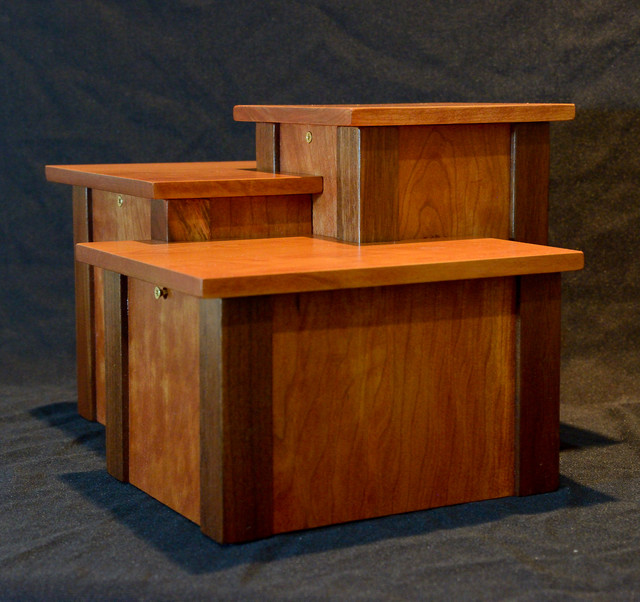
As mentioned, I've used flavored Watco to tone (stain) woods.  Here is a walnut/cherry 3-part funerary urn, toned by wipeon-wipeoff Watco cherry, then top coated with lacquer.
Urn-Walkabout-2.jpg
This was made in 3 interlocking pieces so the wife and 2 children could each hold a portion.  They liked the composition so much they decided not to take them apart.

Re: Watco Natural Danish Oil (Color)

Edited #17
John in NM wrote:

There was half a gallon of it one place I worked that had been sitting around (half empty) for 20 years.  It was unlike any Watco I had ever used before, fairly thick and a perfect consistency for a wiping varnish.  My theory is that it was like a linseed stand oil, where it had slowly pre-polymerized over the years of sitting there and taking up oxygen.  Not a useful tidbit at all, practically speaking, but probably of some interest to David.


Sounds like just what you said. One of the reasons I like to make a long oil tung varnish that's also relatively low solids re: rosin is that it's waterproof, but you can engineer it to be whatever you want in terms of consistency. I think it ends up being what people want out of an oil but can't get. There's tried and true, also, but their aversion to drying agents makes the finish a little harder for someone either impatient or new to really master.

Added later 02 min 58 s:

Mark Mandell wrote:

As mentioned, I've used flavored Watco to tone (stain) woods.  Here is a walnut/cherry 3-part funerary urn, toned by wipeon-wipeoff Watco cherry, then top coated with lacquer.
Urn-Walkabout-2.jpg
This was made in 3 interlocking pieces so the wife and 2 children could each hold a portion.  They liked the composition so much they decided not to take them apart.


that has a very nice tone - like a decade old look for a cherry piece that's sat in some exposure to UV light. 

In your experience, if you keep applying it, will eventually build at the surface (but not on?). I never had a situation where I used it or needed to use it other than just getting something on shop stuff - back then, a router table and other things like that that would've become filthy if they didn't have something on or in the wood to prevent dirty hands kind of dirt from embedding.

Re: Watco Natural Danish Oil (Color)

#18

Added?  Nah.  Top coat is/was N-C lacquer.  It's allowed the Watco and cherry to darken nicely over several years.

reliquary-IMG-0979.jpg

Re: Watco Natural Danish Oil (Color)

#19
Mark Mandell wrote:

Added?  Nah.  Top coat is/was N-C lacquer.  It's allowed the Watco and cherry to darken nicely over several years.

reliquary-IMG-0979.jpg


Thanks - the result looks great and the overhead view does a good job here of showing the lacquer. I'm curious about the wipe on oil products because I never found much satisfaction with them, probably because of refusal to use them the way they're supposed to be used. When transitioning into making my own finishes, I put raw tung in wood with japan drier and was shocked how capable it is if it's placed in the wood instead of on it. 

At any rate, the urn looks great, and the cherry tone is just wonderful. it ages so nicely beyond just the color of the watco.

Re: Watco Natural Danish Oil (Color)

#20

Nakashima's primary finish was, and still is, polymerized tung oil which is basically Waterlox.   His pieces have a lovely soft feel that is close to the wood.

Procedure is just brush/wipe on a light coat, wait 15 minutes, then wipe it dry. I don't rush my finishes, so allow them a day or so to release the carrier solvents before reapplying.  Takes longer to "build" a finish but even a higher gloss will not have that 'plastic' feel.
Salad-2.jpg
18" walnut

Re: Watco Natural Danish Oil (Color)

Edited #21

Waterlox is my favorite finish.  The Original Sealer & Finish is the most versatile stuff I've used, and what I consider to be a true wiping varnish.  By the time Minwax or whoever was selling those I was already using Waterlox and didn't bother experimenting with other products.

The only downside to it is that gelling effect after it's open.  I decant into smaller jars so I can fill them right up and they last well that way.  I've also found that diluting the gelled stuff with turpentine revives it, but I'm not sure what effect it has on the chemistry.  Once the turp is added it dries slower and has a kind of rubbery phase that lasts a couple days (in my hot & dry environment).  I use it for more general coating if I have it around when needed, not on furniture.

Added later 07 min 41 s:

Waterlox is my favorite finish.  The Original Sealer & Finish is the most versatile stuff I've used, and what I consider to be a true wiping varnish.  By the time Minwax or whoever was selling those I was already using Waterlox and didn't bother experimenting with other products.

The only downside to it is that gelling effect after it's open.  I decant into smaller jars so I can fill them right up and they last well that way.  I've also found that diluting the gelled stuff with turpentine revives it, but I'm not sure what effect it has on the chemistry.  Once the turp is added it dries slower and has a kind of rubbery phase that lasts a couple days (in my hot & dry environment).  I use it for more general coating if I have it around when needed, not on furniture.

Re: Watco Natural Danish Oil (Color)

Edited #22
John in NM wrote:

Waterlox is my favorite finish.  The Original Sealer & Finish is the most versatile stuff I've used, and what I consider to be a true wiping varnish.  By the time Minwax or whoever was selling those I was already using Waterlox and didn't bother experimenting with other products.

The only downside to it is that gelling effect after it's open.  I decant into smaller jars so I can fill them right up and they last well that way.  I've also found that diluting the gelled stuff with turpentine revives it, but I'm not sure what effect it has on the chemistry.  Once the turp is added it dries slower and has a kind of rubbery phase that lasts a couple days (in my hot & dry environment).  I use it for more general coating if I have it around when needed, not on furniture.


My impression as an amateur cooker is after the finish starts to cure, you can cease it to some extent with additional solvent (this important in cooking - if the string gets really long, or the molecule length, you can't really unwind it but you can get solvent in it early and stop the reaction). 

When the string gets long enough that you really need a lot of solvent to get a workable finish, there's a range where it will dry slowly, but eventually hard. I'm just guessing that the sites that are suitable for the cure - double bond sites for oxygen to insert itself inti - are fewer or less dense. 

Both turpentine and orange terpenes are a better solvent than mineral spirits, but stoddard solvent that doesn't match even odorless mineral spirits is cheap, so we'll probably have no luck getting that. Waterlox has a lot of margin in it if it's retailing for $99 for a gallon, but probably every finish does. raw tung is $33 a gallon and stoddard solvent is probably less than $10. They're a little secretive by SDS about how much tung is in the original finish. Looks like they add 2.5% rosin or so, so it's probably a very long oil varnish. 

I've never used any of the stuff, though. I remember in my cheap phase, I thought it was expensive, but once you cook your own varnish, there's no great need for any of the waterlox products. 

The ingredients in the original sealer list cobalt (which is a wonderful component of japan drier, despite the negative press about cobalt due to high exposure, i guess in batteries) and then an antioxidant - an interesting combination, but the two together must do some balance of still making it dry well, and not brick in the can the first few times you open it. 

At the cost, it's one of the finishes where stop loss bags probably make sense. 

So far, my tung/rosin varnishes do well without drier added ahead of time, but if they have drier in them, depending on how much, the jars are all at least skinned with little rubber boogers all around the lid, or a total lump of rubbery plastic. 

I suspect that what might be going on with  waterlox with the tung oil is polymerization by varnish making, but don't know. You can't heat tung oil very hot before it gels and spends itself, but if you put rosin in it to cook as a varnish, it will cook better. I haven't experimented with how little - my longest oil varnish has been about 3 parts tung and 1 part rosin. 

To cut solvent cost and aroma if turpentine is objectionable, 3 parts mineral spirits and one part orange solvent makes for a really nice compromise. orange solvent and good turpentine cost about the same amount - $65 or so a gallon, but the MS is something like $19, and the oil and rosin components can be 40% solvents when cooked and still have something wipable. doing some quick math, it's about $30 a gallon to make, plus the need for pots and jars. mason jars and old liquor bottles work well for varnish with no drier in it yet, though. 

Figure $35 a gallon once you total everything including drier and jars. 

The other nice thing about polymerizing tung with rosin (actually just making a long oil varnish instead of the super high cost stuff that LV sells) is there is still clarity, and the finish can build if you want. And, of course, you can vary the rosin and add lime to create a harder varnish if you want a film. 

For some reason, i thought waterlox was tung phenolic, but I must have it confused with some of the spar varnishes. I have only ever heard "it stinks", but I'd be surprised if it stinks as much as epifanes.

Added later 20 min 44 s:

Just a follow up (John, I hope the comment I made above wasn't lost - I'd check how that slow drying stuff seems after a couple of months - it usually will dry well. I've only overcooked one varnish enough that it as too slow for me to tolerate as far as its drying). 

I had to have a look at the waterlox range as a cooker with less capability than they have, to see if they had a "full varnish", and I see their gloss is probably a tung varnish with penta or combination penta rosin. 

this is old school stuff, I can see why people would like it. it's a "real" varnish in a world of a lot of crap, and a lot of other "Tung oil finish" type products where there's little or no tung. 

I made a paint out of raw tung 2 years ago to put on metal stakes that just flake off enamel paint within a short period of time. Two years later, the tung is now dried very hard and with no change - it's like epoxy on the stakes. The barrier isn't that thick as it was just raw and had no body, but it has green chrome pigment in it as that's the color the stakes are. At some point, it may get enough UV to start to craze, but thus far, I know what I'll be doing from now on when I need to paint something metallic outdoors. 

A tung or long tung oil varnish with pigment is far more expensive materials wise than cheap enamel paint from the borg, but the difference is more than eclipsed by the insane markup on stuff like spraypaint now.

Re: Watco Natural Danish Oil (Color)

#23
DavidW wrote:

Just a follow up (John, I hope the comment I made above wasn't lost - I'd check how that slow drying stuff seems after a couple of months - it usually will dry well. I've only overcooked one varnish enough that it as too slow for me to tolerate as far as its drying). 


I did catch that, yes.  And it's good news.

Generally, in my environment Waterlox dries fast - really fast.  If I'm building up a nice gloss coat, I will do about two coats a day until it starts to build, then switch to four.  That is how quickly it goes here.  When I've used the turpentine thinned stuff, I usually give it about two days, and then it seems normal.

The other use for the semi-gelled stuff is as an initial coat - if you can get it on fairly smooth it makes several regular build coats.

I also remember thinking that the resin in Waterlox is phenolic.  Well, you know how the internet is.....

In 2019 my ex and I were traveling around, including a week or so in Cleveland where she's from.  If I had known then that Waterlox is made there, I would have tried to get a tour of the plant.

Funny what you said about people finding turpentine objectionable - old timers like my dad used to remark on how great it smells.  I like the stuff, and if I'm trying to get roofing tar or something like that off my hands, I reach for the turpentine.  Works great and smells good considering it's a solvent.

Re: Watco Natural Danish Oil (Color)

#24

I've compared notes with folks - different sources of pine resin for refinement result in different turps smell, but the stuff from diamond G smells good (really expensive!), as does some from portugal (still expensive, a little less so) that's on ebay, and then there's some place called DIY chemicals that also has crisp clean stuff - about $65 a gallon.

Daughter and wife don't care for it. Son doesn't offer opinions on stuff like that, because he doesn't care. 

They don't say much about orange terpenes and when I get weary of the turps smell, 75% odorless MS and 25% orange terpenes is a nice change of pace. 

Straight up orange stuff is pretty strong and even though it seems to dull the sense of smell a little, I find it a little dizzying. 

I keeping forgetting about the southwest dryness and sun! A straight up tung varnish that's about half rosin and half tung oil here in the humid parts, but with 3% japan dryer, will suitable for recoating at least twice a day, but epifanes is maybe the only decent varnish I've used, and I don't remember anything other than it wasn't quick. There's a varnish that's sold at sherwin williams at this point called "fast drying" or something like that, "performance series fast drying" maybe. it was only about $55 a gallon a few years ago, but has gone up. It dries or cures at the front end fast, but never really gets very hard. 

epifanes claims to be a phenolic modified alkyd resin. I have no idea what that means, but have a better grasp on what rosin, ester and pentaester resins are. Both types of resins are so widely sold for non-finishing purposes that they'll be around forever. Glues, and for resin, food stuff, tape adhesives, and so on. You can buy these types of resins but I don't know if any can just be cooked with an oil like WW rosin (the light colored stuff you see if you search for pine rosin). Phenolic resins and esters have names that go with melting points, and some from china, especially phenolic, can be dirt cheap, but I hear they do not store well and something about cooking them is toxic? I don't know, they're off of my radar. 

It is curious how easily terms are thrown around in magazine articles and by people at the donut shop counter, and we all end  up repeating them. I'm sure that I've typed somewhere that waterlox is a tung phenolic varnish just because someone else said it.

Re: Watco Natural Danish Oil (Color)

#25

Good lead on DIY Chemicals for turpentine, I may try some.  My favorite can came from my parent's garage - previous owner must have bought it in the 1960's or 70's, very clean smelling stuff that I save for diluting finishing oil.  For general use the stuff from the hardware store can be very hit or miss on the odor, but still leaves a nice odor in the air.  But then I also like the smell of hide glue, so I'm a bit strange :D

I always wanted to try some Epifanes, but I've yet to get around to it.  Have you tried any Sutherland Welles finishes? (speaking of $$$$!)

👍 This page answered my questions

Your vote helps other woodworkers quickly find the answers and techniques that actually work in the shop.