My Soap Dispenser Project
Rod Peterson—Ormond Beach, FL
So, this happened:
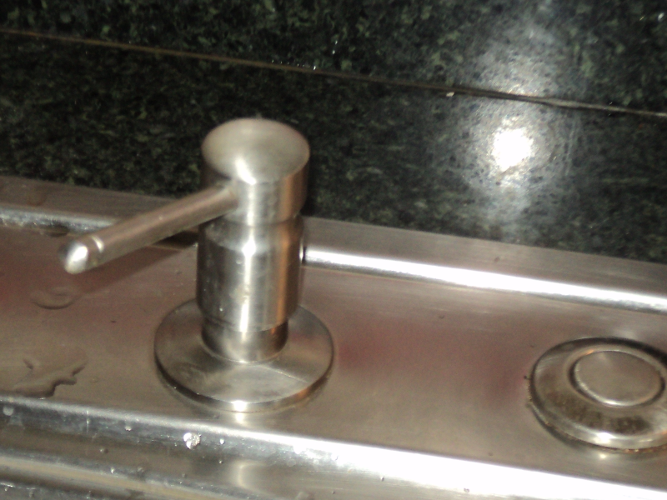
Ah, the soap dispenser. It’s, er, indispensible around the sink as a handy, non-messy way of getting dishwashing liquid into the arena during and after a cook. The only problem is it’s not a bottomless attachment.
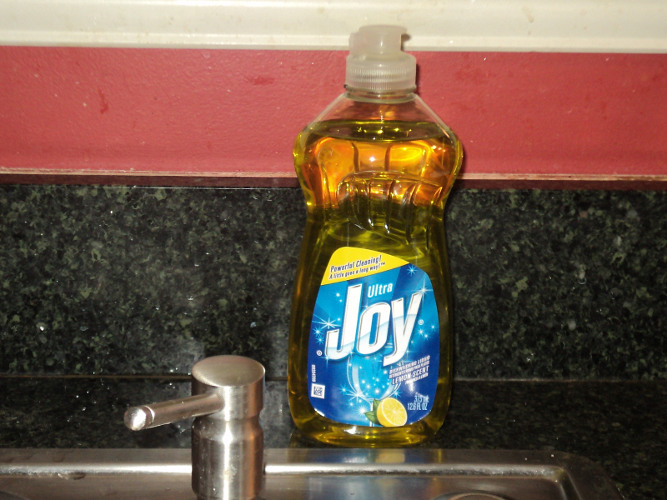
Occasionally, you have to refill it from one of these.
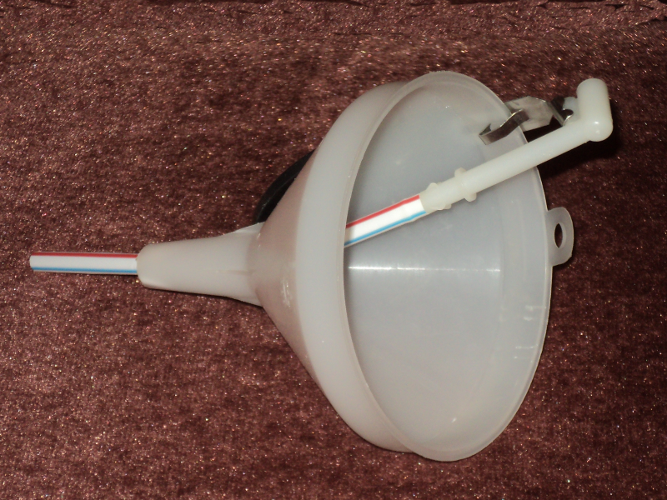
For several years I’ve been using this, which is a funnel, of course, but I quickly ran into the problem of too much gozinta and no getzouta—you know, just like with plumbing air needs a place to go. And, plumbing solution it is, as that plastic thingy with a clip is a leftover part from a toilet fill valve repair, and I was able to get a flexible soda straw over the end of it. It was somewhat effective, but it was easily thwarted (the mechanism for which I never really figured out), sometimes at the messy cost of some spilled soap.
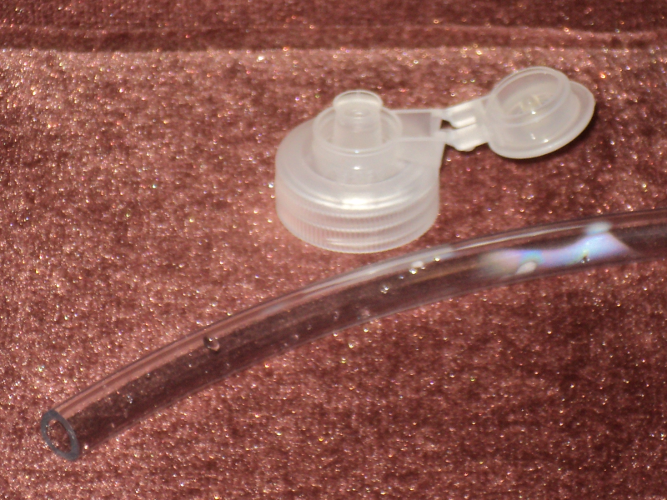
After discovering that the tops to the bottles the dish soap comes in made a nice fit in the top of the dispenser, I tried to figure how to marry one of the tops with a piece of plastic tubing in the hopes of reversing the air-liquid path and netting a more effective process.
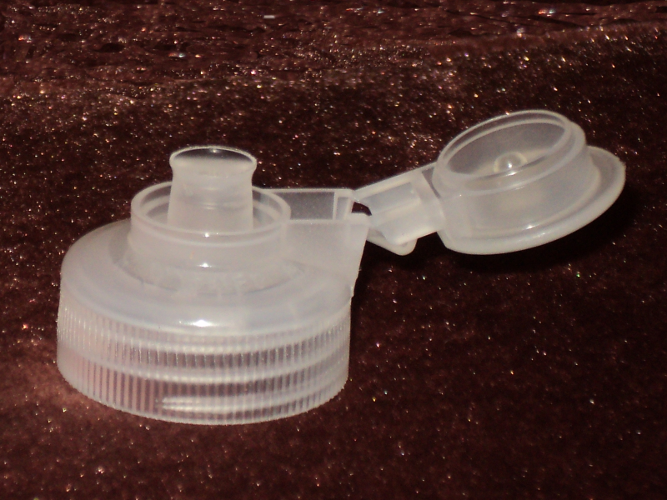
The first thing I did was observe the shape of the spout, which seemed might be a good ferrule to which the plastic could grab. I also removed the flip top (X-acto knife) and cleaned up the remainder with a little file work—aesthetics only, there’s not a bit of functionality to the cleanup.
As I was conceptualizing the project, I had thought of using shrink tubing to seal the plastic tubing to the top, but after bringing home samples of different diameters of tubing, it struck me that I could use a single piece of 3⁄16" ID tubing, if I could just open it up enough.
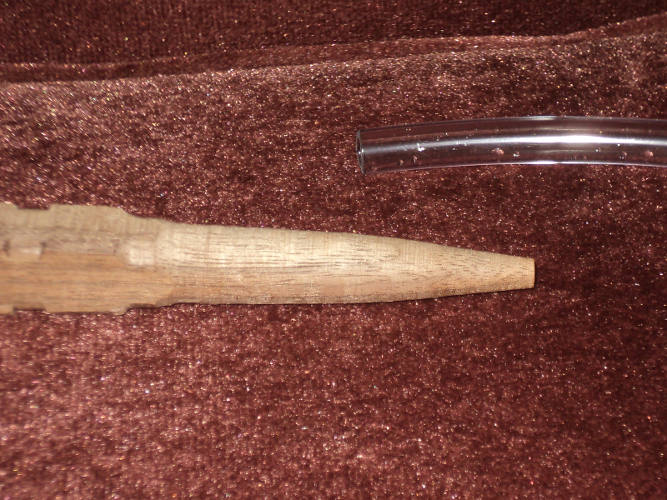
Bring on the woodworking! I chucked a square piece of wood onto my lathe and turned a taper to a small enough diameter to go in the tubing. Then I chucked in vertically in my bench vise, heated the end of the tubing with a heat gun, and forced it down the fid (I’m reasonably sure that’s a good name for it). It took a couple of tries to get the right temperature and the right result.
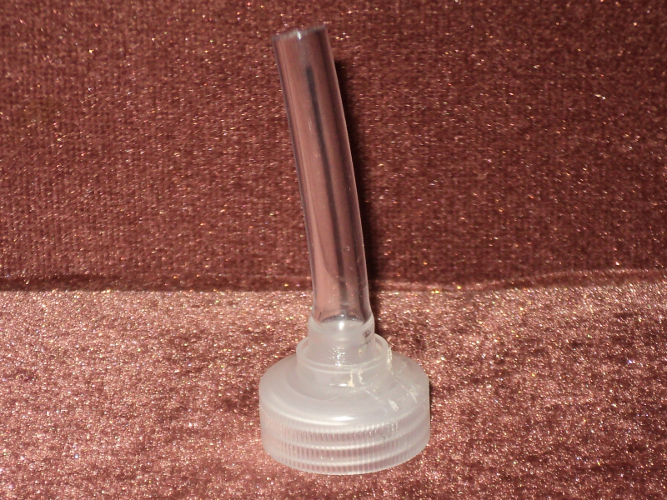
I pressed the soft tubing over the ferrule in the cap and let it cool. Then I took a measurement and trimmed it for appropriate length. This is the finished project.
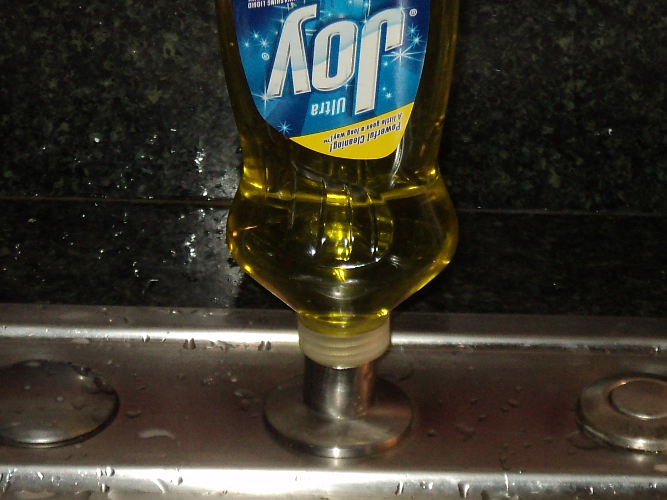
And here is how it works. In truth, the soap is viscous enough that it might take several hours to just drain out of the bottle (plus that air problem is now in the bottle), so I basically squeeze, release, and squeeze again, over and over until the bottle is practically empty. Let it sit for a while, remove, and replace the pump stem. Beautiful.
Rod


