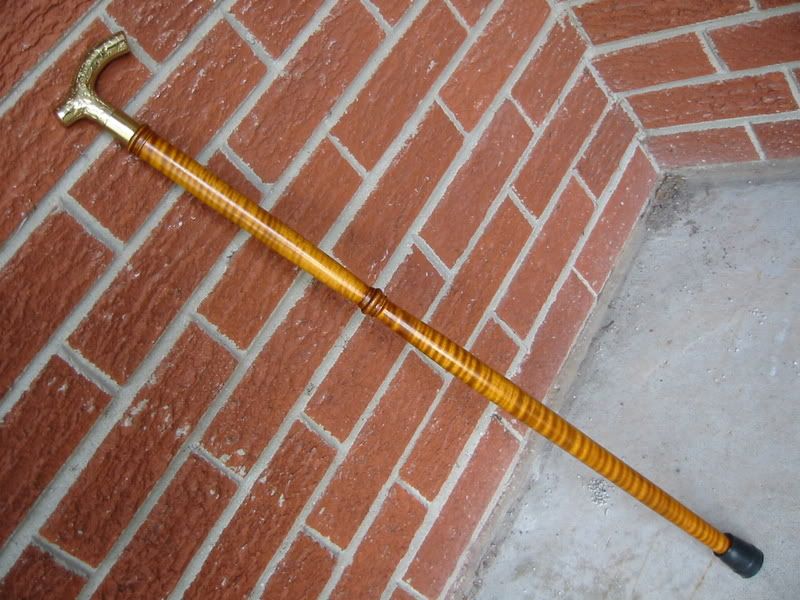
Maple dyes just dandy
Bob McGovern
>While it can blotch under a pigmented stain, maple takes waterbased 'analine' dyes exceptionally well -- nice & even color, with intensity easy to control. But note bene! Semi-rotary-cut birch plywood is often used as a maple emulator in cabinet boxes; it is cheaper and easier to obtain than maple veneered ply, and only a sharp eye can tell them apart. Until you try to dye or stain them. The birch ply is quite porous & gets much darker than either solid maple or maple ply.
That said, you might steer your cabinetmaker to Jeff Jewett's outstanding line of waterbased dyes from Homestead Finishes. Both the Transtint and Transfast lines give excellent results & are easy to use. I like Homestead's Honey Amber for a very light 'aging'; judicious doses of Golden or Medium Brown can add more warmth.
Good surface prep is essential for any dye or stain job: cross grain scratches will leap out, and fillers or glue drips may reject the color. Maple should not be sanded too finely; the sugars can burnish the wood & lead to blotching. But cherry will do the same thing. 180 grit is plenty fine enuf. Waterbased dyes can cause grain raising; a sealer coat & gentle scuff sand will shear off the whiskers.
Finally, any coloring operation (stain, dye, or glaze/toner) may add to the cost of the job. I charge about a $700 premium for dyeing, and it never seems to cover the added time imposed. Even plain old maple will amber quite a bit over the years, as ambient light does its trick.
Best of luck, & stick with maple if you like it.