WoodCentral Forums

Est. 1998 — 27 years of woodworking knowledge

The Butler's Desk - Hikido

Posts

The Butler's Desk - Hikido

#1

The Butler's Desk - Hikido

Brian Holcombe

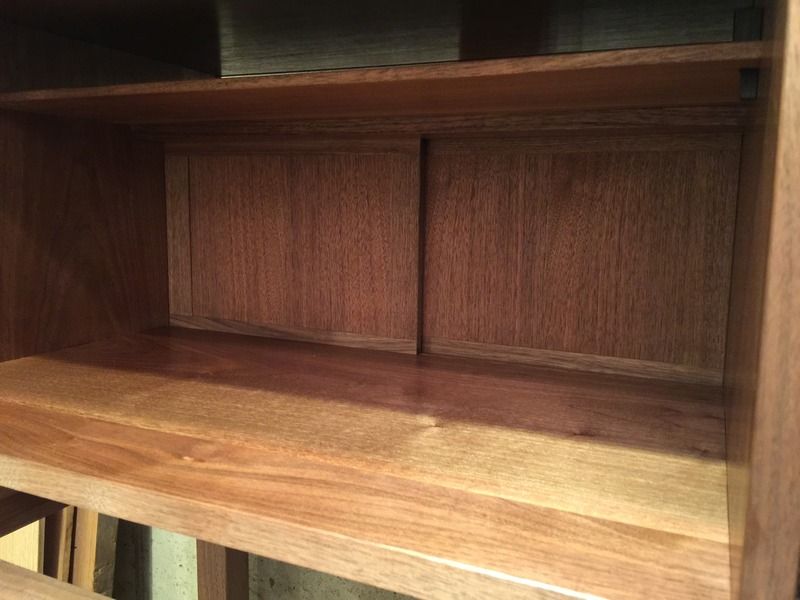
Good morning! I decided to move these up from Saturdays to Thursdays. My latest post on building the sliding doors which will hide but allow access to wiring that will run behind a shelf for storing electronics.

https://brianholcombewoodworker.com/2016/06/16/the-butlers-desk-hikido/

Click the above link to see all of the photos, explanation and video.


Re: The Butler's Desk - Hikido

#2

Re: The Butler's Desk - Hikido

Bill Tindall, E.Tn.

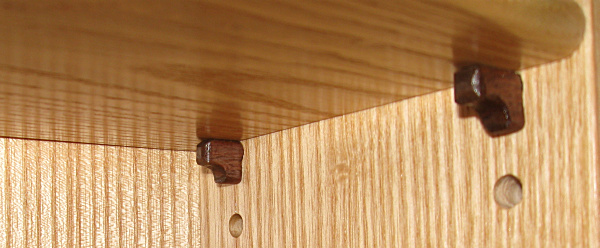
Pretty wood in the doors. You said you didn't mind criticism in a post below, so.......why did you use ebony for a shelf support that can't be seen? I would have saved it for knobs/pulls on something. I have never worked it but if it works like African blackwood I'll bet sawing it wasn't easy.

Re: The Butler's Desk - Hikido

#3

Re: The Butler's Desk - Hikido

Brian Holcombe

Thanks Bill, the comment/criticism is much appreciated. I used Ebony for it as it will ultimately be a perk to those who investigate further. This cabinet isn't for me and the end user is someone who picks up on small details so I have been building in stuff that only they will notice.

I think something becomes more personal if it reveals its many facets and the makers considerations over time.

To give some insight, this is the kind of user who will see try plane marks on the interior of the drawer face and intuitively know that is a product of something made in this fashion and not incorrect.

Ebony is easy to work but sounds harsh when being cut. I take fairly light plane strokes and easy chops.

Re: The Butler's Desk - Hikido

#4

Re: The Butler's Desk - Hikido

TomD

The first shelf supports I ever made were ebony. Still holding up shelves decades later. I think I was influenced by Krenov, he had a section on hand carving them. Took ages to get a perfect burnished fit in the holes. Very frustrating at the time.

I use ebony these days mostly for fingerboards and bridges. It is a delight to work. The Macassar is like being maced for me, but the gaboon is very nice. There are always left over pieces to play with, such as when tapers are cut out of the parts. To me it is probably closest to cutting soft plastic.

Re: The Butler's Desk - Hikido

#5

Re: The Butler's Desk - Hikido

TomD

Another thing, on the can't be seen stuff, there are three type (it really can't be seen unless it smashes open after being dropped by a lift; most people will never see it, the backs or undersides of some pieces; Stuff we say is never seen but it dang well is, we just ignore it. I see shelf supports all the time. Some shelves are low, some are high. On my TV console several shelves are easily seen from underneath, and the tiny brass things I use on stuff like that (TVs change so fast I would never waste time making a really nice cabinet for them, or generally any cabinet) are easy to see, but so small one doesn't bother looking at them. Though some people are taken by the fact so little can even support a shelf. But it is precisely these kinds of details that grab people when they first realize they have to look carefully because surprises are everywhere. If one isn't going to do obvious stuff like stringing or moldings (challenging of course). Then one can't afford to leave out too much else as the pieces appear simple.

Re: The Butler's Desk - Hikido

#6

Re: The Butler's Desk - Hikido

TomD

"To give some insight, this is the kind of user who will see try plane marks on the interior of the drawer face and intuitively know that is a product of something made in this fashion and not incorrect."

With the standard or work, and the style you work in I would strain to know when that wasn't incorrect, of course it is correct if you say it is.

You explained that other stuff better than I did, I just got lost on my way through the answers.

Re: The Butler's Desk - Hikido

#7

Re: The Butler's Desk - Hikido

Brian Holcombe

By try plane marks I don't mean starts and stops and ugly tracks, but scallops that are slightly larger than those of the smoothing planes, so you wouldn't necessarily see anything, but you can feel them.

I like that stuff, but so long as it's kept to a minimum and on the inside surfaces of certain things. Inside surfaces that aren't apparent.

Re: The Butler's Desk - Hikido

#8

Re: The Butler's Desk - Hikido

Brian Holcombe

Thats my opinion as well, some stuff that may never be seen I feel I do properly but do not embellish, but there is that in between where the thoughtful user will notice it but most people won't and I think that is where you can have some fun.

People get to know things over time and I think if all the excitement is immediate then it will be boring later. But then, it's not for me to know if I ever really achieve this.

Re: The Butler's Desk - Hikido

#9

Well....I'm guilty too

Bill Tindall, E.Tn.


I used Blackwood shelf supports in a piece for the same reason you used Ebony. I too like to not quite hide some special feature in a gift piece even if the gift is to wife. It may be years before my grandchildren find all the things I have included in their pieces. Most obvious is a coin with the date of construction.

I like the shape of your support and will likely use something similar some time.

Re: The Butler's Desk - Hikido

#10

Re: Well....I'm guilty too

Brian Holcombe

I like the look of those as well, and that cabinet....white ash?

Re: The Butler's Desk - Hikido

#12

Re: The Butler's Desk - Hikido

TomD

That might still fall into some kind of fake brutalism. On a standard dovetail, and I keep in mind your joinery often is brilliantly far from standard, the back of the front has to make clean contact with the sides which means co-planar at contact which means the try plane marks are actually an additional complication, though I can see how they could be automated with a hand plane routine. And I guess if you are after interest as opposed to pretending to be a vulgarian, then it is gloriously what it is.

Richard Raffan emphasized that a bowl ought to be thinner down the sides than at the edge or at the bottom, because it felt better in the hand, and maybe had better balance as a bowl. I tried a few around the time I ran out of space for my production. I think he may be right. I wonder what the similar deal would be with a drawer. What more can one build into a drawer to make it longer lasting and comfortable, in the hand a complete experience. Some try plane ripples might well do that, or maybe something similar to the raffan tapers. Lots to play with, but boat season is here...
Re: The Butler's Desk - Hikido

#13

Re: The Butler's Desk - Hikido

Brian Holcombe

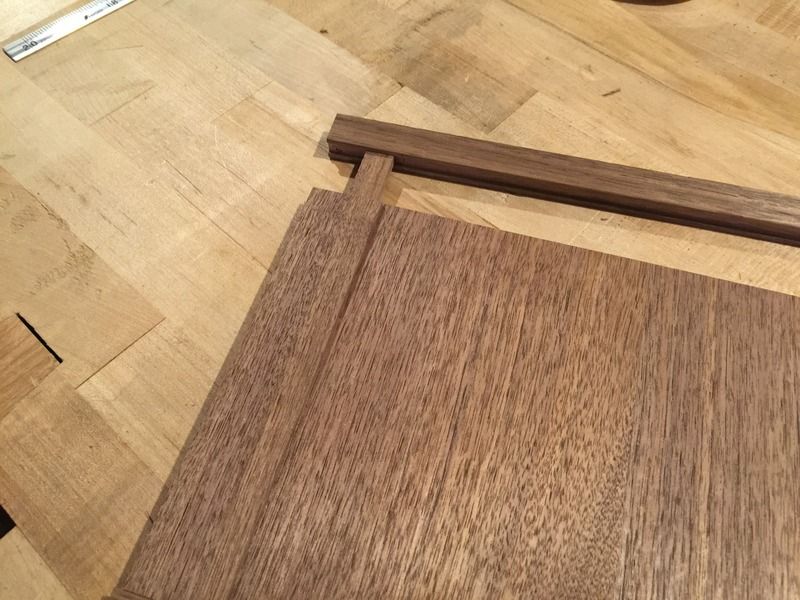
I think we may be talking about two different things, so at the risk of spoiler-ing my upcoming posts I will show the inside of one of my drawers;

If you run your fingers down the inside of the drawer face the scallops are apparent, you can feel them, but you really can't see them (if that makes any sense). So we're not talking huge scallops that would be produced by a jack plane instead slight scallops that are representative of someone doing the work by hand and choosing appropriate (in my opinion) levels of finish for interior and exterior surfaces.

The scallops are likely a few thousands from peak to trough and so they're compressed when coming together with the dovetailed sides.


👍 This page answered my questions

Your vote helps other woodworkers quickly find the answers and techniques that actually work in the shop.