DOMINO mortising ends of long parts
charliel belden
>Loose tenon joinery requires that you cut mortises in the end grain of at least half the parts. With the DOMINO - ALL parts are mortised laying down flat - on any semi-flat surface - a bench, on saw horses - or your driveway since the tool comes to the wood not the other way around. AND you don't usually even need to clamp down the part since you'll be pushing the "fence" of the DOMINO down onto the part and the oscillating bit applies almost no FOREWARD pressure if you use it a biscuit cutting rates of feed.
Think of cutting mortises in the sides of the sides of a two, three or four panel door. You've got five feet of wood hanging out passed the side of the horizontal mortisers table and room for one clamp and a fence or stop. If you want to support what's overhanging it'd better be on ball bearings since a roller stand won't work - and the LAST THING you want is for the part to move while mortising.
If you go to the link I gave earlier, scroll down to the "DOMINO Projects" and go through the four projects
- a table with stepped back aprons
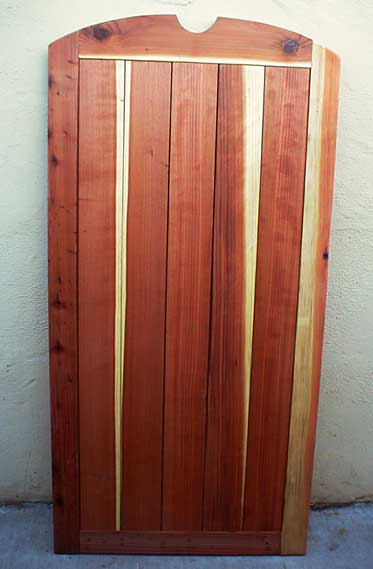
- a simple 2x4 gate 7' tall and 5' wide - with mitered corners - for mortises per miter
- a Refuse Container Surround that involves mortising the ends of 6 foot long 1x6s - actually THREE mortises, one tight and two with some slot for expansion/contraction
- raised panels floor to ceiling linen cabinet - by an absolute newbie to woodworking
you'll see typical real world, common situations where loose tenon joinery mortises are cut.
It would be nice if someone else with actual real world experience with a chisel and bit mortiser, a horizontal mortiser and the DOMINO would go through those projects and give thought out time estimates to do the mortises - including layout and machine set up times and any other accessories and their set up times (roller stands, jigs for mortising mitered corners. etc.)
Then estimate the time to cut the mortises for the linen cabinet - if you have to instruct an absolute newbie to woodworking - to actually cut all the mortises.
Now imagine that the floor to ceiling linen cabinet has to be put together On Site because if it were pre-assembled you couldn't stand it up on site, let alone get it up the stairs, with one landing and a 90 degree turn.
Now imagine that ONE of the mortises has been cut in the wrong place and it needs to be plugged and recut - and your shop is 6 miles away.
With the caveats on special types of projects - A&C through tenons and BIG doors (and even with big doors a single wide tenon will cause you grief which is why doubles are usually used in place of one wide tenon - and with the DOMINO you can do four loose tenons if you need that much strength) - I can recomend the DOMINO over a chisel and bit mortiser and a horizontal mortiser - inlcuding the MultiRouter.
(the MultiRouter will of course do other things the DOMINO can't do - but just for mortising, the DOMINO is faster, easier and as accurate if not more accurate).
I'm getting evangelical here but the DOMINO is that revolutionary a tool.