
by Derek Cohen
I doubt that anyone here has used – over time – enough different “new” chisels to comment which is best. Some, however, may comment about one they like or their own preference. I use spokeshaves a fair amount, and can comment on my favourites.
Spokeshaves are either bevel down or bevel up (low angle), the latter often being made of wood and the firmer made from steel or cast iron. Also, flat- or round bottomed ( and convex and concave). Flat bottomed still shape jnside curves, but the round bottom is better as the curved radius becomes tighter. They are also more ticky to use as there is less reference surface.
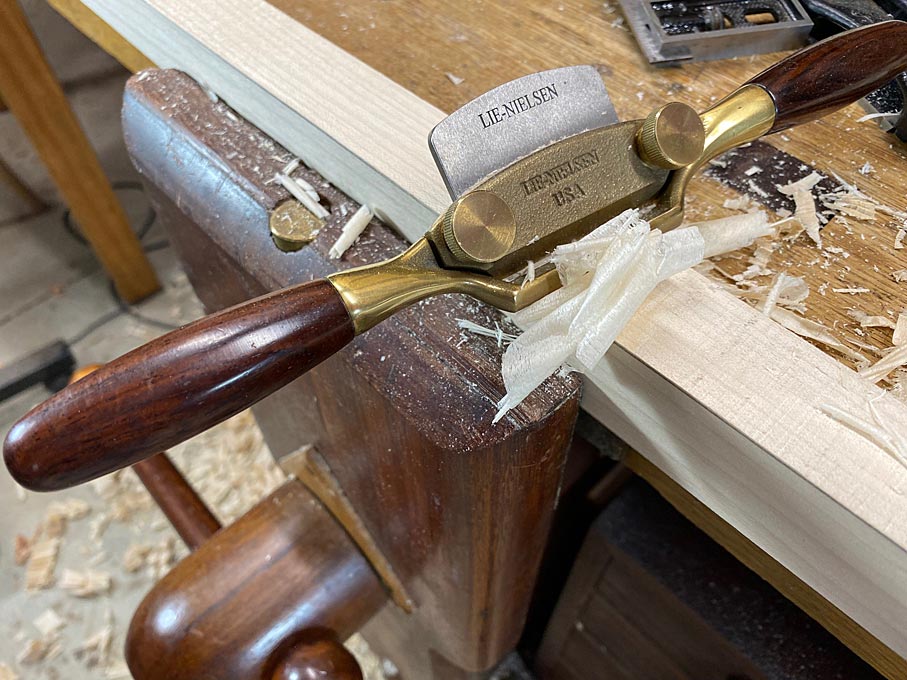
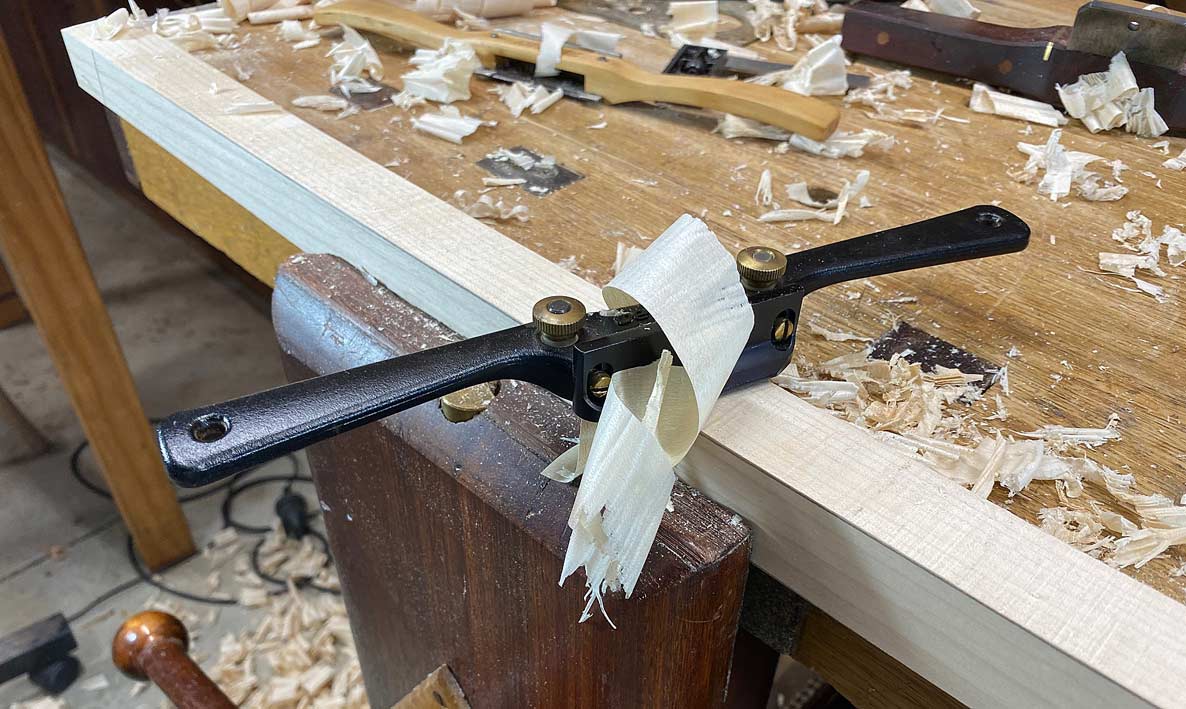
Lie Nielsen sell the bronze Bogg-designed spokeshave set of flat, round and convex. These are beautifully balanced shaves with thightish mouths for fine shavings.
I have not used the Veritas shaves with adjusters as I prefer adjuster-less shaves for balance. They require a little more finess in setting up than the adjuster types. However the Veritas metal LA spokeshave is a gem, especially on end grain. Similarly, the wooden Stanley #83 also has a LA and an adjustable mouth. Along with vintage wooden spokeshaves (and travishers), the mouth of LA spokeshaves angle at around 3 degrees, and when you learn to ride the mouth, it is possible to switch from a coarse to a fine shaving by leaning the mouth forward or back.
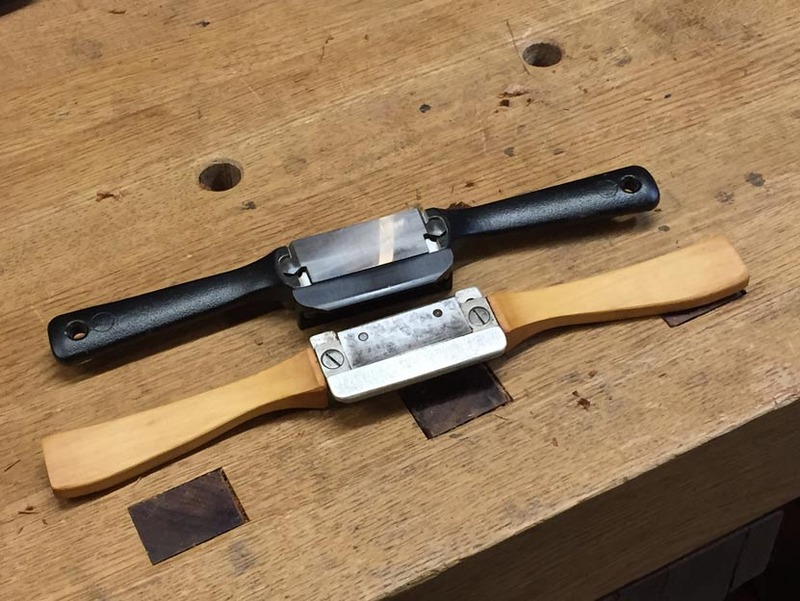
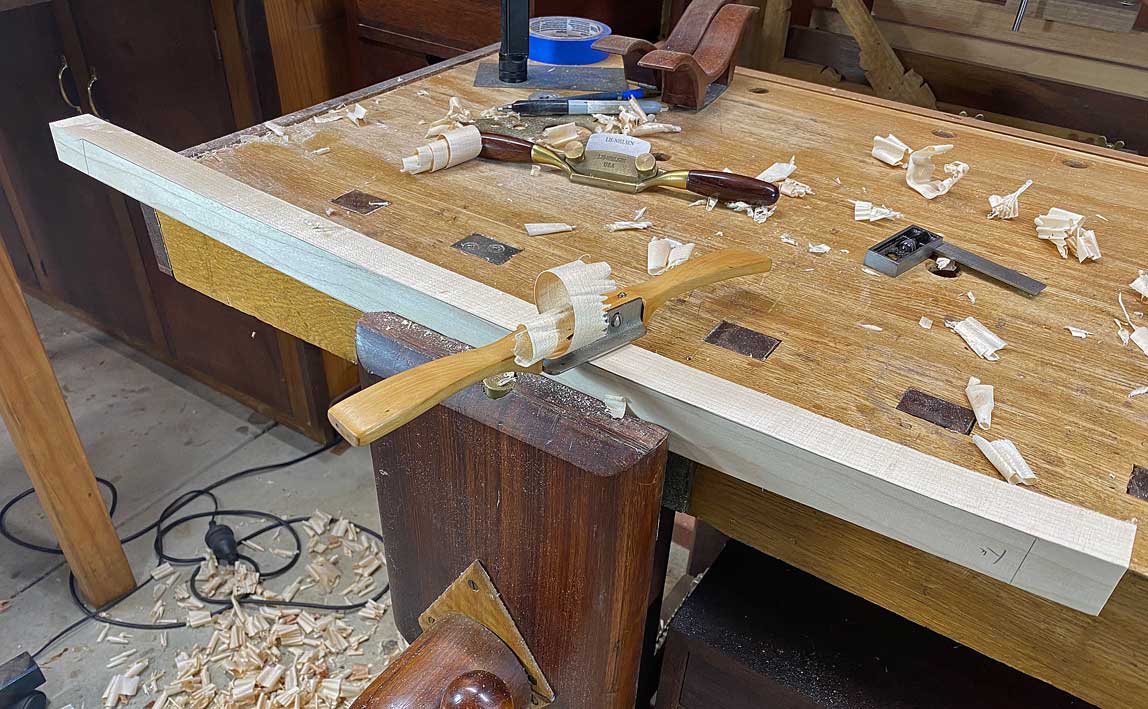
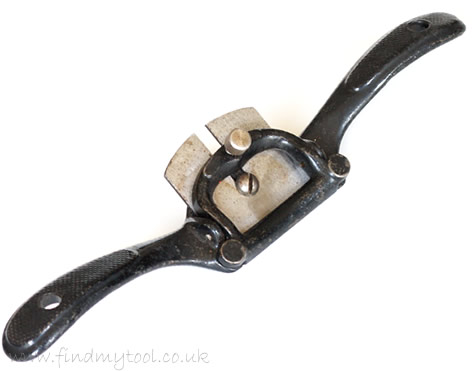
One vintage spokeshave which I am surprised has not been copied by modern manufacturers is the Stanley #53 (the #53 has curved handles and the #54 has straight handles). This is a spokeshave where the mouth can be opened- or closed up for finer or coarser shavings. A superb all-in-one spokeshave.
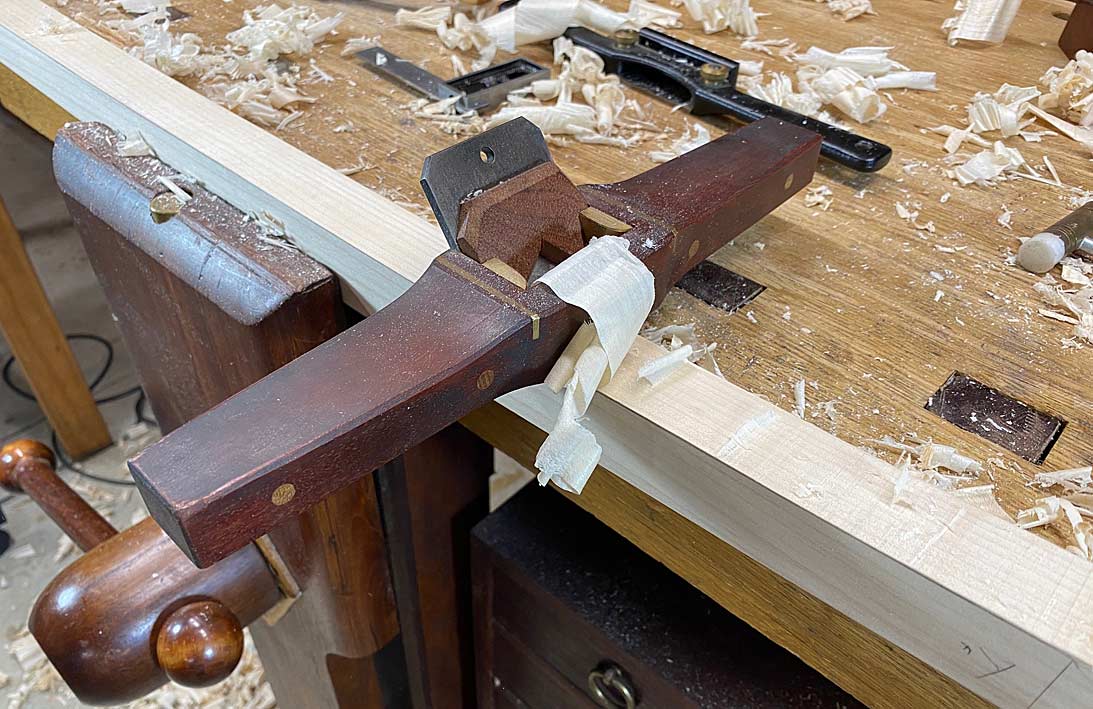
Then there are wooden bevel down spokeshaves made in the Asian style, such as Japanese spokeshaves and the work of HNT Gordon. I hve some of the older flat- and round bottom HNT Gordons, and these have high angle (55 degree) beds. Compare that with the usual 45-degree bed of most, or the 40-degree of the Boggs. The Gordons excell in taking shavings in interlocked grain.
There are other vintage spokeshaves which are most useful, such as the Stanley #51 and #51R (R stands for round bottom). With wider mouths, they are great for fast removal of wood. Further, the bed can be shimmed to close up the mouth, or, as I did with one, added a thicker Ray Iles blade.
Regards from Perth
Derek


