WoodCentral Forums

Est. 1998 — 27 years of woodworking knowledge

Monday

Posts

Monday

#1

Monday 

Gary Smyth

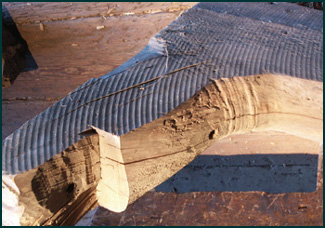
These marks were made by an early woodworking machine. Available in the 1840�s it was in use through the 1920�s. Numerous manufacturers produced the patented device, both during the inventor�s lifetime and for decades afterward. It was so popular and widely used that it became the generic name for all machines of this type.

It was used mostly in the boatbuilding, railroad, factory flooring and heavy construction industries and while it performed it was one of the more dangerous machines even for the time. What was the name of the machine?


Re: Monday

#2

More

Gary Smyth


This was no measly 12 or 18 volt system.

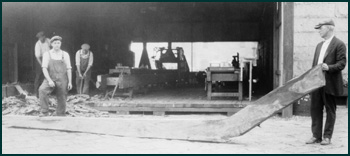
Number 1 shows the type of work done in a shipyard.

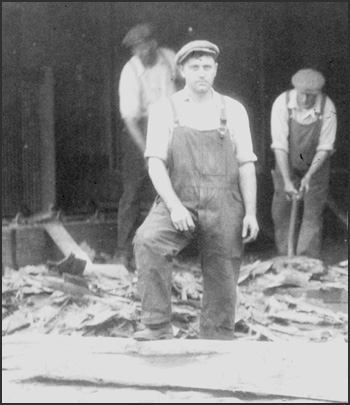
Number 2 is a closup showing the cleanup of the result of the work

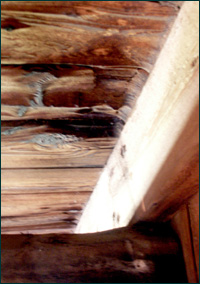
Number 3 shows the polishing and pock marks where the sawdust and cuttings polished and in some cases the potentially lethal cuttings imbedded themselves up to 2" in the ceiling and walls around the machine.

Re: Monday

#3

Re: More

John Veerkamp

Obviously bigger than a Skil saw

Re: Monday

#4

Re: More

Dan Donaldson

rotary planer?

Re: Monday

#5

In the shadows......

Thomas Skaggs, Foothills of Mount Level

.....there is a sillouette of something that sure looks like a thickness planer. The waste port looks like a chimney on top.

Tom

Re: Monday

#6

Both Dan and Tom are generically

Gary Smyth

correct. But I'm holding out for the name.

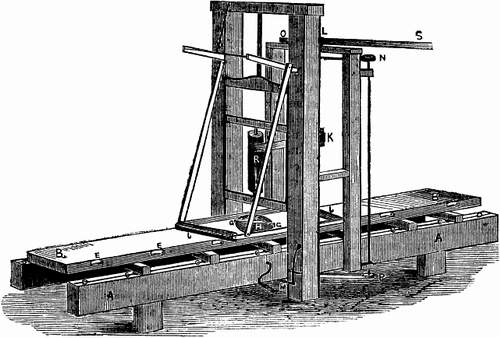
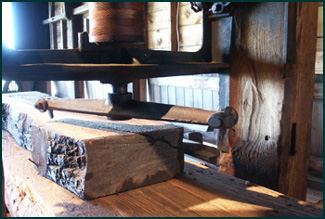
Here is a picture of the machine and the cutter head which is essentially two heavy old woman's tooth planing irons rotating at a geared rate with a lot of torque. First cuts could be as much as 2" deep on the board that advanced through the machine at a set rate. That's some big wood being whipped around at speed. Look at the impact wear on the vertical beam. Furniture makers sometimes used boards directly taken from the planer for the bottoms and back of their stuff and planed smooth only one side.

Re: Monday

#7

Fly in the oinment

Lee Schierer McKean, PA

or in this case in the cutter?

Lee

Re: Monday

#8

It is a fly cutter but I want the patent holder


Re: Monday

#9

It was widely known.......

Thomas Skaggs, Foothills of Mount Level

.....as "Old Shavey"....the thicknesser of death.

Re: Monday

#10

Re: Monday  answer

Gary Smyth

Thomas E. Daniels, 1800-1867

Daniel�s Plane

Two small gold stars for Dan and Tom

In 1834, Daniels patented a machine face-jointer that was, at least in America, the first successful mechanization of the process of flattening boards and lumber. His design was used for many years, often in combination with the Woodworth planer, which machined a second face parallel to the first. The Woodworth planer could not be used by itself to create a flat face, because the pressure of the feed rollers tended to flatten the board, which would spring back after it had been planed. The Daniels planer consisted of a reciprocating carriage on which the lumber was secured; the lumber was shimmed as necessary so that it could not rock or twist while being planed. A pair of cutters were mounted on either end of a horizontal bar that was suspended from a vertical spindle above the stock. This vertical spindle rotated rapidly, removing material from the stock so that the upper face of the stock is flattened (except for circular score marks similar to those left behind by a circular saw).

Information taken from Vintage Machinery web site.
👍 This page answered my questions

Your vote helps other woodworkers quickly find the answers and techniques that actually work in the shop.