Monday answer
Gary Smyth
Ken gets the gold star for my post before Christmas.
The items are chopstick holders. Chopsticks are a big concern! Each DAY in Chengdu, China (pop. 5 million), - capital of the Sichuan province and world-renowned Sichuan cuisine - hundreds of thousands of people crowd into the city's 60,000 (yep, that many) bars and restaurants to eat large amounts of meat, rice, eggs, vegetables and spices. These eaters average 200 pairs of disposable chopsticks per person per year.
Each day requires 4,000 cubic metres of timber. `For that amount you need to fell 100 trees with an average height of ten metres,' quoting Cai Shiyan, a deputy of the National People's Congress.
Throwaway chopsticks are now used in all but the poorest and the most expensive restaurants throughout China. The poor ones reuse bamboo chopsticks after cursory washing. The expensive ones prefer sanitized, lacquered-wood chopsticks. All the rest use disposable wooden chopsticks.
China is the biggest consumer, producer and exporter of chopsticks. It fells 25 million trees a year to make 45 billion pairs. Two-thirds are used in China and few are recycled by a washing and placing them back in holders.. China is severely short of trees - only 13.9 per cent of its 5,637,000 sq. miles is covered by forest. Its amount of forest land per capita is ranked 121st in the world.
"The remaining 200 million acres of natural forests will disappear in a decade if this felling continues," says Professor Shen Guofang, of Beijing Forestry University.
Happy holidays everyone.

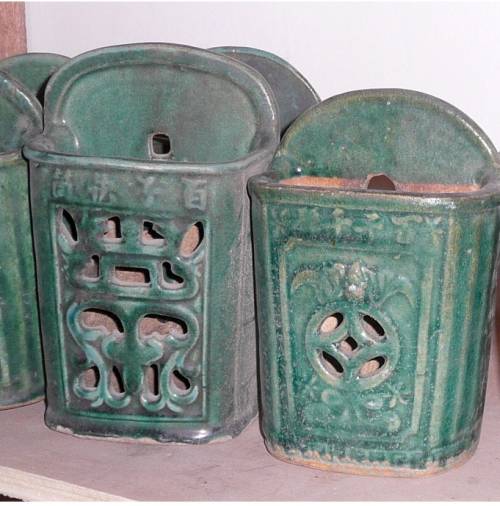 Ceramic ones.