Monday Answer
Gary Smyth
John had reply using obscuritivness to keep the question alive, but only partially correct.
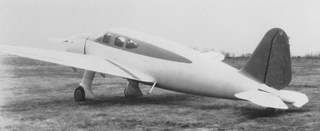
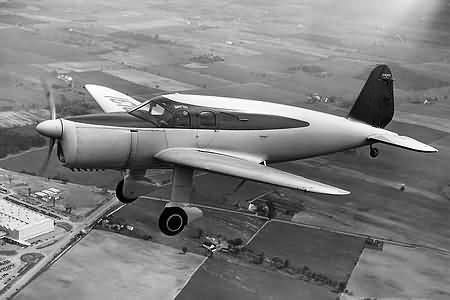
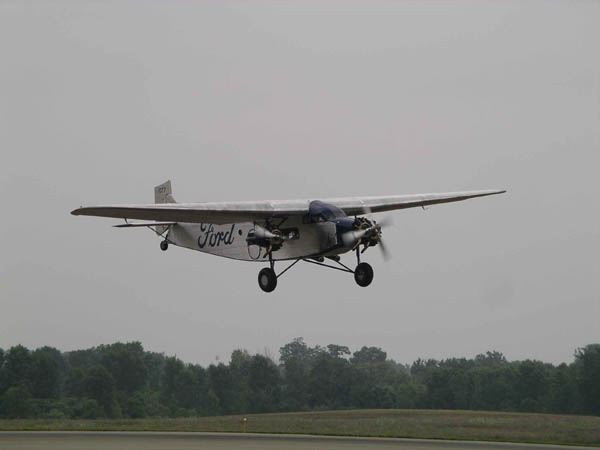
The one and only Model F46 (In 1936 the �F� was for Fairchild, not the military designation for �fighter�) was the idea of Virginius E. Clark, Fairchild Corporate vice president of engineering. The aircraft was a �proof of concept� design to explore the use of molded wood panels and structure, bonded together with a plastic resin under heat and pressure in an autoclave. A subsidiary company called Duramold aircraft company was created in 1937 to shepherd the project along. Using the Duramold wood-bonding process the planes aft fuselage was a monocoque cone fabricated in two halves. The forward fuselage structure was of conventional welded square steel tubing with aluminum skin. The wing and tail surfaces were fabricated of wood skinned with spruce veneer. All of the control surfaces were aluminum with fabric covering. The aircraft was powered by the Ranger Inverted V-12 SGV-770B-5 engine of 420 horsepower. A confusing number of name changes followed as the aircraft was developed, Fairchild Duramold, Clark, Duramold and finally back to Fairchild. Sherman Fairchild sold the Duramold process to HOWARD HUGHES (founder of TWA) who used it on his large flying boat, the Spruce Goose. Hughes and Juan Tripp of Pan American Airlines used the earlier mentioned Tri-Motor planes to start their airlines. The link is weak for John�s early answer but it is there.
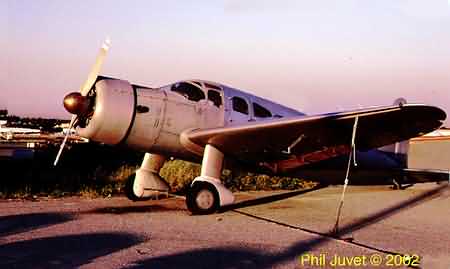
The F46 was acquired in a derelict state by David Lewis, a Fairchild test pilot, in 1947. He managed to reclaim it and eventually converted it to a P&W R985 450HP engine. He flew it for 10 years, parting with it in 1957. The aircraft went through several hands and again was found derelict by Dave in 1998. He reacquired it and dismantled the aircraft and brought it home to Hillsboro, OR from Santa Monica, CA. Copyrighted photo used with permission-- credit: George Trussell.