Bowls
john lucas
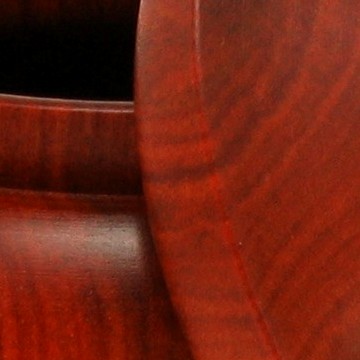
I know I don't turn many bowls but they are fun when I have the inclination. I also turned a hollow vessel out of Bradford pear. It's about 6" tall


Est. 1998 — 27 years of woodworking knowledge
Bowls
john lucas
I know I don't turn many bowls but they are fun when I have the inclination. I also turned a hollow vessel out of Bradford pear. It's about 6" tall
finial
GaryG in MD
John, I like your "double saucer" finial. Nice touch. ...GG
Re: Bowls
Don Orr
Beautiful work as always! That pear is nicely colored.
Re: Bowls
Mark Paulley
john, I really like the bowls! What is the spalted wood?
Re: Bowls
Reed Gray
For more info than you ever realized was in existence about spalting:
https://www.northernspalting.com/
robo hippy
To really understand spaulting there is.......
JamieDonaldson
...no better resource than Dr. Sara Robinson's recent book "Spalted Wood." She established the northernspalting.com resource that Reed referenced, but the book is a masterwork for anyone interested in the science and history of spalted wood.
Re: Bowls
Don Stephan
And there are how-to sheets on line describing how to innoculate wood with fungus purchased from her lab for more reliable results.
spalted wood
John K Jordan
>>> What is the spalted wood?
Mark, spalted wood is wood that has a fungus eating through it. This can leave interesting colors and beautiful black lines in the wood. The lines can be quite striking in light colored wood.
If you leave wood outside on the ground it will probably spalt on the way to rotting. The trick is to catch it after it forms the black lines and before it rots. Since the wood is decaying, spalted wood sometimes has punky areas.
What I learned from Dr Spalt is the black lines woodturners cherish are not actually the spalting but "zone" lines between the spalted areas. The zone lines are lines of defense that competing fungal colonies put up to protect their claims.
Some wood spalts with ugly discoloring without forming black lines. Some wood usually spalts spectacularly. Some, like hackberry, can spalt with wide, less distinct black lines which I find less interesting than others with sharp, thin lines. I have beautiful spalted maple, beech, dogwood, birch, and some unknowns. I have some of the ugliest spalted holly on earth.
Some people have a "spalting farm" where they keep log sections standing on end in the dirt and periodically cut off some and check for spalting. To spalt, wood needs access to fungal spores (which are everywhere), moisture, and warm temperatures.
Some of my spalted turning stash.

JKJ
Re: spalted wood
Mike Stafford
One of my favorite spalted timbers is hackberry. The spalt lines can be very dramatic.
Here are some examples in a few ort bowls.

Re: spalted white oak
Mike Stafford
Another favorite....spalted white oak. I wish I could get a truckload of this stuff.

Spalting is the best thing that ever ..........
JamieDonaldson
......happens for Hackberry as far as turners are concerned!(;>) And Live Oak spalts just like this example of White Oak that Mike posted.
Re: Bowls
Reed Gray
Oh, Seri has a 3 book series out in the Science Fiction genera, under the pen name J S Fields called 'Ardulum'. Very entertaining. Our local Barnes and Nobel has them under 'local artists'. Yes, there is real science in them.
robo hippy
Re: spalted wood
Mark Paulley
Mike,
Thanks for the pics. What is an ort bowl?
Sorry!
Mark Paulley
I guess my original question was not very clear to John
I know about spalted but did not know what specific type of wood used
Thanks
What is an ort bowl?
Mike Stafford
I have been asked this so many times I have developed a canned response. Please forgive me for not taking the time to write it up fresh for you. By the way these little bowls are about 2" tall and 3" in diameter.
What is an ort, you ask? Well, the dictionary defines it as a leftover or a scrap.
Back in the “olden” days when people gathered around the banquet table to eat in their castles there was a scrap problem that needed to be addressed.
You see butchers and cooks of the day were not as fastidious about removing bits of bone and gristle from meats as they are today. People gathered around the banquet table eating those delicious roast venison and ox steaks would encounter small bones, gristle and other bits that were not palatable.
Just piling these unpalatable bits on the banquet table beside the plate was not only unsightly but also resulted in stains on the fine English walnut. There was a problem in need of a solution.
Someone decided that a container was needed to collect those scraps of meat and bone and the ort bowl was invented.
Embroiderers, needle pointers and others engaged in the needle arts have a similar problem with which they must deal. When stitching a strand of thread or floss does not have an infinite length. When finally the strand becomes too short the stitcher will carefully weave the end of the strand through and under the stitching on the back of the canvas and snip off the tag end or thread ort.
Stitchers do not like a messy work area and when a needlepoint group gathers to share their craft a lot of orts can be produced. In order to contain these orts and keep their work space clean the wooden ort bowl was developed.
Re: Bowls
John K Jordan
>>>Oh, Seri has a 3 book series out in the Science Fiction genera, under the pen name J S Fields called 'Ardulum'.
Hey, thanks for that! I just ordered the books.
From the blurb:
J.S. Fields (@galactoglucoman) is a scientist who has perhaps spent too much time around organic solvents. She enjoys roller derby, woodturning, making chainmail by hand, and cultivating fungi in the backs of minivans.
JKJ
I have a differen take on this
Keith Newton
“The zone lines are lines of defense that competing fungal colonies put up to protect their claims.“ You are right that decay has to have all the conditions right, like temperature range, correct moisture content range, and air.
What I’ve observed while turning some wood still in the process of Spalting is that the dark zone lines might be either some chemical within the wood that it can’t consume, or is a biproduct produced by the decaying. Since the tree is dead, I don’t give much credence to the tree defending against the decay. While turning, I have observed a grayish tone within a zone, which lightened as the zone line darkened throughout the drying process. Or as the moisture level dropped below the active range. Another evident indicator is that some tiny beetle holes allow more air to dry the wood around the holes faster, had little black zone lines surrounding them like little bullseye.
I spend a lot of time out in the woods down at my cabin, which is in the Ouachita R floodplane. Due to its frequent floods, there are lots of piles of decaying driftwood. I frequently find chunks of black wood that is nothing but the zoneline. Everything else is gone, except the ebony looking remnant. I keep thinking I should try making something that, but my creativity hasn’t come through fo me yet.