
WoodCentral Forums

Est. 1998 — 27 years of woodworking knowledge

Beads & Coves - Best Concept for Teaching?

Posts

Beads & Coves - Best Concept for Teaching?

#1

billkaz

Beads & Coves - Best Concept for Teaching?

billkaz

Would appreciate some feedback from those of you who teach new turners.

The AAW pubs have lots of info on teaching, primarily starting newbies with an exercise in beads & coves. This seems to be the "traditional" path for new turners. The rationale being, I believe, this exercise, once mastered, will provide the tool control skill to do most any spindle & bowl project.

My observation is that the beads & coves exercise is a very difficult first experience. It requires tool movement in 3 dimensions & 2 mirror image operations. Working with an adult class, perhaps 1 in 3 will get it right after two sessions. All experience frustration that dampens the potential joy of turning. Only after turning some small project, such as a bud vase, does the enthusiasm return.

I noticed at the Nationals Youth Turning session, beginners were started on a project immediately, with guidance as they proceeded. No beads & coves.

So, would like to know what advice the group may have.

(This may not be a new question, but the search function is not responding)
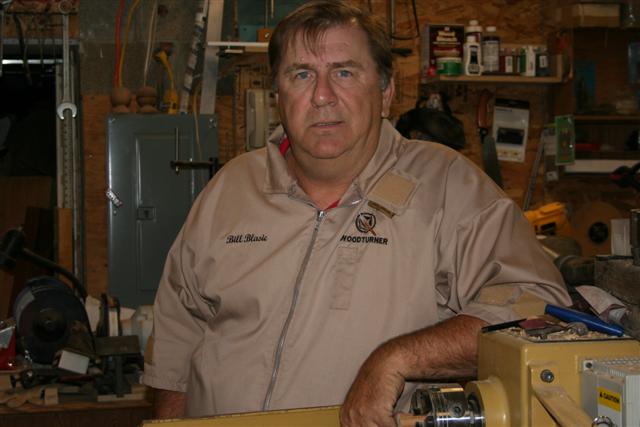
Re: Beads & Coves - Best Concept for Teaching?

#2

Bill Blasic

Re: Beads & Coves - Best Concept for Teaching?

Bill Blasic

I start my students with first a pen and then a bottle stopper. Easy projects that give them some confidence and also gives them something to show their families. Instant gratification and a reason to continue. All have asked what I charge but I charge nothing as it is a way to give back from all I have learned.

Re: Beads & Coves - Best Concept for Teaching?

#3

Steven Antonucci

Lesson 1, page one

Steven Antonucci

beads and coves.

End up with a lot of lumpy sticks, but if you don't understand the basics, chances are you'll run into all kinds of issues real soon afterwards. All work derives from beads and coves, so you better figure it out.

As far as instant gratification goes, the second words out of my mouth are "forget making stuff today". I think it's sort of silly to walk into a class knowing nothing and expecting to walk out with a finished masterpiece? Would you take a language class and expect to be fluent in a day? A ballet class and expect to be on your toes? A painting class and expect to be a masterpiece?

If you want instant gratification, go buy a bowl.

Re: Beads & Coves - Best Concept for Teaching?

#4

Re: Beads & Coves - Best Concept for Teaching? *LINK*

john lucas

It is challenging. turning a bead with a skew or spindle gouge takes 3 movements all happening at once. Rotate the tool, swing the handle and lift the handle. The place where I teach has forced me to change my thinking and how I do it. They have found that people want shorter classes as a basic introduction rather than the weekend or week long, or perhaps to help raise the numbers in the longer classes. To teach a class in 4 hours you don't have time to teach sharpening or bevel rubbing or things that do take practice to learn. So I teach scraping. I know put your fingers in your ears and try not to listen. I used Hunter scraping tools in my last class but the flat scraping tools would also work. You can of course use HSS tools as scrapers, like the skew on it's side or smaller round nose scrapers and flat scrapers. One thing I learned from this is we did everything one step at a time. In other words I don't demo the whole project and turn them loose. I show them, lets make a parting cut here and here and everyone does it. then we show them a bead and everyone does that. This keeps on with each section of the project. we did a fairly complicated candle stand that had beads, coves and hollowed the end just a little. These are 4 hours classes but I liked the concept. No one had any catches the experience was totally fun because there was no stress. Most importantly it got them involved in turning with a good experience. Now if they do take a longer class they will have a good basis for learning the bevel rubbing cuts because I did spend a lot of time talking about cutting downhill with the grain.

Here are my videos on different ways of turning beads and coves. Maybe there will be something in there you can use.


https://www.youtube.com/watch?v=bjYehUsMdB4&t=10s

Re: Beads & Coves - Best Concept for Teaching?

#5

turning a cove  *LINK*


https://www.youtube.com/watch?v=DSybPNw4F1o&t=57s

Re: Beads & Coves - Best Concept for Teaching?

#6

instant gratification

john lucas

Steve Please read what I wrote below. I totally agree that learning the cuts without completing a project is the best way to go. However I find the students really want to go home with a project. I think that is very important to get them to come back. I had one guy in a class that was constantly blowing things up. I told him don't worry about not finishing a project. Just practice the cuts and keep turning until there's no wood left. Then get another piece and try again. I should say he had already been turning for a while. Anyway he came up after class and told me that was the best learning experience he had. Again this guy was already turning and just needed to improve his cuts. The average student I get has never seen a lathe and in many cases have never done anything mechanical or artistic in their life and desperately need to come away with a fun stress free experience if they are ever going to do it again.

Re: Beads & Coves - Best Concept for Teaching?

#7

Steven Antonucci

reading the course description

Steven Antonucci

It's a pet peeve of mine.

I have had people coming into my class with the thought that "we'd just make a bowl!", even though there was nothing in the description that should have given them any sense that we would "just make a bowl".

I also forbid sanding in my class, for the very simple reason that we are not making a ____, but using the ____ to learn important concepts about how to work with wood on a lathe. The goal should be to understand the concept, and then practice the right techniques back at your own shop (instead of trying to guess what some of the YouTube heroes are showing you...ugh)

I also want them to know that failure is routine and part of learning, and that you need to move on quickly from failing. Too many "how do I "rescue" this questions. I've bandsawed things to prevent someone from spending time with it when they could be more productive...

S

Re: Beads & Coves - Best Concept for Teaching?

#8

What works for me

John K Jordan

I'm sure there are many, many successful ways to teach but this works for me. Note that this is with personal one-on-one attention or with two students at once maximum.

I start all students out the same way - with a skew chisel. I think this is the best way to teach the basics of the edge and bevel. We start by making shavings on a blank I already turned into a cylinder. (This eliminates the potential intimidating noisy violence of rounding a square blank.)

The first 5 minutes or so are using the skew with the lathe OFF, with me turning the lathe by hand. Then we do planing cuts at 50 rpm for a minute or two, then gradually increase the speed. In 20 minutes they are making nearly perfect planing cuts at high speed. I've never had one person get a catch.

Then the spindle roughing gouge to learn to make shallow curves.

Then rounding a spindle blank with the roughing gouge.

Back to the skew to learn v-grooves.

Then the spindle gouge for curves and coves.

Finally beads with a spindle gouge.

Then we make a project.

These two girls did all of this in their first lesson, having never touched a lathe before. One made a garden dibble and the other a whacking stick:


The second lesson, later the same day, was on face turning. We started on bowls and they each finished one. All this is in one day.


This is my shop:


Oh, just for fun, these are the next projects these two completed, each was the third lathe experience. (Neither has access to a lathe outside of my shop.) Their first two lessons were over two years earlier since they are both busy students in vet school.


(This project did take several sessions at the lathe, spread out over a week or so.)


JKJ

Re: Beads & Coves - Best Concept for Teaching?

#9

searching woodcentral

John K Jordan

>>>(This may not be a new question, but the search function is not responding)


Billkaz,

It's a good question. Even if covered earlier you will get new perspectives now. But FYI, although the search is broken you can search woodcentral from Google with this:

site:woodcentral.com searchterm1 searchterm2 etc

JKJ

Re: Beads & Coves - Best Concept for Teaching?

#10

Wow!

Tony - Memphis

I need your lessons!

Being a good teacher is quite a skill! Congrats. Not many can do it. I can't. I'm terrible at it.

Re: Beads & Coves - Best Concept for Teaching?

#11

Re: What works for me

Don Stephan

You are getting farm visits when they are in the large animal rotation, aren't you? In fact, you should be paid for allowing them to be exposed to llamas and peacocks.

Re: Beads & Coves - Best Concept for Teaching?

#12

Re: Beads & Coves - Best Concept for Teaching?

Don Stephan

Turning beads was always a struggle until I watched a few times Youtube videos by Mark Silay on slicing cuts. Don't know why I finally became comfortable and somewhat proficient but Mark's approach may have helped.

Re: Beads & Coves - Best Concept for Teaching?

#13

billkaz

Beads & Coves - Best Concept for Teaching?

billkaz

Thanks for all the comments, it does enlarge one's perspective. I think I may try to explore the use of a scraper, or skew, or bedan to imprint the motion of forming a bead. Perhaps learning the rotation & swing this way will train muscle memory to the spindle gouge.

No matter how much one mutters, bevel rubbing & flute facing the cut, the student may do the opposite. Especially when switching from a bead exercise to making a cove it gets confusing as they are mirror motions.

Good discussion


img

Re: Beads & Coves - Best Concept for Teaching?

#14

billkaz

Beads & Coves - Best Concept for Teaching?

billkaz

Thanks John, will try it


img

Re: Beads & Coves - Best Concept for Teaching?

#15

Bill Blasic

Re: Beads & Coves - Best Concept for Teaching?

Bill Blasic

Well now I know the last person on earth I would take a lesson from :D

Re: Beads & Coves - Best Concept for Teaching?

#16

animals and future veterinarians

John K Jordan

>>>You are getting farm visits when they are in the large animal rotation, aren't you? In fact, you should be paid for allowing them to be exposed to llamas and peacocks.

Actually these are informal visits from friends! Years ago one of the girls was in the SS kindergarten class I teach and we've been friends with the family since. Over the years they have visited our farm to play with the animals, ride the 4-wheelers, put chickens in the freezer, and learn to run the backhoe.

Her natural curiosity and drive goes well with our occasional "supply" of varmints and animals with problems. For example when this girl's dad helped me bury a horse she did a bit of necropsy on the leg problem which put the horse down. One girl is specializing in pathology and the other in large animal care - when they are working on animals together I certainly learn a lot! (They graduated #1 and 2 in their class in the undergrad part of the vet program.) Hanging out with young people like this gives me hope for the next generation! ...sometimes stretched thin when I read the newspaper...

JKJ

👍 This page answered my questions

Your vote helps other woodworkers quickly find the answers and techniques that actually work in the shop.