WoodCentral Forums

Est. 1998 — 27 years of woodworking knowledge

cyanoacrylate glue

Posts

cyanoacrylate glue

#1

cyanoacrylate glue

adrien coblentz

Turning a large piece, I noticed some cracks in it.

Dismounting it, I laid it on the ways and poured some

thick CA glue in the cracks.

Remounted, I continued turning for a while, then

decided to move the tool rest.

Unlatching the tail stock, I tried to move it back.

*?!#$ It wouldn't budge, no matter what I did.

Darn thing acted like it was glued to the ways of the lathe.

EUREKA! Guess what!?

Helluva job getting it loose. Acetone was a big help.

Re: cyanoacrylate glue

#2

Re: cyanoacrylate glue

philip f Duffy

I vote for Newspaper on the ways, or a rag, or your shirt ---with you out of it! Philip

Re: cyanoacrylate glue

#3

Re: cyanoacrylate glue

Barry Irby

Many of us have applied CA to a piece and then turned the lathe on and gotten sprayed. Wear a face shield. I have ruined several. Also got it on my glasses. Literally chewed it off. You DO NOT want it in your eyes. Be Careful.

And, It may be dangerous to turn wood you are repairing with CA. The wood can fly apart and be very dangerous. The CA may add little or no strength.

Re: cyanoacrylate glue

#4

Re: cyanoacrylate glue

john lucas

Barry is right on all accounts. We have all had our scare and or funny stories about using CA. It is a great thing when used correctly. Can be down right dangerous when something goes wrong.

Re: cyanoacrylate glue

#5

George Balock

Re: cyanoacrylate glue

George Balock

There was a great article in the British magazine Woodturning a few years back where the turner was doing a demo and his "assistant" mimed putting glue on his lips. The "assistant" thought the cap was on the bottle, alas, it wasn't. I think the end result was a trip to the ER.

In the same article, he talked about a DIY project that went awry. He was attempting to spray poly foam into a gap underneath his house. It wasn't warm enough for the foam to expand, so the liquid came out of the can and went down his arm. When it went inside his sleeve, it was warm enough to expand and immediately turned his flannel shirt into a tourniquet. I laughed so hard I thought I was going to hurt myself.

But to echo the others, be careful with that stuff. It sometimes behaves in ways we don't expect!

Re: cyanoacrylate glue

#6

LOL

GaryG in MD

I've pretty much quit using CA because of the highly toxic fumes, but when I did (or may still do), I have a 100% RULE of putting nitrile gloves on both hands because it doesn't matter where I THINK the glue is going to go, I know it always ends up on my hands anyway.

Re: cyanoacrylate glue

#7

spray foam

john lucas

George My former wife was building a Volcano using the spray foam insulation. As she was getting it taller and taller it started sagging so she used her hands to shape it until it got stiff enough to hold the form. Then when it dried on her hands she came to me to ask how to get it off. I had to tell her that I have never found a solvent that works. She spent many days peeling glue along with layers of skin. This stuff is really just a slightly different formulation of Polyeurethane glue which you also can't get off your hands. That's part of why I quit using the stuff. I haven't found anything it will do that epoxy or yellow glue won't do better and are much easier to clean up.

Re: cyanoacrylate glue

#8

Re: LOL

John K Jordan

>>>I've pretty much quit using CA because of the highly toxic fumes,

I found a full face respirator with filters made for chemicals and not dust works well when I'm using a lot of CA (I sometimes stabilize punky wood with CA)

One big danger with CA is burning the skin from the exothermic reaction if the fingers get stuck to cotton or paper towel with CA in the fibers.

My most notable CA moment was the time I glued my hand to something and could not reach the debonder on the shelf and nobody else home. I discoverd a scalpel used very carefully could cut through the layer of CA without removing (much of) the skin...

JKJ

Re: cyanoacrylate glue

#9

That's yet another LOL, John!

GaryG in MD

I know! We've heard "that" story, but you're one of the perps! Funny now but not at the time, right?

I'm aware of the special mask filters, but it's easier to just not go there. I tend to use thinned shellac or lacquer as a depunkifier if I'm not paying the price for one of those expensive commercial wood "stabilizer" products.

I have a successful history of using it on drying, green blanks or roughouts to stop the propagation of a very thin, newly-formed crack in an area that will eventually be turned away. I also used it for a while as a pen finish too, but it started cracking on me, and I couldn't figure out why, so I switched to lacquer.

...GG

Re: cyanoacrylate glue

#10

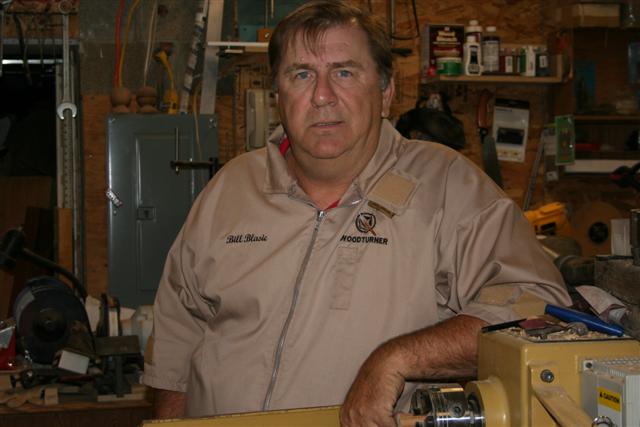
Bill Blasic

Re: That's yet another LOL, John!

Bill Blasic

I did an article on CA Glue for the American Woodturner and one of the products for the review was a debonder. I glued two of my fingers together so that I could try the debonder, it worked as advertised. I have little fans that I position between the object to be CA glued and my face and this works to keep the fumes out. I have little electric fans but when Molly Winton was here doing a hands on/demo she had this little battery operated one that kept the smoke away from her face. I got one of those too and it works well with the CA glue.

Re: cyanoacrylate glue

#11

Re: That's yet another LOL, John!

john lucas

I do most of my CA work with my dust collector hose about 6" away. I pulls the fumes out. I use it a lot to help fill small tear out places or to firm up small areas before making that last pass. I do fill small cracks with it. I like to use wood that has defects for my hand mirrors because it has a lot of character. However these woods often have lots of small checks or weak grain and CA is the best fix I've found.

I do not use it as a structural glue. I don't believe it holds up over the years. Early on I used it to glue the handles on my mirrors. It failed spectacularly after only a short while.

Re: cyanoacrylate glue

#12

Jerry Maske

Re: That's yet another LOL, John!

Jerry Maske

I was doing some rope work in cotton and used thin CA glue to hold the ends in place. That was the day I learned two lessons about CA glue. 1) Never Squeeze the tube, and, 2) Never have anything UNDER the tube you don't want glued.

My bride came into the room and gently laid her hand on my shoulder to see what I was doing.

I was startled and squeezed the tube! It squirted all over the knot which started to smolder, down my hand, onto my legs, I was wearing cotton shorts, and glued the shorts to my leg as they started to smolder! Cotton WILL heat up if you use CA glue on it.

The glued continued to drip down onto my flip flops gluing my bare feet to them and then to the floor.

So, there I was with a Cotton Knot burning glued to my hands, my shorts burning and glued to my leg and my feet glued into my flip flops that were glued to the floor.

Yeah, it's funny now, but I used words the EMTs had never heard before when they tried to pry some of my body parts apart.

I still use the stuff from time to time, but I remember the two rules and apply them.

Jerry

Re: cyanoacrylate glue

#13

Sorry to laugh at your story Jerry, but...

JamieDonaldson

.... that is the most epic CA disaster I've ever read! ;) ;) :b :b :\ :\

Re: cyanoacrylate glue

#14

classic!!


Re: cyanoacrylate glue

#15

Re: Danger

William Duffield

Chemicals called diisocyanates are used in the manufacture of spray foam insulation, polyurethane glues, and other products used in woodworking. These can be released during their application and use and if they are burned. Instead of jumping up and down and screaming "The sky is falling!" I'll let you read a paper on the risks involved and decide for yourselves what you should do.

https://www.cdc.gov/niosh/docs/96-111/

It is not an easy read. There are lots of references to other papers. Also, there are lots of synonyms for these chemicals. To asses your risk, you will also have to read the fine print of the list of ingredients of the product you are using and even go hunt down and read the MSDSs. The manufacturers of these products would have it no other way, and the CDC has to be very careful what they state.

Cyanoacrylate glues also come with safety risks.

https://en.wikipedia.org/wiki/Cyanoacrylate#Safety_issues

👍 This page answered my questions

Your vote helps other woodworkers quickly find the answers and techniques that actually work in the shop.