Home Articles Forums Gallery Marketplace Videos

WoodCentral Forums

Knowledge You Can Build On — Est. 1998

Compare cordless drills on the numbers that matter

Steel vs cast iron.

Posts

Steel vs cast iron.

#1

Steel vs cast iron.

John Lucas

When lathe discussions come up people always argue cast iron vs steel. I own a cast iron powermatic and have turned on vicmarcs and Novas. I've also turned on a lot of different Oneways and one Robust. Personally I can't tell the difference in cast vs steel. At least. It in high end lathes. They all run incredibly smooth. Personally I'd love to have the stainless steel bed.

I do understand the vibration difference in cast iron metal lathes where even small vibration can lead to inaccuracies.

I do prefer steel tool rest. They are simply tougher.

Just my 2 cents worth

Re: Steel vs cast iron.

#2

Re: Steel vs cast iron.  *LINK*

David Walser

John -- I generally agree with your take. A well designed and built lathe made out of steel can be very smooth. And, it's really nice to have stainless steel bed ways. Still, the smoothest lathe I've ever seen is the Serious Wood Lathe from Serious Toolworks. It's 1,500+ lbs of cast iron goodness.

Years ago, the lathe was demoed at a symposium I attended. For most of the symposium, they had a large out of balance blank spinning on the lathe. On the headstock was a tall stack of children's blocks spelling out SERIOUS. While speaking to the guy manning the booth, I laid my hand on the bed ways. I could not feel any vibration. If I did not see the blank spinning, I would have sworn the lathe was off. It was that smooth and that quiet. When I expressed my amazement that I couldn't feel the lathe turning, the rep pulled a nickel from his pocket and stood it on edge on the ways. It just stood there. I've never seen or experienced anything quite like it.

Would a 1,500 lathe made of steel be as smooth? I don't know. I do know I've never seen a lathe as smooth as the one from Serious. Another top-end lathe, like one from Robust or Oneway, might be so smooth that the additional smoothness from Serious produces no discernible benefit. I think that's most likely the case -- at least for someone with my skill. Maybe a real pro with a real steady hand might benefit.

Does this mean the lathe is in my future? Maybe. I'd need to build a larger shop, first. But, there's a lot I like about the Robust lathes, so maybe I need one of each. ("Each" meaning Robust, Oneway, Vicmark, Stubby, etc.)


Serious Wood Lathe (Don't drool!)

Re: Steel vs cast iron.

#3

Re: Steel vs cast iron.

Wally Dickerman in Arizona

Yeah but....1500 lb balanced has to be smooth. My Oneway is all steel and will pass the nickel test. I had a Nichols all steel lathe that weighed 800 lb. It had 400 lb of sand added. Smooth. I turned some pretty big pieces on it.

I've seen the Serious lathe. An impressive lathe.

Re: Steel vs cast iron.

#4

Re: Steel vs cast iron.

Dale Bonertz

The only time I can feel the difference is when roughing and coring larger blanks. That is when I have issues with sliding head stocks also. For general turning I don't think there is much difference. It is when you get into the hard use that it becomes more noticable which I don't think most turners go to the hard use level very often.

Re: Steel vs cast iron.

#5

Re: Steel vs cast iron.

Phillip Medghalchi

David, it cost almost $500 to get tqhat to your door and a fork lift to put it in place.

Of course for $8000.00 and 1500 Lbs, you 'd expect it to be smooth.

I have to start saving until I am retired to buy one of those and move to a 2000 SF house with a 30x30 ft. dedicated shop. :)

Re: Steel vs cast iron.

#6

Re: Steel vs cast iron.

Sergio

Probably at the higher end thare maight be not difference but cast iron is a vibration dampening metal by definition.

To me the reasons to choose a lathe or another is quality, safety, reliability and price.

If one wants to be technical ther are other things like ball bearings, (Vicmarc gas tapered roller), motor (Vicmarc goes to 30 pm withouth modifications), etc.

I also find a difference between the 30mm tool post and the 25.4 mm tool post (with the adaptor) the bigger being much better but it could be bias!

I have many Robust tool rests 30mm post, they are very good but I'm starting to prefer the cast or steel ones: just file them once in a while and they are perfect.

Re: Steel vs cast iron.

#7

Re: Steel vs cast iron.

Dale Miner

I dont think the material the lathe bed is made from has as much effect on how smooth the lathe runs as how the bed is designed. Generraly speaking, if the bed weighs twice as much, it will be more stable.

I prefer cast iron for reasons other than stability. Cast iron is slightly porous and contains graphite in solution. The graphite helps with wear and the porosity holds oils and waxes that can impart some corrosion resistance.

Having stated my preference for cast iron, I recently sold my 3520 and a Oneway 2436 with steel ways is sitting in it's place.

I very much dislike stainless ways. Stainless is softer than steel and scratches and galls easier than either steel or cast. With reasonable care cast will outlast steel and steel will outlast stainless.

I always used Johnson's paste wax on the 3520b, and am now using Johnson's on the 2436. Never had to take a scotch brite to the 3520b. It developed a light brown patina and resisted oak and other tree saps very well. The 2436 needs more attention to prevent staining and rusting, but I still prefer the steel ways over stainless.

Re: Steel vs cast iron.

#8

Re: Steel vs cast iron.

robo hippy

Dale, I am puzzled. I have had my American Beauty for 7 plus years and haven't had any of those problems. I do have some scuff marks, but no rust or staining at all. If the stainless is rusting, I would expect corrosion, which is a chemical reaction. The scuff marks I have are so light, I could probably buff them out, but it isn't worth the effort. The biggest difference I have noticed between my PM 3520A and my Robust, other than size, is that they made different noises when I turned. I have thought about putting shot or sand in the tube body, but don't really need it.

robo hippy

Re: Steel vs cast iron.

#9

Steel vs stainless steel hardness

Dick Coers

That's a way too broad of a statement, but I guess it's appropriate to a post that is comparing fabricated steel lathes to cast iron. High carbon and plain carbon steels would be harder then austenite and ferritic stainless, but martensitic stainless would be harder then plain/high carbon.

Re: Steel vs cast iron.

#10

Re: Steel vs stainless steel hardness

Sergio

Uhmm, really?

Re: Steel vs cast iron.

#11

Re: Steel vs cast iron.

Jeff Smith

I've turned on both and find any differences to be beyond my feeble perception.

While I don't core half as many blanks as Dale does, I can't find a difference there, either. I've cored (with the Macnaughton) the largest blanks that will fit on my Robust AB - with the headstock slid to the end of the ways - and find it stable and smooth. Coring at the end with the tailstock tilted away is very comfortable, as it was on the Powermatic, too.

In my opinion, there's more variations from lathe to lathe caused by poor setup - not leveled properly or sitting evenly on its feet...- than differences caused by weldment vs cast iron. While the materials vary in their ability to dampen vibration, a well engineered weldment will also dampen vibration. just a slightly different mechanism.

Re: Steel vs cast iron.

#12

Bill Blasic

Re: Steel vs cast iron.

Bill Blasic

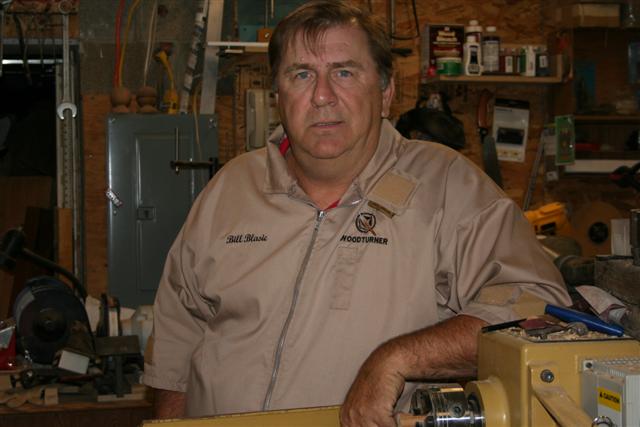
I just like cast iron, used it for 37 years of my working life most every day. For me there is a difference in the feel between the cast and the steel. There is no exaggerated difference between the two it is just what you feel. If you asked me what the best made lathe available was I would answer Brent English's Robust series of lathe period! When I bought my Powermatic it was to be an intermediate step before buying an AB (Not knowing much about the AB). in the mean time I had to use a couple of Oneways, for me it was like night and day. That made me rethink steel and the AB. There is no fight it is just what one likes and my choice is cast.

Re: Steel vs cast iron.

#13

Re: Steel vs stainless steel hardness

Dale Miner

Yes, perhaps the statement makes an assumption. The assumption being that the stainless is an 18-8 grade, non hardenable. Since the ways are welded to a steel base, and then machined to final dimensions on both the top side and underside, I can't imagine that a hardenable grade of stainless is used. The cost for welding, and subsequent hardening would be astronomical. I've seen stainless way 2436 lathes, and the appearance of the ways confirms my feeling that the ways are not hardened.

Cast iron versus steel versus stainless steel is a matter of personal preference. I have my preference (cast iron), but opted for a steel way lathe for the larger swing and other features. If a used 2436 with stainless ways would have came my way for the price that the used 2436 steel ways machine did, I would have been happy to let it occupy the space the 3520b had been in, but would have been a little less thrilled. I don't think 18-8 stainless is a good material in wear applications.

Re: Steel vs cast iron.

#14

Re: Steel vs cast iron.

Dale Miner

Robo,

I would be suprised if your stainless ways ever rust. If they do it will be caused by the passivation becoming defeated by the introduction of iron ions from an external source. Don't use steel wool on your stainless ways, as that would introduce iron ions.

The scratches you refer to is what I also refer to. If you were to buff the scratches out, you would be degrading the accuracy of the ways. Repeated buffing or sanding to remove the scratches wears the ways and reduces the accuracy of the machine alignment and clamping effect of the banjo and tailstock. I think it is a bad practice to routinely scotch brite or sand the ways to remove scratches or staining regardless the way material

Blanks with bark that contain sand or other gritty material can result in the grit getting under the banjo or tailstock and cause scratches to any of the bed materials. Stainless is more apt to become deeply scratched that the other two materials, ergo my reservations for it's use as a way material. Sanding on the lathe can also become a source of grit. Cleaning the shavings and debris before moving the banjo or tailstock is a good idea with any way material, an even better idea with stainless.

Re: Steel vs cast iron.

#15

Joe Bradshaw

Re: Steel vs stainless steel hardness

Joe Bradshaw

You guys remind me of a bunch of old farts setting around a pot-bellied stove in the general store arguing about the best tractor. try all the lathes you can and then buy.

Joe

Re: Steel vs cast iron.

#16

Re: Steel vs cast iron.

Don in Central Illinois

Keith Adams used to put a nickle on edge on his PM 4224 with out of balance blanks and it never moved. Amazed me at the time as I was using a Shopsmith.

Re: Steel vs cast iron.

#17

Re: Steel vs stainless steel hardness

Sergio

Buying a tractor (I did it) or buying a lathe (I did it) is like falling in love. You do it once, twice is better, the lucky ones fall in love many times. Then you settle down with one and release all that air.

Re: Steel vs cast iron.

#18

It takes test nickels to do that. :-)

John Lucas

When I first got my Powermatic 3520A I did the Nickle test and it worked.

Re: Steel vs cast iron.

#19

Keith Tompkins

Re: Steel vs stainless steel hardness

Keith Tompkins

Farmall! :D

Re: Steel vs cast iron.

#20

Re: Steel vs stainless steel hardness

Dale Miner

My favorite tractors are steam powered.

Hey, who is going to sweep up all these shavings from you guys sitting around whittling all day?

Besides, my CaseXX stays sharper longer than your Old Timer and is easier to sharpen, and, and, and....

And another thing;

https://m.youtube.com/watch?v=HH3ruuml-R4

Re: Steel vs cast iron.

#21

Re: Steel vs cast iron.  *LINK*

David Walser

In his most recent Woodturning with Tim Yoder episode, Tim turns a large platter. As you can see in the linked video, the blank is fairly well balanced when it is first mounted on the lathe, yet his Robust AB lathe still vibrates noticeably. I don't think the same blank would have caused nearly as much vibration on the Serious Wood Lathe. My recollection is that the blank I saw spinning on the Serious lathe was more severely out of balance and weighed more, but it wasn't quite as large in diameter.

It would have been fun to take the blank off of Tim's lathe and mount it on other high-end lathes. Assuming all the lathes were properly set up, then we'd "know" the answer to John's question.


Episode 23

Re: Steel vs cast iron.

#22

Re: Steel vs cast iron.

Sergio

It depends also from the speed of turning.

Re: Steel vs cast iron.

#23

Re: Steel vs cast iron.

John Jordan

The lathe shaking from out of balance/large pieces is not the same as "vibrations" at all. Two entirely different things,

Shaking can be largely resolved by a wide footprint with all the legs touching the floor completely, and controlling the speed. Weight can help but not as much as one might think. Of course the workpiece should be balanced as well as possible. Sometimes that means starting on one center and moving the workpiece as mass is removed.

Vibrations are very complex, but the very short version is that steel will have more of various sorts of harmonics that can cause all sorts of problems. Cast iron dampens many of these harmonics and resonant frequencies.

Having said that, I have never noticed any particular problems with the steel lathes available today, and that includes a couple of the very best ones.

John

Re: Steel vs cast iron.

#24

Re: Steel vs cast iron.

Roy

Okay, think back about 20 years there was a guy in I think South Carolina who made a lathe that used weights on the outboard faceplate to counteract the unbalanced blank. I think his name was Thompson and i know he made a lathe for Dennis Elliott of Foreigner. Dennis made large artistic wall platters that were shown in FWW. I can't remember where I read about his lathe, but the write up was pretty detailed and went on about how the weights would cut down on wobble from the out of balance blanks.

Roy

Re: Steel vs cast iron.

#25

Re: Steel vs cast iron.

Don in Central Illinois

You should see some of Terry Scotts off balance pieces and how he balances them. Sometimes a little scary.