Home Articles Forums Gallery Marketplace Videos

WoodCentral Forums

Knowledge You Can Build On — Est. 1998

Have a question? Ask Woody!

Suggestions solicited

Posts

Suggestions solicited

#1

Suggestions solicited

Stuart Hough

I am pondering the possibility of buying a small lathe to start learning how to turn. At this time I am mainly interested turning tool handles, small plates/bowls/cups and other small knick-knacks to get the basics down pat. Larger items will come later on, once I have become competent at this. I need any and all suggestions, opinions, experiences and such that anyone on this board can give me to help me make my equipment decisions in a somewhat intelligent fashion. Thank you for your indulgence and consideration!

Re: Suggestions solicited

#2

Re: Suggestions solicited

Barry L Elder

Find a local woodturning club, attend a meeting, possibly find a mentor! Would give more definite info if I knew where you were, but you seem to keep that a secret. ;)

Re: Suggestions solicited

#3

Re: Suggestions solicited

Dale Gillaspy

Without more specifics it will be really hard to answer....first, like budget? How about available space?

There are sooooo many variables that it is hard to pin it down. For a Mini lathe, I would shoot straight for the Jet 1221VS, but it is more expensive than some others. However, for me, quality and the availability of variable speed would outweigh the cost. That may not be the case for some.

You said you were interested in expanding and doing bigger things later. Is a full size lathe in your sights...then we have a whole bunch of other questions, like 110 or 220v?

I agree with finding a club in your area, but in the mean time, some more info would help.

Re: Suggestions solicited

#4

Re: Suggestions solicited *LINK*

Cyril Griesbach

Stuart, it looks more like you're pondering learning to turn rather than buying a lathe. In any case the information Barry gave is spot on. Finding and joining a turning club will get you much closer to making decisions before spending money and when you do start to make purchases you'll be much more informed and your choices will be more likely to be good and long lasting decisions.

This link http://aaw.site-ym.com/search/custom.asp?id=1509 should get you to the section of the AAW site where you can search for a chapter (sorry AAW but this is NOT easy to find on the website)

Good luck


http://http://aaw.site-ym.com/search/custom.asp?id=1509

Re: Suggestions solicited

#5

Steven Antonucci

Minimum of tools, lathe, club

steven antonucci

The old joke that the turner with the most tools dies the winner is a bad idea starting off. Every tool ever made will produce good results in good hands. The corollary is that the best tool in bad hands will still produce bad results. So don't buy a lot of tools.

Buy good tools and learn to sharpen well. A sharp edge is good, but only presented to the wood properly. A sharp edge presented poorly will still produce poor results. By having fewer tools in your arsenal, you can focus on using them well. A bowl gouge, a spindle gouge, a skew, a round nosed scraper and a parting tool are a good starting point.

A good mentor will help, but getting hands on instruction is a good way to overcome the learning curve. If you can take classes with a good instructor, do it. The money you spend will come out of your sandpaper budget, and the time you get back can be devoted to practice.

Do not focus on products first. Most new turners want to make one of everything, and are quickly disappointed with the results. Whenever you see a post about "a tough piece of wood", "not sure how I get this end grain tear out", "what am I doing wrong", the answer is always practice, practice, practice. When I was truly transformed, there would be days when I would go to the lathe and just turn beads so that it wasn't so hard to do. Or cut bowls until I could do it with one hand and my eyes closed. Time at the lathe is accrued, and is not something you can buy.

Steven

Re: Suggestions solicited

#6

Re: Suggestions solicited

Dick Coers

Yup, Jet 1221VS. It will get you a long ways into turning, and will make a good second machine when you buy a big lathe. Buy a slow speed grinder with the Wolverine sharpening system, the same day you buy tools.DO NOT buy tools without the grinder. And as mentioned, your learning experience will be cut by two thirds if you find a mentor. The skills you will need to learn are not intuitive, and not easily learned by watching YouTube.

Re: Suggestions solicited

#7

Re: Suggestions solicited

Phillip Medghalchi

Stuart, like others said above, your best bet is to find a mentor and ask them if they will let you turn on their lathe, before you go out and spend money.

That is what helped me to start.

The most important too, is your mentor also, teach you about the safety of using tools, then you can decide if this is something you want to do. Wood turning requires different safety precautions than flat work like furniture and cabinet work.

Very much luck to you and hope we can see you taking up this hobby/art.

Re: Suggestions solicited

#8

Re: Suggestions solicited

Craig Daymon

I don't have any direct lathe recommendations. Your budget will certainly come into play.

With respect to tools, there are a few that I really don't think that someone starting out needs to splurge on.

1) 1/16" thin parting tool. Penn State sells one for about $17. That's less than half what the big brands will charge and it will easily do the job for a long time.

2) SPINDLE Roughing gouge. A P&N 1-1/4" Spindle Roughing gouge is a great tool, with lots of mass and a very strong tang. It's also expensive, though it should last a LONG time. Starting out, Penn State sells a 2" Spindle Roughing gouge for $49. (I swear it use to be closer to $30.) The large diameter makes it nice to use for a planing cut, similar but maybe easier to what you would do with a skew chisel. It will also work fine for roughing down spindles and the large diameter provides plenty of sharp area to use before returning to the grinder. This is a roughing gouge. Though the beef of the P&N makes it very nice to use, you are using it (aside from a planing cut) to rough down wood, so you don't need cryo powdered metal steel to get the job done.

3) I like the Packard spindle gouges. They are fairly inexpensive and nice to use. I also have a Thompson, which I use a lot, but I interchange it with the Packard often. Thompson tools are great, but they are more expensive and do require a handle to be made or the use of a handle that can exchange tools (which you can also make yourself).

4) One tool I really love and use it to shape the OUTSIDE of bowls, as well as spindle turning, is a 5/8" Thompson Spindle gouge. I use it in a Kelton handle that permits changing the tool.

5) 4 jaw chucks. I really like the Axminster chucks I've bought from Lee Valley. I have an Evolution chuck, that is really terrific and a bargain compared to the other higher end chucks, but Axminster has a number of chucks at very reasonable prices, with stainless steel bodies. All Axminster chucks can use all their jaws, which is something you don't get between a OneWay Talon and OneWay Stronghold. (Nova chucks also interchange jaws.) Axminster also offers the O'Donnell jaws and some really beefy dovetail jaws.

6) If you see a tool you want that is basically a HSS rod with the end ground a certain way, consider buying a drill blank of the right size and make your own. (Or Thompson sells a number of sizes of blanks in their steel, but they will be decidedly more expensive.) Tools in this category would be round skew chisels, 3 point tools or skewchigouges. (I have found a skewchigouge style tool useful.)

7) Similar to #6, and probably your largest tool expenditure, will be a bowl gouge. If you are thinking about an Ellsworth/Irish grind gouge, which are very useful, consider buying the same gouge in the conventional grind and grind it to that style yourself. You can save $40 by doing this. My main bowl gouge is a 5/8" gouge. (Keep in mind that there are different ways to measure gouge size, depending on where it is made. I think Europe measures the flute and the U.S. measures the steel diameter, though it may also depend on the catalog or maker, so read the descriptions.)

8) Always keep in mind that any tool you buy will be going to the grinding wheel, where it will be up to you to maintain the shape. So if there is a special grind that you think will be useful, check if it is more practical for you to grind a less expensive tool yourself.

9) Penn State also sells a nice 1-1/2" Round Nose Scraper thats fairly beefy at just under 3/8" thick. It's $32. The larger size also makes it nice to use shear scraping the outside of a bowl, though I will usually use my Ellsworth grind bowl gouge for this, mostly because it is frequently in hand. The thicker your scraper, the better because it is very susceptible to vibration. I have 2 Crown scrapers that are 1/2" thick, making them really nice to use.

10) Watch sales. I have several Crown Pro-PM tools that I got on sale from Hartville Tools for 50% off. I think I got the Crown scrapers from Woodcraft as part of a closeout sale. Again, about 50% off. Wish I had bought more as scrapers are useful to have extras to grind for special purposes. Could have made a Raffan point tip scraper from one.

My opinions, take them as you will. I have bought far more tools, especially hollowing, than I use on a regular basis.

Re: Suggestions solicited

#9

Total Agreement!

Don Orr

Steve has given some of the best advice on getting started there is. Practice!

There is no substitute for practice once you have the basics. Professionals in many fields (sports, music) practice every day and they already know how to do what they do. It's amazing to me that beginning turners don't think they need to practice. They just want to make stuff. Making stuff is fine as long as you realize that removing the waste wood IS practice. In fact, every cut is a practice cut until the final cut.

And sharpening is a necessary skill that needs to be learned as well, and it's not that much different than turning. Make friends with your grinder and it will take you far in your turning journey.

To paraphrase an annoying song on the radio-it's all about the bevel, 'bout the bevel, 'bout the bevel. That goes for turning and sharpening.

Re: Suggestions solicited

#10

Dick Hines

Re: Suggestions solicited

Dick Hines

Get a bigger lathe than you think you will need. If you buy a small lathe and find you like turning you will not be happy. If you find you don't like turning a big lathe will have a better sales value than the small one.

I have two lathes. I bought the big one first and had a chance to pick up a small lathe at a good price. I use the bigger lathe most of the time but would not get rid of the small one.

As far as tools go I am a fan in Doug Thompson"s tools.

Re: Suggestions solicited

#11

Re: Suggestions solicited

Jerry Klug

A lot of good suggestions in the above comments. The first lesson in turning was to buy the best lathe you can afford as most turners trade up about 4 times costing a losses each time. That being said, you can turn on a Jet 1221 VS for a lot of years and not out grow it.

I volunteer at an alternative school teaching teenagers. I want them to learn turning, not scraping. I do not use any carbide insert tools. They have a quick learning curve but if you don't learn with conventional HHS tools for proper tool control, you will be limiting your future abilities. It is hard to unlearn poor practices.

I like the idea of using low cost tools as a sharp Chinese gouge will cut just like a sharp expensive gouge. It takes most turners some time to climb the sharpening learning curve. During that learning time it is easier on the pocketbook to grind away Chinese M2 steel than M42 alloy. Start with the low cost Chinese but be aware that one reason the price is lower is that the quality control is not as good. The M2 may be only in the first inch or two and consistent chemical analysis is usually not there. After you are comfortable with keeping your tools sharp and not rapidly shortening them switch to Sheffield steel or the cool powdered and alloy tools. There are a number of good Sheffield tools out there... Sorby, Crown, Taylor. The quality alloy tools are Thompson, D-Way and Carter & Son. I have turned with all of those and not found a particular favorite brand but I do find have favorite individual tools.

Join a club, set a budget and turn as often as you can. Enjoy falling into the vortex.

Re: Suggestions solicited

#12

Thanks for all the replies!

Stuart Hough

Lots to think about! Some answers to questions asked:

Time frame is 6-12 months.

I live in Florence, SC.

Have been asking around my area for info on any clubs out there, with little luck. There are clubs in Columbia (85 miles away) and Charleston (100 miles away).

Thanks again for all the suggestions and ideas.

Re: Suggestions solicited

#13

Bill Blasic

Re: Thanks for all the replies!

Bill Blasic

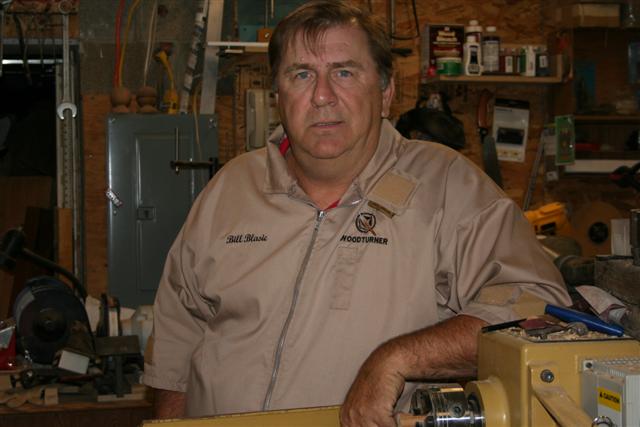
Stuart a mentor that volunteers his time and machinery is usually one of the top tier turners in their club who can start you off with three important things. Turning, sharpening and safety and in my club that costs you nothing. I also would suggest that if you can afford it start with the Jet 1642. It may cost a thou or so more than the Jet 1221 but you are getting a ton more lathe. I do not know of many turners who started with a midi that did not move on to a bigger lathe. Remember you can turn anything on the 1642 that you can turn on the 1221 but there is so much more you can do on the 1642 that you cannot do on the 1221. I'm sure you will find that like many of us turning is like a vortex and just sucks you in!

Re: Suggestions solicited

#14

Re: Thanks for all the replies!

Craig Daymon

Stuart,

I just pulled a list of all the clubs in SC. Haven't checked how close any are to you. If you are near a state border, there may be one just across the line. You can get a list by going the the AAW site search tool for chapters, http://www.woodturner.org/search/custom.asp?id=1509

Bluffton Woodturners

Bluffton

South Carolina

United States

AAW Chapter GROUP: Bluffton Woodturners

Charlestowne Woodturners

Charleston

South Carolina

United States

AAW Chapter GROUP: Charlestowne Woodturners

Council of Lakeland Area Woodworkers (CLAW)

Greenwood

South Carolina

United States

AAW Chapter GROUP: Council of Lakeland Area Woodworkers (CLAW)

Palmetto Woodturners

Columbia

South Carolina

United States

AAW Chapter GROUP: Palmetto Woodturners

I know you already mentioned that Columbia and Charleston are too far.