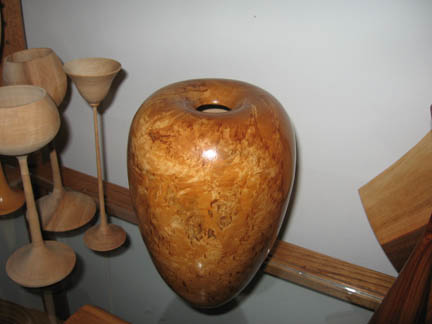
... I have.
Geoff Whaling
Philip,
Your project has been weighing on my mind. Firstly I applaud you for stepping back & considering how to proceed, what are the characteristics of this particular wood, the risks and potential for other hazards you are not aware of because of your unfamiliarity with it, potential stabilization options, etc.
If only many other turners would do the same, they would be at much less risk.
The thing that bothers me most, alarms me in fact, with this blank is the poor quality of the base of the bowl & tenon pictured. The bark inclusion/cracks & lack of sufficient stable material to resist crushing by the chuck jaws will cause the tenon to fail IMO. Only a matter of time of when it does.
If you proceed with this project please remove the unstable tenon and fit a glue block before you do any other turning. The glue block should be large enough to cover the full width of the bowl base & of sufficient thickness to attach a large face plate with robust coach bolts, rather than use larger chuck jaws.
Using a face plate removes one high risk hazard - the unstable & weak tenon in this example. Far less chance of the bowl blank moving on a face plate from the constant pressure cutting or a catch. Reducing the potential for movement further reduces the potential for a catch etc. BUT we may create another hazard - what is the potential for the glue block or glue joint to fail?
By steadily working through the hazards, realizing the risks and coming up with stabilization options, then considering any new risks or the residual risks a much less hazardous method of turning can be developed.
Whether it reduces risk and potential for severe injury to a level you & your family are comfortable with are questions only you can answer.
Take your time, work through it steadily, consider the merits of any advice given, implement procedures to minimize risk, and above all stop and take a break to regularly inspect the work piece. Stay safe.