Is
Bob Rogne
Is there a waiting period after using tung oil (Deft) before using the Beal buffing system. I'm not real fond of glossy finish but have a few pieces that need it. Thanks
Knowledge You Can Build On — Est. 1998
Is
Bob Rogne
Is there a waiting period after using tung oil (Deft) before using the Beal buffing system. I'm not real fond of glossy finish but have a few pieces that need it. Thanks
Re: Tung
Mark Mandell - Gone Round In New Jersey
Never used Deft Tung, but this oil is slow curing which can take a week or three depending on the temperature and humidity. Tung also forms a softer (read more fragile) film that other polymerizing oils so I'd suggest that you give it every chance to complete both its oxidation and its "pull-down" (thinning out of the film) that all drying oils do, before you go at it with a buffer. It is, however, my fave oil finish for turnings.
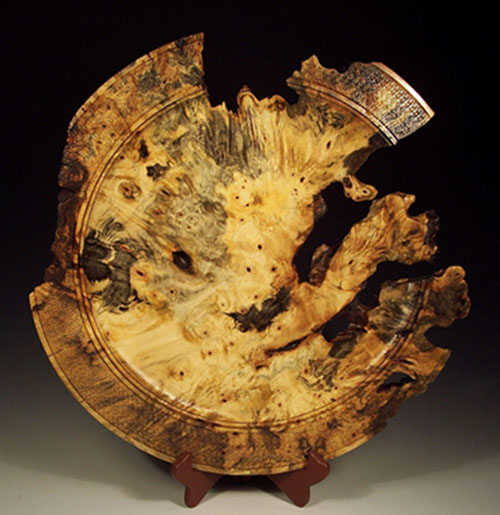
In addition, when you do buff, go very lightly as tung oil's film finish is liable to melt and craze with too much heat. I have done several tung oil finishes and every one of them was rubbed out by hand with Meguires compounds rather than machine buffed. The pic is an example of Tung on walnut. I let it sit for 3 weeks before rubbing out the finish.

Re: Tung
Bob Rogne
Thank you Mark. I have used Deft tung for long time because I like how it seems to pop the grain. I found that a lot of buyers seem to like high gloss which I don't. Buffing seems to be in between.
again THANKS
Re: Tung
Greg Haugen
Bob, What Tung Oil are you using? Deft, from their site doesn't make one. Are you talking about Deft's Danish oil- DeftOil? Or Watco makes a "tung oil" finish that is new to compete with Waterlox.
Re: Is
Don Leydens
Hi Bob! I use Formby's Tung Oil on nearly all my turnings and wait a day in between coats and at least a week before buffing. If the piece looks too glossy, you can always cut it back with Renaissance Wax applied with 0000 steel wool. You can always bypass the buffing all together and go straight to the Ren. wax as well.
Don
Remember the late, great Russ Fairfield....
Greg Haugen
.....not all "oil" finishes are created equal. Some finishes that say tung oil, don't have a drop in them. When in doubt, check the MSDS and labels. Minwax's and Cabot's Tung Oil finish, for example, don't have a single drop. Cabot's even list their ingredients and percentages on the side of the can, it's not even mentioned except in the "title".
absolutely true
GaryG in MD
If the word "finish" is in the name, it's not pure tung oil, and may likely have none at all in it.
To be real, it should just say "tung oil" (or "china wood oil").
A good brand is Behlen's.
Here's the MSDS:
http://www.behlen.co.uk/safety/B740-0003.pdf
The side of the can says: "H. Behlen Pure Tung Oil contains no dryers or thinners."
...GG
If It Does
Mark Mandell - Gone Round In New Jersey
"say 'pure tung oil" do not use it. It can take weeks to cure.
Waterlox uses tung as their oil base, but adds varying amounts of driers, resins, and diluents to make their products. Formby's used to have very little tung, but dried quickly.
Mark,
GaryG in MD
You said it's your "favorite finish". What brand do you use? ...GG
Gary
Mark Mandell - Gone Round In New Jersey
For Bowls: Waterlox, Red or Green. If the bowl is for use (treen) I do 2 applications of the original sealer, rubbed in then wiped dry, about 8 hours apart. After 2-3 days I apply a cooked mix of mineral oil and paraffin and it's done. Display bowls get the sealer, then 3-6 applications of the gloss (green can) to build a film finish.
For Other Stuff: I'll use one application of the red-can sealer to pop the grain, then go from there. For turned jars I've taken to top coating Krylon matte finish over the "lox" to get a nice, close-to-the-wood sheen. On furniture, I'll go over the red sealer with a tie coat of dewaxed shellac and then top coat, usually with General Enduro or Target WB Lacquer
Thanks for the tips. And...
GaryG in MD
What technique do you use to keep your Waterlox from jelling?
Small containers?
Store upside down?
Other?
...GG
Re: You're Welcome. And...
Mark Mandell - Gone Round In New Jersey
Marbles and the refrigerator. Oxidation and polymerization need two things: oxygen and energy. The marbles keep the cans "full" and, at 36° there's a lot less energy available to spur the chemical reaction. 
PS
Mark Mandell - Gone Round In New Jersey
Never Never return product to the can. I only pour as much as I think I'll need for the piece, erring on the side of pouring a bit more. Exposed to air and warmed up, the drier and diluents kick in and the oil takes in oxygen. If I were to pour it back, I'd be returning oxygen and in-process polymerized oil to the can that can start the gelling process.
excellent ideas
GaryG in MD
Thanks! ...GG


